Abd Elfatah Khaled Saad, Elabasy Moshira Abas, El-Khyate Faris, Elmahallawy Ehab Kotb, Mosad Samah M, El-Gohary Fatma A, Abdo Walied, Al-Brakati Ashraf, Seadawy Mohamed G, Tahoon Abd Elnaby, El-Gohary Abd Elgalil
Department of Poultry and Rabbit Diseases, Faculty of Veterinary Medicine, Kafrelsheikh University, Kafrelsheikh 33511, Egypt.
Department of Zoonoses, Faculty of Veterinary Medicine, Sohag University, Sohag 82524, Egypt.
Animals (Basel). 2021 Feb 15;11(2):505. doi: 10.3390/ani11020505.
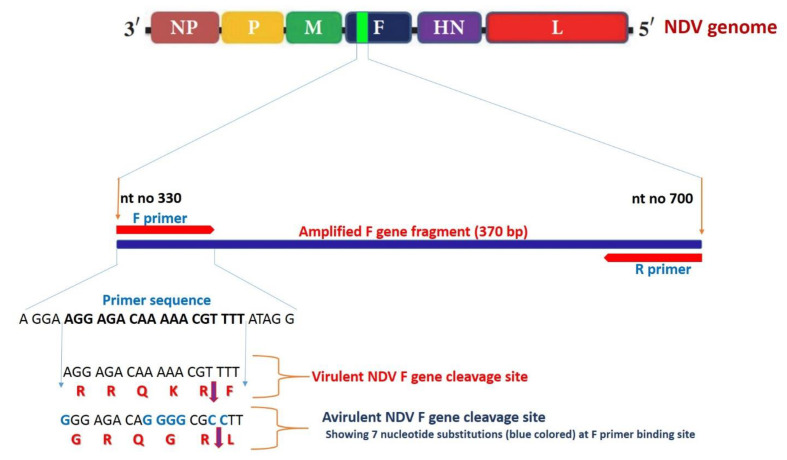
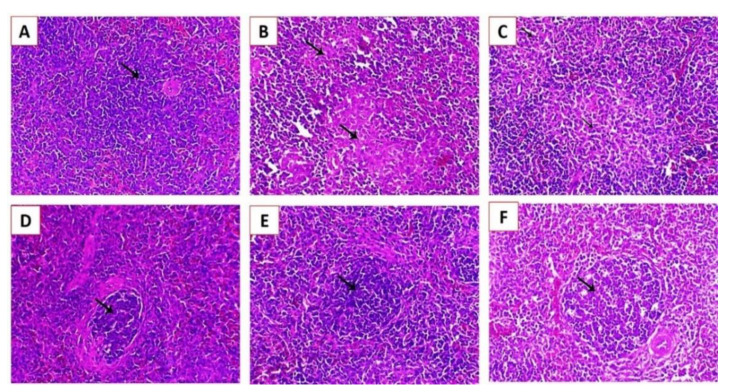
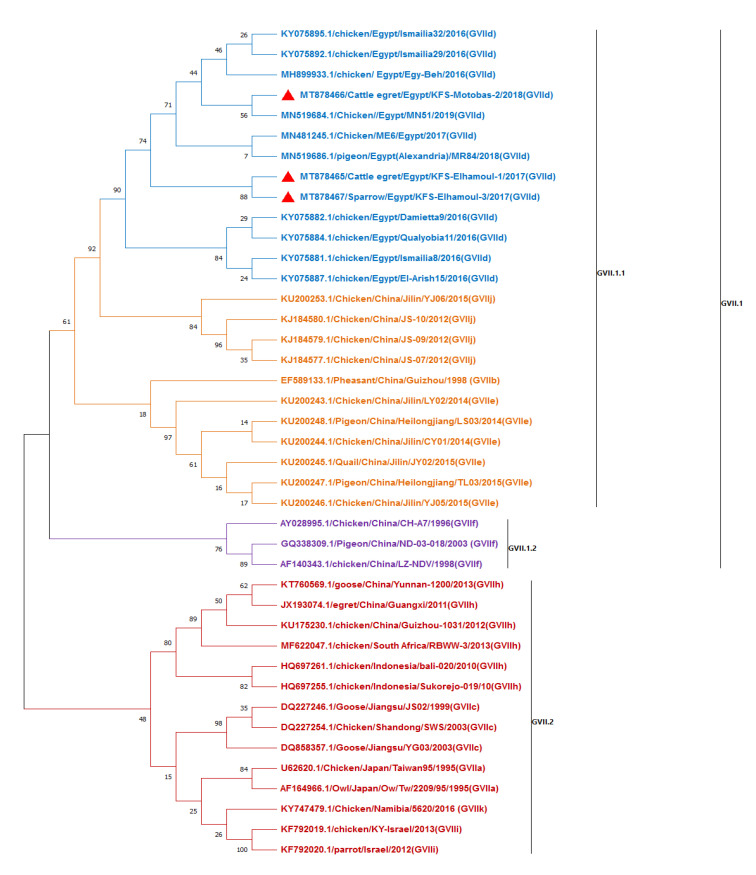
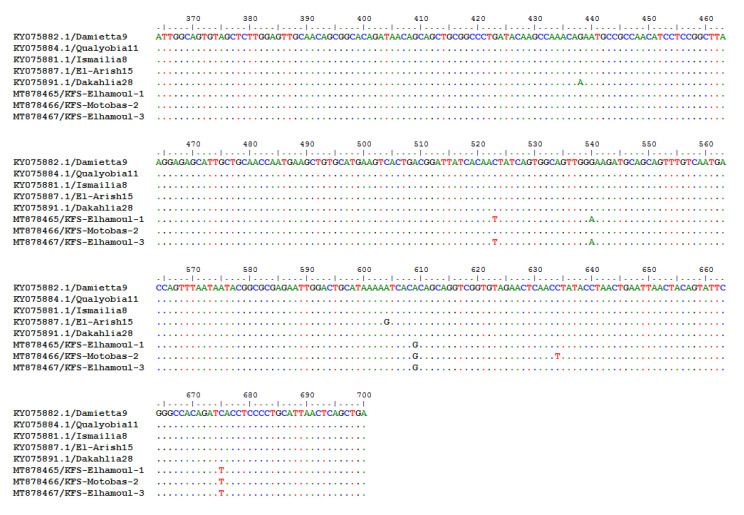
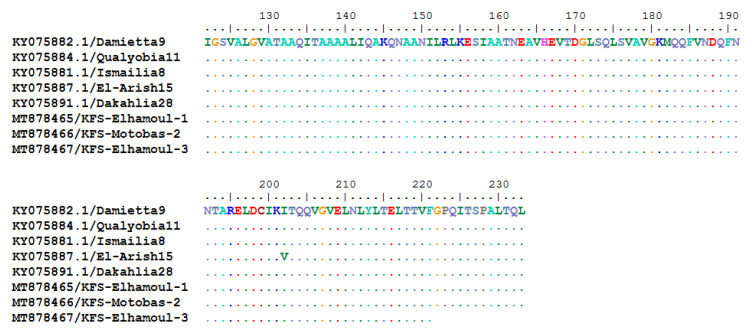
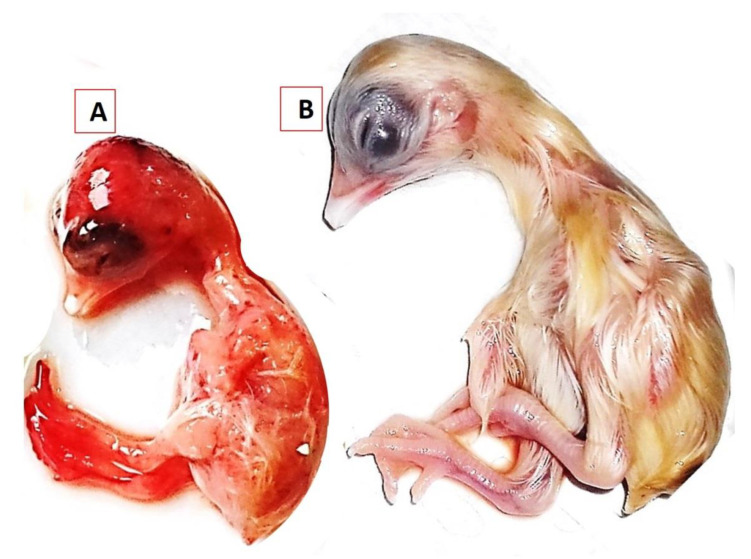
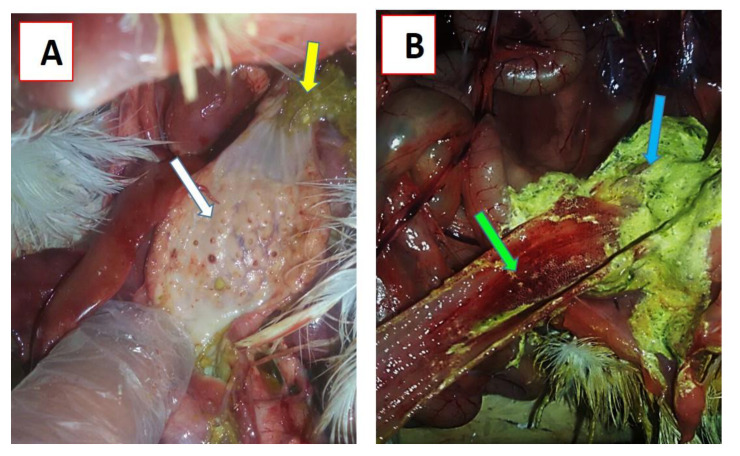
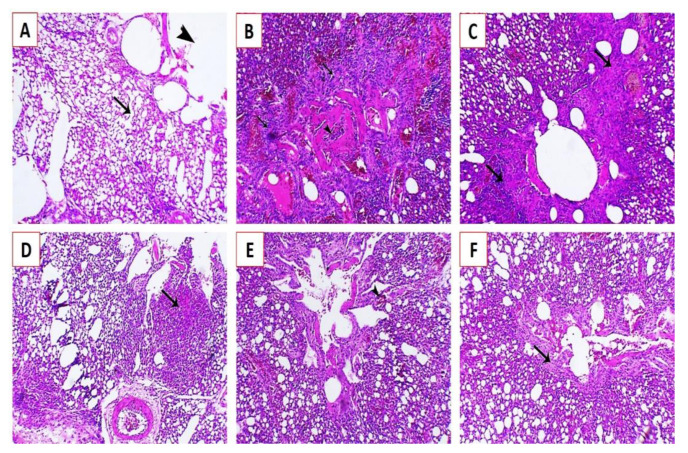
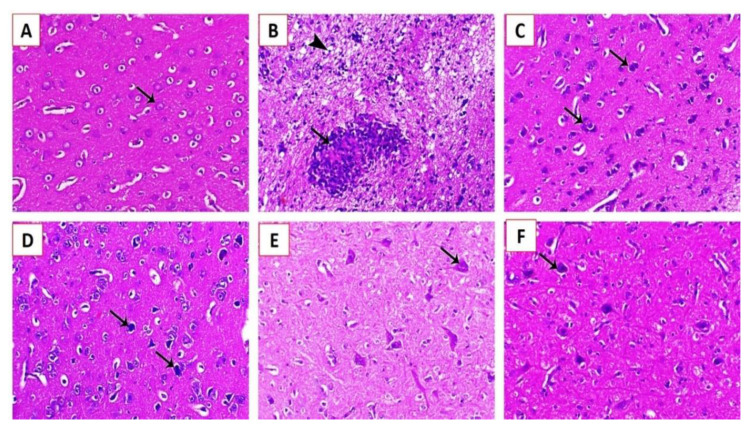
Newcastle disease (ND) is considered to be one of the most economically significant avian viral diseases. It has a worldwide distribution and a continuous diversity of genotypes. Despite its limited zoonotic potential, Newcastle disease virus (NDV) outbreaks in Egypt occur frequently and result in serious economic losses in the poultry industry. In this study, we investigated and characterized NDV in wild cattle egrets and house sparrows. Fifty cattle egrets and fifty house sparrows were collected from the vicinity of chicken farms in Kafrelsheikh Governorate, Egypt, which has a history of NDV infection. Lung, spleen, and brain tissue samples were pooled from each bird and screened for NDV by real-time reverse transcriptase polymerase chain reaction (RRT-PCR) and reverse transcriptase polymerase chain reaction (RT-PCR) to amplify the 370 bp NDV F gene fragment. NDV was detected by RRT-PCR in 22 of 50 (44%) cattle egrets and 13 of 50 (26%) house sparrows, while the conventional RT-PCR detected NDV in 18 of 50 (36%) cattle egrets and 10 of 50 (20%) of house sparrows. Phylogenic analysis revealed that the NDV strains identified in the present study are closely related to other Egyptian class II, sub-genotype VII.1.1 NDV strains from GenBank, having 99.7-98.5% identity. The pathogenicity of the wild-bird-origin NDV sub-genotype VII.1.1 NDV strains were assessed by experimental inoculation of identified strains (KFS-Motobas-2, KFS-Elhamoul-1, and KFS-Elhamoul-3) in 28-day-old specific-pathogen-free (SPF) Cobb chickens. The clinical signs and post-mortem changes of velogenic NDV genotype VII (GVII) were observed in inoculated chickens 3 to 7 days post-inoculation, with 67.5-70% mortality rates. NDV was detected in all NDV-inoculated chickens by RRT-PCR and RT-PCR at 3, 7, and 10 days post-inoculation. The histopathological findings of the experimentally infected chickens showed marked pulmonary congestion and pneumonia associated with complete bronchial stenosis. The spleen showed histocytic cell proliferation with marked lymphoid depletion, while the brain had malacia and diffuse gliosis. These findings provide interesting data about the characterization of NDV in wild birds from Egypt and add to our understanding of their possible role in the transmission dynamics of the disease in Egypt. Further research is needed to explore the role of other species of wild birds in the epidemiology of this disease and to compare the strains circulating in wild birds with those found in poultry.
新城疫(ND)被认为是最具经济重要性的禽类病毒性疾病之一。它在全球范围内分布,基因型不断多样。尽管其跨物种传播给人类的可能性有限,但埃及仍频繁爆发新城疫病毒(NDV)疫情,给家禽业造成严重经济损失。在本研究中,我们对野生牛背鹭和家麻雀体内的NDV进行了调查和特征分析。从埃及卡夫尔谢赫省有新城疫病毒感染史的养鸡场附近收集了50只牛背鹭和50只家麻雀。从每只鸟身上采集肺、脾和脑组织样本,通过实时逆转录聚合酶链反应(RRT-PCR)和逆转录聚合酶链反应(RT-PCR)对样本进行新城疫病毒筛查,以扩增370bp的新城疫病毒F基因片段。通过RRT-PCR在50只(44%)牛背鹭中的22只以及50只(26%)家麻雀中的13只检测到了新城疫病毒,而传统RT-PCR在50只(36%)牛背鹭中的18只以及50只(20%)家麻雀中的10只检测到了新城疫病毒。系统发育分析表明,本研究中鉴定出的新城疫病毒株与GenBank中其他埃及II类、VII.1.1亚基因型新城疫病毒株密切相关,同源性为99.7 - 98.5%。通过将鉴定出的毒株(KFS - Motobas - 2、KFS - Elhamoul - 1和KFS - Elhamoul - 3)接种到28日龄无特定病原体(SPF)的科布鸡中,评估了源自野生鸟类的VII.1.1亚基因型新城疫病毒株的致病性。接种后3至7天,在接种的鸡中观察到了速发型新城疫病毒基因型VII(GVII)的临床症状和死后变化,死亡率为67.5 - 70%。在接种后3、7和10天,通过RRT-PCR和RT-PCR在所有接种新城疫病毒的鸡中均检测到了新城疫病毒。实验感染鸡的组织病理学检查结果显示,肺部有明显充血和肺炎,伴有完全性支气管狭窄。脾脏显示组织细胞增殖,伴有明显的淋巴细胞耗竭,而脑部有软化和弥漫性胶质增生。这些发现为埃及野生鸟类中新城疫病毒的特征分析提供了有趣的数据,并增进了我们对它们在埃及疾病传播动态中可能作用的理解。需要进一步研究以探索其他野生鸟类物种在该疾病流行病学中的作用,并比较野生鸟类中传播的毒株与家禽中发现的毒株。