Department of Medical Sciences, University of Turin, Via Genova 3, 10126 Turin, Italy.
Pathology Unit, AOU Città della Salute e della Scienza di Torino, University of Turin, Via Santena 7, 10126 Turin, Italy.
Int J Mol Sci. 2021 Feb 12;22(4):1818. doi: 10.3390/ijms22041818.
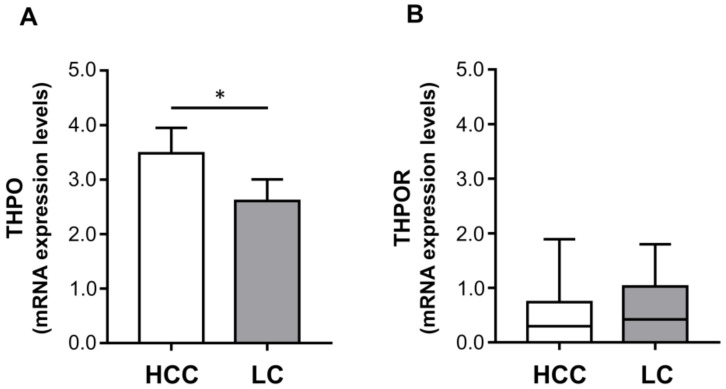
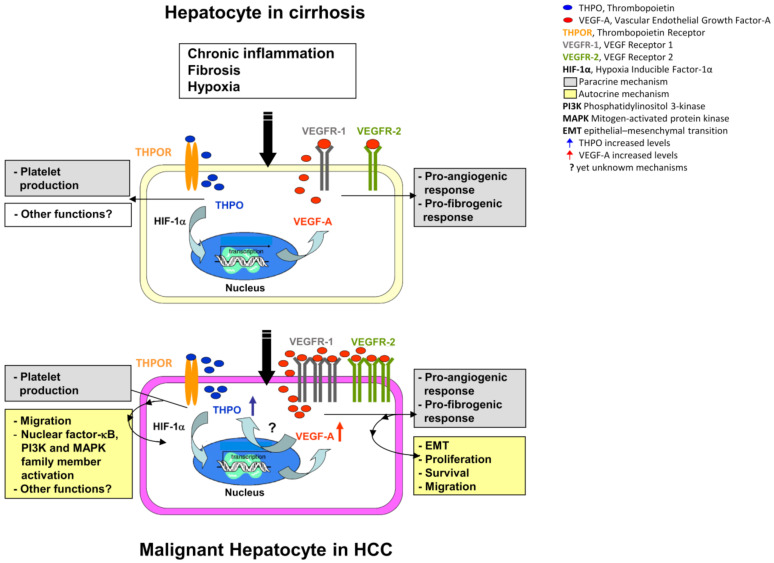
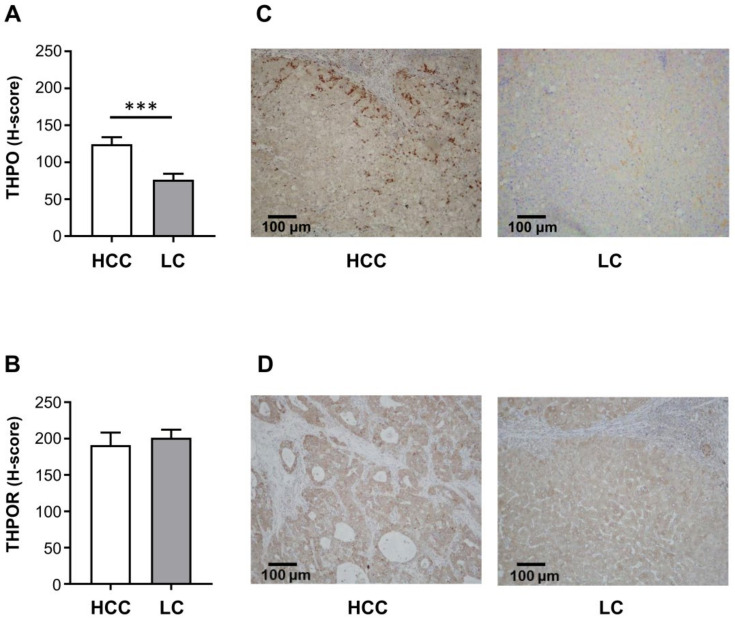
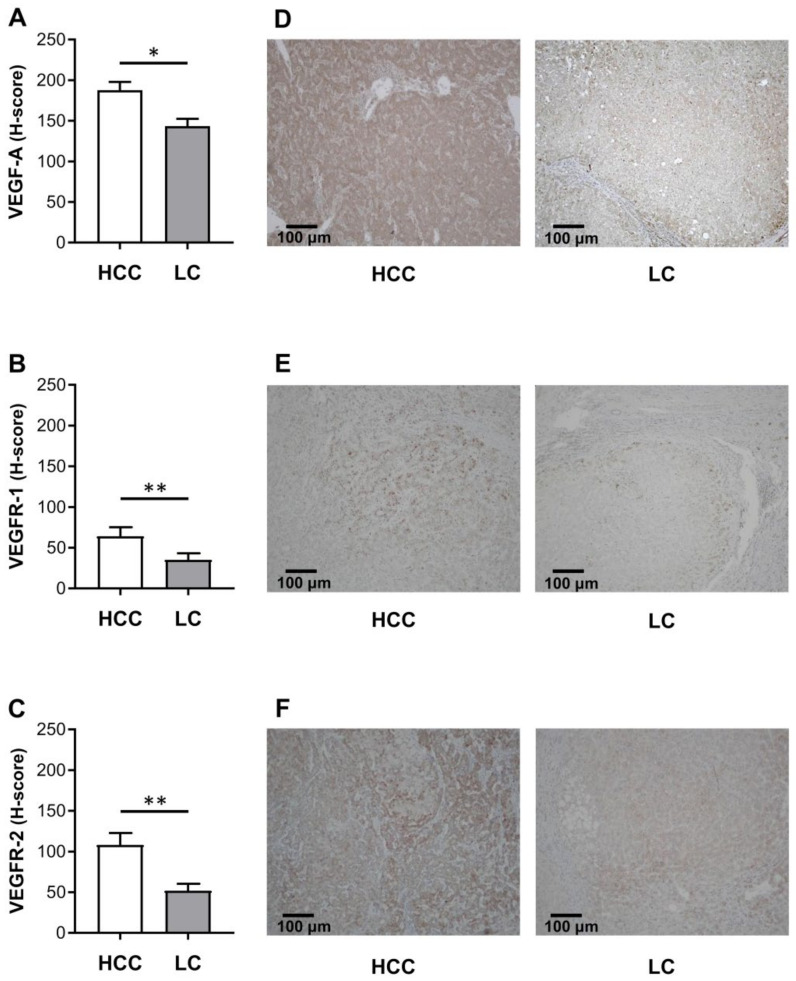
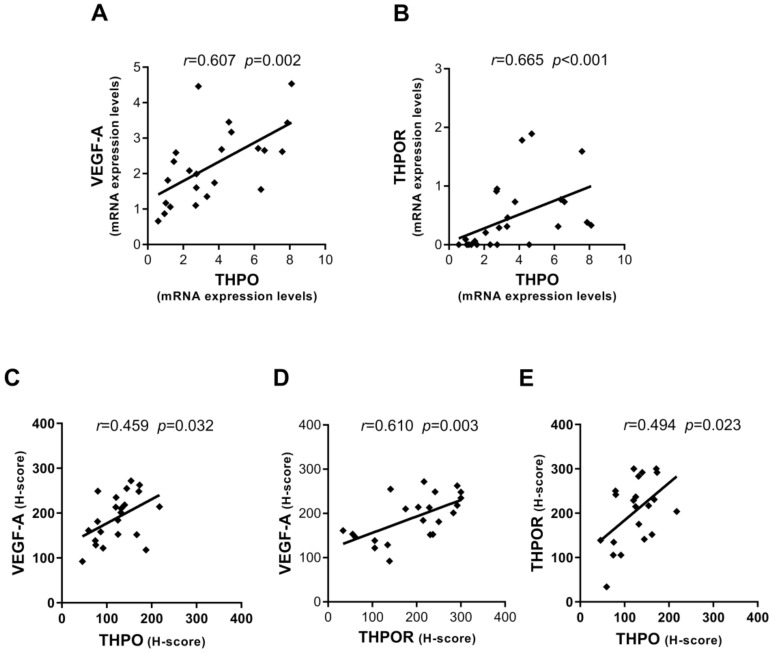
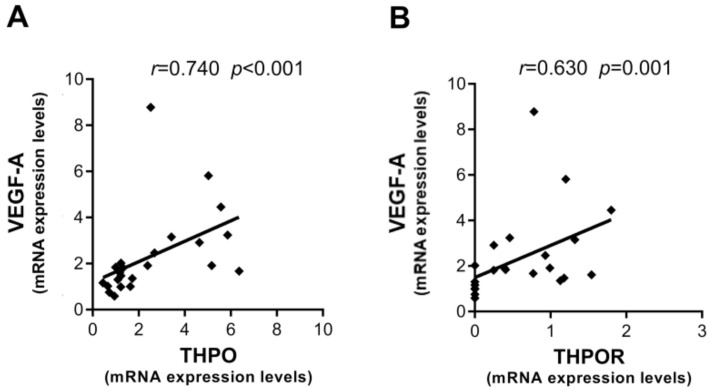
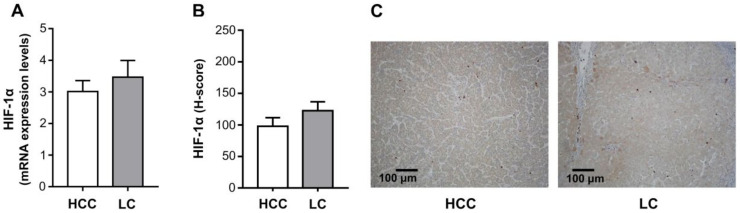
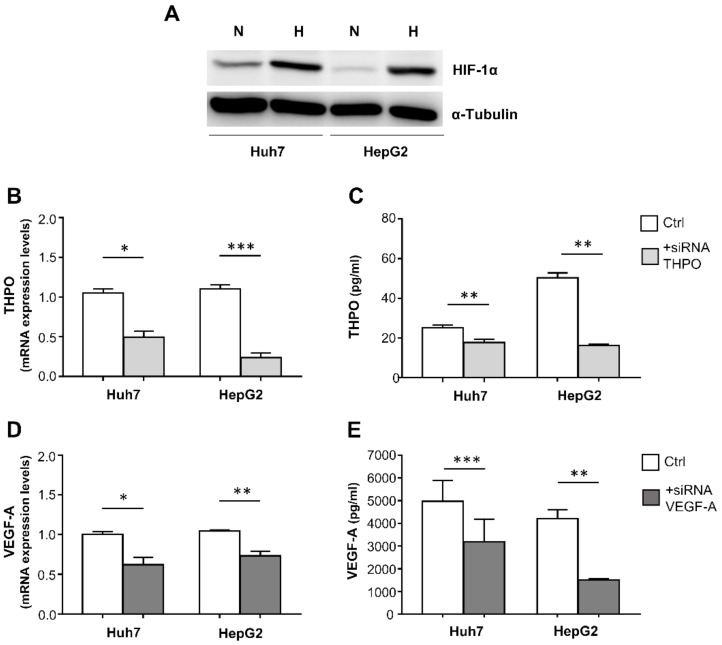
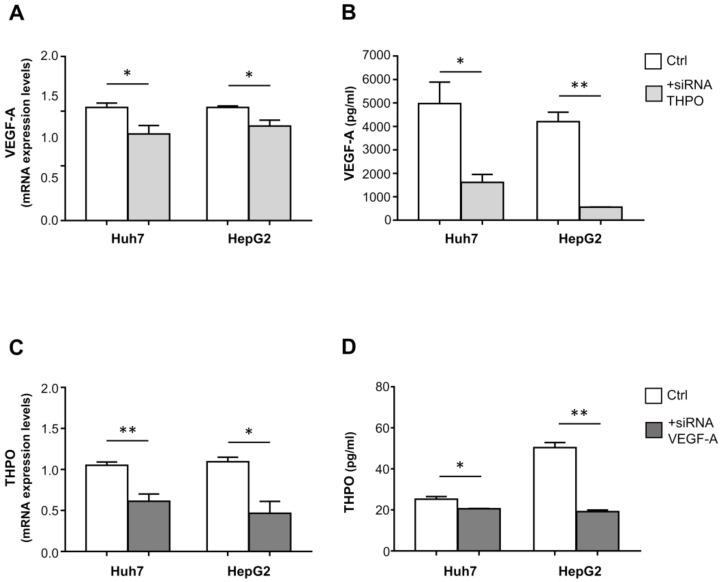
Primary thrombopoietic mediator thrombopoietin (THPO) is mainly produced by the liver; it may act as a growth factor for hepatic progenitors. Principal angiogenesis inducer vascular endothelial growth factor-A (VEGF-A) is critical for the complex vascular network within the liver architecture. As a cross-regulatory loop between THPO and VEGF-A has been demonstrated in the hematopoietic system, the two growth factors were hypothesized to cooperatively contribute to the progression from liver cirrhosis (LC) to hepatocellular carcinoma (HCC). The mRNA and protein expression levels of THPO, VEGF-A, and their receptors were examined, compared, and correlated in paired cancerous and LC tissues from 26 cirrhosis-related HCC patients, using qRT-PCR and immunohistochemistry. THPO and VEGF-A were alternatively silenced by small interfering RNA (siRNA) in human liver cancer cell lines Huh7 and HepG2. THPO and VEGF-A expressions significantly increased in tumor versus LC tissues. HCC and paired LC cells expressed similar levels of THPO receptor (R), whereas vascular endothelial growth factor receptor (VEGFR) -1 and VEGFR-2 levels were higher in HCC than in corresponding LC tissue samples. A significant linear correlation emerged between THPO and VEGF-A transcripts in HCC and, at the protein level, THPO and THPOR were significantly correlated with VEGF-A in tumor tissues. Both HCC and LC expressed similar levels of gene and protein hypoxia inducible factor (HIF)-1α. Positive cross-regulation occurred with the alternative administration of siRNAs targeting THPO and those targeting VEGF-A in hypoxic liver cancer cell lines. These results suggest THPO and VEGF-A might act as interdependently regulated autocrine and/or paracrine systems for cellular growth in HCC. This might be clinically interesting, since new classes of THPOR agonistic/antagonistic drugs may provide novel therapeutic options to correct the frequent hemostatic abnormality seen in HCC patients.
主要的血小板生成素(THPO)是一种初级的促血小板生成介质,主要由肝脏产生;它可能作为肝祖细胞的生长因子。血管内皮生长因子 A(VEGF-A)是主要的血管生成诱导剂,对肝结构内的复杂血管网络至关重要。由于在造血系统中已经证明了 THPO 和 VEGF-A 之间存在交叉调节环路,因此假设这两种生长因子共同促进从肝硬化(LC)到肝细胞癌(HCC)的进展。使用 qRT-PCR 和免疫组织化学技术,在 26 例肝硬化相关 HCC 患者的配对癌组织和 LC 组织中,检测、比较和关联了 THPO、VEGF-A 及其受体的 mRNA 和蛋白表达水平。在人肝癌细胞系 Huh7 和 HepG2 中,通过小干扰 RNA(siRNA)对 THPO 和 VEGF-A 进行了交替沉默。与 LC 组织相比,肿瘤组织中 THPO 和 VEGF-A 的表达显著增加。HCC 和配对的 LC 细胞表达相似水平的 THPO 受体(R),而血管内皮生长因子受体(VEGFR)-1 和 VEGFR-2 的水平在 HCC 中高于相应的 LC 组织样本。在 HCC 中,THPO 和 VEGF-A 的转录物之间出现了显著的线性相关性,并且在蛋白水平上,THPO 和 THPOR 与肿瘤组织中的 VEGF-A 显著相关。HCC 和 LC 都表达相似水平的基因和蛋白缺氧诱导因子(HIF)-1α。在缺氧肝癌细胞系中,交替给予针对 THPO 和 VEGF-A 的 siRNA 进行靶向治疗会产生阳性的交叉调节作用。这些结果表明,THPO 和 VEGF-A 可能作为 HCC 细胞生长的相互依赖调节的自分泌和/或旁分泌系统发挥作用。这在临床上可能很有趣,因为新类别的 THPOR 激动剂/拮抗剂药物可能为纠正 HCC 患者经常出现的止血异常提供新的治疗选择。