Department of Pharmacology and Pharmacodynamics, Medical University, Lublin, 20-059 Lublin, Poland.
Department of Radiography, Medical University, Lublin, 20-081 Lublin, Poland.
Biomolecules. 2021 Feb 27;11(3):362. doi: 10.3390/biom11030362.
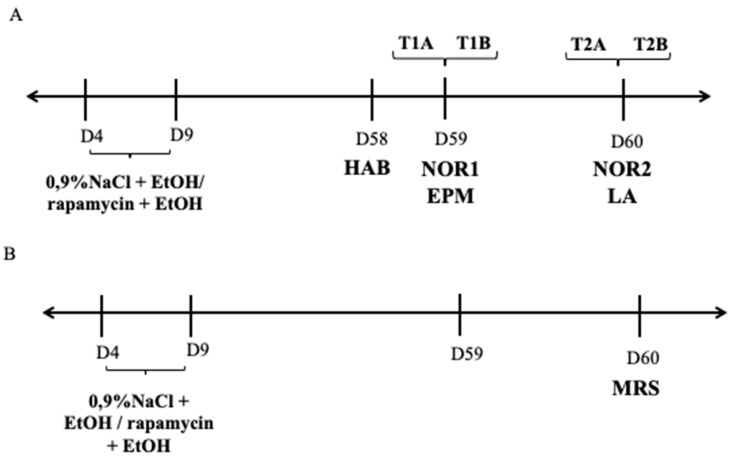
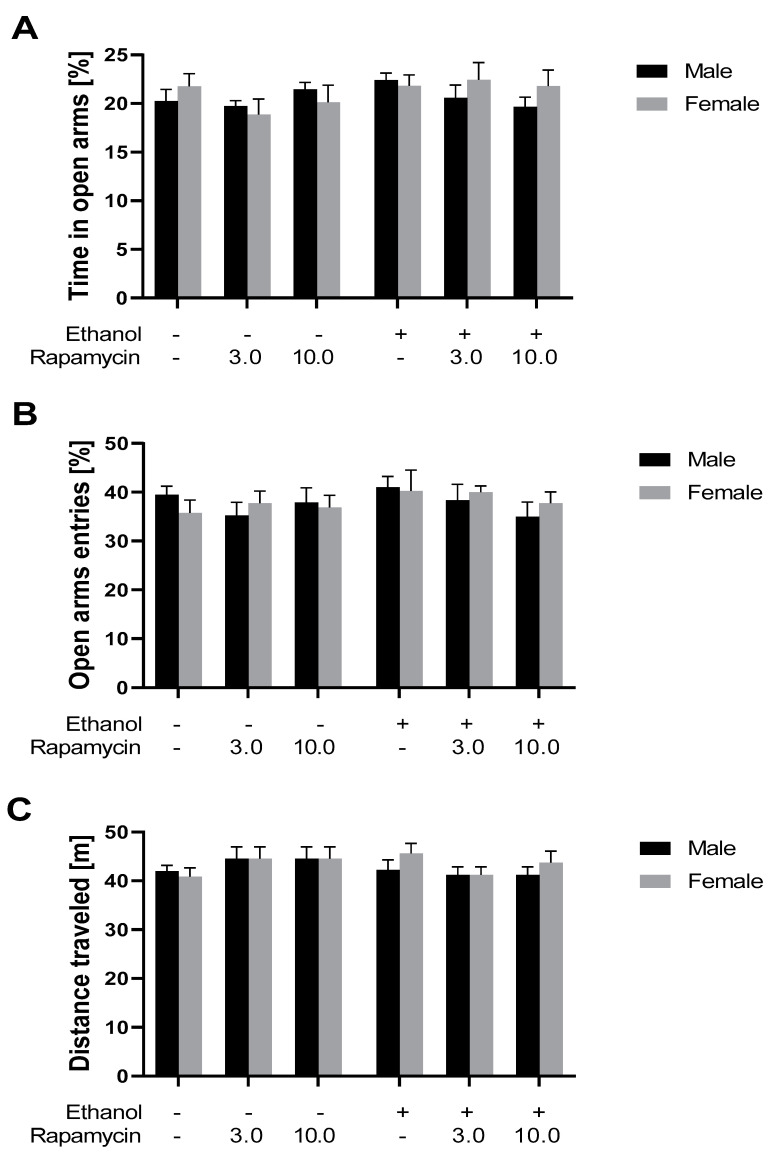
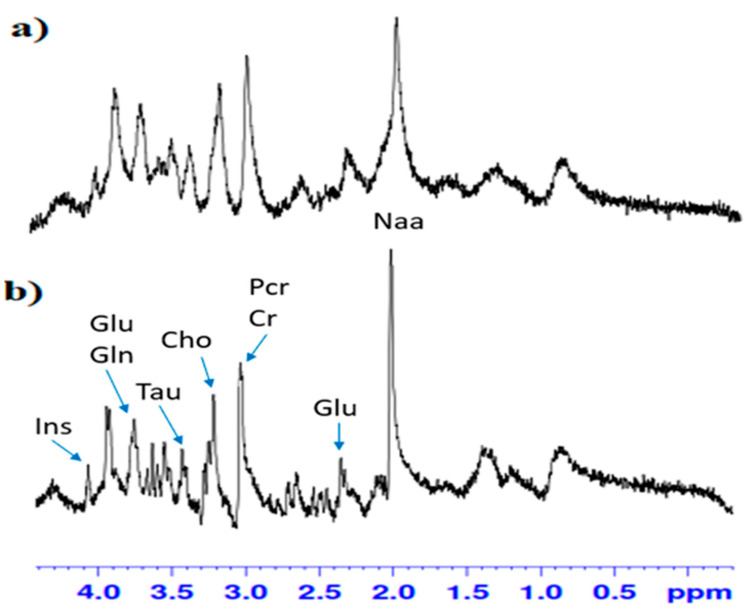
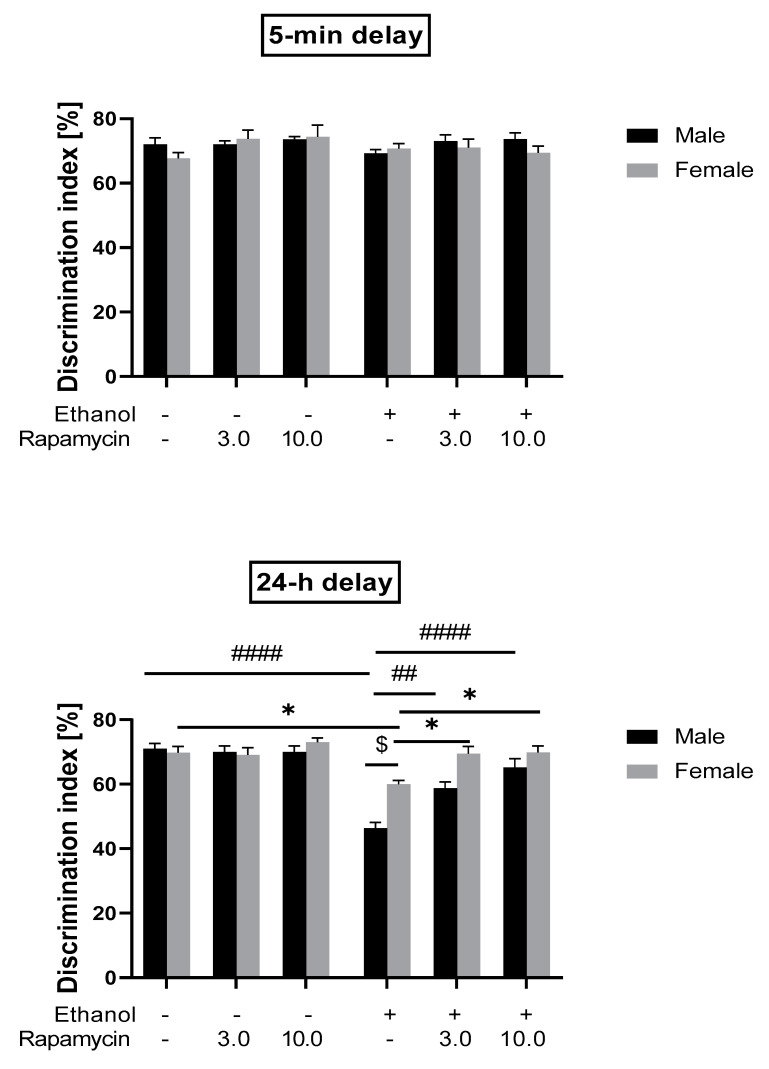
The mammalian target of rapamycin (mTOR), a serine/ threonine kinase, is implicated in synaptic plasticity by controlling protein synthesis. Research suggests that ethanol exposure during pregnancy alters the mTOR signaling pathway in the fetal hippocampus. Thus, we investigated the influence of pre-treatment with rapamycin, an mTORC1 inhibitor, on the development of recognition memory deficits in adult rats that were neonatally exposed to ethanol. In the study, male and female rat pups received ethanol (5 g/kg/day) by intragastric intubation at postanatal day (PND 4-9), an equivalent to the third trimester of human pregnancy. Rapamycin (3 and 10 mg/kg) was given intraperitoneally before every ethanol administration. Short- and long-term recognition memory was assessed in the novel object recognition (NOR) task in adult (PND 59/60) rats. Locomotor activity and anxiety-like behavior were also evaluated to exclude the influence of such behavior on the outcome of the memory task. Moreover, the effects of rapamycin pre-treatment during neonatal ethanol exposure on the content of amino-acids and amines essential for the proper development of cognitive function in the dentate gyrus (DG) of the hippocampus was evaluated using proton magnetic resonance spectroscopy (1H MRS) in male adult (PND 60) rats. Our results show the deleterious effect of ethanol given to neonatal rats on long-term recognition memory in adults. The effect was more pronounced in male rather than female rats. Rapamycin reversed this ethanol-induced memory impairment and normalized the levels of amino acids and amines in the DG. This suggests the involvement of mTORC1 in the deleterious effect of ethanol on the developing brain.
哺乳动物雷帕霉素靶蛋白(mTOR)是一种丝氨酸/苏氨酸激酶,通过控制蛋白质合成参与突触可塑性。研究表明,妊娠期间暴露于乙醇会改变胎儿海马中的 mTOR 信号通路。因此,我们研究了在新生期暴露于乙醇的成年大鼠中,预先给予雷帕霉素(mTORC1 抑制剂)对识别记忆缺陷发展的影响。在该研究中,雄性和雌性幼鼠在出生后第 4-9 天(PND4-9)通过胃内插管接受乙醇(5g/kg/天),相当于人类妊娠的第三个 trimester。雷帕霉素(3 和 10mg/kg)在每次乙醇给药前通过腹腔内给药。在成年(PND59/60)大鼠中,通过新物体识别(NOR)任务评估短期和长期识别记忆。还评估了运动活动和焦虑样行为,以排除这种行为对记忆任务结果的影响。此外,通过质子磁共振波谱(1H MRS)评估了在新生期乙醇暴露期间预先给予雷帕霉素对海马齿状回(DG)中认知功能正常发育所必需的氨基酸和胺含量的影响。我们的结果表明,新生期给予大鼠乙醇对成年大鼠的长期识别记忆有有害影响。这种影响在雄性大鼠中比在雌性大鼠中更为明显。雷帕霉素逆转了这种乙醇诱导的记忆损伤,并使 DG 中的氨基酸和胺水平正常化。这表明 mTORC1 参与了乙醇对发育中大脑的有害影响。