Griesemer Sara B, Van Slyke Greta, Ehrbar Dylan, Strle Klemen, Yildirim Tugba, Centurioni Dominick A, Walsh Anne C, Chang Andrew K, Waxman Michael J, St George Kirsten
Division of Infectious Diseases, Wadsworth Center, New York State Department of Health, Albany, New York, USA.
Directors Office, Wadsworth Center, New York State Department of Health, Albany, New York, USA.
J Clin Microbiol. 2021 Apr 20;59(5). doi: 10.1128/JCM.01418-20.
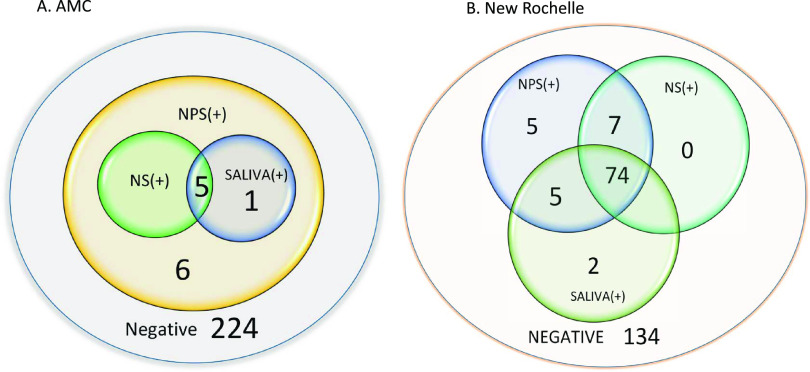
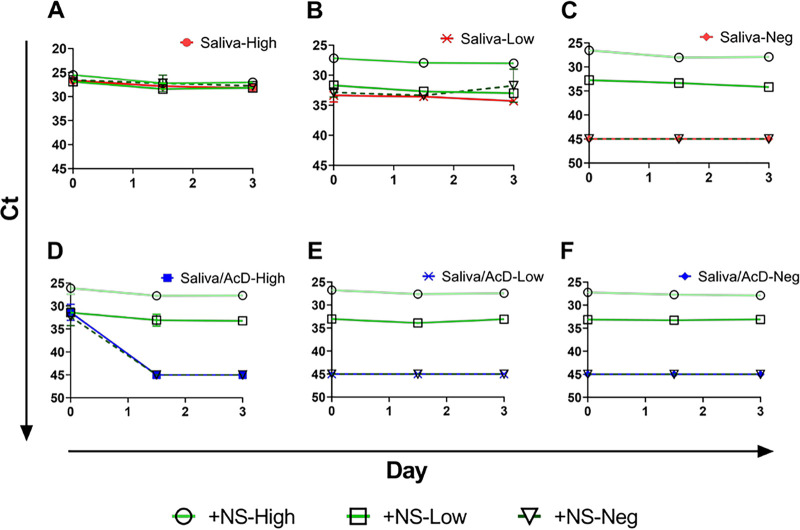
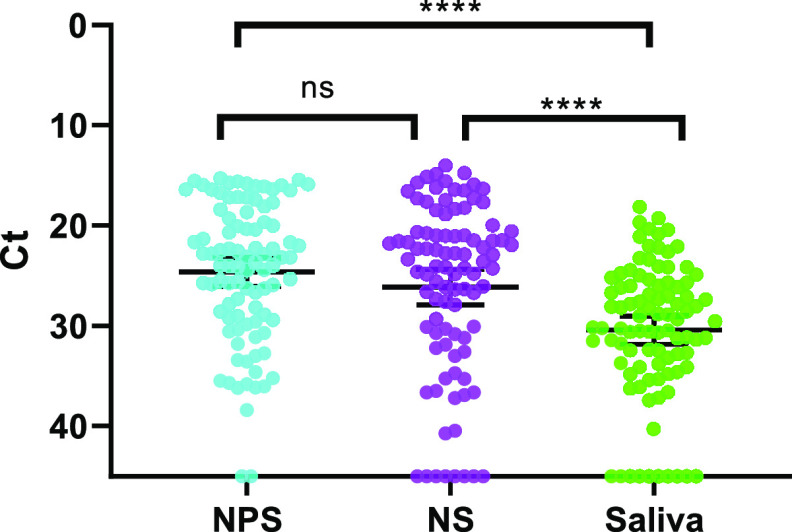
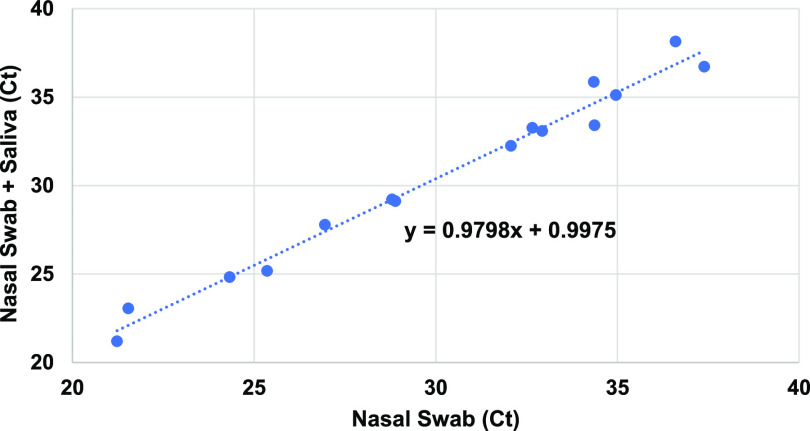
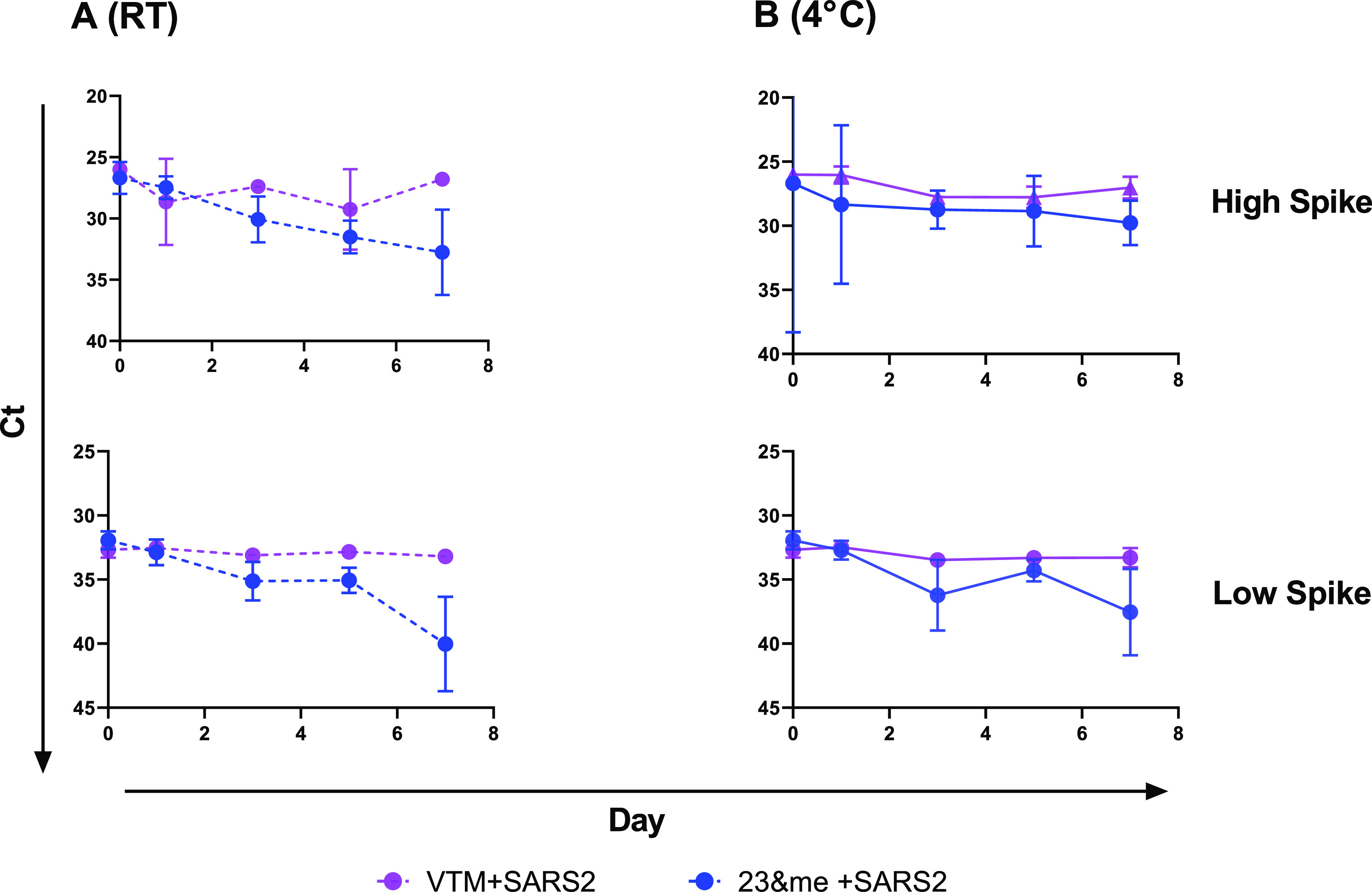
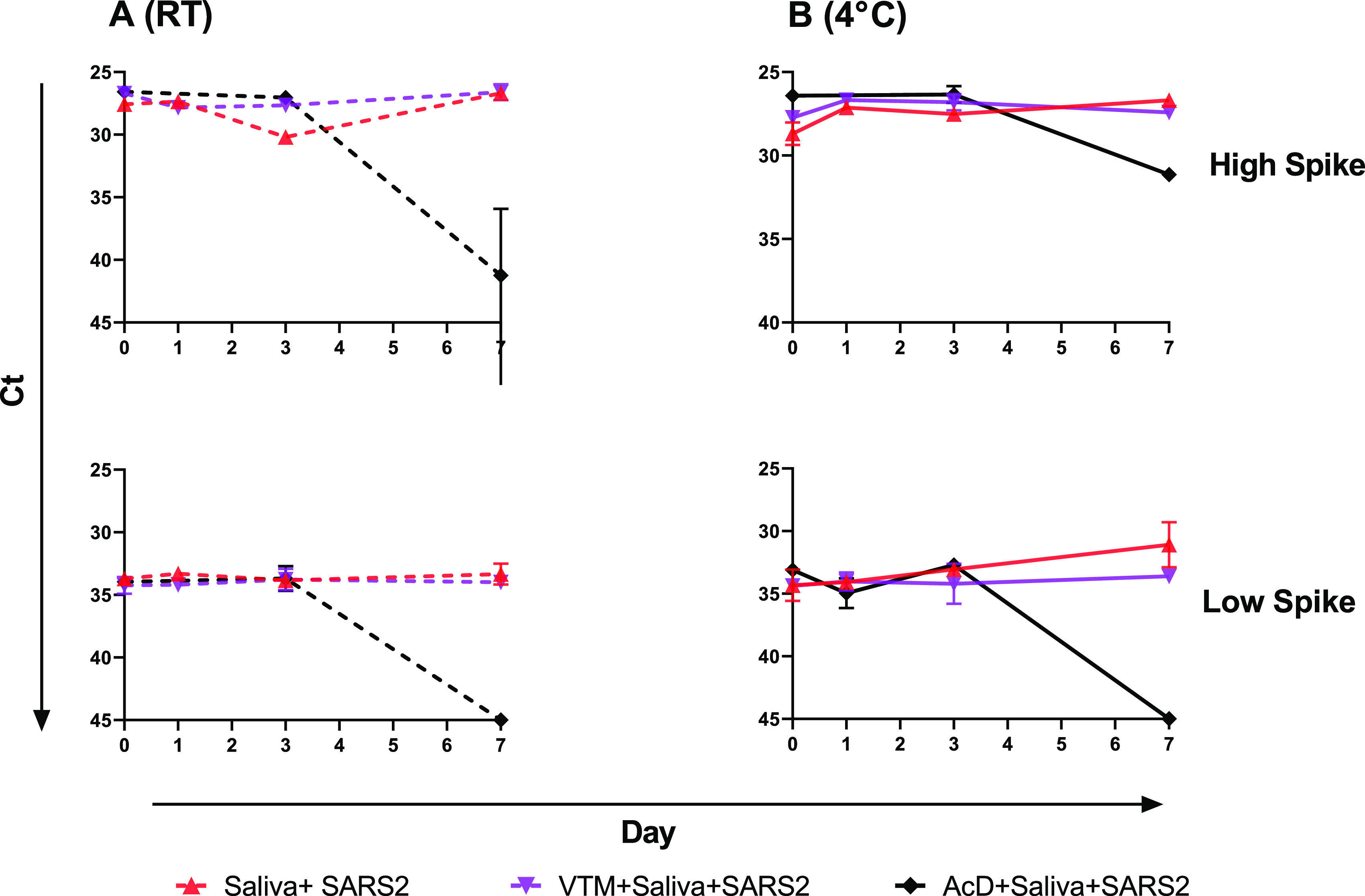
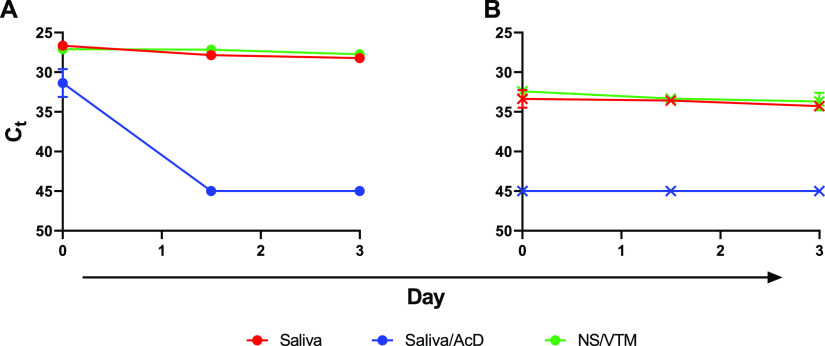
Identifying SARS-CoV-2 infections through aggressive diagnostic testing remains critical to tracking and curbing the spread of the COVID-19 pandemic. Collection of nasopharyngeal swabs (NPS), the preferred sample type for SARS-CoV-2 detection, has become difficult due to the dramatic increase in testing and consequent supply strain. Therefore, alternative specimen types have been investigated that provide similar detection sensitivity with reduced health care exposure and the potential for self-collection. In this study, the detection sensitivity of SARS-CoV-2 in nasal swabs (NS) and saliva was compared to that of NPS using matched specimens from two outpatient cohorts in New York State (total = 463). The first cohort showed only a 5.4% positivity, but the second cohort ( = 227) had a positivity rate of 41%, with sensitivity in NPS, NS, and saliva of 97.9%, 87.1%, and 87.1%, respectively. Whether the reduced sensitivity of NS or saliva is acceptable must be assessed in the settings where they are used. However, we sought to improve on it by validating a method to mix the two sample types, as the combination of nasal swab and saliva resulted in 94.6% SARS-CoV-2 detection sensitivity. Spiking experiments showed that combining them did not adversely affect the detection sensitivity in either. Virus stability in saliva was also investigated, with and without the addition of commercially available stabilizing solutions. The virus was stable in saliva at both 4°C and room temperature for up to 7 days. The addition of stabilizing solutions did not enhance stability and, in some situations, reduced detectable virus levels.
通过积极的诊断检测来识别新型冠状病毒2(SARS-CoV-2)感染对于追踪和遏制新冠疫情的传播仍然至关重要。鼻咽拭子(NPS)是检测SARS-CoV-2的首选样本类型,由于检测量急剧增加以及随之而来的供应紧张,其采集变得困难。因此,人们对其他样本类型进行了研究,这些样本类型在降低医护人员暴露风险和具备自我采集可能性的情况下能提供相似的检测灵敏度。在本研究中,使用来自纽约州两个门诊队列的匹配样本(共463份),将鼻拭子(NS)和唾液中SARS-CoV-2的检测灵敏度与NPS的检测灵敏度进行了比较。第一个队列的阳性率仅为5.4%,但第二个队列(n = 227)的阳性率为41%,NPS、NS和唾液的检测灵敏度分别为97.9%、87.1%和87.1%。NS或唾液较低的检测灵敏度在其使用场景中是否可接受必须进行评估。然而,我们试图通过验证一种混合这两种样本类型的方法来加以改进,因为鼻拭子和唾液的组合使SARS-CoV-2检测灵敏度达到了94.6%。加标实验表明,将它们混合不会对任何一种的检测灵敏度产生不利影响。还研究了在添加和不添加市售稳定溶液的情况下唾液中病毒的稳定性。病毒在4°C和室温下在唾液中均可稳定存在长达7天。添加稳定溶液并未提高稳定性,在某些情况下,还降低了可检测到的病毒水平。