Department of Psychology, University of Calgary, 2500 University Drive NW, Calgary, Alberta, T2N 1N4, Canada; Alberta Children's Hospital Research Institute, 2500 University Drive NW, Calgary, Alberta, T2N 1N4, Canada.
Department of Health Sciences, University of Missouri, 701 S. 5th St., Columbia, 65211, USA.
J Adolesc. 2021 Apr;88:97-106. doi: 10.1016/j.adolescence.2021.01.010. Epub 2021 Mar 5.
A sizable minority of youth are sexting; however there are likely large individual differences in sexting and sexual behaviors, yet to be captured. A Latent Class Analysis was used to identify subgroups of youth characterized by differential engagement in sexting and sexual behaviors.
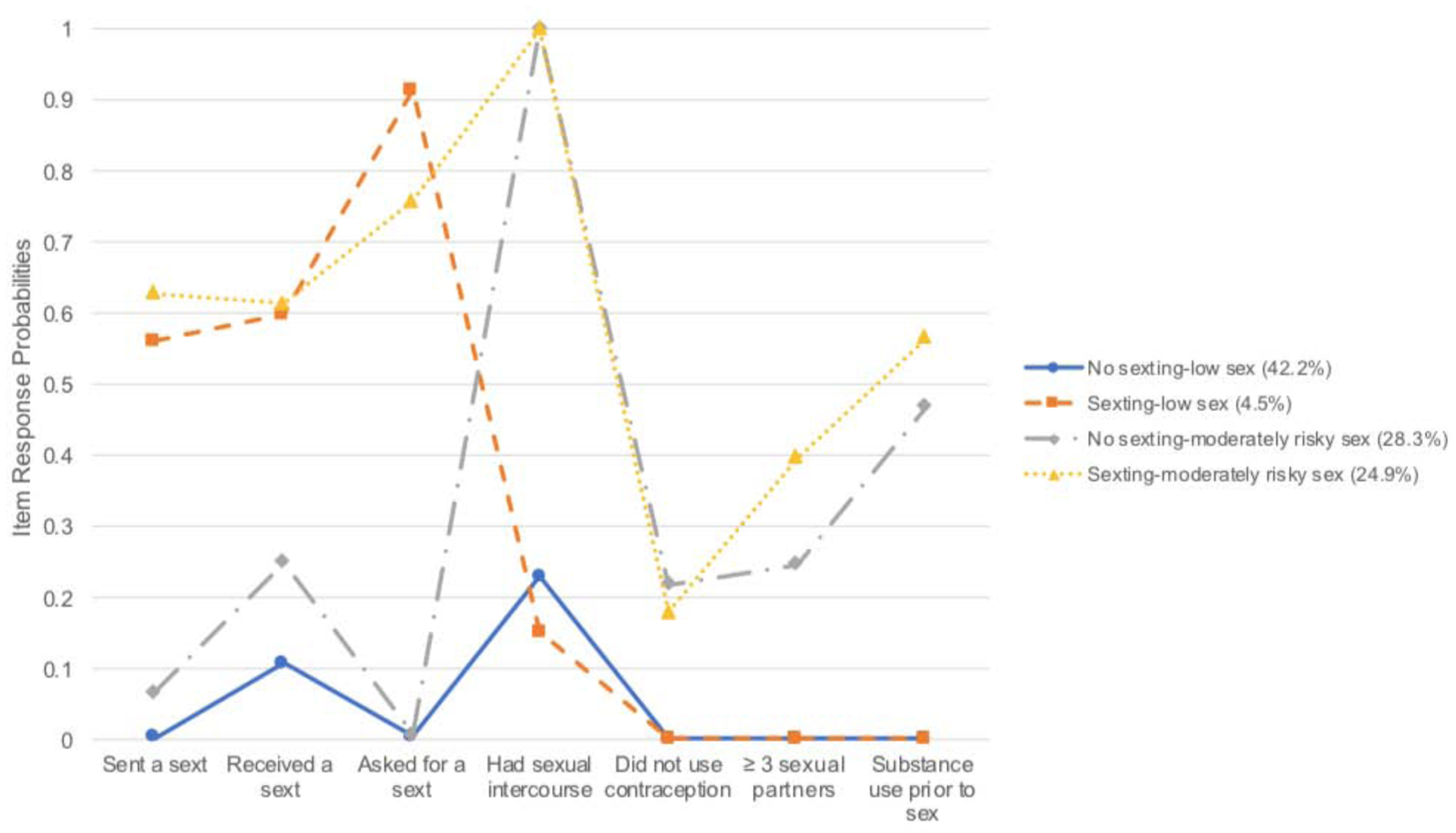
Participants were an ethnically diverse sample of 894 youth (55.8% female; Mage = 17.04, SD = 0.77) from a longitudinal survey study in southeast Texas. Latent classes were identified through participants' responses to the following indicator variables: sending, receiving, and requesting sexts, sexual activity, contraception use, ≥ three partners, and substance use prior to sexual activity. Gender, ethnicity, impulsivity, and living situation were analyzed as predictors, and depressive symptoms as an outcome, of class membership.
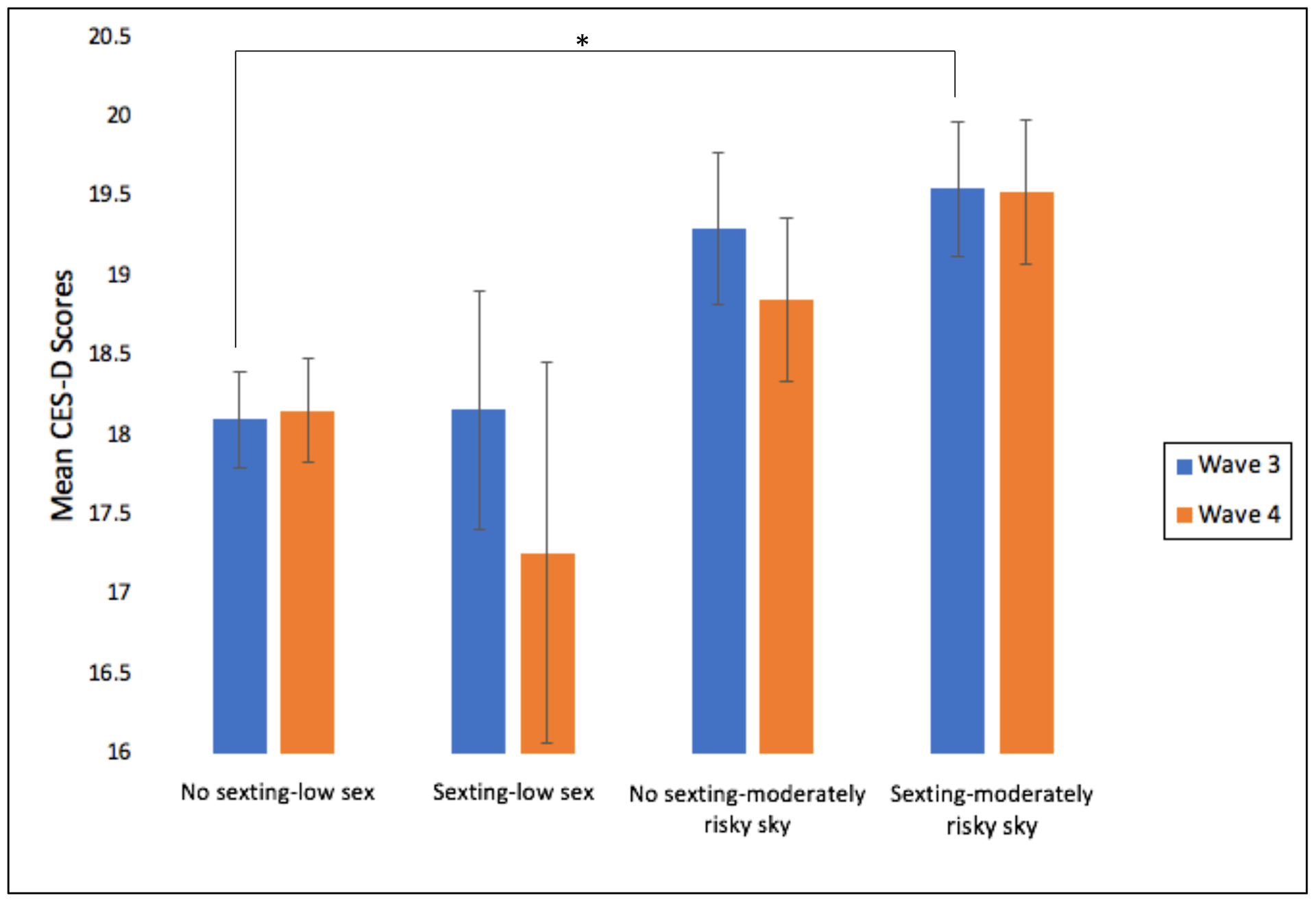
The analysis revealed four distinct classes: No sexting-Low sex (42.2%), Sexting-Low sex (4.5%), No sexting-Moderately risky sex (28.3%), and Sexting-Moderately risky sex (24.9%). Gender and ethnicity predicted class membership wherein females and ethnic minority youth were less likely to be in groups displaying higher rates of sexting. Impulsivity and living situation predicted class membership, such that youth reporting higher impulsivity and living in a situation other than with two biological parents were less likely to be in classes displaying low sexting and sexual behaviors. Group membership predicted depressive symptoms.
Results suggest that not all youth who are sexting are having sex, and not all youth who are having sex are sexting. Evidence of individual differences in youth sexual behaviors should inform educational initiatives aimed at teaching youth about sexual and online health.
相当一部分年轻人会发送色情短信;然而,在发送色情短信和性行为方面,可能存在很大的个体差异,这些差异尚未被捕捉到。本研究使用潜在类别分析来识别在发送色情短信和性行为方面存在不同参与程度的青年亚组。
参与者是来自德克萨斯州东南部一项纵向调查研究的 894 名种族多样化的年轻人(55.8%为女性;平均年龄=17.04,标准差=0.77)。通过参与者对以下指示变量的回答来确定潜在类别:发送、接收和请求色情短信、性行为、避孕措施使用、≥三个性伴侣以及在性行为前使用物质。将性别、种族、冲动性和生活状况作为类别的预测因素,将抑郁症状作为类别的结果进行分析。
分析结果显示存在四个不同的类别:无色情短信-低性行为(42.2%)、发送色情短信-低性行为(4.5%)、无色情短信-中等风险性行为(28.3%)和发送色情短信-中等风险性行为(24.9%)。性别和种族预测了类别归属,女性和少数民族青年更不可能属于发送色情短信比例较高的群体。冲动性和生活状况预测了类别归属,报告较高冲动性和与父母以外的人一起生活的青年不太可能属于低色情短信和性行为的群体。群体归属预测了抑郁症状。
研究结果表明,并非所有发送色情短信的年轻人都有性行为,也并非所有有性行为的年轻人都发送色情短信。年轻人性行为方面的个体差异证据应该为旨在教授年轻人性健康和网络健康的教育计划提供信息。