Aquatic Systems Research Group, School of Biology and Environmental Sciences, University of Mpumalanga, Nelspruit, 1200, South Africa.
Aquatic Systems Research Group, Department of Ecology and Resource Management, University of Venda, Thohoyandou, 0950, South Africa.
Environ Sci Pollut Res Int. 2021 Jul;28(27):36102-36111. doi: 10.1007/s11356-021-13185-1. Epub 2021 Mar 8.
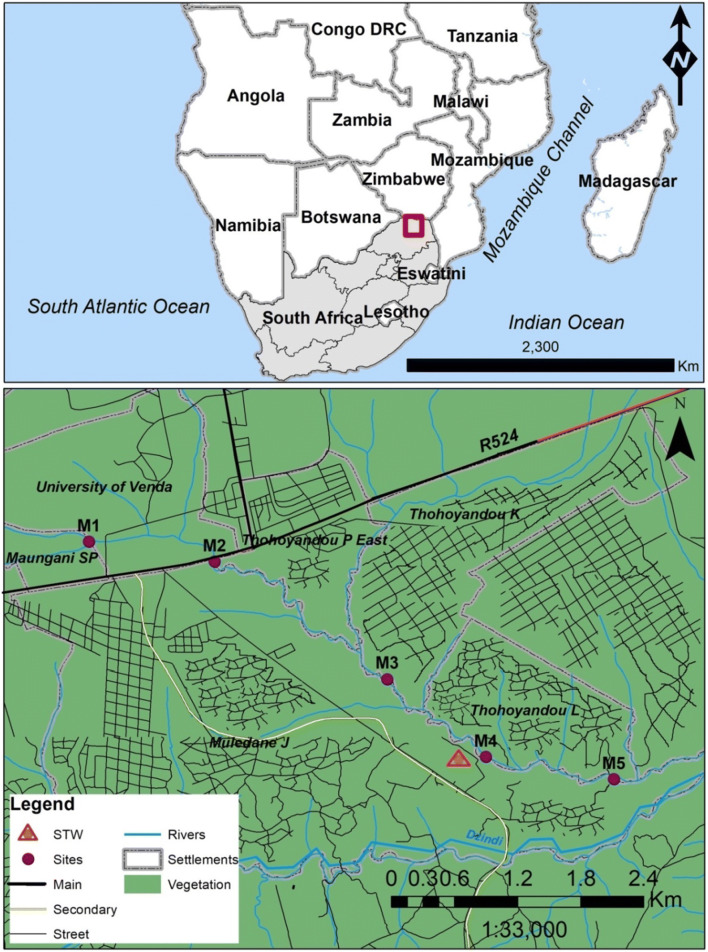
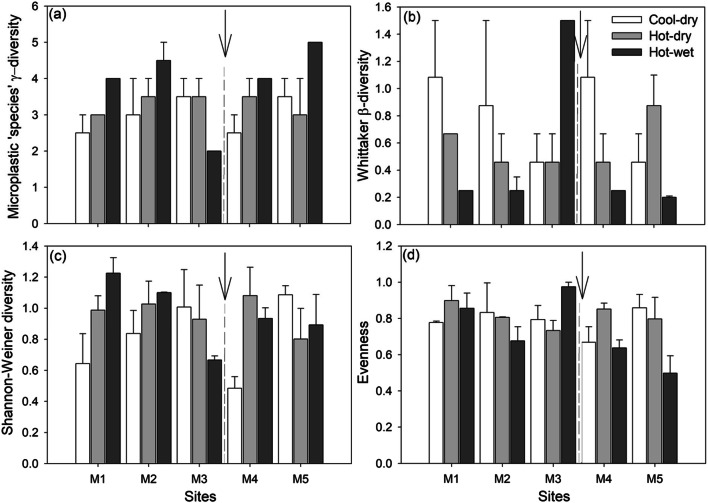
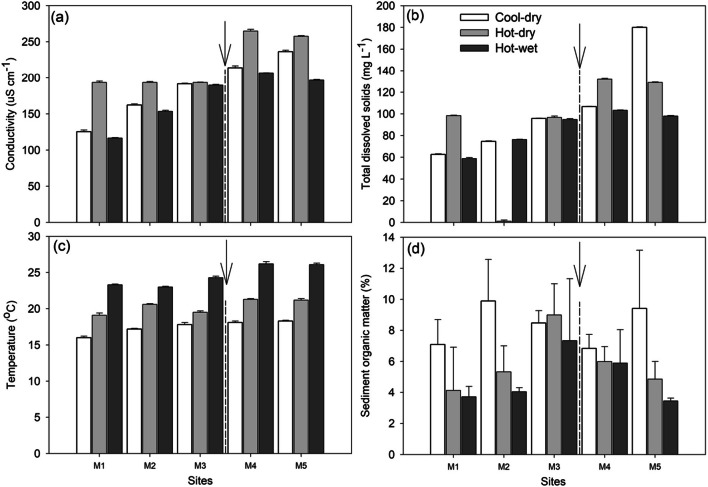
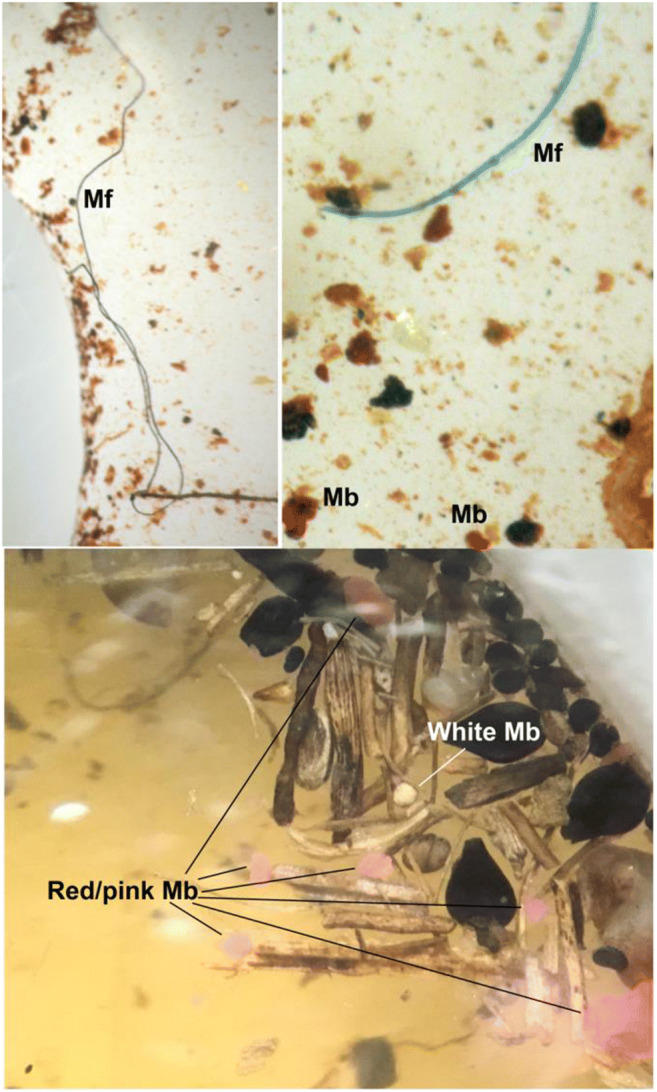
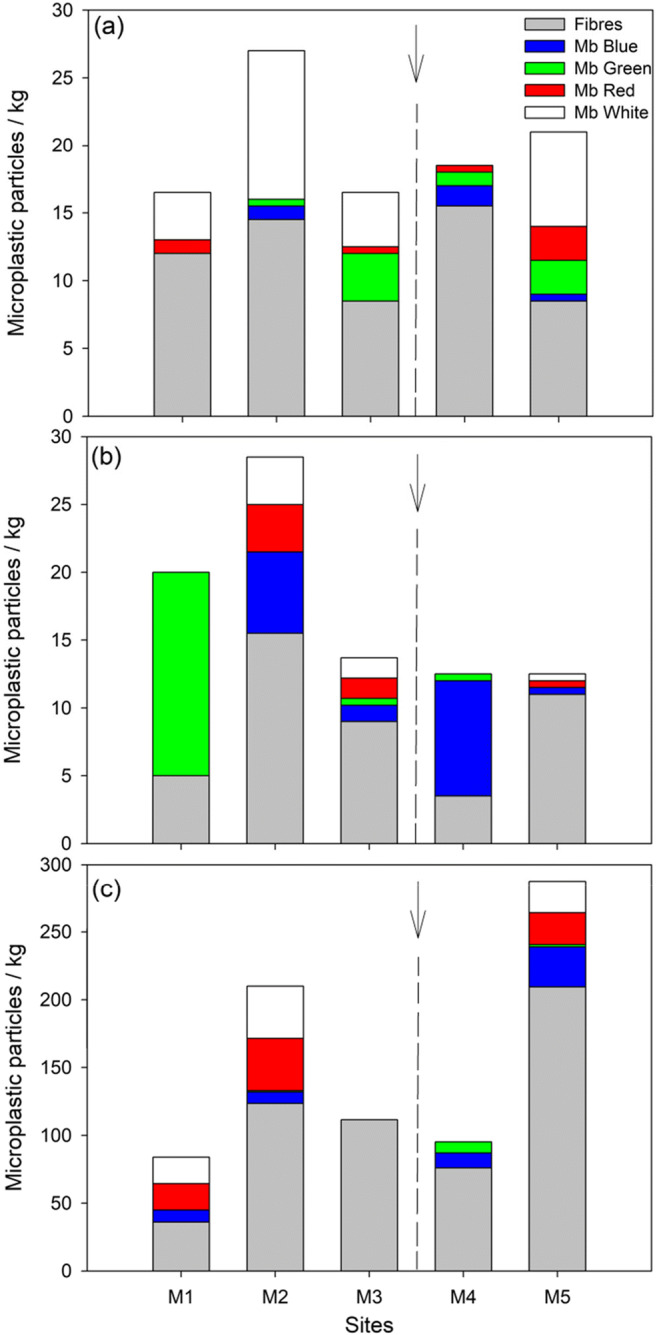
Global freshwaters are increasingly threatened by pollutants emanating from human activities around watersheds. Microplastic pollution is an increasing problem for rivers worldwide, potentially threatening ecological integrity, ecosystem services and human health. We present quantifications and characterisations of sediment microplastic pollution in a subtropical river system in southern Africa, and relate distributions to wastewater treatment works, abiotic variables and urban environments. We additionally apply several diversity indices to decipher how microplastic types differ across the river system seasonally. Over two thousand microplastic particles were found across five sites and three seasons in the river system, comprising microbeads of various colours and microfibres. Microplastic concentrations were highest and most diverse in the hot-wet (mean range 76.0 ± 10.0-285.5 ± 44.5 microplastic kg) season as compared to the cool-dry (16.5 ± 4.5-27.0 ± 5.0 microplastic kg) and hot-dry (13.0 ± 4.0-29.0 ± 10.0 microplastic kg) seasons, and were mostly dominated by microfibres. However, no clear patterns were found in relation to wastewater treatment operations spatially, or in relation to abiotic variables in the river system. This study therefore finds a diverse range of microplastic types widely distributed in the river system that differ across seasons. Our results provide important, novel insights into plastic pollution in an understudied area of the Global South, and point to extensive pollution from sources outside of wastewater treatment works.
全球淡水资源正日益受到源自流域周边人类活动的污染物的威胁。微塑料污染是全世界河流面临的一个日益严重的问题,可能威胁到生态完整性、生态系统服务和人类健康。我们对南非亚热带河流系统中的沉积物微塑料污染进行了量化和特征描述,并将其分布与污水处理厂、非生物变量和城市环境联系起来。此外,我们还应用了几种多样性指数来推断微塑料类型在整个河流系统中季节性的差异。在该河流系统的五个地点和三个季节中,共发现了两千多个微塑料颗粒,包括各种颜色的微珠和微纤维。在炎热潮湿的季节(平均范围 76.0 ± 10.0-285.5 ± 44.5 个微塑料 kg),微塑料浓度最高且种类最多,与凉爽干燥的季节(16.5 ± 4.5-27.0 ± 5.0 个微塑料 kg)和炎热干燥的季节(13.0 ± 4.0-29.0 ± 10.0 个微塑料 kg)相比,微塑料浓度最高且种类最多,而且主要以微纤维为主。然而,在空间上与污水处理厂的运作或与河流系统中的非生物变量都没有明显的关系。因此,本研究发现了广泛分布于整个河流系统中、且在不同季节存在差异的各种微塑料类型。我们的研究结果为全球南方这一研究较少的地区的塑料污染提供了重要的、新颖的见解,并指出了除污水处理厂之外的广泛的污染源。