Kinoshita Mitsuhiro, Kondo Hiroshi, Hitomi Suguru, Hara Takuya, Zako Ryusei, Yamamoto Masayoshi, Hiraoka Junichiro, Takaoka Yukiko, Enomoto Hideaki, Matsunaga Naoki, Takechi Katsuya, Shirono Ryozo, Akagawa Yoko, Osaki Kyosuke, Ohnishi Norio, Tani Hayato
Department of Radiology, Tokushima Red Cross Hospital, 103 Irinokuchi Komatsushima-cho, Komatsushima City, Tokushima, 773-8502, Japan.
Department of Radiology, Teikyo University School of Medicine, 2-11-1 Kaga Itabashi-ku, Tokyo, 173-8606, Japan.
CVIR Endovasc. 2021 Mar 9;4(1):28. doi: 10.1186/s42155-021-00215-9.
To evaluate the clinical outcome of ultraselective transcatheter arterial embolization (TAE) with small-sized microcoils for acute lower gastrointestinal bleeding (LGIB).
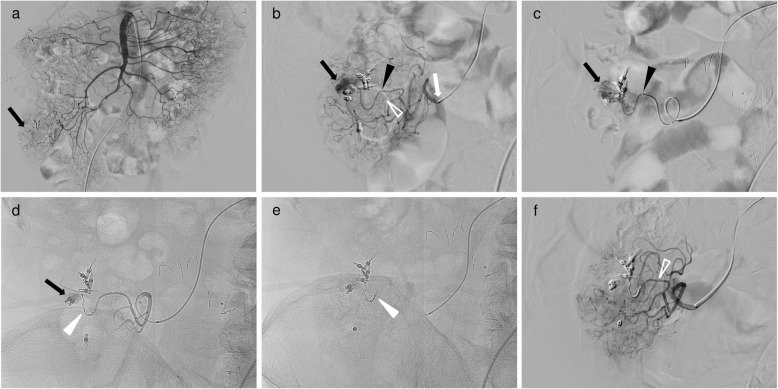
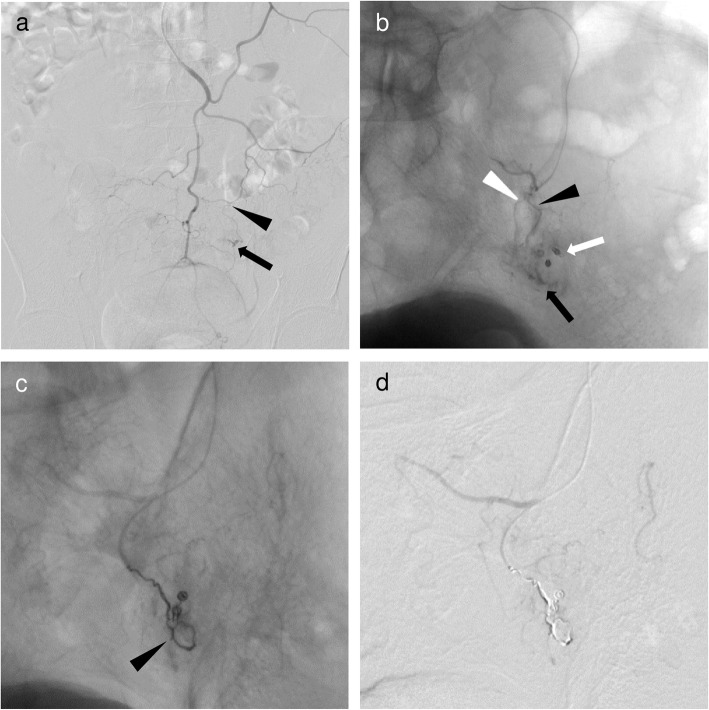
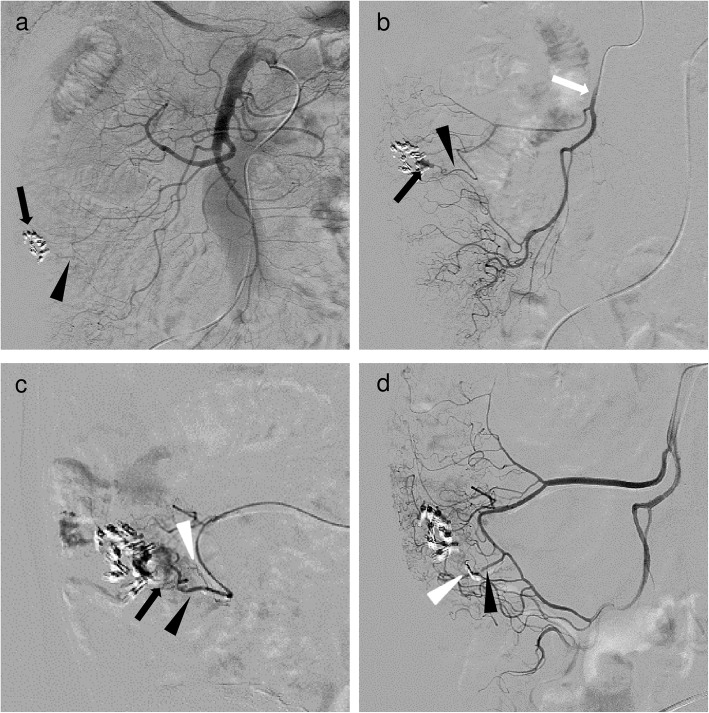
The subjects were 17 consecutive patients (mean age, 69 years) with LGIB who were treated with ultraselective TAE using small-sized microcoils between December 2013 and December 2019. Ultraselective TAE was defined as embolization of one or both of the long or short branches of the vasa recta. The etiologies of bleeding were colonic diverticulosis in 16 patients (94%) and malignancy in one patient (6%). The bleeding foci were in the ascending colon in 11 patients (65%), transverse colon in 2 patients (12%), and sigmoid colon in 4 patients (23%). A total of 18 branches (diameter: range 0.5-1.5 mm, mean 1.1 mm) of the vasa recta in 17 patients were embolized with small-sized microcoils (size range 1-3 mm, mean combined lengths of all microcoils 7.6 cm). The mean follow-up period was 19 months (range 1-80 months). The technical and clinical success rate, recurrent bleeding rate, major complications and long-term clinical outcomes were retrospectively evaluated.
Technical and clinical success was achieved in all patients (17/17). The rates of early recurrent bleeding (within 30 days of TAE) and major complications were 0% (0/17). Recurrent bleeding occurred in one patient at 2 months after TAE, but was stopped with conservative treatment. There were no other bleeding episodes or complications in the follow-up period.
Ultraselective TAE with small-sized microcoils is a highly effective and safe treatment modality for LGIB.
评估使用小型微线圈进行超选择性经导管动脉栓塞术(TAE)治疗急性下消化道出血(LGIB)的临床疗效。
研究对象为2013年12月至2019年12月期间连续17例接受使用小型微线圈的超选择性TAE治疗的LGIB患者(平均年龄69岁)。超选择性TAE定义为对直血管的长支或短支中的一支或两支进行栓塞。出血病因包括16例(94%)结肠憩室病和1例(6%)恶性肿瘤。出血部位位于升结肠11例(65%)、横结肠2例(12%)、乙状结肠4例(23%)。17例患者的直血管共18支(直径范围0.5 - 1.5毫米,平均1.1毫米)使用小型微线圈(尺寸范围1 - 3毫米,所有微线圈的平均总长度7.6厘米)进行栓塞。平均随访期为19个月(范围1 - 80个月)。对技术成功率、临床成功率、再出血率、主要并发症及长期临床疗效进行回顾性评估。
所有患者(17/17)均取得技术和临床成功。早期再出血率(TAE后30天内)和主要并发症发生率均为0%(0/17)。1例患者在TAE后2个月出现再出血,但经保守治疗后停止。随访期间无其他出血事件或并发症发生。
使用小型微线圈进行超选择性TAE是治疗LGIB的一种高效且安全的治疗方式。