Laboratory of Cellular Metabolism and Metabolic Regulation, VIB-KU Leuven Center for Cancer Biology, Leuven, Belgium.
Department of Oncology, Laboratory of Cellular Metabolism and Metabolic Regulation, KU Leuven and Leuven Cancer Institute (LKI), Leuven, Belgium.
Cancer Res. 2021 Apr 15;81(8):1988-2001. doi: 10.1158/0008-5472.CAN-20-1954. Epub 2021 Mar 9.
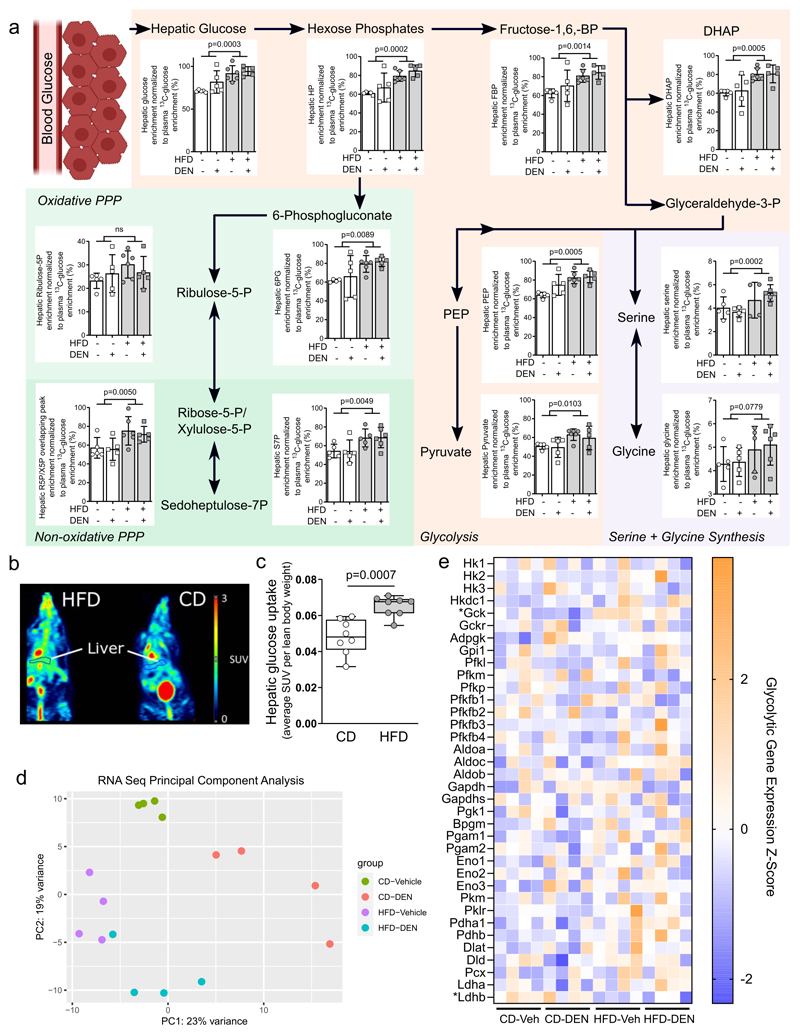
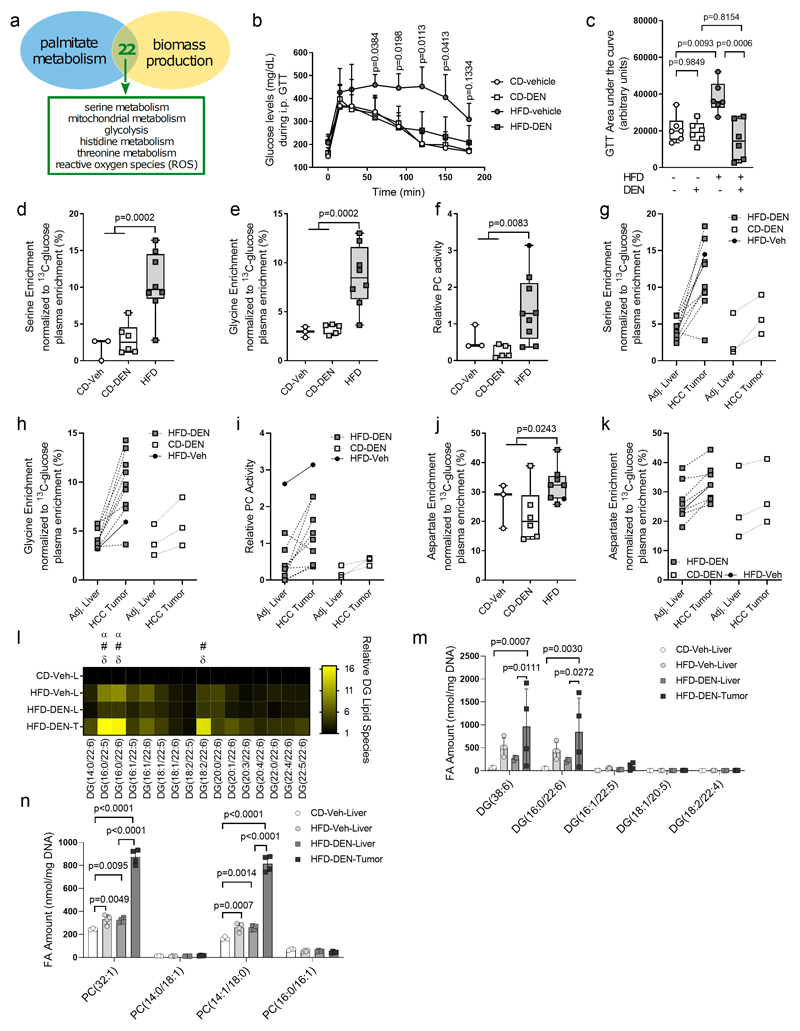
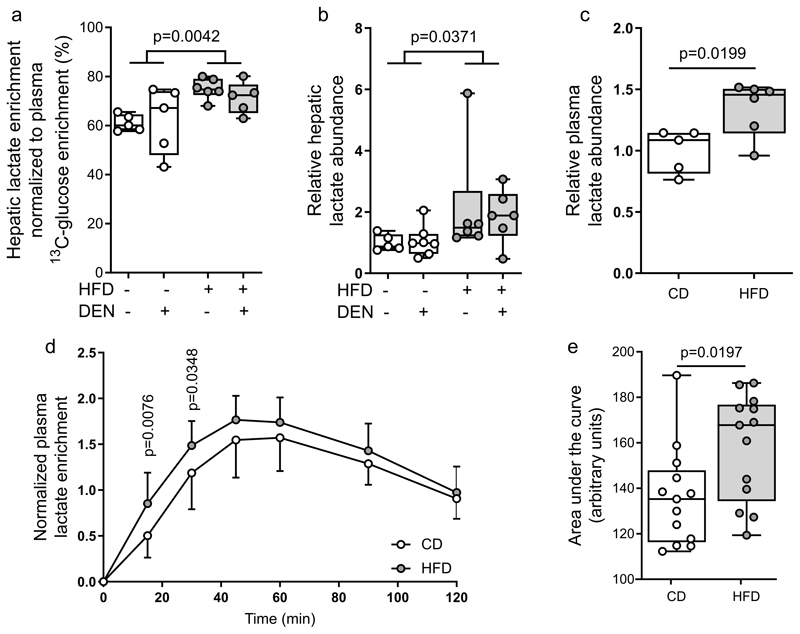
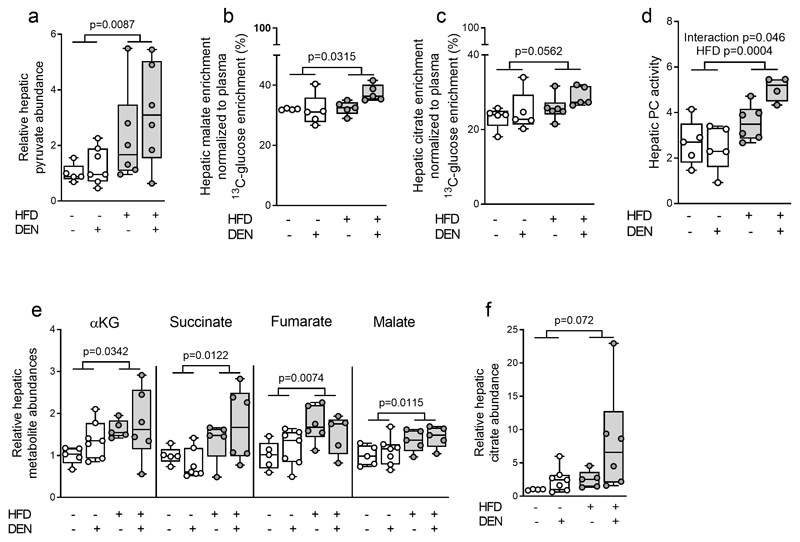
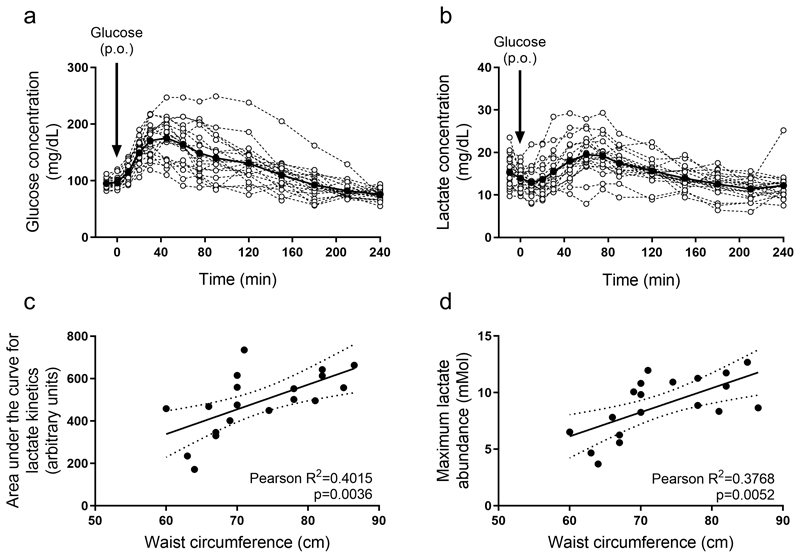
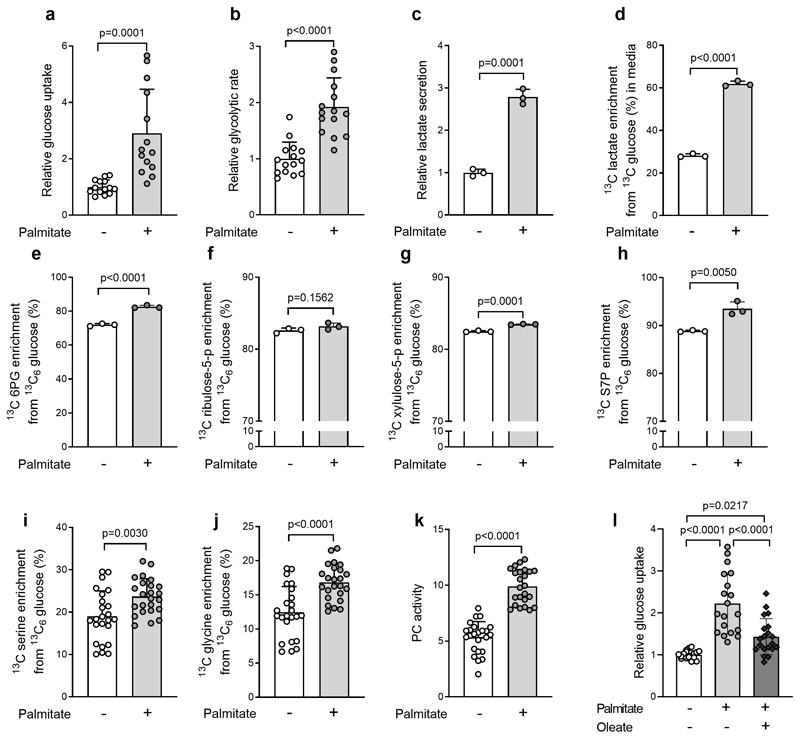
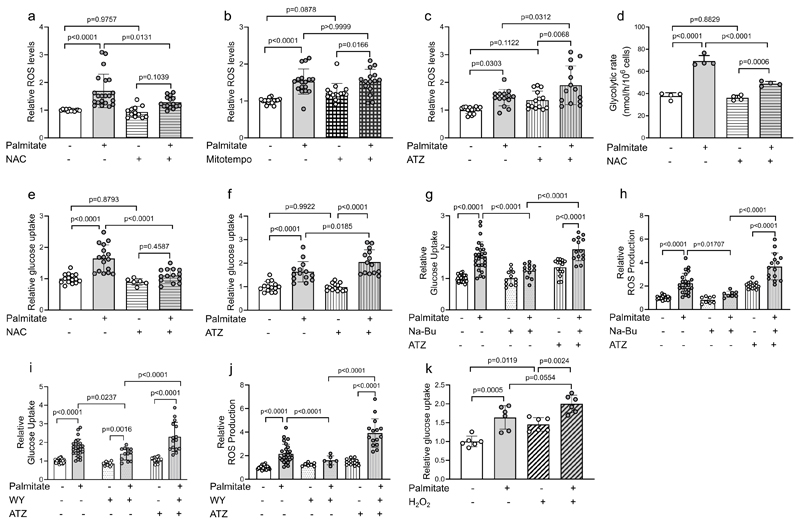
Hepatic fat accumulation is associated with diabetes and hepatocellular carcinoma (HCC). Here, we characterize the metabolic response that high-fat availability elicits in livers before disease development. After a short term on a high-fat diet (HFD), otherwise healthy mice showed elevated hepatic glucose uptake and increased glucose contribution to serine and pyruvate carboxylase activity compared with control diet (CD) mice. This glucose phenotype occurred independently from transcriptional or proteomic programming, which identifies increased peroxisomal and lipid metabolism pathways. HFD-fed mice exhibited increased lactate production when challenged with glucose. Consistently, administration of an oral glucose bolus to healthy individuals revealed a correlation between waist circumference and lactate secretion in a human cohort. , palmitate exposure stimulated production of reactive oxygen species and subsequent glucose uptake and lactate secretion in hepatocytes and liver cancer cells. Furthermore, HFD enhanced the formation of HCC compared with CD in mice exposed to a hepatic carcinogen. Regardless of the dietary background, all murine tumors showed similar alterations in glucose metabolism to those identified in fat exposed nontransformed mouse livers, however, particular lipid species were elevated in HFD tumor and nontumor-bearing HFD liver tissue. These findings suggest that fat can induce glucose-mediated metabolic changes in nontransformed liver cells similar to those found in HCC. SIGNIFICANCE: With obesity-induced hepatocellular carcinoma on a rising trend, this study shows in normal, nontransformed livers that fat induces glucose metabolism similar to an oncogenic transformation.
肝脂肪积累与糖尿病和肝细胞癌 (HCC) 有关。在这里,我们描述了高脂肪供应在疾病发生前对肝脏的代谢反应。在高脂肪饮食 (HFD) 短期喂养后,与对照饮食 (CD) 小鼠相比,健康的小鼠表现出肝葡萄糖摄取增加,以及葡萄糖对丝氨酸和丙酮酸羧化酶活性的贡献增加。这种葡萄糖表型发生在转录或蛋白质组编程之外,这确定了增加的过氧化物酶体和脂质代谢途径。与 CD 喂养的小鼠相比,HFD 喂养的小鼠在受到葡萄糖挑战时表现出更高的乳酸产量。一致地,对健康个体给予口服葡萄糖 bolus 后,在人类队列中发现腰围与乳酸分泌之间存在相关性。此外,棕榈酸暴露刺激了肝细胞和肝癌细胞中活性氧的产生,以及随后的葡萄糖摄取和乳酸分泌。此外,与 CD 相比,HFD 增强了在暴露于肝致癌物的小鼠中 HCC 的形成。无论饮食背景如何,所有的小鼠肿瘤都显示出与在暴露于脂肪的非转化小鼠肝脏中鉴定出的类似的葡萄糖代谢改变,但在 HFD 肿瘤和非肿瘤性 HFD 肝组织中特定的脂质种类升高。这些发现表明,脂肪可以诱导非转化肝细胞中的葡萄糖介导的代谢变化,类似于 HCC 中发现的变化。意义:随着肥胖诱导的肝细胞癌呈上升趋势,本研究表明在正常的非转化肝脏中,脂肪诱导的葡萄糖代谢类似于致癌转化。