Truong Thao T, Ryutov Alex, Pandey Utsav, Yee Rebecca, Goldberg Lior, Bhojwani Deepa, Aguayo-Hiraldo Paibel, Pinsky Benjamin A, Pekosz Andrew, Shen Lishuang, Boyd Scott D, Wirz Oliver F, Röltgen Katharina, Bootwalla Moiz, Maglinte Dennis T, Ostrow Dejerianne, Ruble David, Han Jennifer H, Biegel Jaclyn A, Li Maggie, Huang ChunHong, Sahoo Mayala K, Pannaraj Pia S, O'Gorman Maurice, Judkins Alexander R, Gai Xiaowu, Bard Jennifer Dien
Department of Pathology and Laboratory Medicine, Children's Hospital Los Angeles, Los Angeles, CA.
Department of Pathology, Westchester Medical Center/New York Medical College, Valhalla, NY.
medRxiv. 2021 Mar 2:2021.02.27.21252099. doi: 10.1101/2021.02.27.21252099.
There is increasing concern that persistent infection of SARS-CoV-2 within immunocompromised hosts could serve as a reservoir for mutation accumulation and subsequent emergence of novel strains with the potential to evade immune responses.
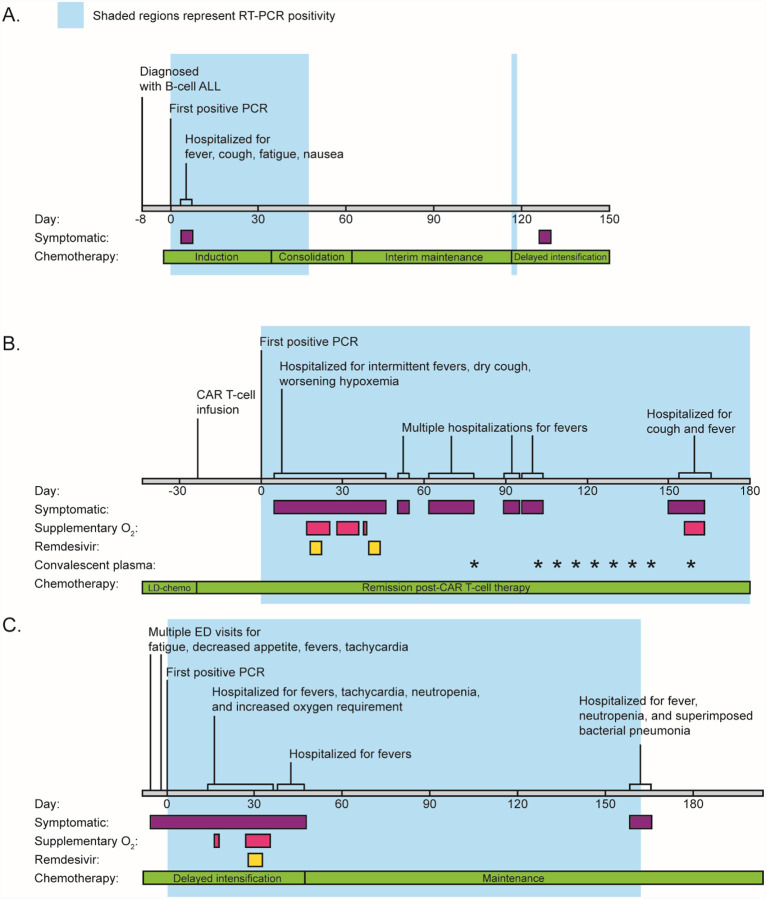
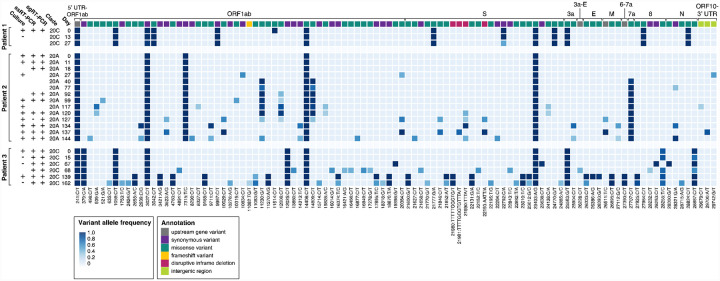
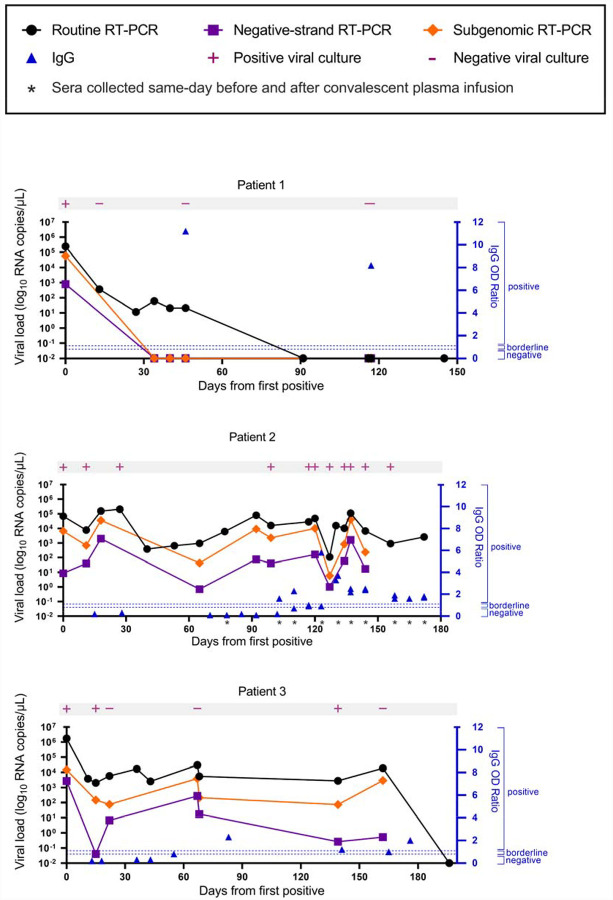
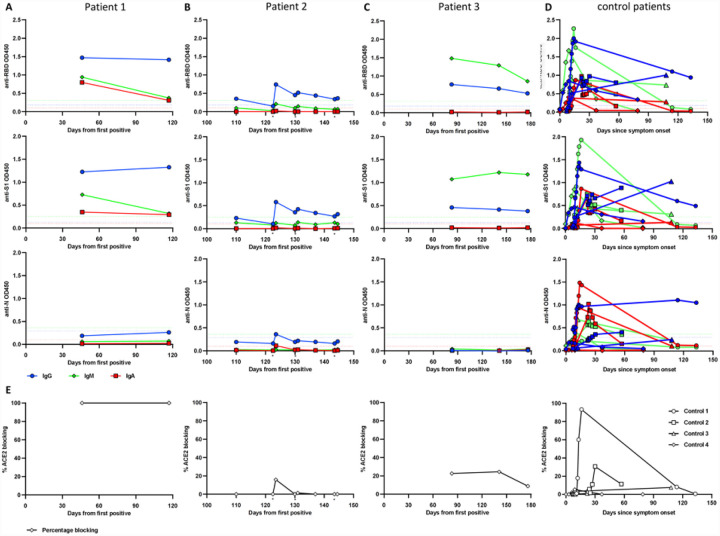
We describe three patients with acute lymphoblastic leukemia who were persistently positive for SARS-CoV-2 by real-time polymerase chain reaction. Viral viability from longitudinally-collected specimens was assessed. Whole-genome sequencing and serological studies were performed to measure viral evolution and evidence of immune escape.
We found compelling evidence of ongoing replication and infectivity for up to 162 days from initial positive by subgenomic RNA, single-stranded RNA, and viral culture analysis. Our results reveal a broad spectrum of infectivity, host immune responses, and accumulation of mutations, some with the potential for immune escape.
Our results highlight the need to reassess infection control precautions in the management and care of immunocompromised patients. Routine surveillance of mutations and evaluation of their potential impact on viral transmission and immune escape should be considered.
The work was partially funded by The Saban Research Institute at Children's Hospital Los Angeles intramural support for COVID-19 Directed Research (X.G. and J.D.B.), the Johns Hopkins Center of Excellence in Influenza Research and Surveillance HHSN272201400007C (A.P.), NIH/NIAID R01AI127877 (S.D.B.), NIH/NIAID R01AI130398 (S.D.B.), NIH 1U54CA260517 (S.D.B.), an endowment to S.D.B. from the Crown Family Foundation, an Early Postdoc.Mobility Fellowship Stipend to O.F.W. from the Swiss National Science Foundation (SNSF), and a Coulter COVID-19 Rapid Response Award to S.D.B. L.G. is a SHARE Research Fellow in Pediatric Hematology-Oncology.
人们越来越担心,严重急性呼吸综合征冠状病毒2(SARS-CoV-2)在免疫功能低下宿主中的持续感染可能成为突变积累的储存库,并随后出现有可能逃避免疫反应的新毒株。
我们描述了3例急性淋巴细胞白血病患者,他们通过实时聚合酶链反应检测SARS-CoV-2持续呈阳性。评估了纵向收集标本的病毒活力。进行了全基因组测序和血清学研究,以测量病毒进化和免疫逃逸证据。
通过亚基因组RNA、单链RNA和病毒培养分析,我们发现了令人信服的证据,表明从初次检测呈阳性起,病毒持续复制和具有传染性长达162天。我们的结果揭示了广泛的传染性、宿主免疫反应和突变积累,其中一些突变有可能导致免疫逃逸。
我们的结果强调了在免疫功能低下患者的管理和护理中重新评估感染控制预防措施的必要性。应考虑对突变进行常规监测,并评估其对病毒传播和免疫逃逸的潜在影响。
这项工作部分由洛杉矶儿童医院萨班研究所对COVID-19定向研究的内部支持(X.G.和J.D.B.)、约翰·霍普金斯大学流感研究与监测卓越中心HHSN272201400007C(A.P.)、美国国立卫生研究院/国家过敏和传染病研究所R01AI127877(S.D.B.)、美国国立卫生研究院/国家过敏和传染病研究所R01AI130398(S.D.B.)、美国国立卫生研究院1U54CA260517(S.D.B.)、皇冠家族基金会给S.D.B.的捐赠、瑞士国家科学基金会(SNSF)给O.F.W.的早期博士后流动奖学金以及给S.D.B.的库尔特COVID-19快速反应奖提供资金。L.G.是儿科血液肿瘤学的SHARE研究员。