Yunnan Key Laboratory for Integrative Conservation of Plant Species with Extremely Small Populations/ Key Laboratory for Plant Diversity and Biogeography of East Asia, Kunming Institute of Botany, Chinese Academy of Sciences, Kunming, 650201, Yunnan, China.
University of Chinese Academy of Sciences, Beijing, 100049, China.
BMC Plant Biol. 2021 Mar 10;21(1):133. doi: 10.1186/s12870-021-02909-7.
It has been recognized that a certain amount of habitat disturbance is a facilitating factor for the occurrence of natural hybridization, yet to date we are unaware of any studies exploring hybridization and reproductive barriers in those plants preferentially occupying disturbed habitats. Buddleja plants (also called butterfly bush) generally do grow in disturbed habitats, and several species with hybrid origin have been proposed, based solely on morphological evidence.
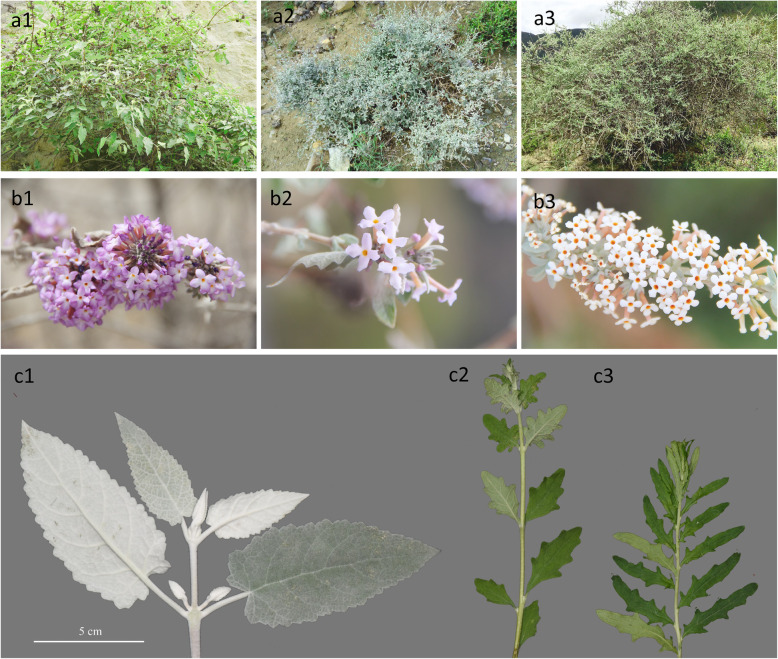
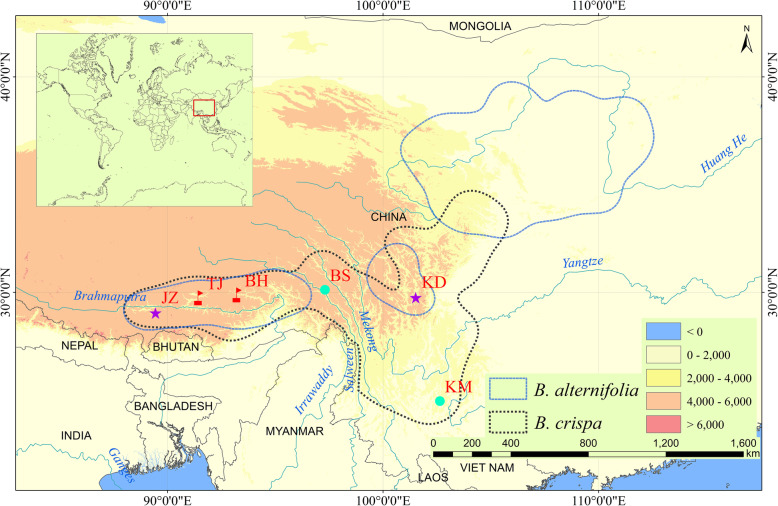
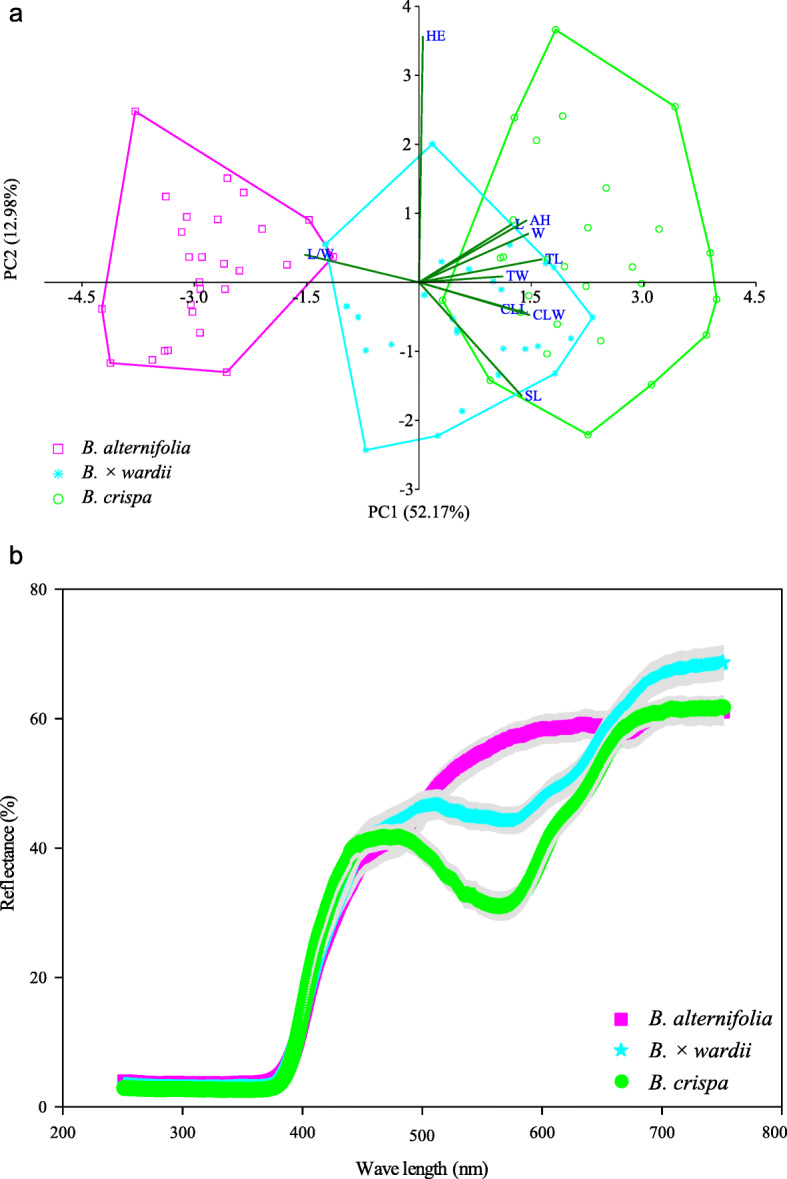
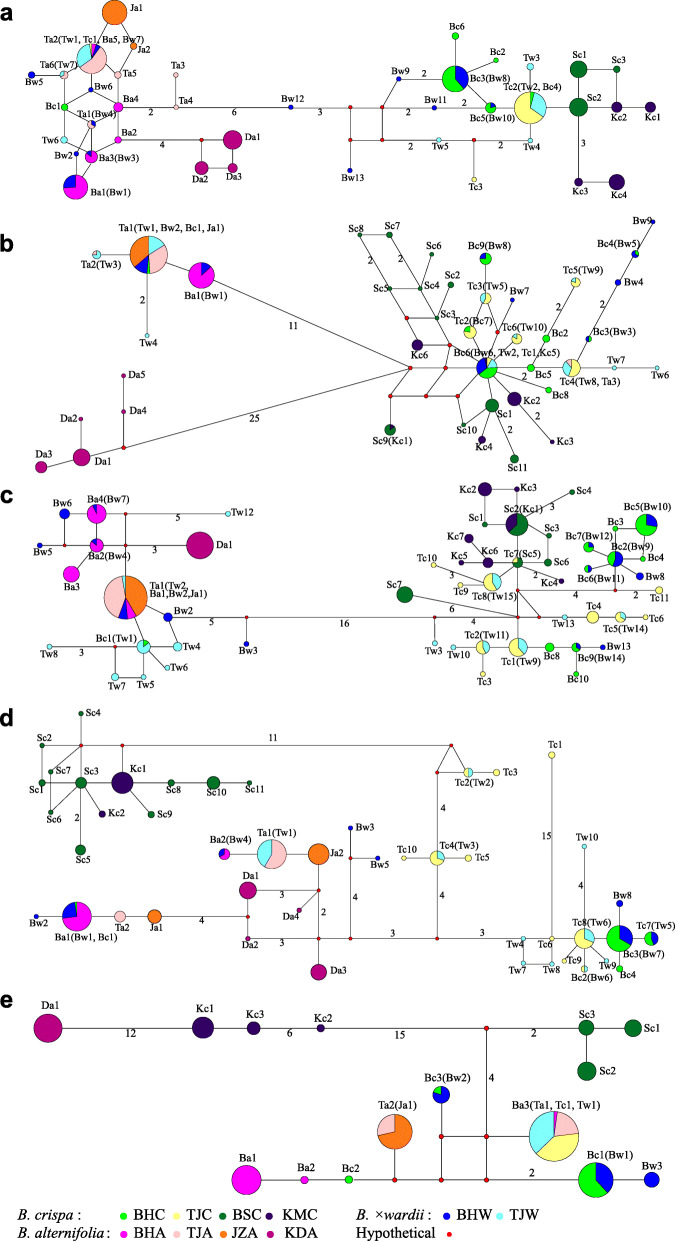
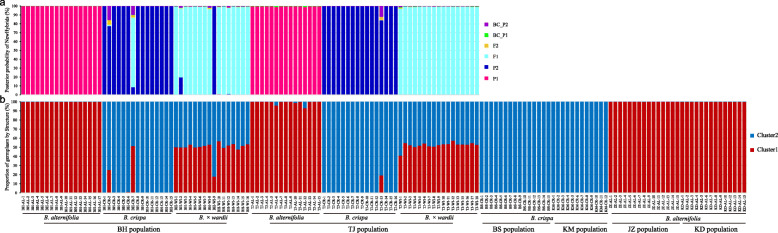
In the present study, we test the hypothesis that B. × wardii is of natural hybridization origin in two sympatric populations of three taxa including B. × wardii and its parents (B. alternifolia and B. crispa) plus 4 referenced parental populations, using four nuclear genes and three chloroplast intergenic spacers, as well as with 10 morphological characters. Our results suggest that at both sites B. × wardii is likely to be a hybrid between B. alternifolia and B. crispa, and moreover, we confirm that most of the hybrids examined are Fs. That these plants are Fs is further supported by morphology, as no transgressive characters were detected. B. crispa was found to be the maternal parent in the Bahe (BH) population, from cpDNA evidence. However, in the Taji (TJ) population, the direction of hybridization was difficult to establish due to the shared cpDNA haplotypes between B. alternifolia and B. crispa, however we still predicted a similar unidirectional hybridization pattern due to results from cross-specific pollination treatments which supported the "SI × SC rule".
The presence of mainly F hybrids can successfully impede gene flow and thus maintain species boundaries in parental species in a typical distribution of Buddleja, i.e. in disturbed habitats.
人们已经认识到,一定程度的栖息地干扰是自然杂交发生的促进因素,但迄今为止,我们还没有发现任何研究探讨那些优先占据受干扰栖息地的植物的杂交和生殖障碍。醉鱼草属植物(也称为蝴蝶灌木)通常生长在受干扰的栖息地,并且根据仅基于形态学证据,已经提出了几种具有杂交起源的物种。
在本研究中,我们通过四个核基因和三个叶绿体间隔区以及 10 个形态特征,在包括 B. × wardii 及其父母(B. alternifolia 和 B. crispa)在内的三个分类群的两个同域种群中测试了 B. × wardii 是自然杂交起源的假设,以及 4 个参考亲本种群。我们的结果表明,在这两个地点,B. × wardii 很可能是 B. alternifolia 和 B. crispa 之间的杂种,而且,我们还证实了所检查的大多数杂种都是 F1。这些植物是 F1 的进一步支持来自形态学,因为没有检测到越界特征。从 cpDNA 证据来看,B. crispa 被发现是巴河(BH)种群中的母本。然而,在塔吉(TJ)种群中,由于 B. alternifolia 和 B. crispa 之间共享的 cpDNA 单倍型,杂交方向难以确定,但由于交叉特异性授粉处理的结果,我们仍然预测了类似的单向杂交模式,因为这支持了“SI×SC 规则”。
主要是 F1 杂种的存在可以成功地阻止基因流动,从而在醉鱼草属植物的典型分布中,即在受干扰的栖息地中维持亲种的种界。