Oxford Liver Unit, Translational Gastroenterology Unit, Oxford University Hospitals NHS Foundation Trust, University of Oxford, Oxford, UK.
Cambridge Liver Unit, Addenbrooke's Hospital, Cambridge University Hospitals, Cambridge, UK.
Nat Rev Gastroenterol Hepatol. 2021 May;18(5):348-364. doi: 10.1038/s41575-021-00426-4. Epub 2021 Mar 10.
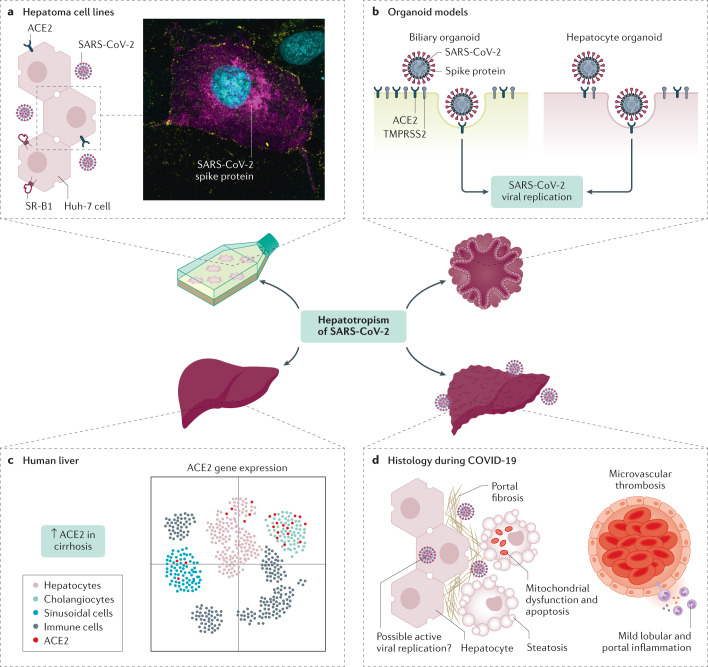
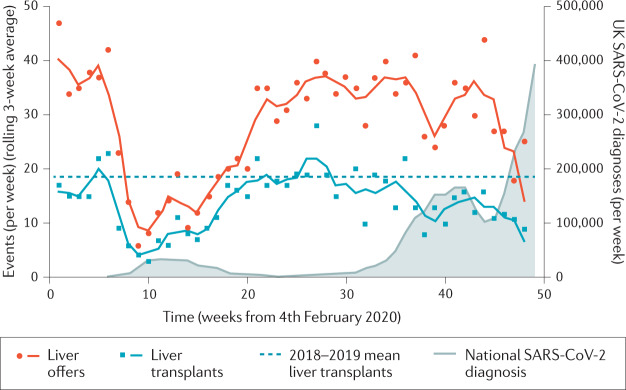
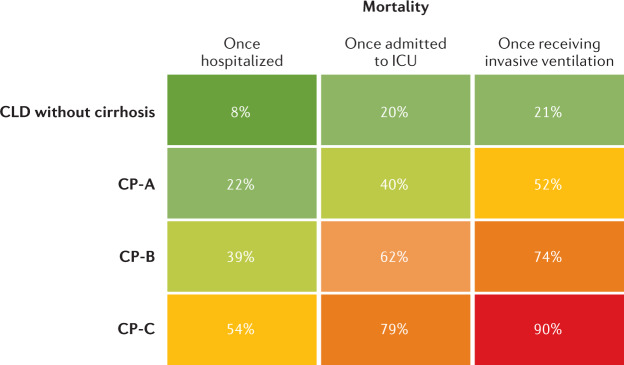
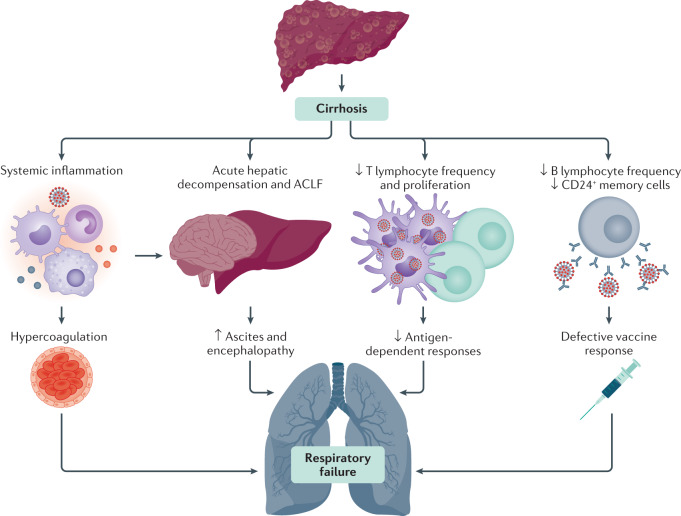
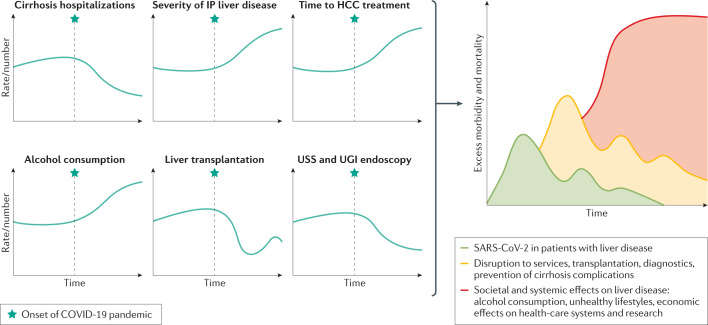
Our understanding of the hepatic consequences of severe acute respiratory syndrome coronavirus 2 (SARS-CoV-2) infection and its resultant coronavirus disease 2019 (COVID-19) has evolved rapidly since the onset of the pandemic. In this Review, we discuss the hepatotropism of SARS-CoV-2, including the differential expression of viral receptors on liver cell types, and we describe the liver histology features present in patients with COVID-19. We also provide an overview of the pattern and relevance of abnormal liver biochemistry during COVID-19 and present the possible underlying direct and indirect mechanisms for liver injury. Furthermore, large international cohorts have been able to characterize the disease course of COVID-19 in patients with pre-existing chronic liver disease. Patients with cirrhosis have particularly high rates of hepatic decompensation and death following SARS-CoV-2 infection and we outline hypotheses to explain these findings, including the possible role of cirrhosis-associated immune dysfunction. This finding contrasts with outcome data in pharmacologically immunosuppressed patients after liver transplantation who seem to have comparatively better outcomes from COVID-19 than those with advanced liver disease. Finally, we discuss the approach to SARS-CoV-2 vaccination in patients with cirrhosis and after liver transplantation and predict how changes in social behaviours and clinical care pathways during the pandemic might lead to increased liver disease incidence and severity.
自大流行开始以来,我们对严重急性呼吸综合征冠状病毒 2(SARS-CoV-2)感染的肝脏后果及其导致的 2019 年冠状病毒病(COVID-19)的理解迅速发展。在这篇综述中,我们讨论了 SARS-CoV-2 的嗜肝性,包括病毒受体在肝细胞类型上的差异表达,并描述了 COVID-19 患者的肝脏组织学特征。我们还概述了 COVID-19 期间异常肝功能的模式和相关性,并提出了肝脏损伤的潜在直接和间接机制。此外,大型国际队列已经能够描述慢性肝病患者 COVID-19 的疾病过程。感染 SARS-CoV-2 后,肝硬化患者肝失代偿和死亡的发生率特别高,我们提出了一些假设来解释这些发现,包括肝硬化相关免疫功能障碍的可能作用。这一发现与肝移植后药物免疫抑制患者的预后数据形成对比,后者 COVID-19 的预后似乎比晚期肝病患者要好。最后,我们讨论了肝硬化患者和肝移植后的 SARS-CoV-2 疫苗接种方法,并预测大流行期间社会行为和临床护理途径的变化如何导致肝脏疾病发病率和严重程度增加。