Zhao Hainan, Dong Suhe, Du Jicong, Xia Penglin, Liu Ruling, Liu Tingting, Yang Yajie, Cheng Ying, Cai Jianming, Liu Cong, Gao Fu, Liu Hu
Department of Radiation Medicine, Faculty of Naval Medicine, Second Military Medical University, Shanghai, China.
Department of Radiology Intervention, Changhai Hospital Affiliated to the Second Military Medical University, Shanghai, China.
Front Oncol. 2021 Feb 22;10:574001. doi: 10.3389/fonc.2020.574001. eCollection 2020.
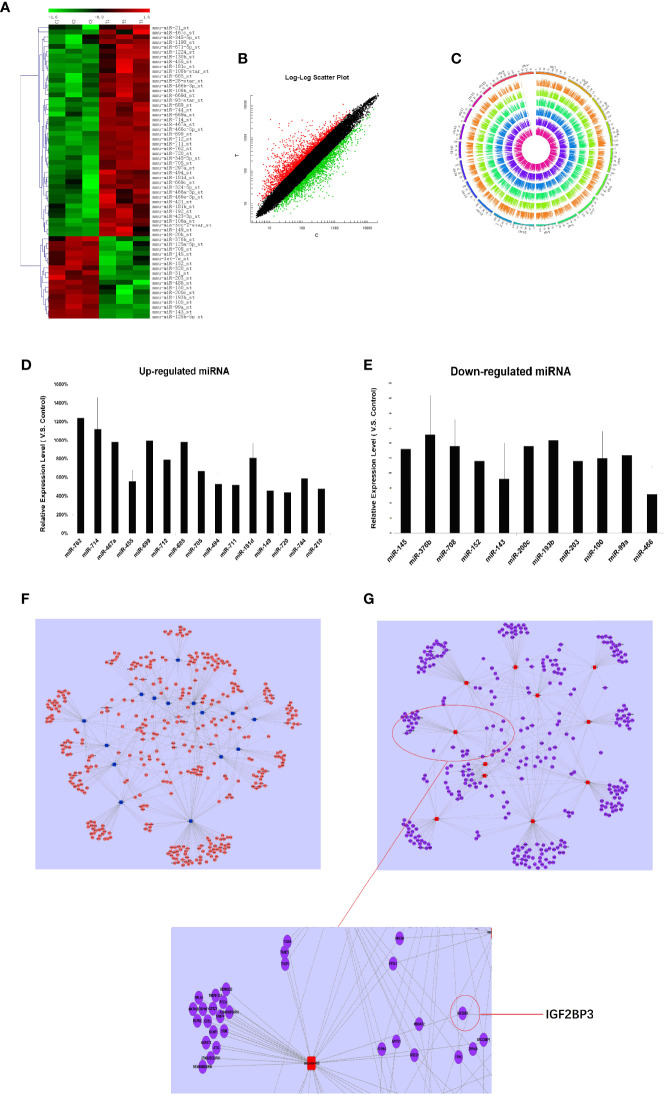
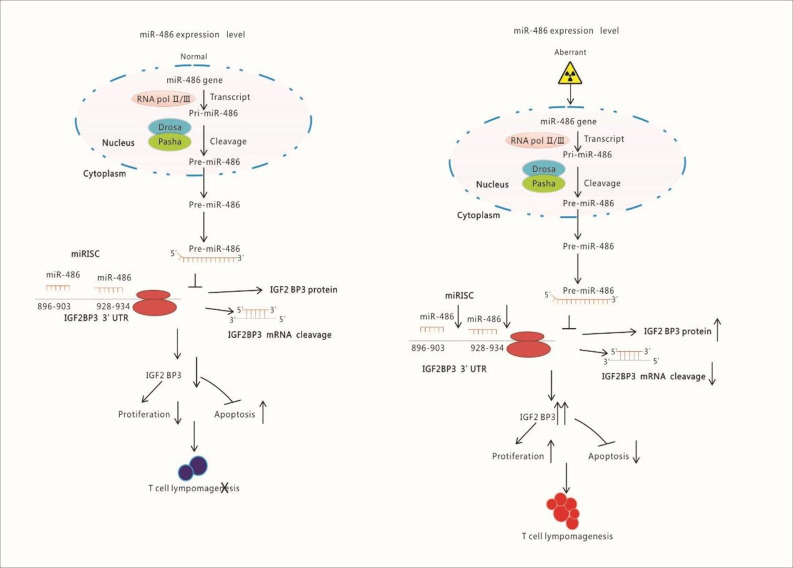
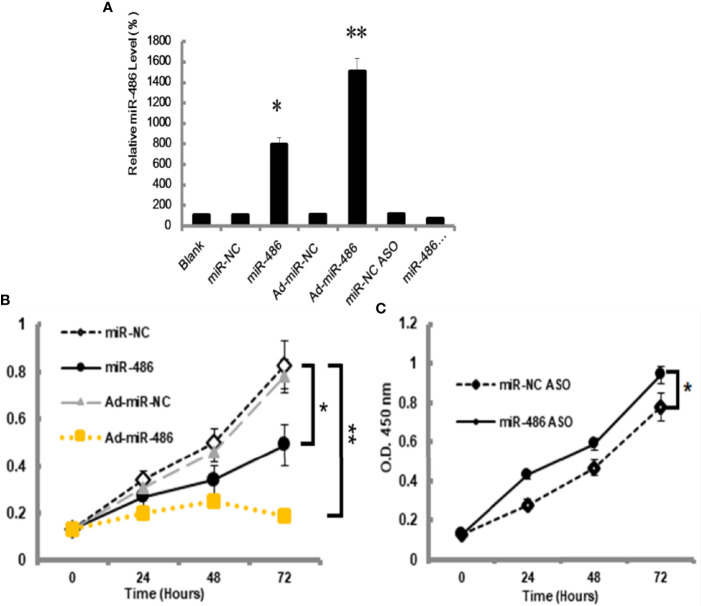
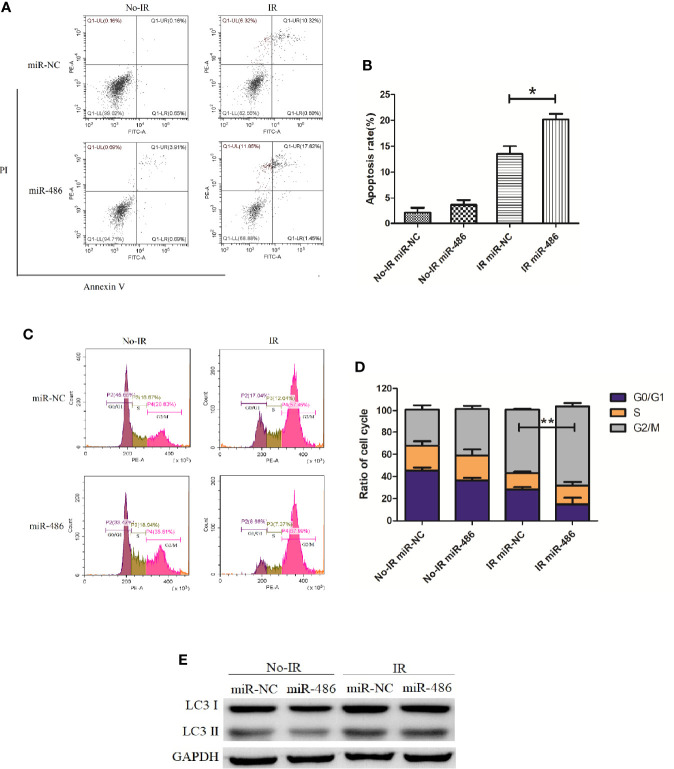
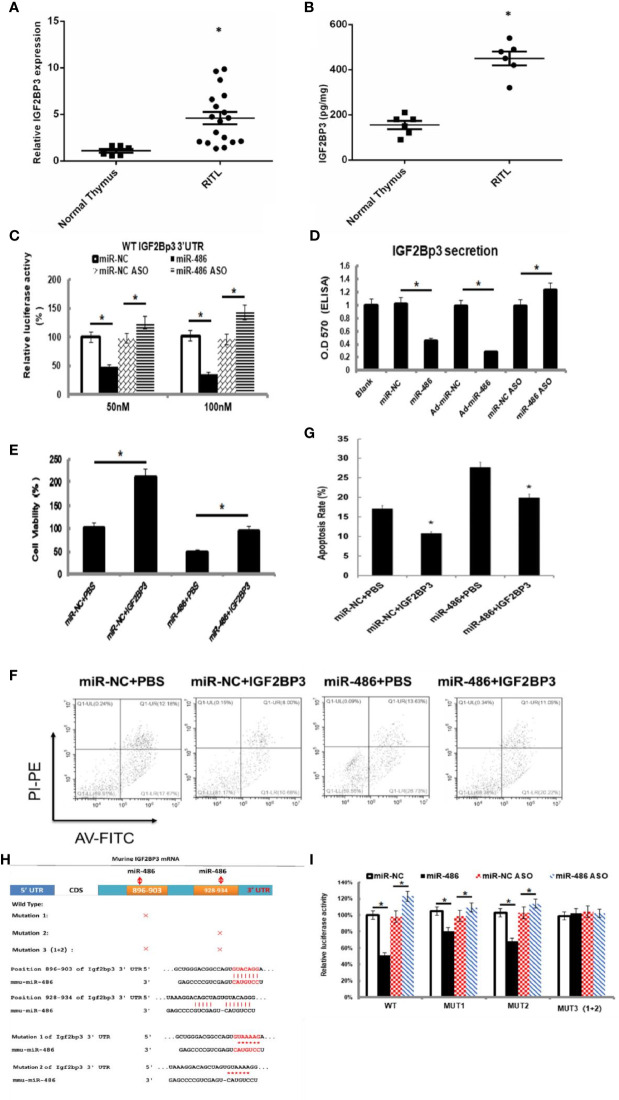
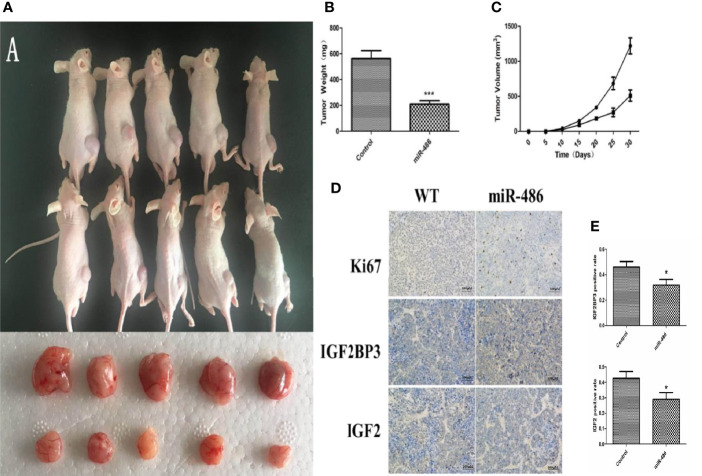
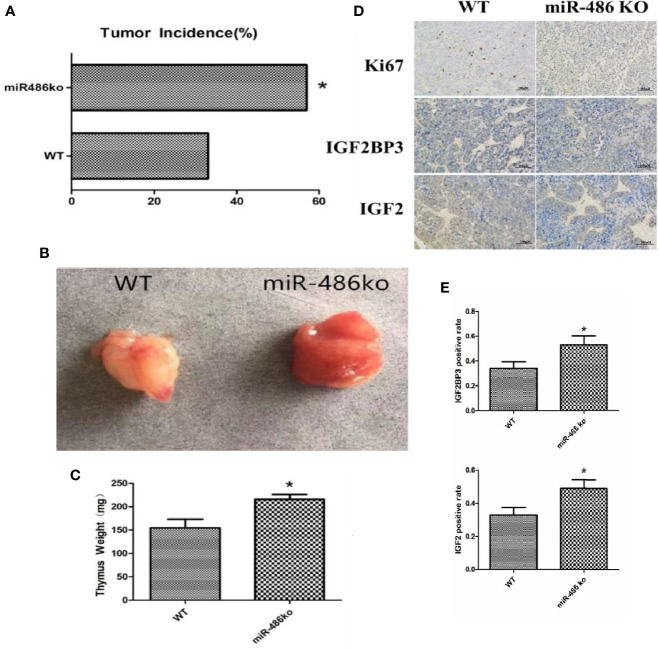
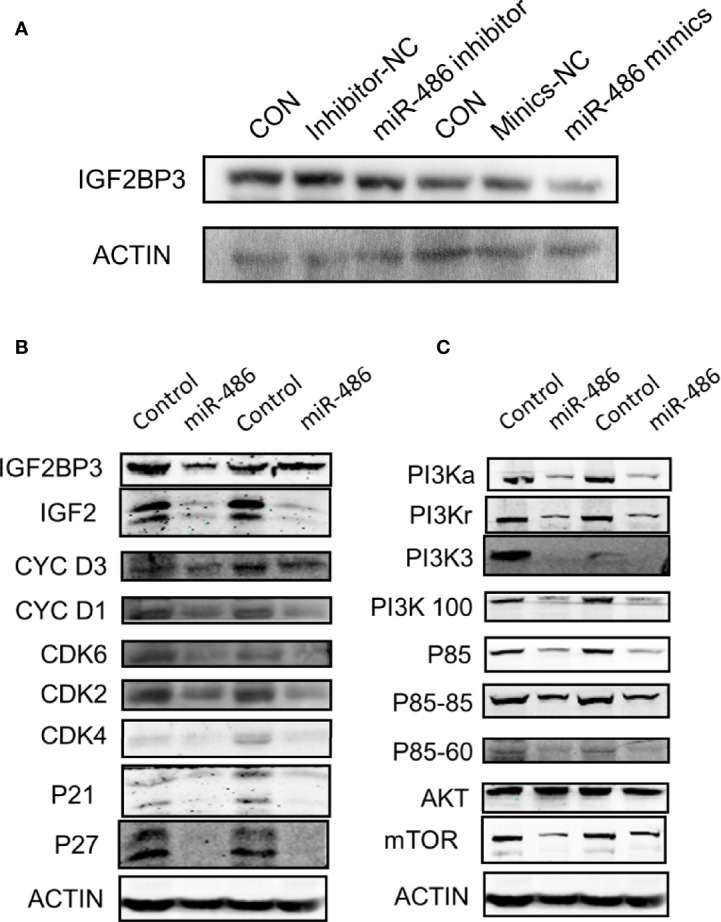
Ionizing radiation is one of the common environmental carcinogens. miRNAs play critical roles in the processes of tumor occurrence, development, metastasis. However, the relationship between radiation-induced carcinogenesis and miRNA rarely reported. This study is aimed to investigate the effect of miRNAs on radiation-induced carcinogenesis. In this study we established the radiation-induced thymic lymphoma mice model. By using miRNA array of RTL tissue and predicting for miRNAs target genes, a miRNA-mRNA crosstalk network was established. Based on this network, we identified a critical miRNA, miR-486, which was the most down-regulated in the radiation-induced carcinogenesis. Then the function of miR-486 was confirmed by using knockout mice and cellular experiments. As a result, miR-486 could inhibit proliferation of mouse lymphoma cells by targeting IGF2BP3 mRNA. The adenovirus over-expression miR-486 vector reduced tumorigenesis . MiR-486 knockout mice have a strong tendency of radiation-induced carcinogenesis. In conclusion, miR-486 inhibits the proliferation of lymphoma cells and tumorigenesis induced by radiation through targeting IGF2BP3.
电离辐射是常见的环境致癌物之一。微小RNA(miRNAs)在肿瘤发生、发展和转移过程中发挥着关键作用。然而,辐射致癌与miRNA之间的关系鲜有报道。本研究旨在探讨miRNAs对辐射致癌的影响。在本研究中,我们建立了辐射诱导的胸腺淋巴瘤小鼠模型。通过使用RTL组织的miRNA芯片并预测miRNAs的靶基因,构建了一个miRNA-mRNA相互作用网络。基于该网络,我们鉴定出一个关键的miRNA,即miR-486,它在辐射致癌过程中表达下调最为明显。然后通过基因敲除小鼠和细胞实验证实了miR-486的功能。结果表明,miR-486可通过靶向IGF2BP3 mRNA抑制小鼠淋巴瘤细胞的增殖。腺病毒过表达miR-486载体可减少肿瘤发生。miR-486基因敲除小鼠具有很强的辐射致癌倾向。总之,miR-486通过靶向IGF2BP3抑制淋巴瘤细胞增殖和辐射诱导的肿瘤发生。