Laboratory of Retinal Cell Biology, Department of Ophthalmology, Keio University School of Medicine, 35 Shinanomachi, Shinjukuku, Tokyo, 160-8582, Japan; Department of Ophthalmology, Keio University School of Medicine, 35 Shinanomachi, Shinjukuku, Tokyo, 160-8582, Japan.
Department of Cell Modulation, Institute of Molecular Embryology and Genetics, Kumamoto University, Chuo-ku, Kumamoto, 860-0811, Japan.
Redox Biol. 2021 May;41:101921. doi: 10.1016/j.redox.2021.101921. Epub 2021 Feb 28.
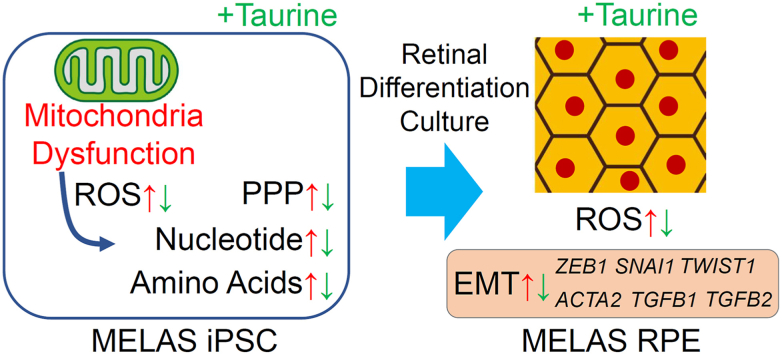
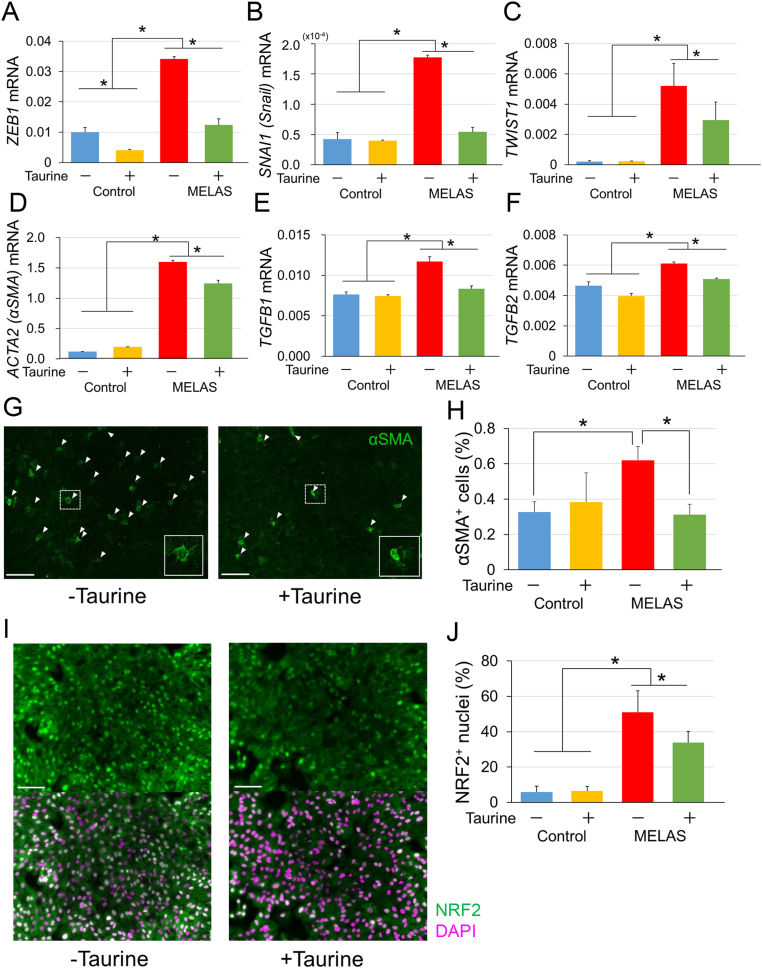
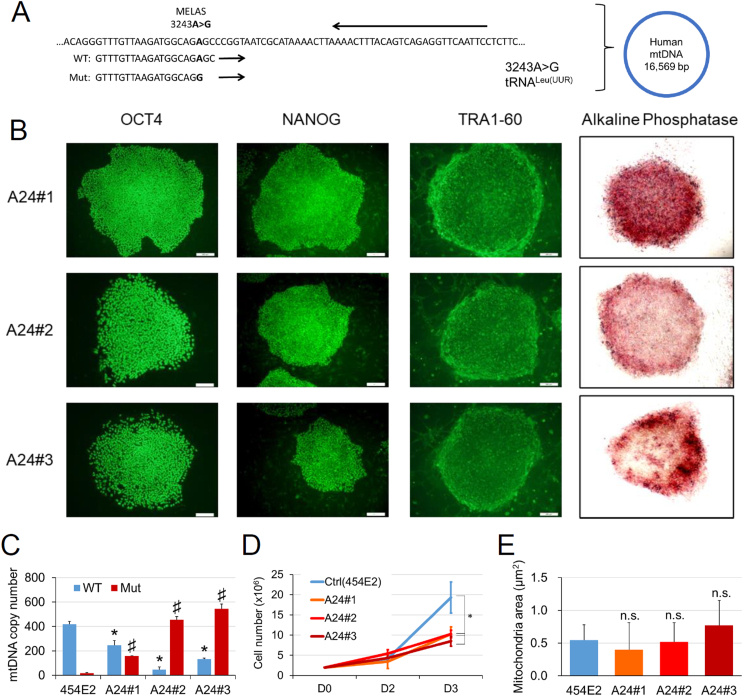
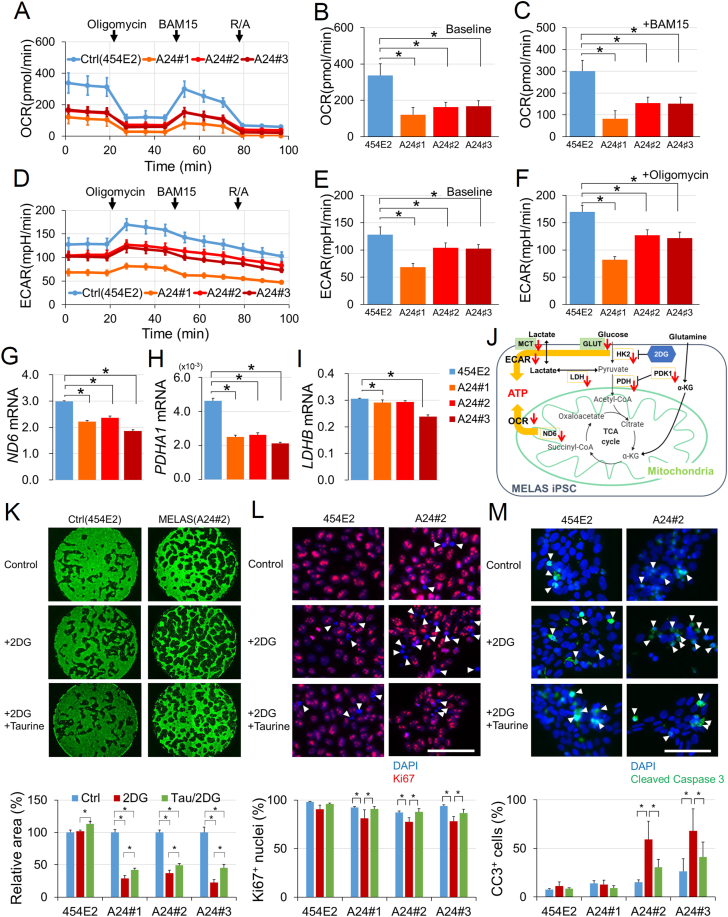
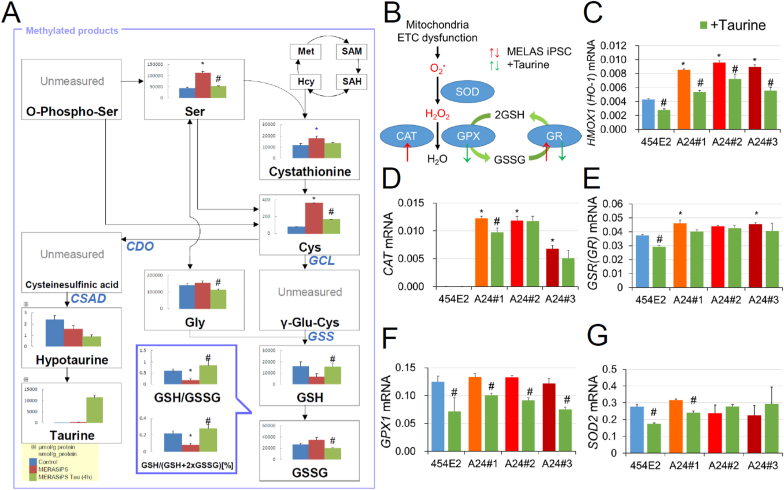
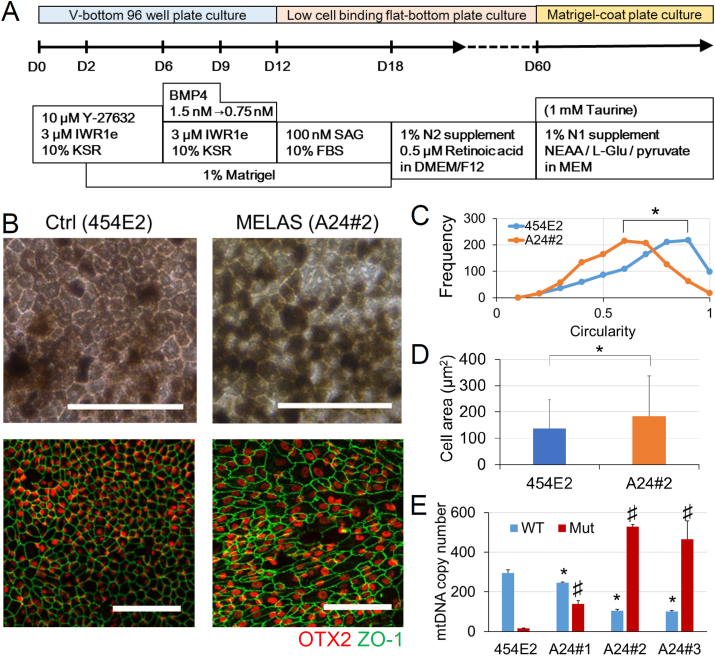
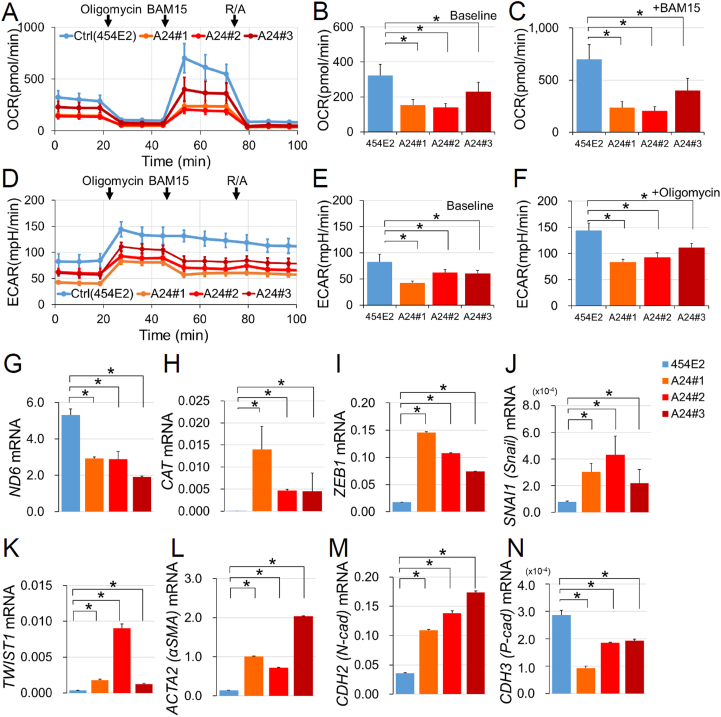
Mitochondria participate in various metabolic pathways, and their dysregulation results in multiple disorders, including aging-related diseases. However, the metabolic changes and mechanisms of mitochondrial disorders are not fully understood. Here, we found that induced pluripotent stem cells (iPSCs) from a patient with mitochondrial myopathy, encephalopathy, lactic acidosis, and stroke-like episodes (MELAS) showed attenuated proliferation and survival when glycolysis was inhibited. These deficits were rescued by taurine administration. Metabolomic analyses showed that the ratio of the reduced (GSH) to oxidized glutathione (GSSG) was decreased; whereas the levels of cysteine, a substrate of GSH, and oxidative stress markers were upregulated in MELAS iPSCs. Taurine normalized these changes, suggesting that MELAS iPSCs were affected by the oxidative stress and taurine reduced its influence. We also analyzed the retinal pigment epithelium (RPE) differentiated from MELAS iPSCs by using a three-dimensional culture system and found that it showed epithelial mesenchymal transition (EMT), which was suppressed by taurine. Therefore, mitochondrial dysfunction caused metabolic changes, accumulation of oxidative stress that depleted GSH, and EMT in the RPE that could be involved in retinal pathogenesis. Because all these phenomena were sensitive to taurine treatment, we conclude that administration of taurine may be a potential new therapeutic approach for mitochondria-related retinal diseases.
线粒体参与多种代谢途径,其功能失调可导致多种疾病,包括与衰老相关的疾病。然而,线粒体疾病的代谢变化和机制尚未完全阐明。在这里,我们发现来自线粒体肌病、脑病、乳酸酸中毒和卒中样发作(MELAS)患者的诱导多能干细胞(iPSC)在糖酵解被抑制时增殖和存活能力减弱。牛磺酸的给药挽救了这些缺陷。代谢组学分析表明,还原型(GSH)与氧化型谷胱甘肽(GSSG)的比值降低;而 MELAS iPSC 中的半胱氨酸(GSH 的底物)水平和氧化应激标志物上调。牛磺酸使这些变化正常化,表明 MELAS iPSC 受到氧化应激的影响,而牛磺酸减轻了其影响。我们还通过三维培养系统分析了从 MELAS iPSC 分化而来的视网膜色素上皮(RPE),发现它表现出上皮间质转化(EMT),而牛磺酸抑制了 EMT。因此,线粒体功能障碍引起代谢变化、氧化应激导致 GSH 耗竭以及 RPE 的 EMT,这些都可能涉及视网膜发病机制。由于所有这些现象对牛磺酸治疗都很敏感,我们得出结论,牛磺酸的给药可能是治疗与线粒体相关的视网膜疾病的一种潜在新方法。