Jafari Lua A, Suen Rachel M, Khan Sadiya S
Department of Medicine, Northwestern University Feinberg School of Medicine, Chicago, IL, USA.
Department of Preventive Medicine, Northwestern University Feinberg School of Medicine, Chicago, IL, USA.
Curr Treat Options Cardiovasc Med. 2020 Jul;22(7). doi: 10.1007/s11936-020-00811-3. Epub 2020 May 29.
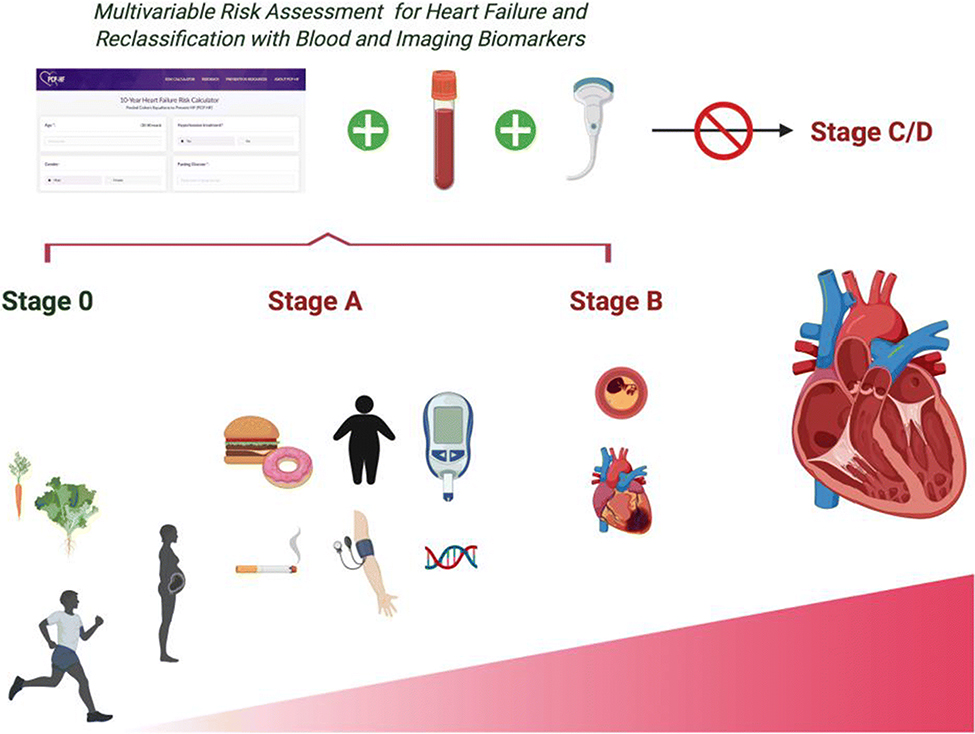
The burden of heart failure (HF) is a significant national and global public health problem, with prevalence rates on the rise. Given the significant morbidity, mortality, and healthcare costs attributable to HF, it is of utmost importance to utilize preventive strategies to prevent the development of HF. Therefore, we sought to address how a multi-modal risk assessment approach can be used to stratify patients for HF risk and guide implementation of therapeutic strategies to prevent HF.
New externally validated, multivariate prediction models for incident HF can be applied in the general population and may be used to aide clinicians in assessing individualized HF risk and screening for HF. Recent clinical trial data suggest a natriuretic peptide biomarker-based screening approach coupled with team-based cardiovascular care to focus on optimization of guideline-directed medical therapy may help prevent new-onset HF. However, widespread implementation of clinical risk scores and/or biomarkers is needed.
In addition to promoting a heart healthy lifestyle, prevention and management of modifiable risk factors, including intensive blood pressure lowering and use of sodium-glucose cotransporter-2 inhibitors, can prevent incident HF.
心力衰竭(HF)的负担是一个重大的国家和全球公共卫生问题,其患病率正在上升。鉴于HF所致的显著发病率、死亡率和医疗费用,采用预防策略来预防HF的发生至关重要。因此,我们试图探讨如何使用多模式风险评估方法对HF风险进行分层,并指导预防HF的治疗策略的实施。
新的经外部验证的HF发病多变量预测模型可应用于一般人群,并可用于帮助临床医生评估个体HF风险和筛查HF。最近的临床试验数据表明,基于利钠肽生物标志物的筛查方法,结合以团队为基础的心血管护理,专注于优化指南指导的药物治疗,可能有助于预防新发HF。然而,需要广泛实施临床风险评分和/或生物标志物。
除了倡导心脏健康的生活方式外,预防和管理可改变的风险因素,包括强化降压和使用钠-葡萄糖协同转运蛋白2抑制剂,可预防HF发病。