• 文献检索
  • 文档翻译
  • 深度研究
  • 学术资讯
  • Suppr Zotero 插件Zotero 插件
  • 邀请有礼
  • 套餐&价格
  • 历史记录
应用&插件
Suppr Zotero 插件Zotero 插件浏览器插件Mac 客户端Windows 客户端微信小程序
定价
高级版会员购买积分包购买API积分包
服务
文献检索文档翻译深度研究API 文档MCP 服务
关于我们
关于 Suppr公司介绍联系我们用户协议隐私条款
关注我们

Suppr 超能文献

核心技术专利:CN118964589B侵权必究
粤ICP备2023148730 号-1Suppr @ 2026

文献检索

告别复杂PubMed语法,用中文像聊天一样搜索,搜遍4000万医学文献。AI智能推荐,让科研检索更轻松。

立即免费搜索

文件翻译

保留排版,准确专业,支持PDF/Word/PPT等文件格式,支持 12+语言互译。

免费翻译文档

深度研究

AI帮你快速写综述,25分钟生成高质量综述,智能提取关键信息,辅助科研写作。

立即免费体验

2017年“调查者”号研究船航行期间在澳大利亚东部深海收集的环节动物。

Annelids of the eastern Australian abyss collected by the 2017 RV 'Investigator' voyage.

作者信息

Gunton Laetitia M, Kupriyanova Elena K, Alvestad Tom, Avery Lynda, Blake James A, Biriukova Olga, Böggemann Markus, Borisova Polina, Budaeva Nataliya, Burghardt Ingo, Capa Maria, Georgieva Magdalena N, Glasby Christopher J, Hsueh Pan-Wen, Hutchings Pat, Jimi Naoto, Kongsrud Jon A, Langeneck Joachim, Meißner Karin, Murray Anna, Nikolic Mark, Paxton Hannelore, Ramos Dino, Schulze Anja, Sobczyk Robert, Watson Charlotte, Wiklund Helena, Wilson Robin S, Zhadan Anna, Zhang Jinghuai

机构信息

Australian Museum Research Institute, Sydney, Australia.

Macquarie University, Sydney, Australia.

出版信息

Zookeys. 2021 Feb 24;1020:1-198. doi: 10.3897/zookeys.1020.57921. eCollection 2021.

DOI:10.3897/zookeys.1020.57921
PMID:33708002
原文链接:
https://pmc.ncbi.nlm.nih.gov/articles/PMC7930015/
Abstract

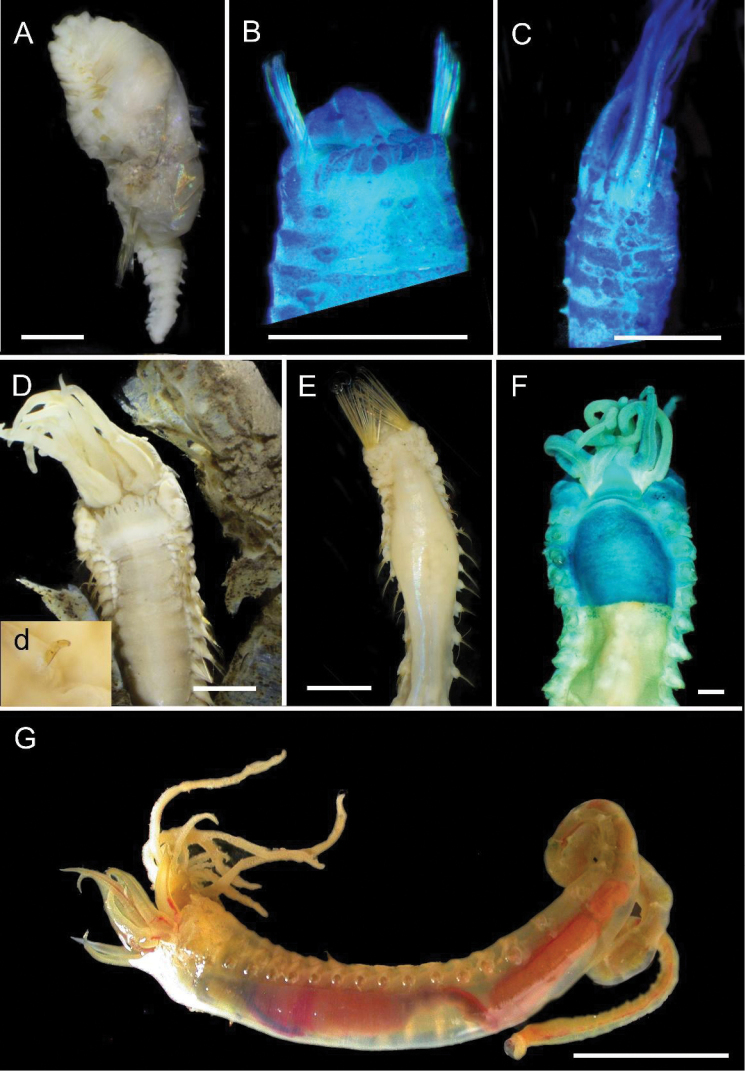
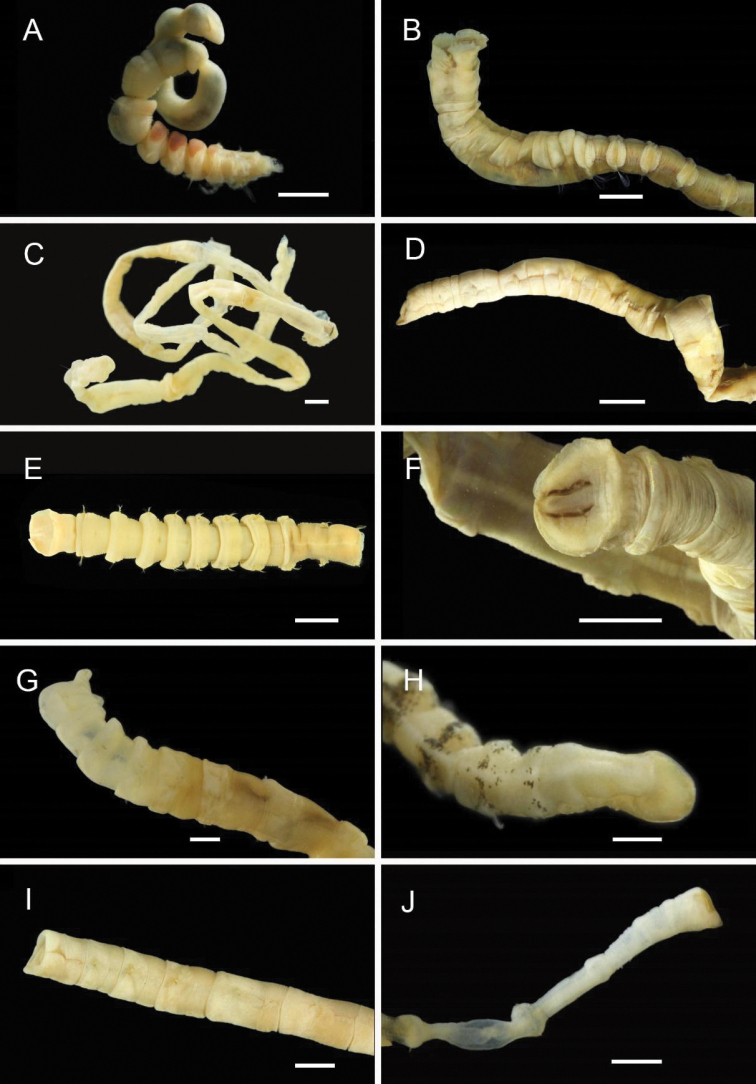
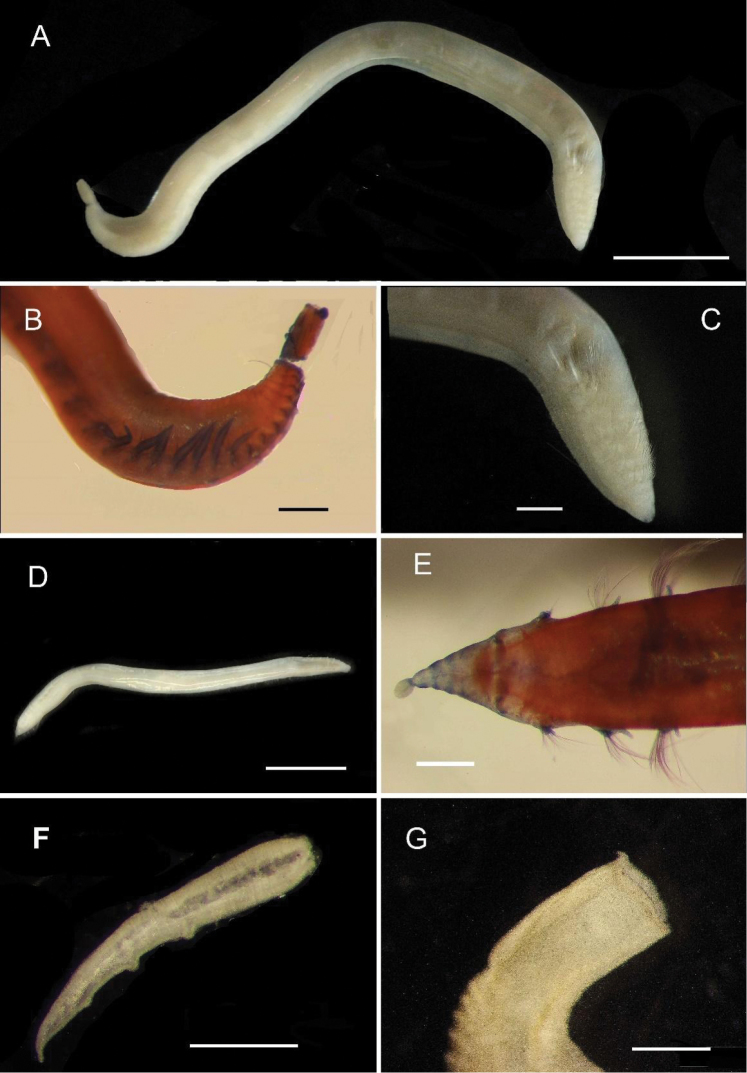
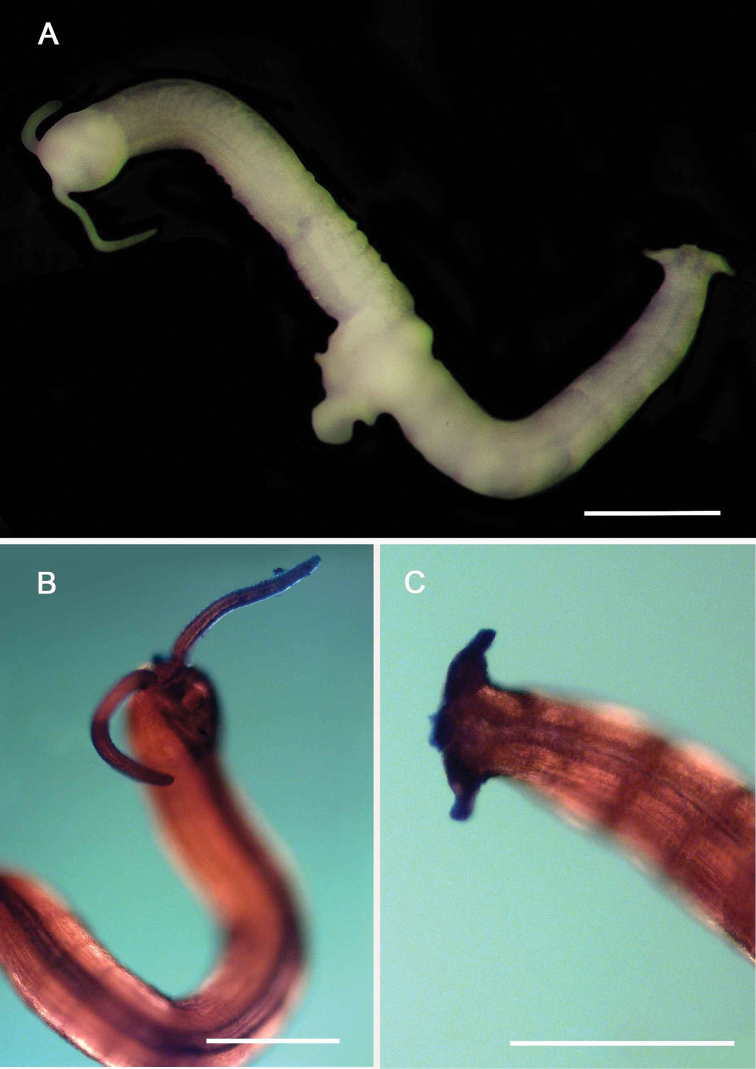
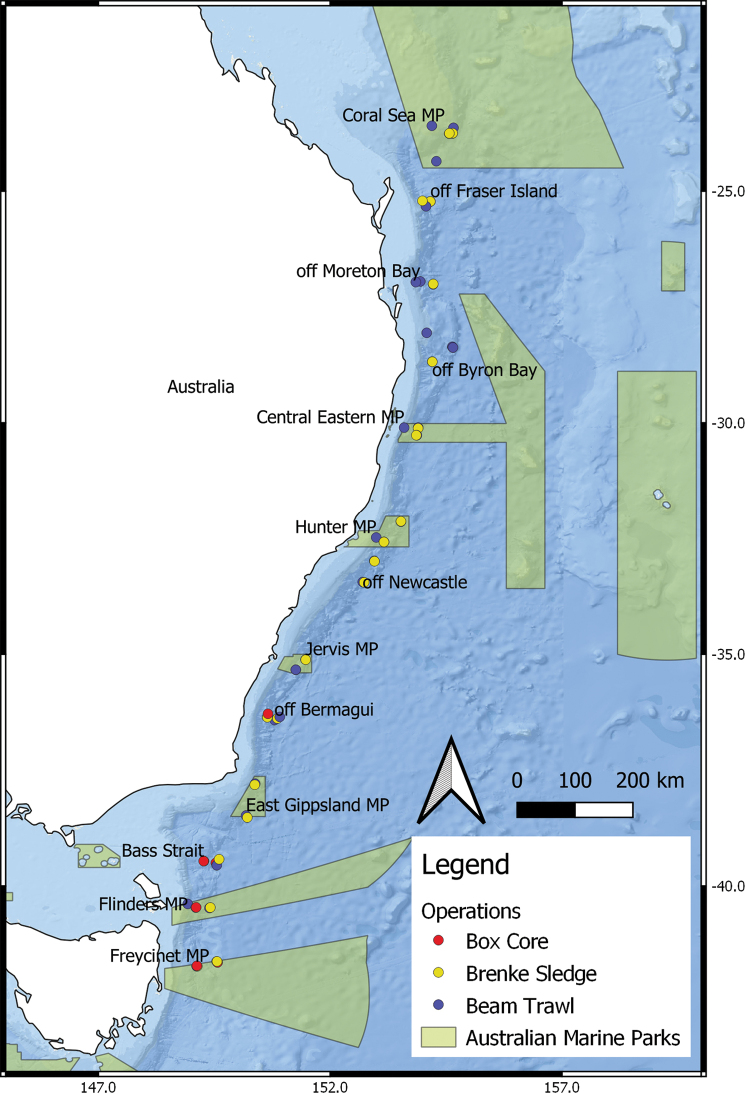
In Australia, the deep-water (bathyal and abyssal) benthic invertebrate fauna is poorly known in comparison with that of shallow (subtidal and shelf) habitats. Benthic fauna from the deep eastern Australian margin was sampled systematically for the first time during 2017 RV 'Investigator' voyage 'Sampling the Abyss'. Box core, Brenke sledge, and beam trawl samples were collected at one-degree intervals from Tasmania, 42°S, to southern Queensland, 24°S, from 900 to 4800 m depth. Annelids collected were identified by taxonomic experts on individual families around the world. A complete list of all identified species is presented, accompanied with brief morphological diagnoses, taxonomic remarks, and colour images. A total of more than 6000 annelid specimens consisting of 50 families (47 Polychaeta, one Echiura, two Sipuncula) and 214 species were recovered. Twenty-seven species were given valid names, 45 were assigned the qualifier cf., 87 the qualifier sp., and 55 species were considered new to science. Geographical ranges of 16 morphospecies extended along the eastern Australian margin to the Great Australian Bight, South Australia; however, these ranges need to be confirmed with genetic data. This work providing critical baseline biodiversity data on an important group of benthic invertebrates from a virtually unknown region of the world's ocean will act as a springboard for future taxonomic and biogeographic studies in the area.

摘要

在澳大利亚,与浅海(潮下带和陆架)栖息地相比,深水(半深海和深海)底栖无脊椎动物区系鲜为人知。2017年“调查者号”(RV 'Investigator')“深渊采样”航次期间,首次对澳大利亚东部深海底栖动物区系进行了系统采样。在从塔斯马尼亚(南纬42°)到昆士兰南部(南纬24°)、深度从900米至4800米的区域,每隔一度采集箱式岩心、布伦克拖网和桁拖网样本。所采集的环节动物由世界各地各分类科的专家进行鉴定。列出了所有已鉴定物种的完整清单,并附有简要的形态学诊断、分类学说明和彩色图像。共采集到6000多个环节动物标本,分属50个科(47个多毛纲、1个螠虫纲、2个星虫纲)和214个物种。27个物种被赋予有效名称,45个被指定为cf.(注:相似种),87个被指定为sp.(注:待定种),55个物种被认为是科学上新发现的。16个形态种的地理分布范围沿澳大利亚东部边缘延伸至南澳大利亚的大澳大利亚湾;然而,这些分布范围需要通过基因数据来确认。这项工作提供了关于世界海洋一个几乎未知区域重要底栖无脊椎动物类群的关键基线生物多样性数据,将成为该地区未来分类学和生物地理学研究的跳板。
https://cdn.ncbi.nlm.nih.gov/pmc/blobs/1248/7930015/c5d81c4575ec/zookeys-1020-001-g035.jpg
https://cdn.ncbi.nlm.nih.gov/pmc/blobs/1248/7930015/86e0fd4ee375/zookeys-1020-001-g001.jpg
https://cdn.ncbi.nlm.nih.gov/pmc/blobs/1248/7930015/1091c6199866/zookeys-1020-001-g002.jpg
https://cdn.ncbi.nlm.nih.gov/pmc/blobs/1248/7930015/656dcb71c6b9/zookeys-1020-001-g003.jpg
https://cdn.ncbi.nlm.nih.gov/pmc/blobs/1248/7930015/10c2951587ec/zookeys-1020-001-g004.jpg
https://cdn.ncbi.nlm.nih.gov/pmc/blobs/1248/7930015/f20cc6843e86/zookeys-1020-001-g005.jpg
https://cdn.ncbi.nlm.nih.gov/pmc/blobs/1248/7930015/a15b007459cc/zookeys-1020-001-g006.jpg
https://cdn.ncbi.nlm.nih.gov/pmc/blobs/1248/7930015/491f085305f3/zookeys-1020-001-g007.jpg
https://cdn.ncbi.nlm.nih.gov/pmc/blobs/1248/7930015/c677a9f35b8a/zookeys-1020-001-g008.jpg
https://cdn.ncbi.nlm.nih.gov/pmc/blobs/1248/7930015/091e7335b3df/zookeys-1020-001-g009.jpg
https://cdn.ncbi.nlm.nih.gov/pmc/blobs/1248/7930015/0ad7a2e9f78d/zookeys-1020-001-g010.jpg
https://cdn.ncbi.nlm.nih.gov/pmc/blobs/1248/7930015/4fc8db30b322/zookeys-1020-001-g011.jpg
https://cdn.ncbi.nlm.nih.gov/pmc/blobs/1248/7930015/82e7bcc1f250/zookeys-1020-001-g012.jpg
https://cdn.ncbi.nlm.nih.gov/pmc/blobs/1248/7930015/888bb50532c9/zookeys-1020-001-g013.jpg
https://cdn.ncbi.nlm.nih.gov/pmc/blobs/1248/7930015/5f7391dc46f5/zookeys-1020-001-g014.jpg
https://cdn.ncbi.nlm.nih.gov/pmc/blobs/1248/7930015/f38a213c25ba/zookeys-1020-001-g015.jpg
https://cdn.ncbi.nlm.nih.gov/pmc/blobs/1248/7930015/b23f1cb10ae0/zookeys-1020-001-g016.jpg
https://cdn.ncbi.nlm.nih.gov/pmc/blobs/1248/7930015/60149604d0d5/zookeys-1020-001-g017.jpg
https://cdn.ncbi.nlm.nih.gov/pmc/blobs/1248/7930015/3e8c8ae85b56/zookeys-1020-001-g018.jpg
https://cdn.ncbi.nlm.nih.gov/pmc/blobs/1248/7930015/52afcff02f69/zookeys-1020-001-g019.jpg
https://cdn.ncbi.nlm.nih.gov/pmc/blobs/1248/7930015/4acefded4649/zookeys-1020-001-g020.jpg
https://cdn.ncbi.nlm.nih.gov/pmc/blobs/1248/7930015/dcdace4a98ae/zookeys-1020-001-g021.jpg
https://cdn.ncbi.nlm.nih.gov/pmc/blobs/1248/7930015/f6c8ee56af30/zookeys-1020-001-g022.jpg
https://cdn.ncbi.nlm.nih.gov/pmc/blobs/1248/7930015/c93124bf794d/zookeys-1020-001-g023.jpg
https://cdn.ncbi.nlm.nih.gov/pmc/blobs/1248/7930015/c02a6d0638a5/zookeys-1020-001-g024.jpg
https://cdn.ncbi.nlm.nih.gov/pmc/blobs/1248/7930015/281e62465a60/zookeys-1020-001-g025.jpg
https://cdn.ncbi.nlm.nih.gov/pmc/blobs/1248/7930015/47cc25e03de3/zookeys-1020-001-g026.jpg
https://cdn.ncbi.nlm.nih.gov/pmc/blobs/1248/7930015/ec34bb719ee7/zookeys-1020-001-g027.jpg
https://cdn.ncbi.nlm.nih.gov/pmc/blobs/1248/7930015/a37466042a8e/zookeys-1020-001-g028.jpg
https://cdn.ncbi.nlm.nih.gov/pmc/blobs/1248/7930015/27a90dec9ba2/zookeys-1020-001-g029.jpg
https://cdn.ncbi.nlm.nih.gov/pmc/blobs/1248/7930015/7316733a53b0/zookeys-1020-001-g030.jpg
https://cdn.ncbi.nlm.nih.gov/pmc/blobs/1248/7930015/0bfce6ad10a5/zookeys-1020-001-g031.jpg
https://cdn.ncbi.nlm.nih.gov/pmc/blobs/1248/7930015/7219ddec286e/zookeys-1020-001-g032.jpg
https://cdn.ncbi.nlm.nih.gov/pmc/blobs/1248/7930015/f0c18719ed48/zookeys-1020-001-g033.jpg
https://cdn.ncbi.nlm.nih.gov/pmc/blobs/1248/7930015/311455a6e296/zookeys-1020-001-g034.jpg
https://cdn.ncbi.nlm.nih.gov/pmc/blobs/1248/7930015/c5d81c4575ec/zookeys-1020-001-g035.jpg
https://cdn.ncbi.nlm.nih.gov/pmc/blobs/1248/7930015/86e0fd4ee375/zookeys-1020-001-g001.jpg
https://cdn.ncbi.nlm.nih.gov/pmc/blobs/1248/7930015/1091c6199866/zookeys-1020-001-g002.jpg
https://cdn.ncbi.nlm.nih.gov/pmc/blobs/1248/7930015/656dcb71c6b9/zookeys-1020-001-g003.jpg
https://cdn.ncbi.nlm.nih.gov/pmc/blobs/1248/7930015/10c2951587ec/zookeys-1020-001-g004.jpg
https://cdn.ncbi.nlm.nih.gov/pmc/blobs/1248/7930015/f20cc6843e86/zookeys-1020-001-g005.jpg
https://cdn.ncbi.nlm.nih.gov/pmc/blobs/1248/7930015/a15b007459cc/zookeys-1020-001-g006.jpg
https://cdn.ncbi.nlm.nih.gov/pmc/blobs/1248/7930015/491f085305f3/zookeys-1020-001-g007.jpg
https://cdn.ncbi.nlm.nih.gov/pmc/blobs/1248/7930015/c677a9f35b8a/zookeys-1020-001-g008.jpg
https://cdn.ncbi.nlm.nih.gov/pmc/blobs/1248/7930015/091e7335b3df/zookeys-1020-001-g009.jpg
https://cdn.ncbi.nlm.nih.gov/pmc/blobs/1248/7930015/0ad7a2e9f78d/zookeys-1020-001-g010.jpg
https://cdn.ncbi.nlm.nih.gov/pmc/blobs/1248/7930015/4fc8db30b322/zookeys-1020-001-g011.jpg
https://cdn.ncbi.nlm.nih.gov/pmc/blobs/1248/7930015/82e7bcc1f250/zookeys-1020-001-g012.jpg
https://cdn.ncbi.nlm.nih.gov/pmc/blobs/1248/7930015/888bb50532c9/zookeys-1020-001-g013.jpg
https://cdn.ncbi.nlm.nih.gov/pmc/blobs/1248/7930015/5f7391dc46f5/zookeys-1020-001-g014.jpg
https://cdn.ncbi.nlm.nih.gov/pmc/blobs/1248/7930015/f38a213c25ba/zookeys-1020-001-g015.jpg
https://cdn.ncbi.nlm.nih.gov/pmc/blobs/1248/7930015/b23f1cb10ae0/zookeys-1020-001-g016.jpg
https://cdn.ncbi.nlm.nih.gov/pmc/blobs/1248/7930015/60149604d0d5/zookeys-1020-001-g017.jpg
https://cdn.ncbi.nlm.nih.gov/pmc/blobs/1248/7930015/3e8c8ae85b56/zookeys-1020-001-g018.jpg
https://cdn.ncbi.nlm.nih.gov/pmc/blobs/1248/7930015/52afcff02f69/zookeys-1020-001-g019.jpg
https://cdn.ncbi.nlm.nih.gov/pmc/blobs/1248/7930015/4acefded4649/zookeys-1020-001-g020.jpg
https://cdn.ncbi.nlm.nih.gov/pmc/blobs/1248/7930015/dcdace4a98ae/zookeys-1020-001-g021.jpg
https://cdn.ncbi.nlm.nih.gov/pmc/blobs/1248/7930015/f6c8ee56af30/zookeys-1020-001-g022.jpg
https://cdn.ncbi.nlm.nih.gov/pmc/blobs/1248/7930015/c93124bf794d/zookeys-1020-001-g023.jpg
https://cdn.ncbi.nlm.nih.gov/pmc/blobs/1248/7930015/c02a6d0638a5/zookeys-1020-001-g024.jpg
https://cdn.ncbi.nlm.nih.gov/pmc/blobs/1248/7930015/281e62465a60/zookeys-1020-001-g025.jpg
https://cdn.ncbi.nlm.nih.gov/pmc/blobs/1248/7930015/47cc25e03de3/zookeys-1020-001-g026.jpg
https://cdn.ncbi.nlm.nih.gov/pmc/blobs/1248/7930015/ec34bb719ee7/zookeys-1020-001-g027.jpg
https://cdn.ncbi.nlm.nih.gov/pmc/blobs/1248/7930015/a37466042a8e/zookeys-1020-001-g028.jpg
https://cdn.ncbi.nlm.nih.gov/pmc/blobs/1248/7930015/27a90dec9ba2/zookeys-1020-001-g029.jpg
https://cdn.ncbi.nlm.nih.gov/pmc/blobs/1248/7930015/7316733a53b0/zookeys-1020-001-g030.jpg
https://cdn.ncbi.nlm.nih.gov/pmc/blobs/1248/7930015/0bfce6ad10a5/zookeys-1020-001-g031.jpg
https://cdn.ncbi.nlm.nih.gov/pmc/blobs/1248/7930015/7219ddec286e/zookeys-1020-001-g032.jpg
https://cdn.ncbi.nlm.nih.gov/pmc/blobs/1248/7930015/f0c18719ed48/zookeys-1020-001-g033.jpg
https://cdn.ncbi.nlm.nih.gov/pmc/blobs/1248/7930015/311455a6e296/zookeys-1020-001-g034.jpg
https://cdn.ncbi.nlm.nih.gov/pmc/blobs/1248/7930015/c5d81c4575ec/zookeys-1020-001-g035.jpg

相似文献

1
Annelids of the eastern Australian abyss collected by the 2017 RV 'Investigator' voyage.2017年“调查者”号研究船航行期间在澳大利亚东部深海收集的环节动物。
Zookeys. 2021 Feb 24;1020:1-198. doi: 10.3897/zookeys.1020.57921. eCollection 2021.
2
Hydroids (Cnidaria, Hydrozoa) from Mauritanian Coral Mounds.来自毛里塔尼亚珊瑚丘的水螅虫纲动物(刺胞动物门,水螅虫纲)。
Zootaxa. 2020 Nov 16;4878(3):zootaxa.4878.3.2. doi: 10.11646/zootaxa.4878.3.2.
3
Two new species of Sabellariidae (Annelida, Polychaeta) from the abyss of eastern Australia.来自澳大利亚东部深海的沙蚕科(环节动物门,多毛纲)两个新物种。
Zootaxa. 2020 Aug 3;4821(3):zootaxa.4821.3.4. doi: 10.11646/zootaxa.4821.3.4.
4
Deep-sea benthic crustacean and annelid data from the Bering Sea.来自白令海的深海底栖甲壳类动物和环节动物数据。
Data Brief. 2023 Apr 28;48:109186. doi: 10.1016/j.dib.2023.109186. eCollection 2023 Jun.
5
Benthic biogeographic patterns in the southern Australian deep sea: Do historical museum records accord with recent systematic, but spatially limited, survey data?澳大利亚南部深海的底栖生物地理模式:历史博物馆记录与近期系统性但空间有限的调查数据是否相符?
Ecol Evol. 2018 Nov 8;8(23):11423-11433. doi: 10.1002/ece3.4565. eCollection 2018 Dec.
6
Explaining bathymetric diversity patterns in marine benthic invertebrates and demersal fishes: physiological contributions to adaptation of life at depth.解释海洋底栖无脊椎动物和底层鱼类的测深多样性模式:深度生活适应的生理贡献。
Biol Rev Camb Philos Soc. 2014 May;89(2):406-26. doi: 10.1111/brv.12061. Epub 2013 Oct 4.
7
Annelid phylogeny and the status of Sipuncula and Echiura.环节动物系统发育以及星虫动物门和螠虫动物门的地位。
BMC Evol Biol. 2007 Apr 5;7:57. doi: 10.1186/1471-2148-7-57.
8
A source-sink hypothesis for abyssal biodiversity.深海生物多样性的源-汇假说。
Am Nat. 2005 Feb;165(2):163-78. doi: 10.1086/427226. Epub 2004 Dec 22.
9
New species and records of Heterospio (Annelida, Longosomatidae) from continental shelf, slope and abyssal depths of the Atlantic Ocean, Pacific Ocean, Indian Ocean and adjacent seas.大西洋、太平洋、印度洋及其毗邻海域大陆架、斜坡和深海中的异须虫(环节动物,长尾虫科)新种和记录。
Zootaxa. 2023 Apr 3;5260(1):1-74. doi: 10.11646/zootaxa.5260.1.1.
10
Australia's deep-water octocoral fauna: historical account and checklist, distributions and regional affinities of recent collections.澳大利亚的深水八放珊瑚动物群:历史记述与清单、近期采集样本的分布及区域亲缘关系
Zootaxa. 2014 May 20(3796):435-52. doi: 10.11646/zootaxa.3796.3.2.

引用本文的文献

1
A remarkable new deep-sea nereidid (Annelida: Nereididae) with gills.一种具有鳃的奇异新深海磷虾类(环节动物门:磷虾科)。
PLoS One. 2024 Mar 6;19(3):e0297961. doi: 10.1371/journal.pone.0297961. eCollection 2024.
2
Two new species of (Annelida: Hesionidae) associated with ghost shrimps (Crustacea: Decapoda) and their phylogenetic relationships.两种与幽灵虾(十足目:十足目)相关的新盲鳗(环节动物门:盲鳗科)及其系统发育关系。
PeerJ. 2023 Nov 1;11:e16346. doi: 10.7717/peerj.16346. eCollection 2023.
3
Abyssal fauna of polymetallic nodule exploration areas, eastern Clarion-Clipperton Zone, central Pacific Ocean: Amphinomidae and Euphrosinidae (Annelida, Amphinomida).

本文引用的文献

1
Phylogeny of Sabellidae (Annelida) and relationships with other taxa inferred from morphology and multiple genes.缨鳃虫科(环节动物门)的系统发育及其与其他类群的关系:基于形态学和多个基因的推断
Cladistics. 2011 Oct;27(5):449-469. doi: 10.1111/j.1096-0031.2010.00341.x. Epub 2010 Nov 4.
2
Inference of phylogenetic relationships within Fabriciidae (Sabellida, Annelida) using molecular and morphological data.利用分子和形态学数据推断缨鳃虫科(多毛纲,沙蚕目)内部的系统发育关系。
Cladistics. 2011 Aug;27(4):356-379. doi: 10.1111/j.1096-0031.2010.00343.x. Epub 2010 Dec 3.
3
Phylogeny and systematics of Protodrilidae (Annelida) inferred with total evidence analyses.
中太平洋克拉里昂-克利珀顿区东部多金属结核勘探区域的深海动物群:矶沙蚕科和艾氏矶沙蚕科(环节动物门,矶沙蚕目)
Zookeys. 2022 Dec 22;1137:33-74. doi: 10.3897/zookeys.1137.86150. eCollection 2022.
基于全证据分析推断原钻蚓科(环节动物门)的系统发育与分类学
Cladistics. 2015 Jun;31(3):250-276. doi: 10.1111/cla.12089. Epub 2014 Jul 16.
4
Phylogenetic hypothesis of Sphaerodoridae Malmgren, 1867 (Annelida) and its position within Phyllodocida.1867年马尔姆格伦的海球虫科(环节动物门)系统发育假说及其在叶须虫目的地位。
Cladistics. 2016 Aug;32(4):335-350. doi: 10.1111/cla.12134. Epub 2015 Sep 12.
5
Phylogeny and systematics of Aphroditiformia.海女虫目的系统发育与分类学
Cladistics. 2018 Jun;34(3):225-259. doi: 10.1111/cla.12202. Epub 2017 Jun 10.
6
Anguillosyllis (Annelida: Syllidae) from multiple deep-water locations in the northern and southern hemispheres.来自北半球和南半球多个深水区域的鳗沙蚕属(环节动物门:沙蚕科)
Zootaxa. 2020 Jun 15;4793(1):zootaxa.4793.1.1. doi: 10.11646/zootaxa.4793.1.1.
7
Two new species of Sabellariidae (Annelida, Polychaeta) from the abyss of eastern Australia.来自澳大利亚东部深海的沙蚕科(环节动物门,多毛纲)两个新物种。
Zootaxa. 2020 Aug 3;4821(3):zootaxa.4821.3.4. doi: 10.11646/zootaxa.4821.3.4.
8
Carnivorous sponges from the Australian Bathyal and Abyssal zones collected during the RV Investigator 2017 Expedition.在2017年“调查者号”科考船考察期间从澳大利亚半深海和深海区域采集的食肉海绵。
Zootaxa. 2020 May 12;4774(1):zootaxa.4774.1.1. doi: 10.11646/zootaxa.4774.1.1.
9
Biodiversity data and new species descriptions of polychaetes from offshore waters of the Falkland Islands, an area undergoing hydrocarbon exploration.福克兰群岛近海水域多毛纲动物的生物多样性数据及新物种描述,该地区正在进行油气勘探。
Zookeys. 2020 Jun 3;938:1-86. doi: 10.3897/zookeys.938.49349. eCollection 2020.
10
Spaghetti to a Tree: A Robust Phylogeny for Terebelliformia (Annelida) Based on Transcriptomes, Molecular and Morphological Data.从意大利面到树:基于转录组、分子和形态学数据构建的缨鳃虫目(环节动物)稳健系统发育树
Biology (Basel). 2020 Apr 6;9(4):73. doi: 10.3390/biology9040073.