Wu Hao, Chu Yijun, Sun Shanshan, Li Guozheng, Xu Shouping, Zhang Xianyu, Jiang Yongdong, Gao Song, Wang Qin, Zhang Jian, Pang Da
Sino-Russian Medical Research Center, Harbin Medical University Cancer Hospital, Harbin, China.
Translational Medicine Research and Cooperation Center of Northern China, Harbin Medical University, Harbin, China.
Front Cell Dev Biol. 2021 Feb 23;9:607142. doi: 10.3389/fcell.2021.607142. eCollection 2021.
Complement 1q binding protein (C1QBP/HABP1/p32/gC1qR) has been found to be overexpressed in triple-negative breast cancer (TNBC). However, the underlying mechanisms of high C1QBP expression and its role in TNBC remain largely unclear. Hypoxia is a tumor-associated microenvironment that promotes metastasis and paclitaxel (PTX) chemoresistance in tumor cells. In this study, we aimed to assess C1QBP expression and explore its role in hypoxia-related metastasis and chemoresistance in TNBC.
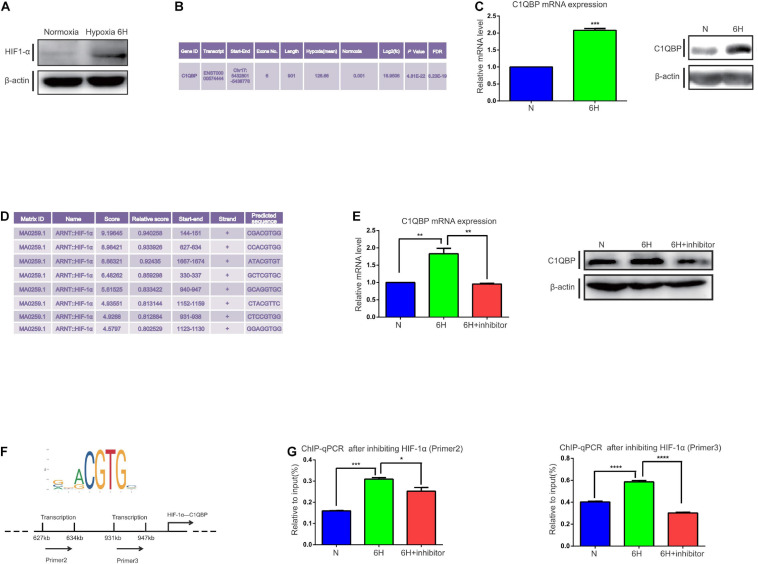
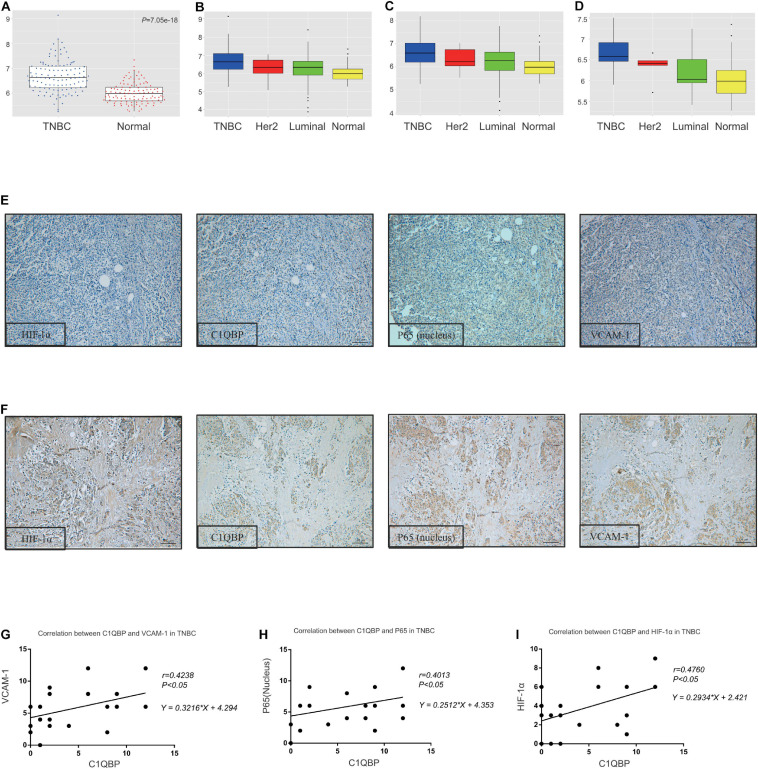
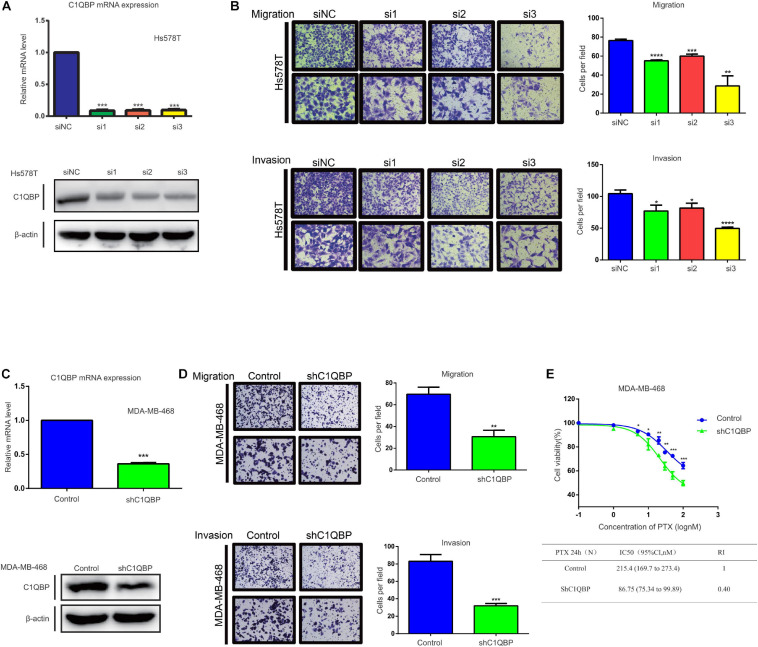
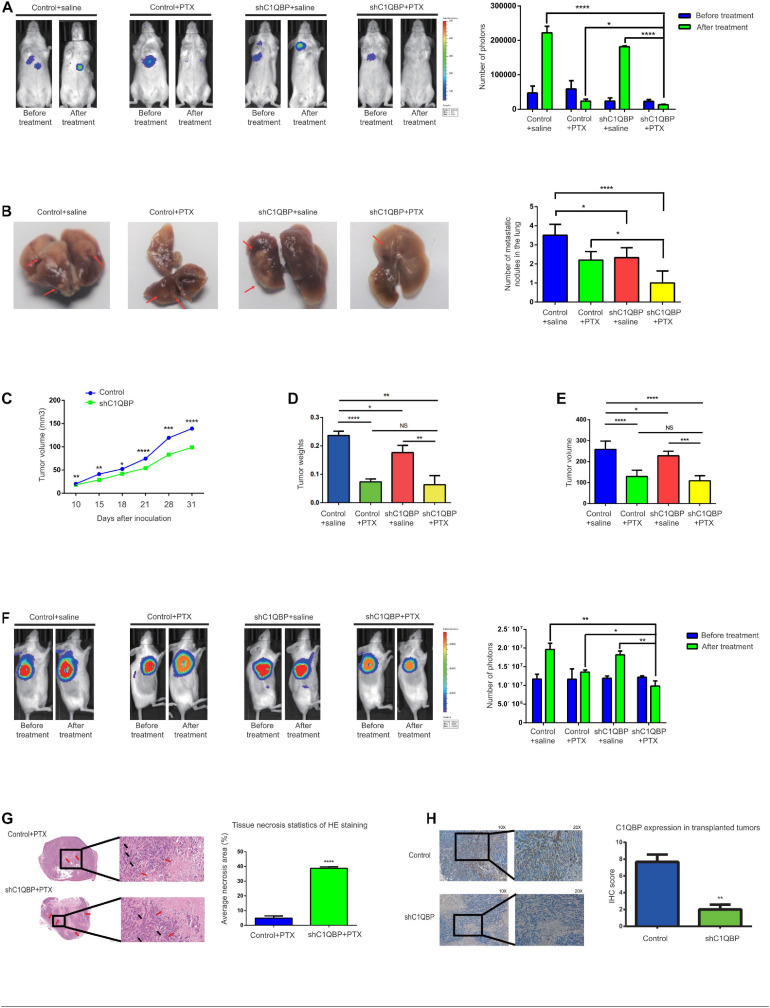
RNA-sequencing of TNBC cells under hypoxia was performed to identify C1QBP. The effect of hypoxia inducible factor 1 subunit alpha (HIF-1α) on C1QBP expression was investigated using chromatin immunoprecipitation (ChIP) assay. The role of C1QBP in mediating metastasis, chemoresistance to PTX, and regulation of metastasis-linked vascular cell adhesion molecule 1 (VCAM-1) expression were studied using and experiments. Clinical tissue microarrays were used to verify the correlation of C1QBP with the expression of HIF-1α, VCAM-1, and RELA proto-oncogene nuclear factor-kappa B subunit (P65).
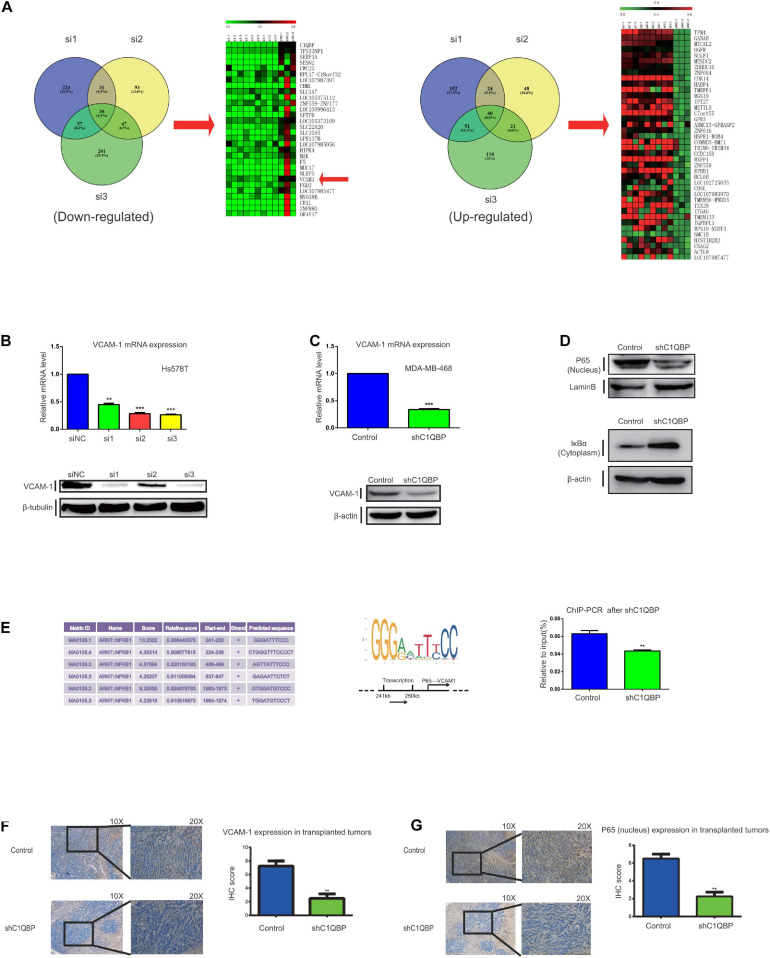
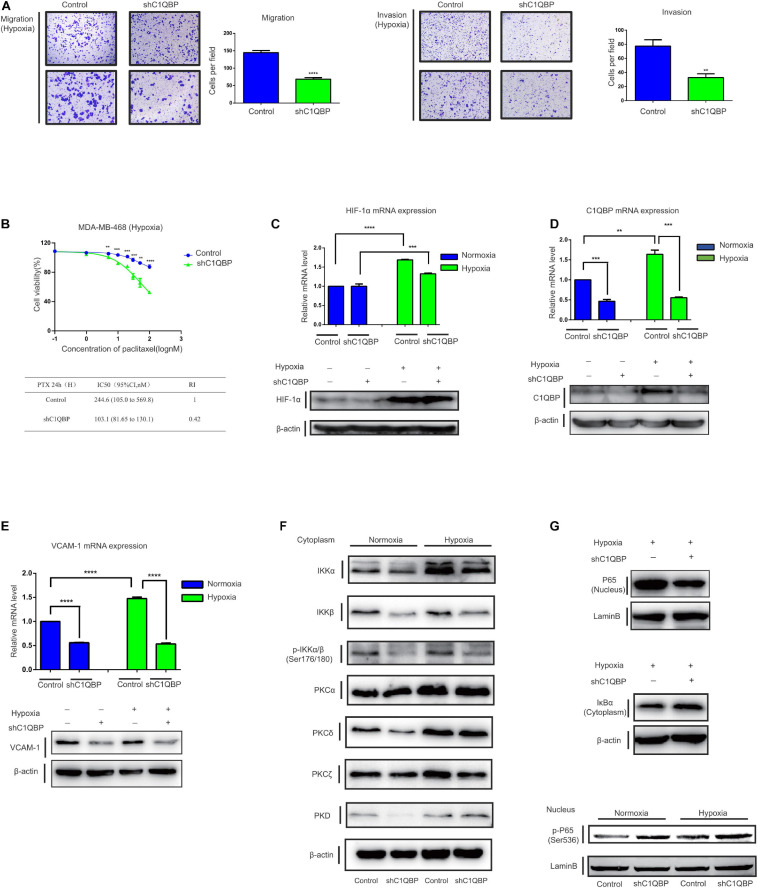
We found that hypoxia-induced HIF-1α upregulated C1QBP. The inhibition of C1QBP notably blocked metastasis of TNBC cells and increased their sensitivity to PTX under hypoxic conditions. Depletion of C1QBP decreased VCAM-1 expression by reducing the amount of P65 in the nucleus and suppressed the activation of hypoxia-induced protein kinase C-nuclear factor-kappa B (PKC-NF-κB) signaling.immunohistochemistry (IHC) staining of the tissue microarray showed positive correlations between the C1QBP level and those of HIF-1α, P65, and VCAM-1.
Targeting C1QBP along with PTX treatment might be a potential treatment for TNBC patients.
补体1q结合蛋白(C1QBP/HABP1/p32/gC1qR)已被发现在三阴性乳腺癌(TNBC)中过表达。然而,C1QBP高表达的潜在机制及其在TNBC中的作用仍不清楚。缺氧是一种与肿瘤相关的微环境,可促进肿瘤细胞转移和对紫杉醇(PTX)的化疗耐药性。在本研究中,我们旨在评估C1QBP的表达,并探讨其在TNBC缺氧相关转移和化疗耐药中的作用。
对缺氧条件下的TNBC细胞进行RNA测序以鉴定C1QBP。使用染色质免疫沉淀(ChIP)试验研究缺氧诱导因子1α亚基(HIF-1α)对C1QBP表达的影响。使用[具体实验名称1]和[具体实验名称2]实验研究C1QBP在介导转移、对PTX的化疗耐药性以及调节转移相关血管细胞黏附分子1(VCAM-1)表达中的作用。使用临床组织微阵列验证C1QBP与HIF-1α、VCAM-1和RELA原癌基因核因子κB亚基(P65)表达的相关性。
我们发现缺氧诱导的HIF-1α上调了C1QBP。在缺氧条件下,抑制C1QBP显著阻断了TNBC细胞的转移并增加了它们对PTX的敏感性。敲低C1QBP通过减少细胞核中P65的量降低了VCAM-1的表达,并抑制了缺氧诱导的蛋白激酶C-核因子κB(PKC-NF-κB)信号通路的激活。组织微阵列的免疫组织化学(IHC)染色显示C1QBP水平与HIF-1α、P65和VCAM-1水平呈正相关。
靶向C1QBP联合PTX治疗可能是TNBC患者的一种潜在治疗方法。