Department of Clinical Neuroscience, Karolinska Institutet, Stockholm, Sweden.
Division of Affinity Proteomics, Department of Protein Science, SciLifeLab, KTH-Royal Institute of Technology, Stockholm, Sweden.
Crit Care. 2021 Mar 12;25(1):103. doi: 10.1186/s13054-021-03503-x.
Severe traumatic brain injury (TBI) is associated with blood-brain barrier (BBB) disruption and a subsequent neuroinflammatory process. We aimed to perform a multiplex screening of brain enriched and inflammatory proteins in blood and cerebrospinal fluid (CSF) in order to study their role in BBB disruption, neuroinflammation and long-term functional outcome in TBI patients and healthy controls.
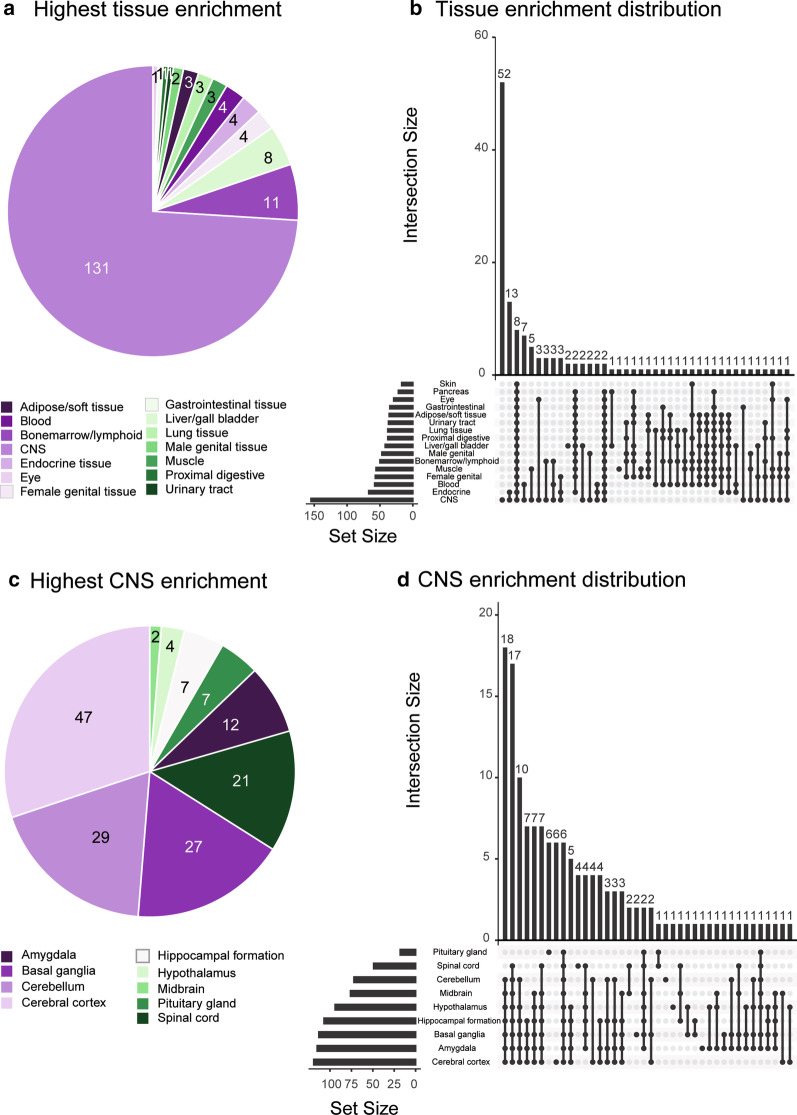
We conducted a prospective, observational study on 90 severe TBI patients and 15 control subjects. Clinical outcome data, Glasgow Outcome Score, was collected after 6-12 months. We utilized a suspension bead antibody array analyzed on a FlexMap 3D Luminex platform to characterize 177 unique proteins in matched CSF and serum samples. In addition, we assessed BBB disruption using the CSF-serum albumin quotient (Q), and performed Apolipoprotein E-genotyping as the latter has been linked to BBB function in the absence of trauma. We employed pathway-, cluster-, and proportional odds regression analyses. Key findings were validated in blood samples from an independent TBI cohort.
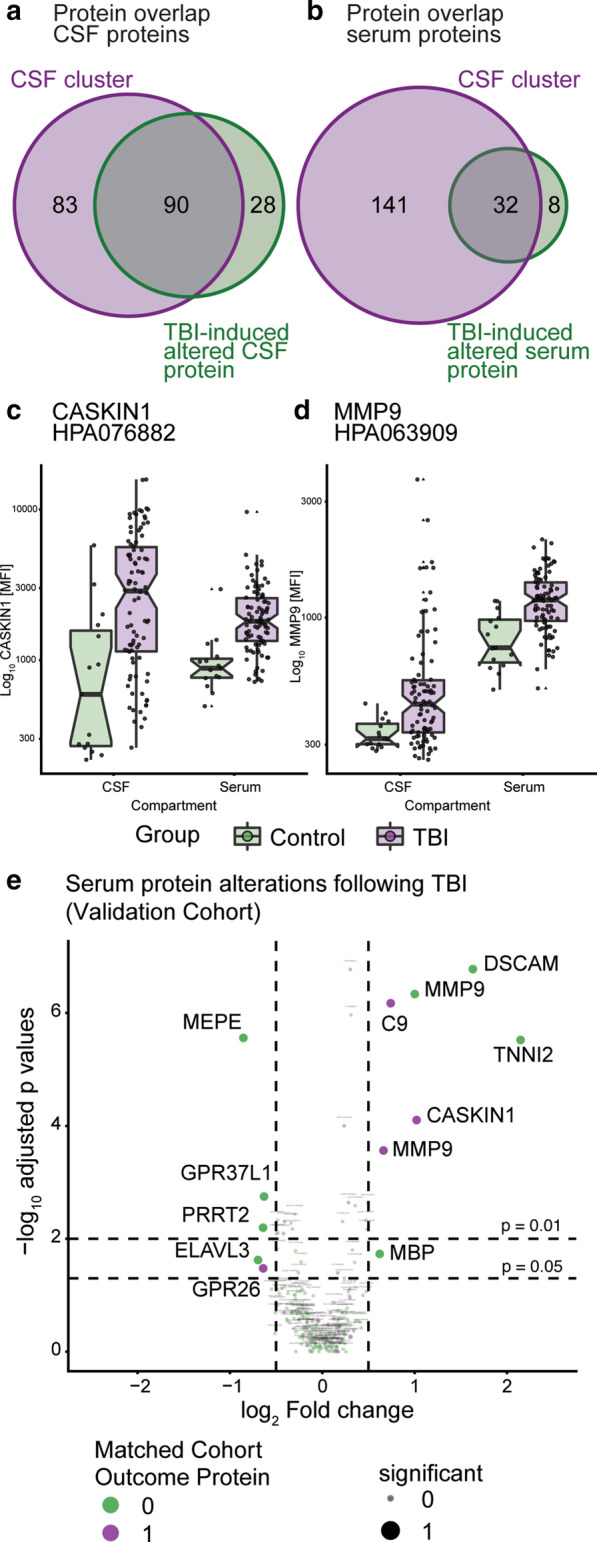
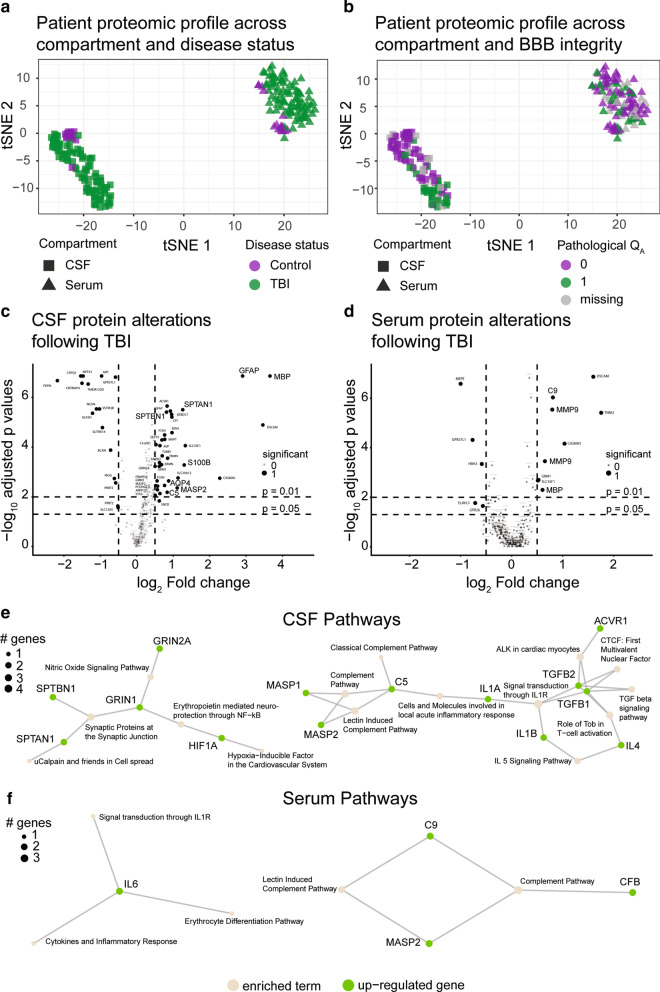
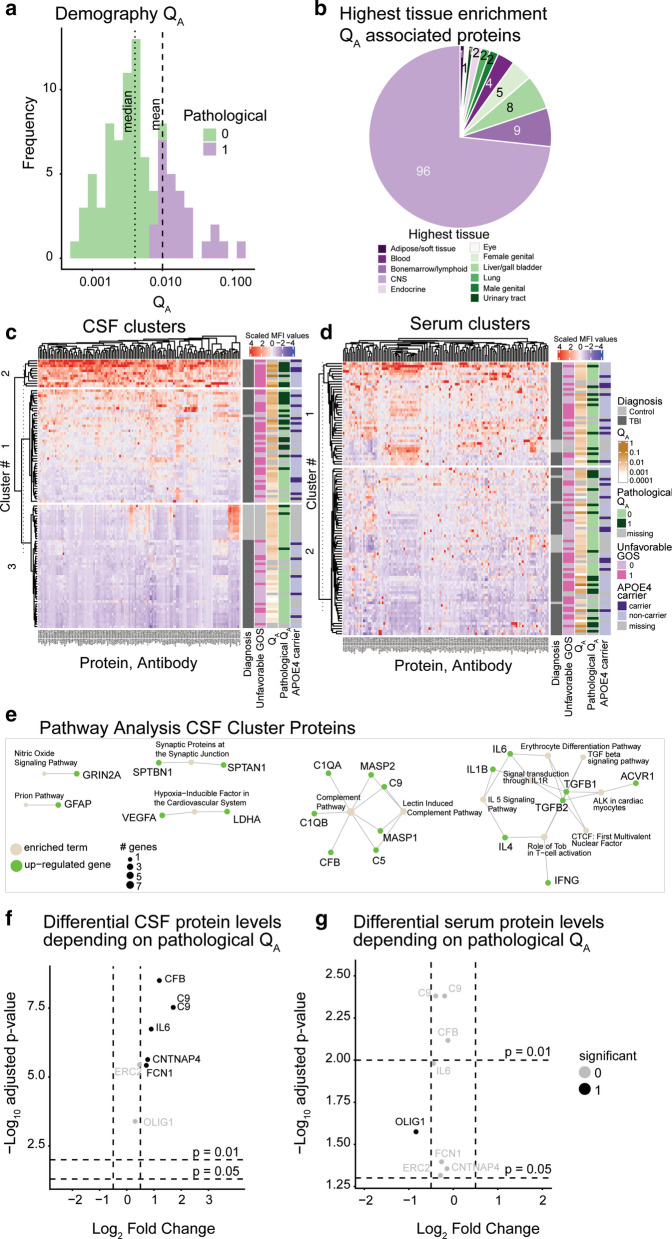
TBI patients had an upregulation of structural CNS and neuroinflammatory pathways in both CSF and serum. In total, 114 proteins correlated with Q, among which the top-correlated proteins were complement proteins. A cluster analysis revealed protein levels to be strongly associated with BBB integrity, but not carriage of the Apolipoprotein E4-variant. Among cluster-derived proteins, innate immune pathways were upregulated. Forty unique proteins emanated as novel independent predictors of clinical outcome, that individually explained ~ 10% additional model variance. Among proteins significantly different between TBI patients with intact or disrupted BBB, complement C9 in CSF (p = 0.014, ΔR = 7.4%) and complement factor B in serum (p = 0.003, ΔR = 9.2%) were independent outcome predictors also following step-down modelling.
This represents the largest concomitant CSF and serum proteomic profiling study so far reported in TBI, providing substantial support to the notion that neuroinflammatory markers, including complement activation, predicts BBB disruption and long-term outcome. Individual proteins identified here could potentially serve to refine current biomarker modelling or represent novel treatment targets in severe TBI.
严重创伤性脑损伤(TBI)与血脑屏障(BBB)破坏和随后的神经炎症过程有关。我们旨在对血液和脑脊液(CSF)中丰富的脑和炎症蛋白进行多重筛选,以研究它们在 TBI 患者和健康对照者的 BBB 破坏、神经炎症和长期功能结局中的作用。
我们对 90 例严重 TBI 患者和 15 例对照者进行了前瞻性、观察性研究。在 6-12 个月后收集格拉斯哥结局评分的临床结局数据。我们利用悬浮珠抗体阵列在 FlexMap 3D Luminex 平台上进行分析,以表征匹配的 CSF 和血清样本中的 177 种独特蛋白质。此外,我们还使用 CSF-血清白蛋白商(Q)评估 BBB 破坏,并进行载脂蛋白 E 基因分型,因为后者在没有创伤的情况下与 BBB 功能有关。我们采用途径、聚类和比例优势回归分析。关键发现通过独立的 TBI 队列的血液样本进行验证。
TBI 患者的 CSF 和血清中均存在结构 CNS 和神经炎症途径的上调。共有 114 种蛋白质与 Q 相关,其中相关性最高的蛋白质是补体蛋白。聚类分析表明,蛋白质水平与 BBB 完整性密切相关,但与载脂蛋白 E4 变体无关。在聚类衍生的蛋白质中,先天免疫途径被上调。40 种独特的蛋白质作为临床结局的新的独立预测因子出现,单独解释了大约 10%的额外模型方差。在 BBB 完整或破坏的 TBI 患者之间差异显著的蛋白质中,CSF 中的补体 C9(p=0.014,ΔR=7.4%)和血清中的补体因子 B(p=0.003,ΔR=9.2%)是独立的预后预测因子,在逐步模型建立后也是如此。
这是迄今为止 TBI 中最大的同时 CSF 和血清蛋白质组学分析研究,为神经炎症标志物(包括补体激活)预测 BBB 破坏和长期结局的观点提供了有力支持。这里鉴定的单个蛋白质可能有助于完善当前的生物标志物建模,或代表严重 TBI 的新治疗靶点。