Department of Gastroenterology, The First Affiliated Hospital, College of Medicine, Zhejiang University, Hangzhou, China.
Department of Gastroenterology and Hepatology, Zhongshan Hospital, Fudan University, Shanghai, China.
J Biol Chem. 2021 Jan-Jun;296:100531. doi: 10.1016/j.jbc.2021.100531. Epub 2021 Mar 11.
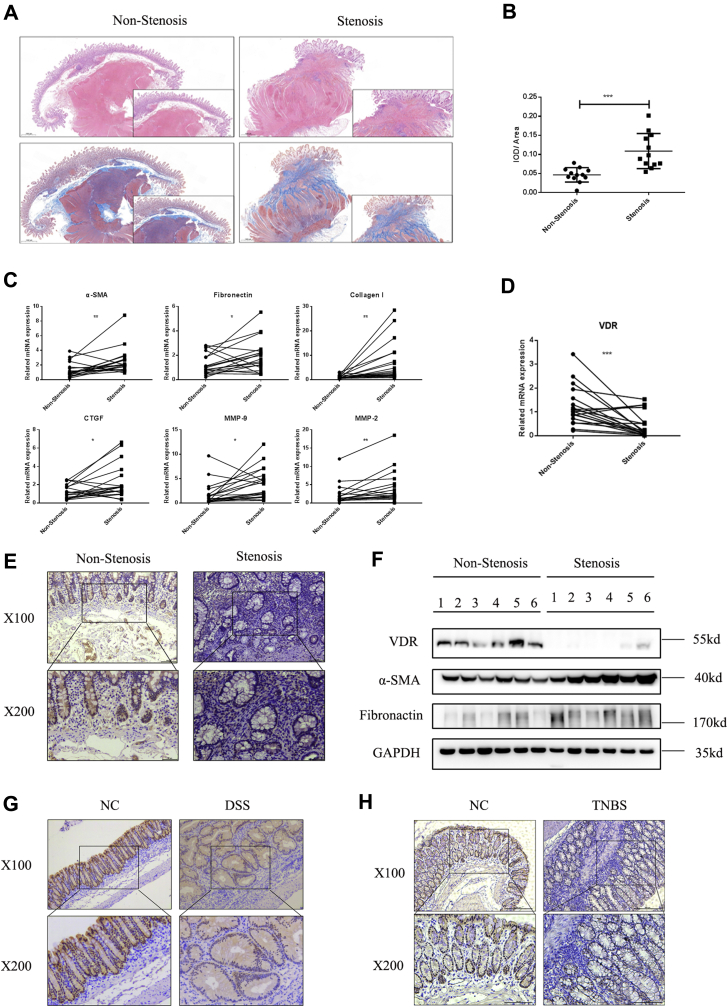
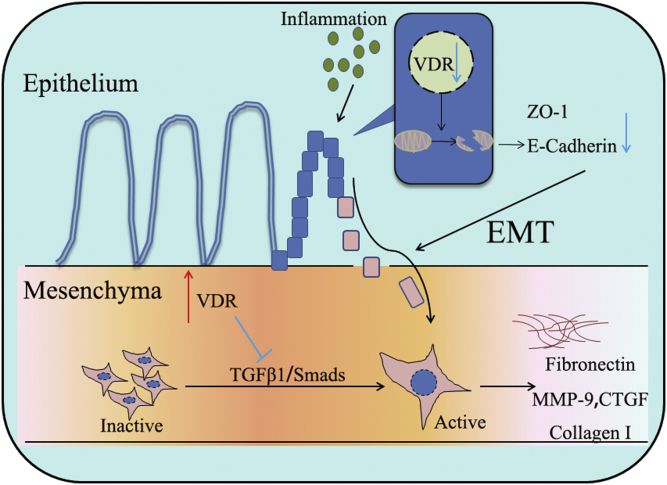
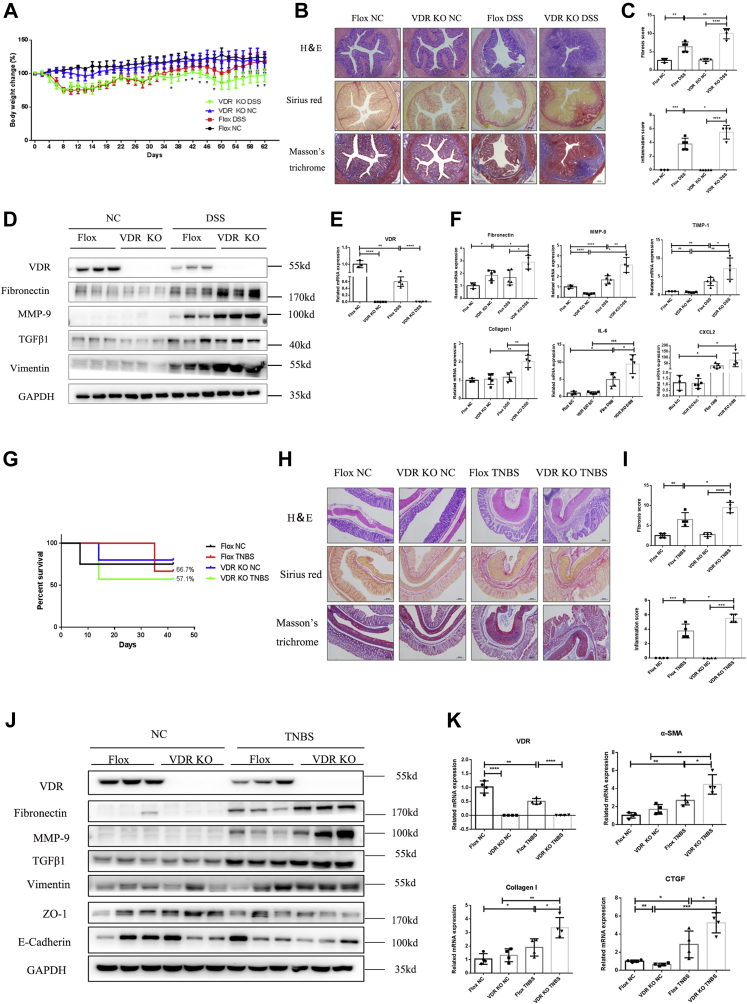
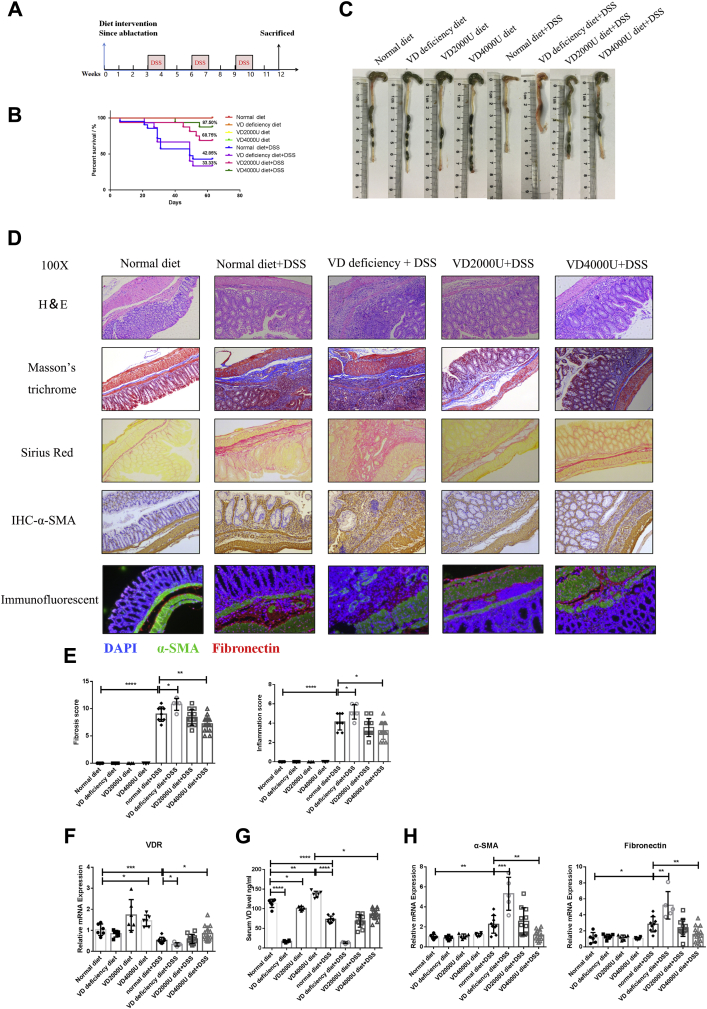
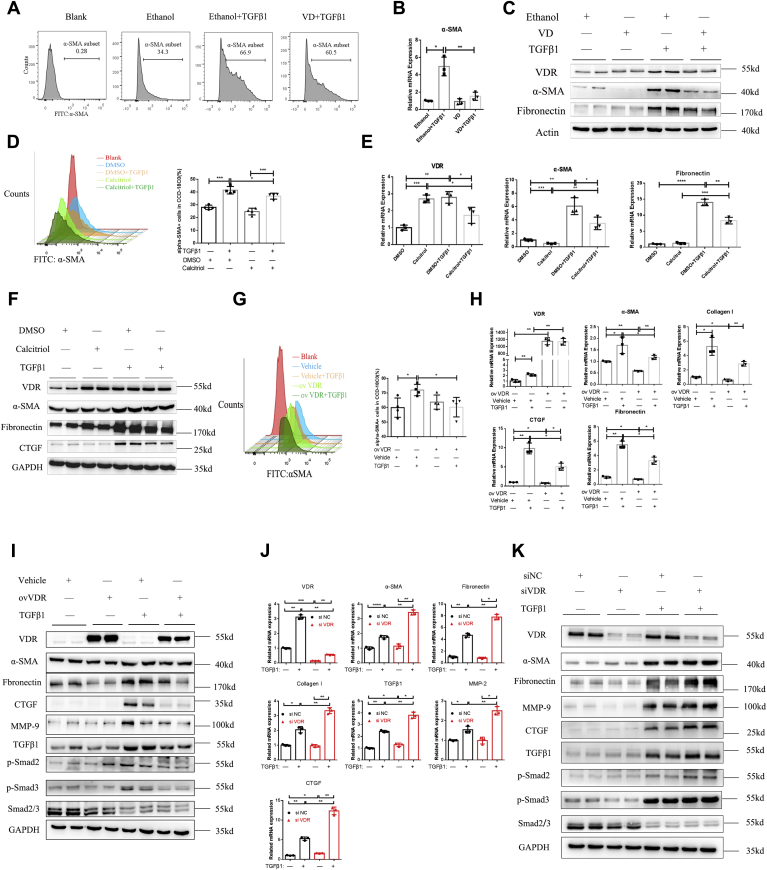
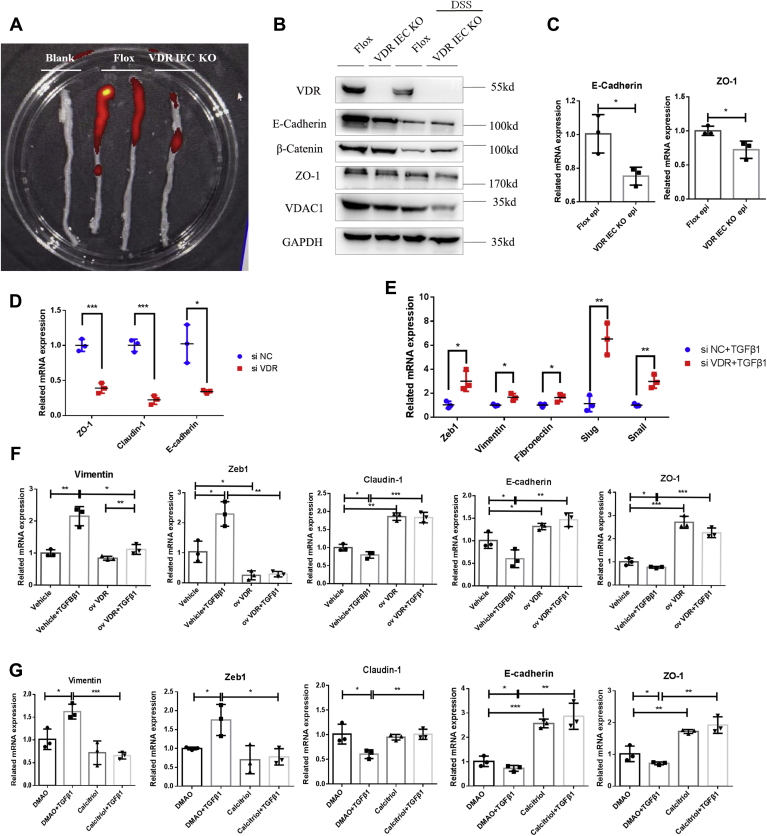
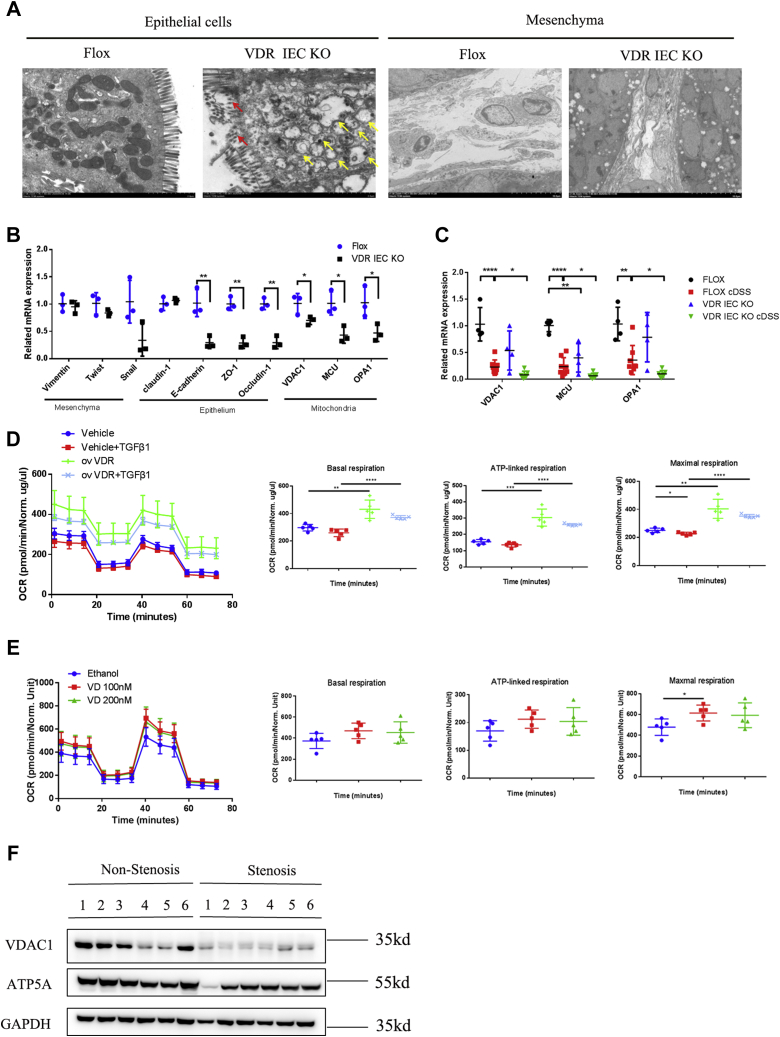
We previously showed that the vitamin D receptor (VDR) plays a crucial role in acute inflammatory bowel disease and that intestinal fibrosis is a common complication of Crohn's disease (CD). Epithelial-mesenchymal transition (EMT) is an important hallmark of fibrogenesis through which epithelial cells lose their epithelial phenotype and transform into mesenchymal cells. It is known that the VDR plays an essential role in epithelial integrity and mitochondrial function, but its role in intestinal fibrosis remains unknown. Here, we investigated whether the VDR is involved in epithelial mitochondrial dysfunction that results in EMT in intestinal fibrosis. Using human CD samples, intestine-specific VDR-KO mice, and fibroblast cellular models, we showed that the expression of the VDR was significantly lower in intestinal stenotic areas than in nonstenotic areas in patients with chronic CD. Genetic deletion of the VDR in the intestinal epithelium exacerbated intestinal fibrosis in mice administered with dextran sulfate sodium or 2,4,6-trinitrobenzene sulfonic acid, two experimental colitis inducers. In addition, we found that vitamin D dietary intervention regulated intestinal fibrosis by modulating the intestinal expression of the VDR. Mechanistically, knocking down the VDR in both CCD-18Co cells and human primary colonic fibroblasts promoted fibroblast activation, whereas VDR overexpression or VDR agonist administration inhibited fibroblast activation. Further analysis illustrated that the VDR inhibited EMT in the HT29 cell model and that mitochondrial dysfunction mediated epithelial integrity and barrier function in VDR-deficient epithelial cells. Together, our data for the first time demonstrate that VDR activation alleviates intestinal fibrosis by inhibiting fibroblast activation and epithelial mitochondria-mediated EMT.
我们之前已经证明维生素 D 受体(VDR)在急性炎症性肠病中起着至关重要的作用,并且肠道纤维化是克罗恩病(CD)的常见并发症。上皮-间充质转化(EMT)是纤维化的一个重要标志,通过该转化,上皮细胞失去上皮表型并转化为间充质细胞。已知 VDR 在上皮细胞完整性和线粒体功能中起着至关重要的作用,但它在肠道纤维化中的作用仍不清楚。在这里,我们研究了 VDR 是否参与导致肠道纤维化的 EMT 中上皮细胞的线粒体功能障碍。使用人类 CD 样本、肠道特异性 VDR-KO 小鼠和纤维母细胞细胞模型,我们发现 VDR 在慢性 CD 患者的肠狭窄区域的表达明显低于非狭窄区域。在给予葡聚糖硫酸钠或 2,4,6-三硝基苯磺酸(两种实验性结肠炎诱导剂)的小鼠中,肠道上皮细胞中 VDR 的遗传缺失加剧了肠道纤维化。此外,我们发现维生素 D 饮食干预通过调节肠道 VDR 的表达来调节肠道纤维化。从机制上讲,在 CCD-18Co 细胞和人原代结肠成纤维细胞中敲低 VDR 促进了成纤维细胞的激活,而 VDR 过表达或 VDR 激动剂给药抑制了成纤维细胞的激活。进一步的分析表明,VDR 在 HT29 细胞模型中抑制 EMT,并且线粒体功能障碍介导 VDR 缺陷上皮细胞中的上皮完整性和屏障功能。总之,我们的数据首次表明,VDR 激活通过抑制成纤维细胞激活和上皮细胞线粒体介导的 EMT 来缓解肠道纤维化。