Cardiology Department, Zagazig University, Zagazig, Egypt.
Cardiology Department, Zagazig University, Zagazig, Egypt.
Indian Heart J. 2021 Jan-Feb;73(1):35-43. doi: 10.1016/j.ihj.2020.12.008. Epub 2020 Dec 29.
The no-reflow phenomenon occurs in 25% of patients with ST elevation myocardial infarction (STEMI) undergoing primary percutaneous coronary intervention (PCI), and may be associated with adverse outcomes. The aim of our study was to detect novel predictors of no-reflow phenomenon and the resulting adverse long term outcomes.
We enrolled 400 STEMI patients undergoing primary PCI; 228 patients had TIMI flow 3 after PCI (57%) and the remaining 172 patients had TIMI flow <3 (43%). Fibrinogen to albumin ratio (FAR), high sensitive C-reactive protein to albumin ratio (CAR), and atherogenic index of plasma (AIP) were calculated. Long term mortality and morbidity during 6 months follow up were recorded. These data were compared among both groups.
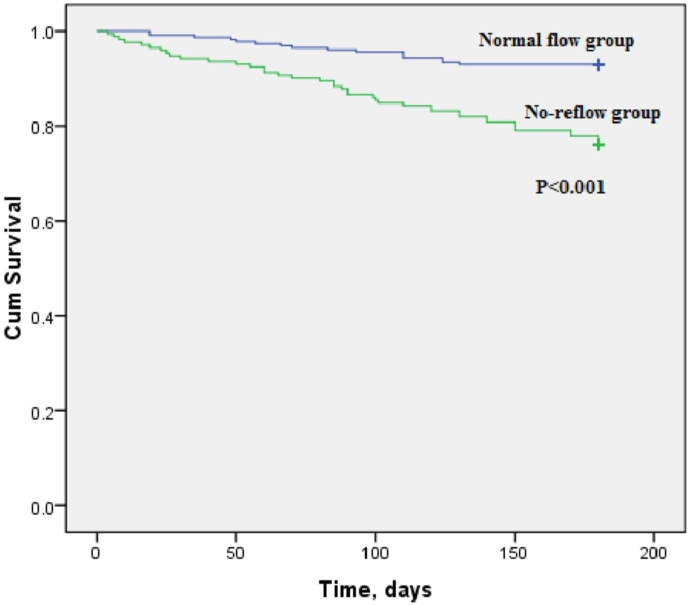
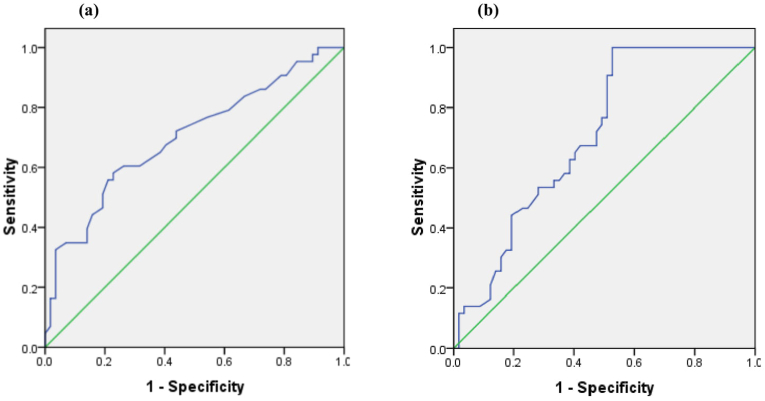
In multivariate regression analysis, old age (OR = 1.115, 95% CI: 1.032-1.205, P = 0.006), higher troponin level >5.6 ng/mL (OR = 1.040, 95% CI: 1.001-1.080, P = 0.04), diabetes mellitus (OR = 4.401, 95% CI: 1.081-17.923, P = 0.04) and heavy thrombus burden (OR = 16.915, 95% CI: 5.055-56.602, P < 0.001) could be considered as predictors for the development of no-reflow. Interestingly, CAR >0.21, FAR >11.56, and AIP >0.52 could be considered as novel powerful independent predictors (OR = 3.357, 95% CI: 2.288-4.927, P < 0.001, OR = 4.187, 95% CI: 2.761-6.349, P < 0.001, OR = 16.794, 95% CI: 1.018-277.01, P = 0.04, respectively). Higher long term mortality (P < 0.001) and heart failure (P < 0.001) was also strongly related to incidence of no-reflow.
No-reflow could be attributed to novel predictors as CAR, FAR, and AIP. This phenomenon was associated with long term adverse events as higher mortality and pump failure.
在接受直接经皮冠状动脉介入治疗(PCI)的 ST 段抬高型心肌梗死(STEMI)患者中,有 25%发生无复流现象,可能与不良结局相关。本研究旨在发现无复流现象的新预测因子及其导致的不良长期结局。
我们纳入了 400 名接受直接 PCI 的 STEMI 患者;228 名患者 PCI 后 TIMI 血流 3 级(57%),其余 172 名患者 TIMI 血流<3 级(43%)。计算纤维蛋白原与白蛋白比值(FAR)、高敏 C 反应蛋白与白蛋白比值(CAR)和血浆致动脉粥样硬化指数(AIP)。记录 6 个月随访期间的长期死亡率和发病率。比较两组间的数据。
多变量回归分析显示,高龄(OR=1.115,95%CI:1.032-1.205,P=0.006)、肌钙蛋白水平较高(>5.6ng/ml,OR=1.040,95%CI:1.001-1.080,P=0.04)、糖尿病(OR=4.401,95%CI:1.081-17.923,P=0.04)和血栓负荷较重(OR=16.915,95%CI:5.055-56.602,P<0.001)可作为无复流发生的预测因子。有趣的是,CAR>0.21、FAR>11.56 和 AIP>0.52 可作为新的强有力的独立预测因子(OR=3.357,95%CI:2.288-4.927,P<0.001,OR=4.187,95%CI:2.761-6.349,P<0.001,OR=16.794,95%CI:1.018-277.01,P=0.04)。较高的长期死亡率(P<0.001)和心力衰竭(P<0.001)也与无复流的发生率密切相关。
无复流现象可归因于新型预测因子,如 CAR、FAR 和 AIP。该现象与较高的死亡率和泵衰竭等长期不良事件相关。