Department of Physiology, Faculty of Medical Sciences in Katowice, Medical University of Silesia, Katowice, Poland.
Laboratory of Molecular Biology, Institute of Physiotherapy and Health Sciences, The Jerzy Kukuczka Academy of Physical Education, Katowice, Poland.
Front Endocrinol (Lausanne). 2021 Feb 24;12:568197. doi: 10.3389/fendo.2021.568197. eCollection 2021.
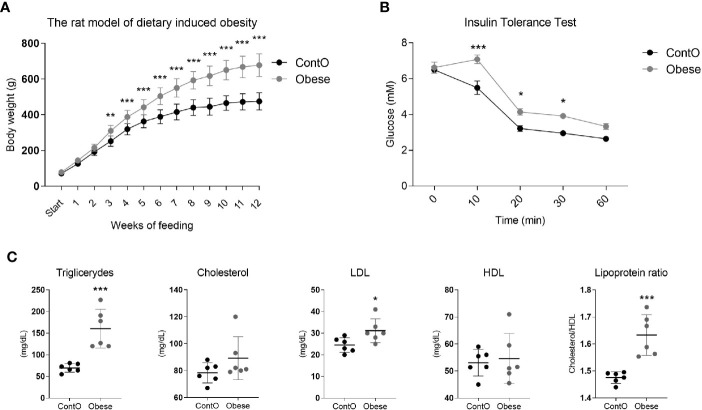
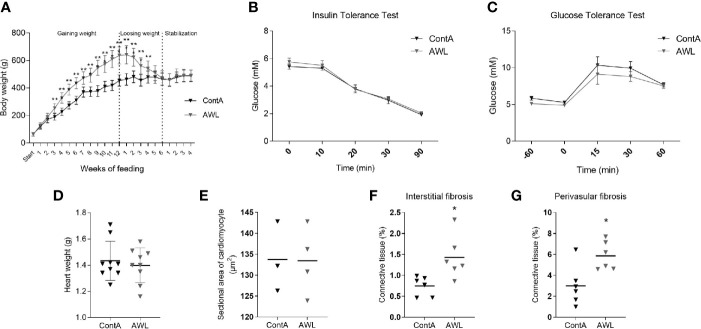
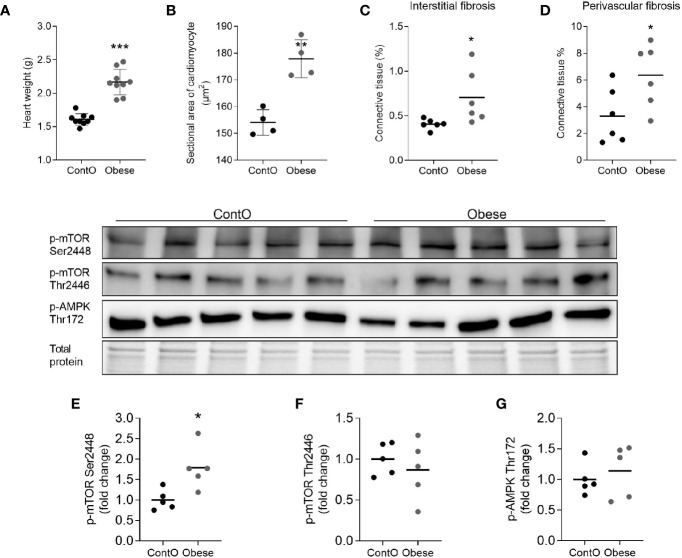
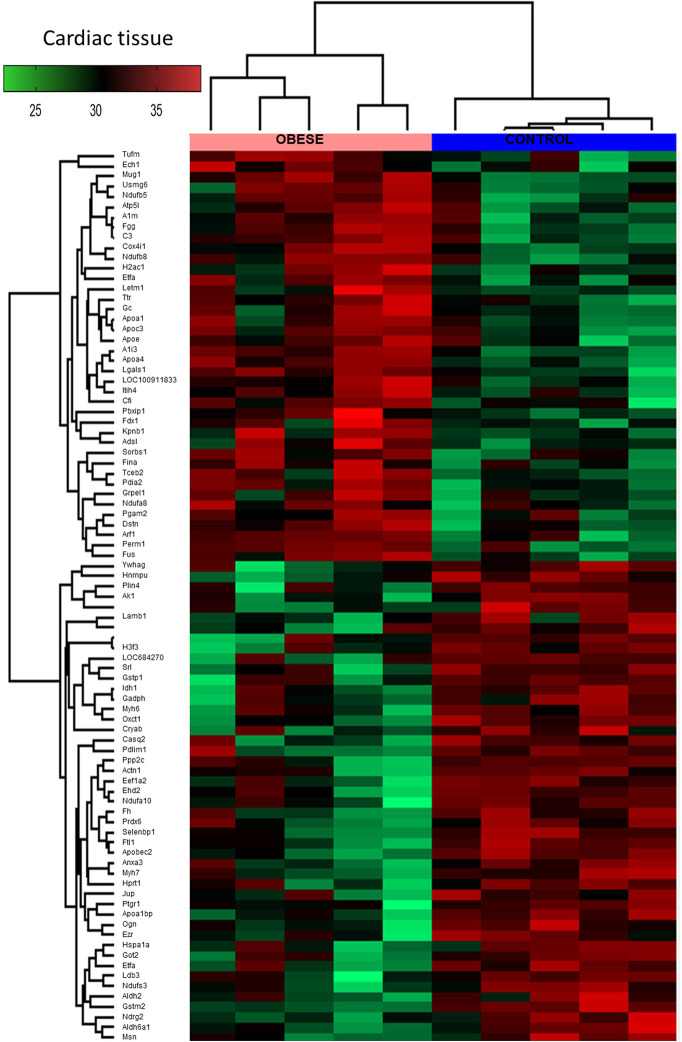
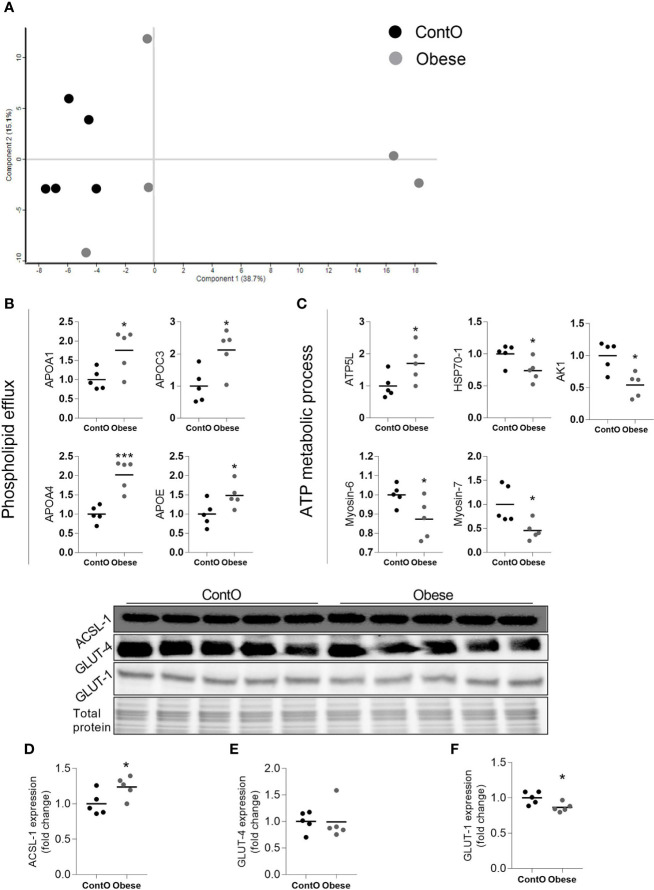
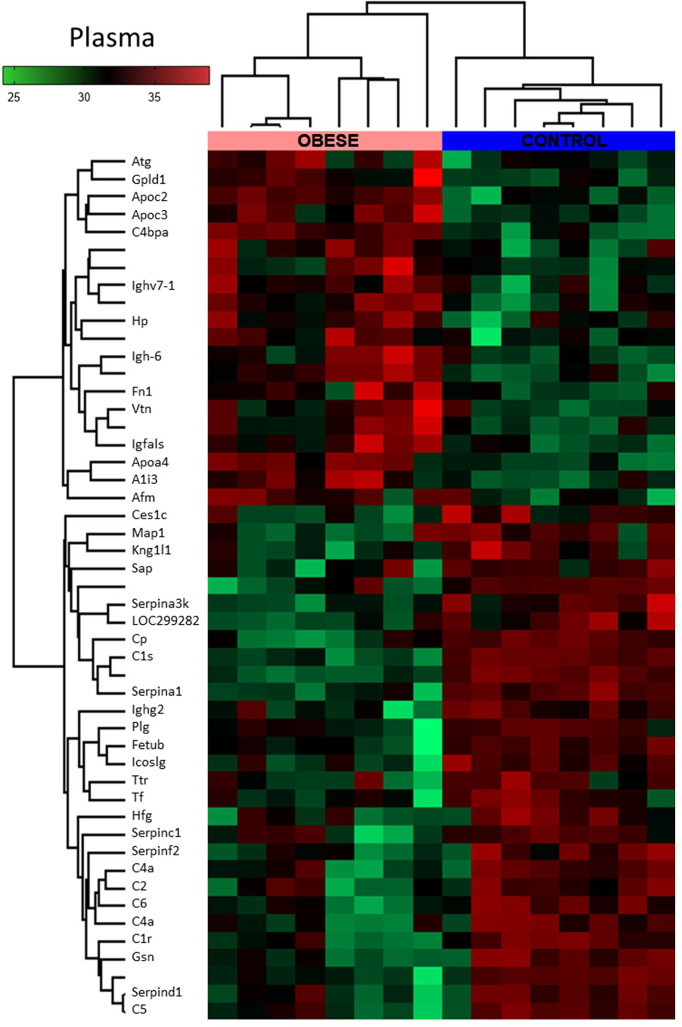
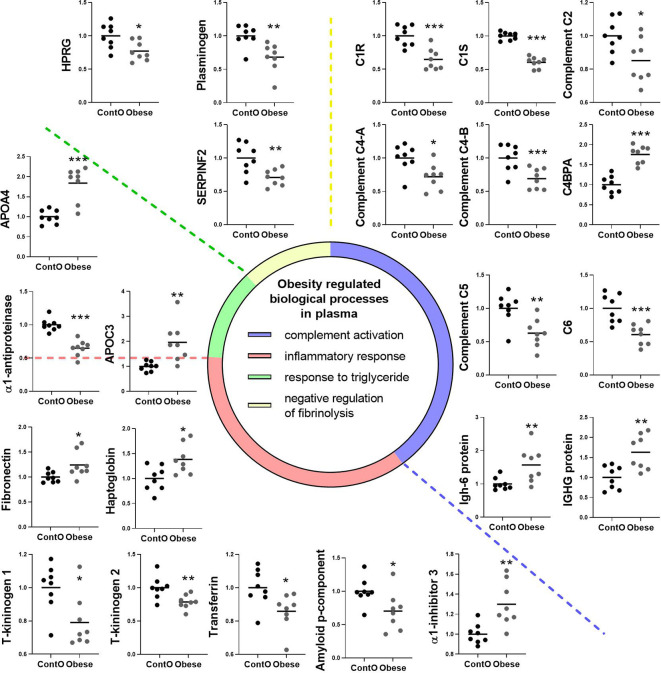
Obesity cardiomyopathy increases the risk of heart failure and death. Obesity is curable, leading to the restoration of the heart phenotype, but it is not clear if there are any after-effects of obesity present after weight loss. We characterize the proteomic landscape of obesity cardiomyopathy with an evaluation of whether the cardiac phenotype is still shaped after weight loss. Cardiomyopathy was validated by cardiac hypertrophy, fibrosis, oversized myocytes, and mTOR upregulation in a rat model of cafeteria diet-induced developmental obesity. By global proteomic techniques (LC-MS/MS) a plethora of molecular changes was observed in the heart and circulation of obese animals, suggesting abnormal utilization of metabolic substrates. This was confirmed by increased levels of cardiac ACSL-1, a key enzyme for fatty acid degradation and decreased GLUT-1, a glucose transporter in obese rats. Calorie restriction and weight loss led to the normalization of the heart's size, but fibrosis was still excessive. The proteomic compositions of cardiac tissue and plasma were different after weight loss as compared to control. In addition to morphological consequences, obesity cardiomyopathy involves many proteomic changes. Weight loss provides for a partial repair of the heart's architecture, but the trace of fibrotic deposition and proteomic alterations may occur.
肥胖性心肌病增加心力衰竭和死亡的风险。肥胖是可治愈的,可导致心脏表型恢复,但尚不清楚减肥后是否存在肥胖的后遗症。我们通过评估减肥后心脏表型是否仍然存在来描述肥胖性心肌病的蛋白质组学特征。通过 cafeteria 饮食诱导的发育性肥胖大鼠模型中的心脏肥大、纤维化、心肌细胞过大和 mTOR 上调来验证心肌病。通过全局蛋白质组学技术(LC-MS/MS),在肥胖动物的心脏和循环中观察到大量分子变化,表明代谢底物的利用异常。这通过心脏 ACSL-1(脂肪酸降解的关键酶)水平升高和肥胖大鼠中葡萄糖转运蛋白 GLUT-1 降低得到证实。热量限制和体重减轻导致心脏大小正常化,但纤维化仍然过多。与对照组相比,减肥后心脏组织和血浆的蛋白质组组成不同。除了形态学后果外,肥胖性心肌病还涉及许多蛋白质组变化。体重减轻为心脏结构的部分修复提供了条件,但可能会出现纤维沉积和蛋白质组改变的痕迹。