Li Haozhen, Zhu Quan, Li Kaixuan, Wu Ziqiang, Tang Zhengyan, Wang Zhao
Department of Urology, Xiangya Hospital, Central South University, Changsha, China.
Hunan Provincial Engineering Laboratory for Diagnosis and Treatment of Genitourinary System Disease, Changsha, China.
Transl Androl Urol. 2021 Feb;10(2):830-840. doi: 10.21037/tau-20-1202.
Ketamine abuse has been linked to the system's damage, presenting with lower urinary tract symptoms (LUTS). While the pathogenesis of ketamine-induced urinary damage is not fully understood, fibrosis is believed to be a potential mechanism. A metabolomic investigation of the urinary metabolites in ketamine abuse was conducted to gain insights into its pathogenesis.
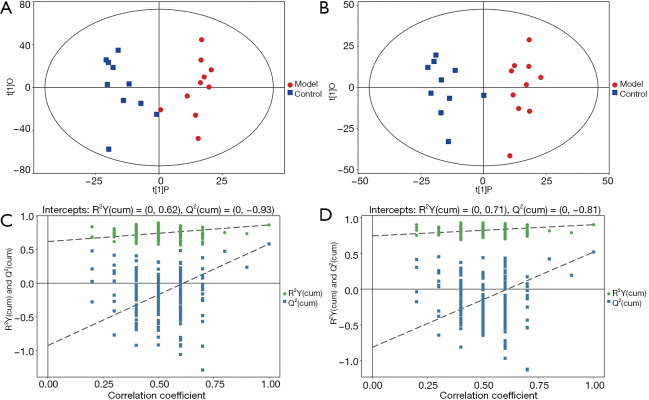
A rat model of ketamine induced bladder fibrosis was established through tail vein injection of ketamine hydrochloride and control group was established through tail vein injection of the equivalent normal saline. Hematoxylin and eosin (H&E) staining and Masson trichrome staining were performed to evaluated bladder pathology. Urinary components were detected based on a metabolomic approach using ultra-high performance liquid tandem chromatography quadrupole time of flight mass spectrometry (UHPLC-QTOFMS platform). Orthogonal projections analyzed the data to latent structures discriminant analysis (OPLS-DA) and bioinformatics analysis.
The rat model of ketamine induced bladder fibrosis was confirmed through H&E and Masson trichrome staining. There were marked differences in the urinary metabolites between the experimental group and the control group. Compared to the control group, 16 kinds of differential metabolites were up-regulated and 102 differential metabolites were down-regulated in the urine samples of the ketamine group. Bioinformatics analysis revealed the related metabolic pathways.
Using a ketamine-induced bladder fibrosis rat model, this study identified the differential urinary metabolites expressed following ketamine treatment. These results provide vital clues for exploring the pathogenesis of ketamine-induced LUTS and may further contribute to the disease's diagnosis and treatment.
氯胺酮滥用与系统损害有关,表现为下尿路症状(LUTS)。虽然氯胺酮所致泌尿系统损害的发病机制尚未完全明确,但纤维化被认为是一种潜在机制。本研究对氯胺酮滥用者尿液代谢物进行代谢组学研究,以深入了解其发病机制。
通过尾静脉注射盐酸氯胺酮建立氯胺酮诱导膀胱纤维化大鼠模型,通过尾静脉注射等量生理盐水建立对照组。采用苏木精-伊红(H&E)染色和Masson三色染色评估膀胱病理变化。基于代谢组学方法,使用超高效液相色谱串联四极杆飞行时间质谱(UHPLC-QTOFMS平台)检测尿液成分。采用正交投影分析数据进行潜在结构判别分析(OPLS-DA)和生物信息学分析。
通过H&E和Masson三色染色证实了氯胺酮诱导膀胱纤维化大鼠模型。实验组和对照组尿液代谢物存在显著差异。与对照组相比,氯胺酮组尿液样本中16种差异代谢物上调,102种差异代谢物下调。生物信息学分析揭示了相关代谢途径。
本研究利用氯胺酮诱导膀胱纤维化大鼠模型,鉴定了氯胺酮处理后尿液中表达的差异代谢物。这些结果为探索氯胺酮诱导LUTS的发病机制提供了重要线索,可能有助于该疾病的诊断和治疗。