MRC Centre for Molecular Bacteriology and Infection, Imperial College London, London, United Kingdom.
Front Cell Infect Microbiol. 2021 Feb 24;11:608860. doi: 10.3389/fcimb.2021.608860. eCollection 2021.
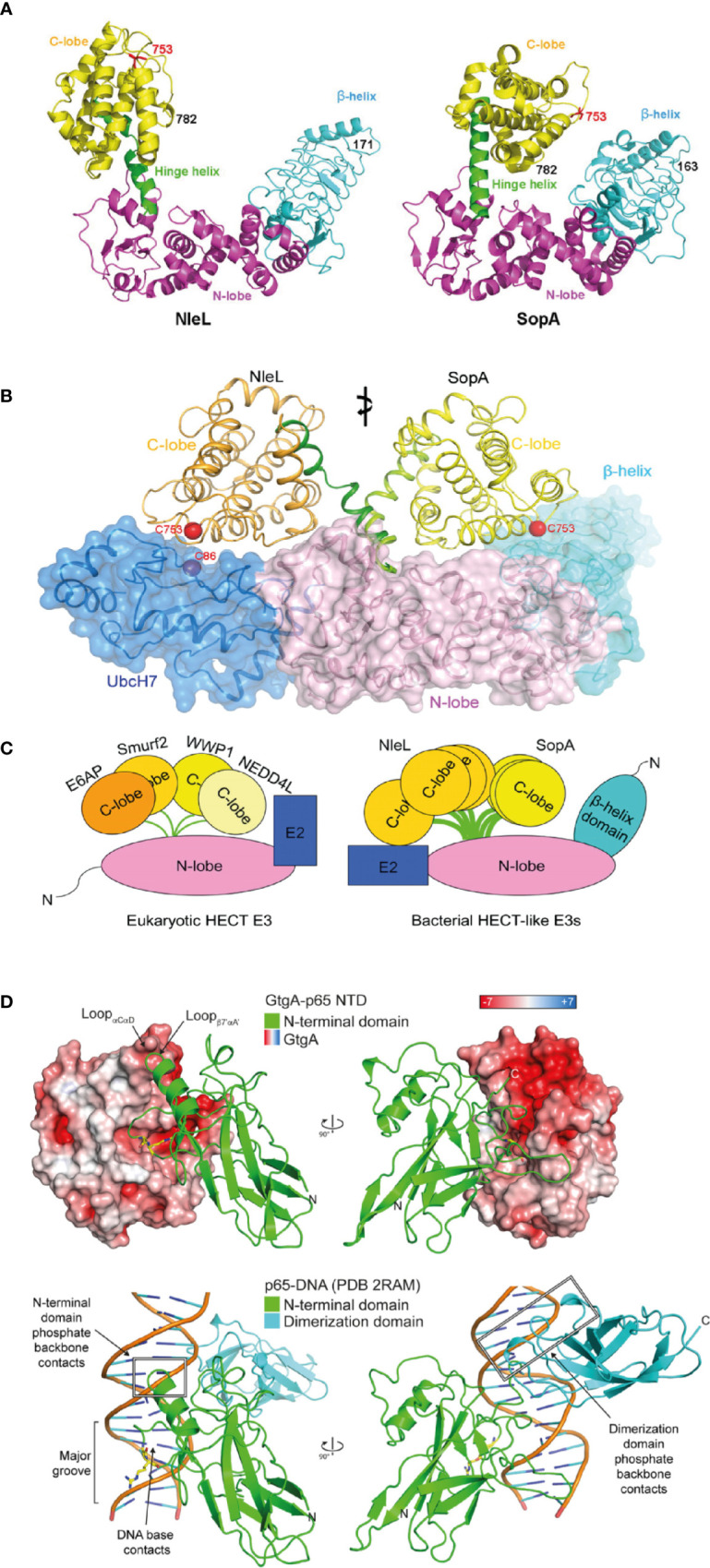
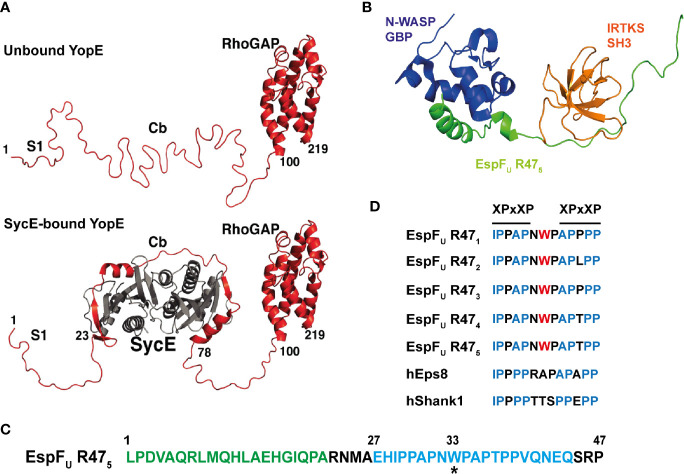
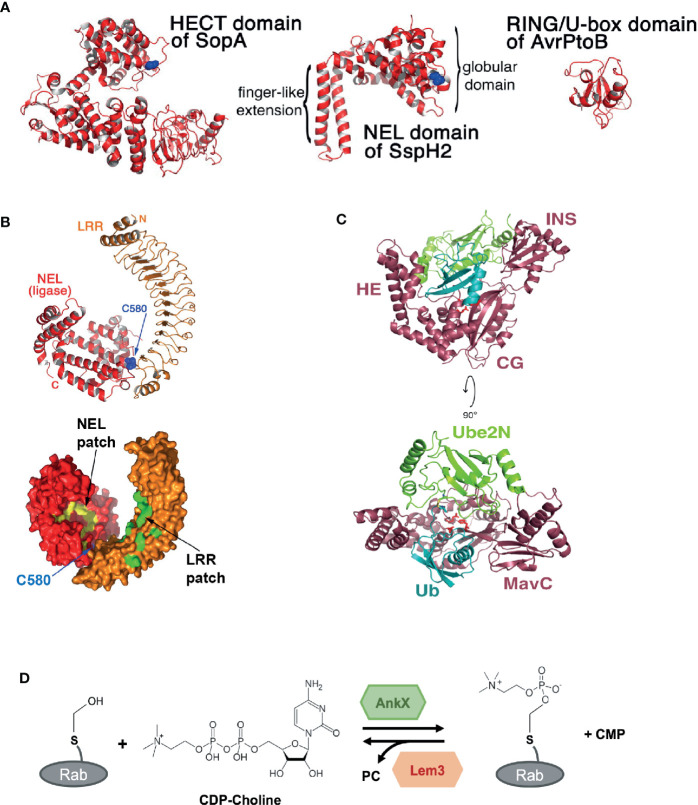
Bacterial effector proteins, delivered into host cells by specialized multiprotein secretion systems, are a key mediator of bacterial pathogenesis. Following delivery, they modulate a range of host cellular processes and functions. Strong selective pressures have resulted in bacterial effectors evolving unique structures that can mimic host protein biochemical activity or enable novel and distinct biochemistries. Despite the protein structure-function paradigm, effectors from different bacterial species that share biochemical activities, such as the conjugation of ubiquitin to a substrate, do not necessarily share structural or sequence homology to each other or the eukaryotic proteins that carry out the same function. Furthermore, some bacterial effectors have evolved structural variations to known protein folds which enable different or additional biochemical and physiological functions. Despite the overall low occurrence of intrinsically disordered proteins or regions in prokaryotic proteomes compared to eukaryotes proteomes, bacterial effectors appear to have adopted intrinsically disordered regions that mimic the disordered regions of eukaryotic signaling proteins. In this review, we explore examples of the diverse biochemical properties found in bacterial effectors that enable effector-mediated interference of eukaryotic signaling pathways and ultimately support pathogenesis. Despite challenges in the structural and functional characterisation of effectors, recent progress has been made in understanding the often unusual and fascinating ways in which these virulence factors promote pathogenesis. Nevertheless, continued work is essential to reveal the array of remarkable activities displayed by effectors.
细菌效应蛋白通过专门的多蛋白分泌系统输送到宿主细胞中,是细菌发病机制的主要介质。输送后,它们调节一系列宿主细胞过程和功能。强烈的选择压力导致细菌效应蛋白进化出独特的结构,这些结构可以模拟宿主蛋白的生化活性或实现新的、独特的生化特性。尽管存在蛋白结构-功能的范例,但具有相同生化活性的不同细菌物种的效应蛋白,如将泛素连接到底物上,彼此之间不一定具有结构或序列同源性,也不一定与执行相同功能的真核蛋白具有同源性。此外,一些细菌效应蛋白已经进化出了对已知蛋白折叠的结构变化,从而实现了不同或额外的生化和生理功能。尽管与真核生物蛋白质组相比,原核生物蛋白质组中内在无序蛋白或区域的总体发生率较低,但细菌效应蛋白似乎已经采用了内在无序区域,这些区域模拟了真核信号蛋白的无序区域。在这篇综述中,我们探讨了在细菌效应蛋白中发现的各种生化特性的例子,这些特性使效应蛋白能够介导真核信号通路的干扰,并最终支持发病机制。尽管在效应蛋白的结构和功能表征方面存在挑战,但在理解这些毒力因子促进发病机制的常见和迷人方式方面已经取得了一些进展。然而,继续开展工作对于揭示效应蛋白所表现出的一系列惊人活性仍然是必要的。