Zhao Zai-Hua, Du Ke-Jun, Wang Tao, Wang Ji-Ye, Cao Zi-Peng, Chen Xiao-Ming, Song Han, Zheng Gang, Shen Xue-Feng
Department of Occupational and Environmental Health and the Ministry of Education Key Lab of Hazard Assessment and Control in Special Operational Environment, School of Public Health, Fourth Military Medical University, Xi'an, China.
Department of Health Service, Chinese PLA General Hospital, Beijing, China.
Front Cell Dev Biol. 2021 Feb 25;9:648261. doi: 10.3389/fcell.2021.648261. eCollection 2021.
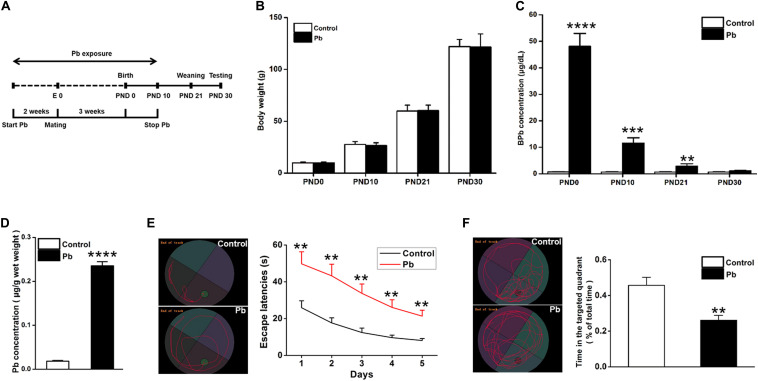
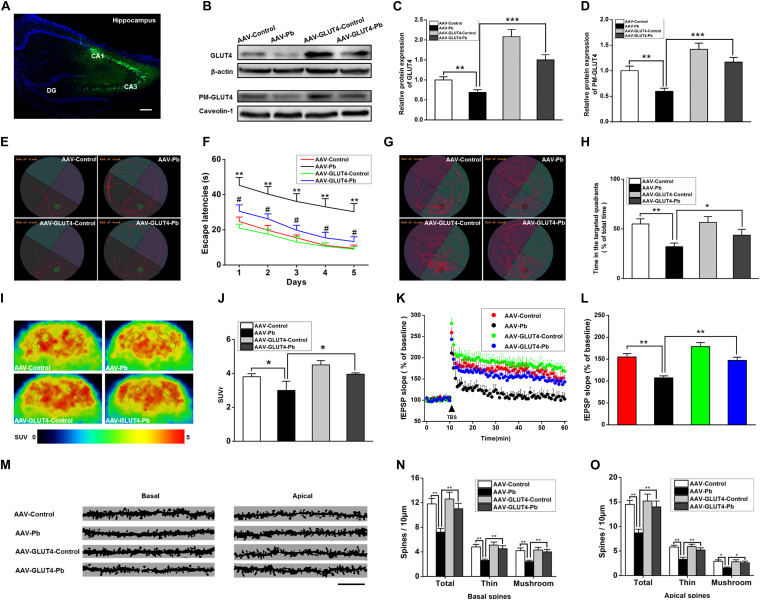
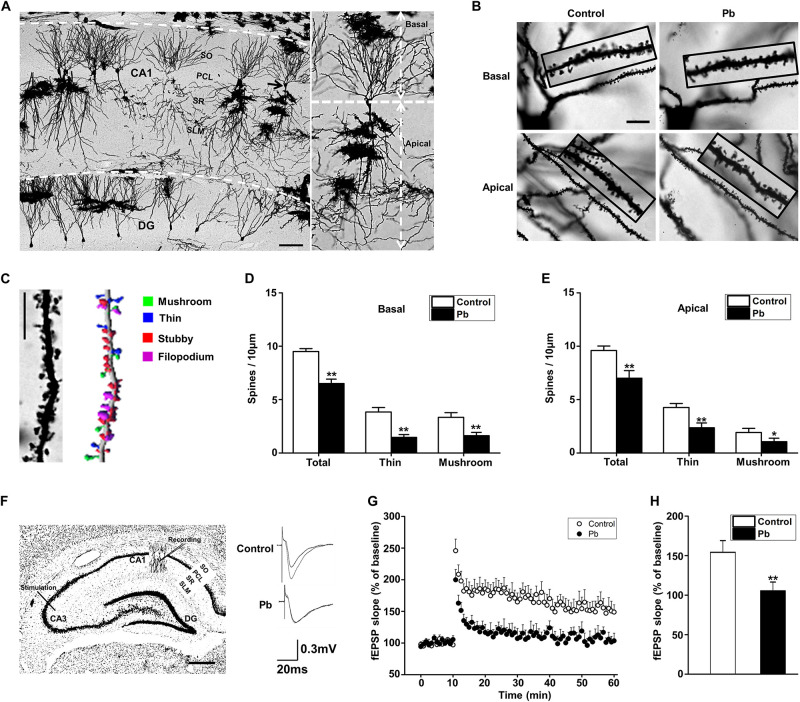
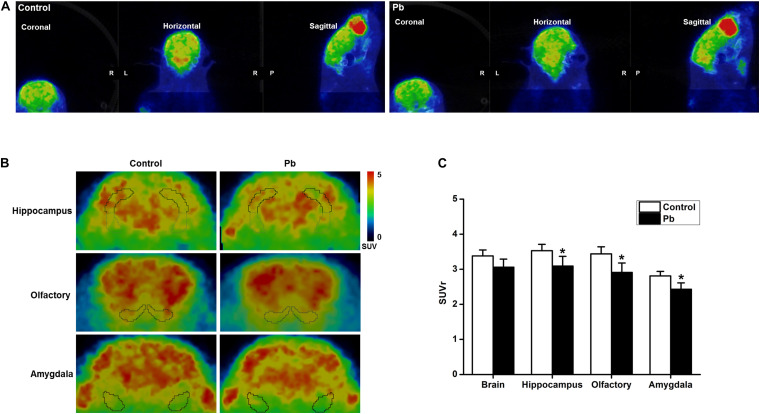
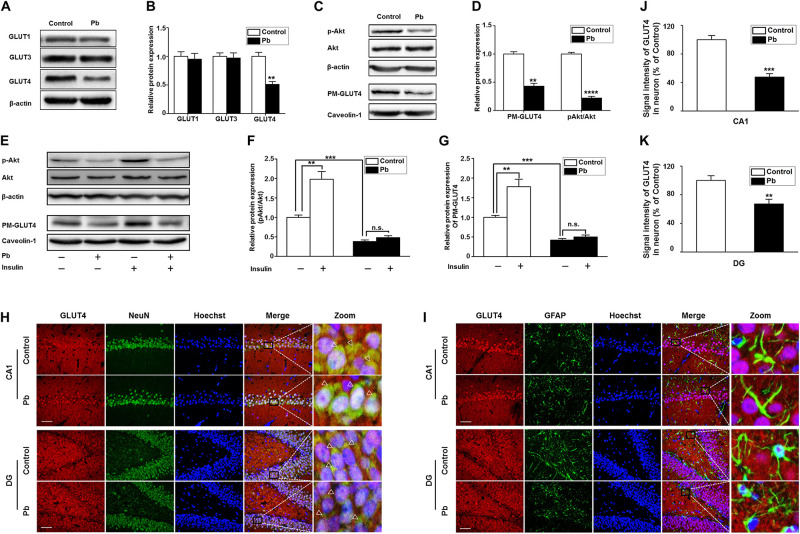
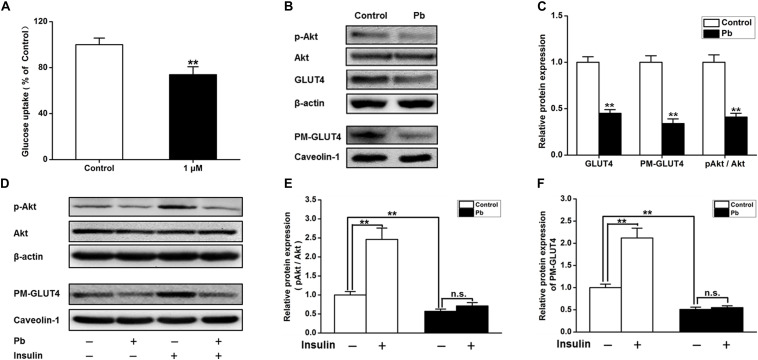
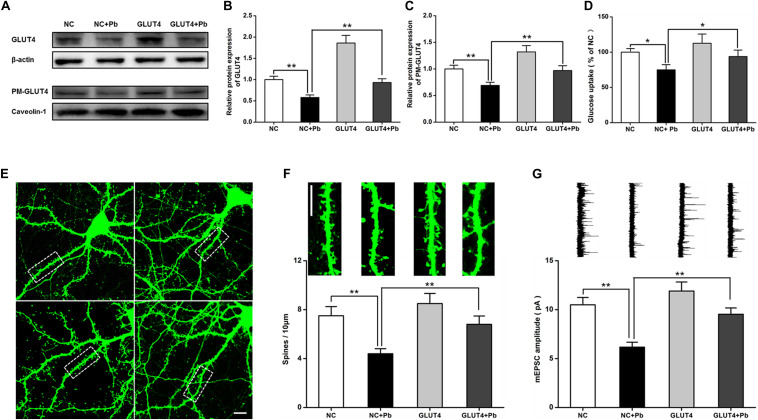
Lead (Pb) can cause a significant neurotoxicity in both adults and children, leading to the impairment to brain function. Pb exposure plays a key role in the impairment of learning and memory through synaptic neurotoxicity, resulting in the cognitive function. Researches have demonstrated that Pb exposure plays an important role in the etiology and pathogenesis of neurodegenerative diseases, such as Alzheimer's disease. However, the underlying mechanisms remain unclear. In the current study, a gestational Pb exposure (GLE) rat model was established to investigate the underlying mechanisms of Pb-induced cognitive impairment. We demonstrated that low-level gestational Pb exposure impaired spatial learning and memory as well as hippocampal synaptic plasticity at postnatal day 30 (PND 30) when the blood concentration of Pb had already recovered to normal levels. Pb exposure induced a decrease in hippocampal glucose metabolism by reducing glucose transporter 4 (GLUT4) levels in the cell membrane through the phosphatidylinositol 3 kinase-protein kinase B (PI3K-Akt) pathway. and GLUT4 over-expression increased the membrane translocation of GLUT4 and glucose uptake, and reversed the Pb-induced impairment to synaptic plasticity and cognition. These findings indicate that Pb exposure impairs synaptic plasticity by reducing the level of GLUT4 in the cell membrane as well as glucose uptake via the PI3K-Akt signaling pathway, demonstrating a novel mechanism for Pb exposure-induced neurotoxicity.
铅(Pb)可在成人和儿童中引起显著的神经毒性,导致脑功能受损。铅暴露通过突触神经毒性在学习和记忆损害中起关键作用,进而影响认知功能。研究表明,铅暴露在神经退行性疾病如阿尔茨海默病的病因和发病机制中起重要作用。然而,其潜在机制仍不清楚。在本研究中,建立了孕期铅暴露(GLE)大鼠模型以探究铅诱导认知障碍的潜在机制。我们发现,在出生后第30天(PND 30),当血液中铅浓度已恢复到正常水平时,低水平孕期铅暴露会损害空间学习和记忆以及海马突触可塑性。铅暴露通过磷脂酰肌醇3激酶 - 蛋白激酶B(PI3K - Akt)途径降低细胞膜中葡萄糖转运蛋白4(GLUT4)水平,从而导致海马葡萄糖代谢减少。GLUT4过表达增加了GLUT4的膜转位和葡萄糖摄取,并逆转了铅诱导的突触可塑性和认知损害。这些发现表明,铅暴露通过降低细胞膜中GLUT4水平以及通过PI3K - Akt信号通路减少葡萄糖摄取来损害突触可塑性,揭示了铅暴露诱导神经毒性的新机制。