Department of Oral and Maxillofacial Surgery, The First Affiliated Hospital of Chongqing Medical University, No. 1, Youyi Road, Yuzhong District, 400016, Chongqing, China.
Cell Death Dis. 2021 Mar 15;12(3):276. doi: 10.1038/s41419-021-03563-5.
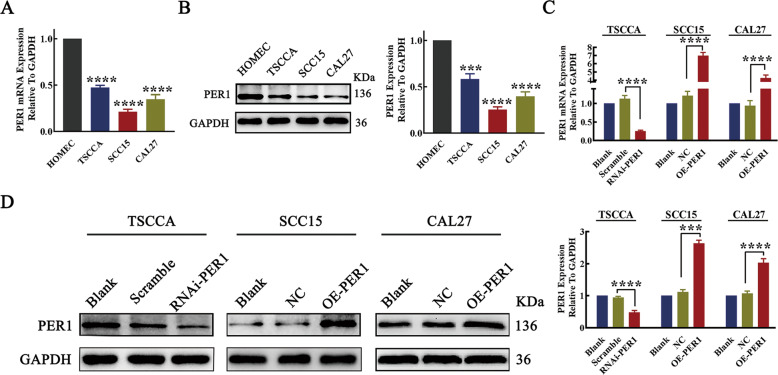
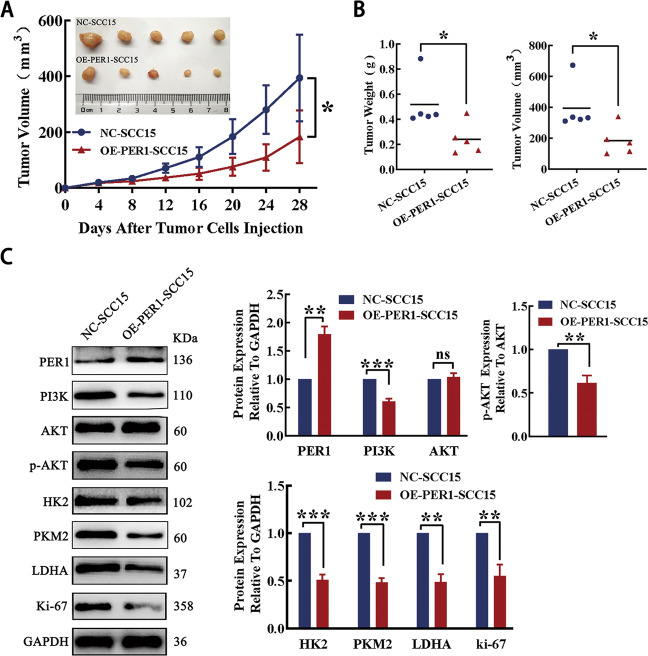
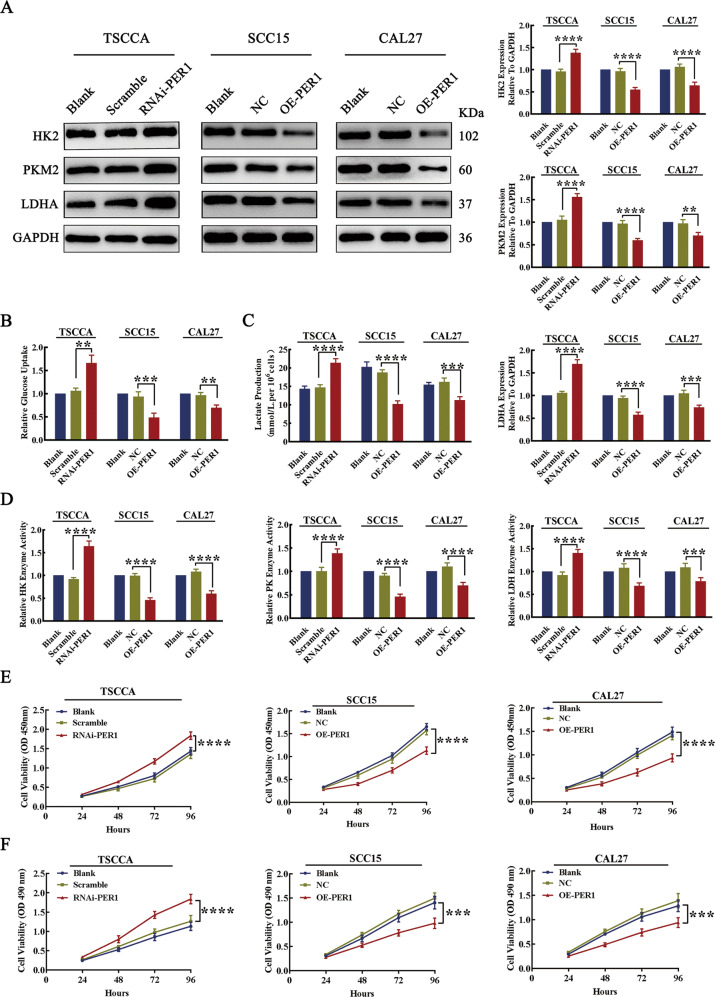
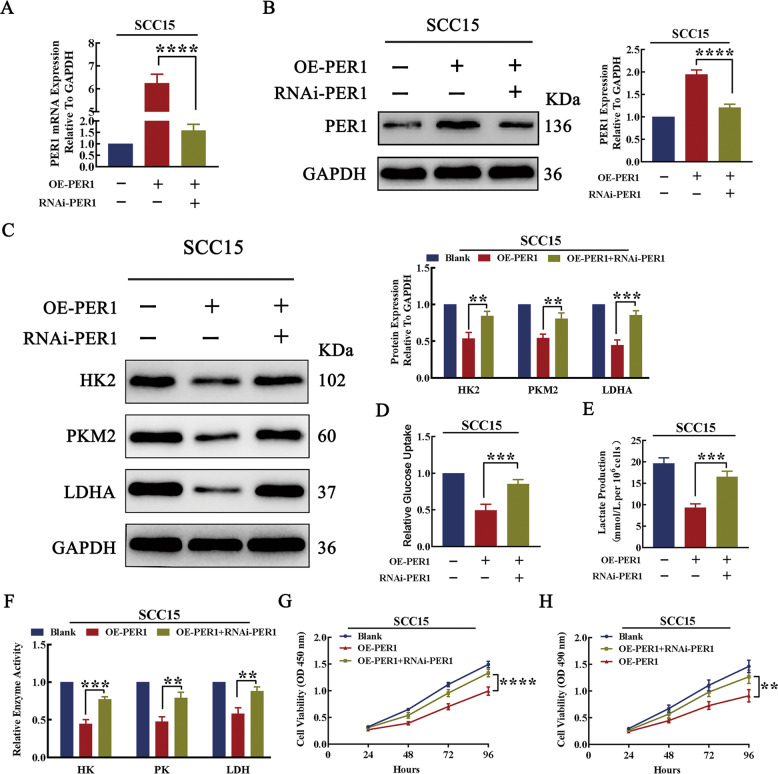
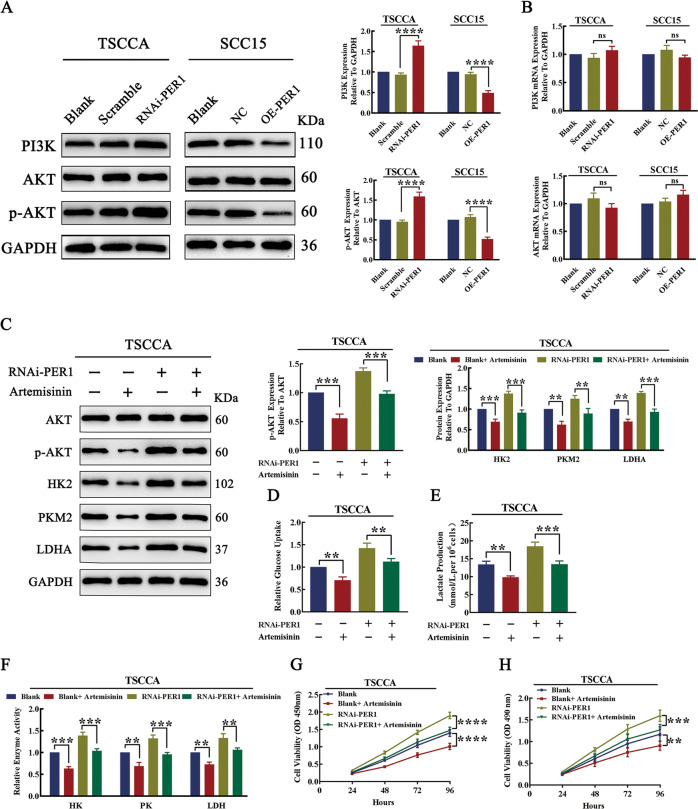
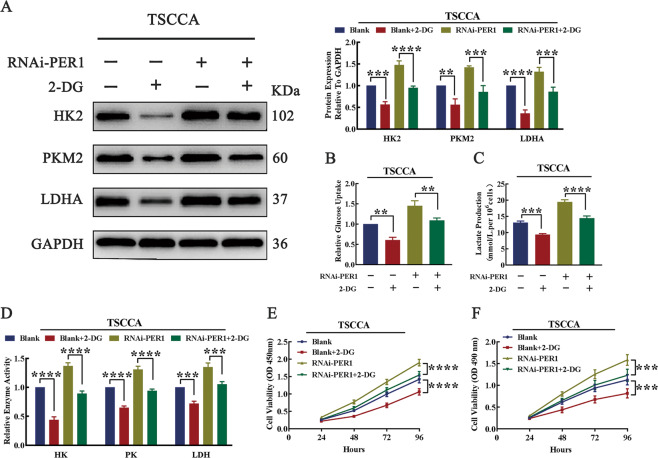
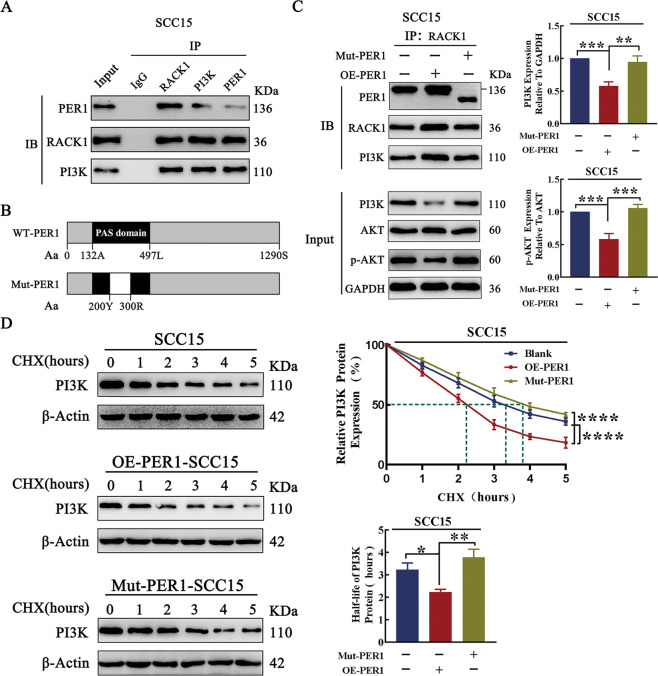
There is increasing evidence that the core clock gene Period 1 (PER1) plays important roles in the formation of various tumors. However, the biological functions and mechanism of PER1 in promoting tumor progression remain largely unknown. Here, we discovered that PER1 was markedly downregulated in oral squamous cell carcinoma (OSCC). Then, OSCC cell lines with stable overexpression, knockdown, and mutation of PER1 were established. We found that PER1 overexpression significantly inhibited glycolysis, glucose uptake, proliferation, and the PI3K/AKT pathway in OSCC cells. The opposite effects were observed in PER1-knockdown OSCC cells. After treatment of PER1-overexpressing OSCC cells with an AKT activator or treatment of PER1-knockdown OSCC cells with an AKT inhibitor, glycolysis, glucose uptake, and proliferation were markedly rescued. In addition, after treatment of PER1-knockdown OSCC cells with a glycolysis inhibitor, the increase in cell proliferation was significantly reversed. Further, coimmunoprecipitation (Co-IP) and cycloheximide (CHX) chase experiment demonstrated that PER1 can bind with RACK1 and PI3K to form the PER1/RACK1/PI3K complex in OSCC cells. In PER1-overexpressing OSCC cells, the abundance of the PER1/RACK1/PI3K complex was significantly increased, the half-life of PI3K was markedly decreased, and glycolysis, proliferation, and the PI3K/AKT pathway were significantly inhibited. However, these effects were markedly reversed in PER1-mutant OSCC cells. In vivo tumorigenicity assays confirmed that PER1 overexpression inhibited tumor growth while suppressing glycolysis, proliferation, and the PI3K/AKT pathway. Collectively, this study generated the novel findings that PER1 suppresses OSCC progression by inhibiting glycolysis-mediated cell proliferation via the formation of the PER1/RACK1/PI3K complex to regulate the stability of PI3K and the PI3K/AKT pathway-dependent manner and that PER1 could potentially be a valuable therapeutic target in OSCC.
越来越多的证据表明,核心时钟基因 Period 1(PER1)在各种肿瘤的形成中发挥着重要作用。然而,PER1 促进肿瘤进展的生物学功能和机制在很大程度上仍然未知。在这里,我们发现 PER1 在口腔鳞状细胞癌(OSCC)中明显下调。然后,建立了 PER1 稳定过表达、敲低和突变的 OSCC 细胞系。我们发现 PER1 过表达显著抑制了 OSCC 细胞的糖酵解、葡萄糖摄取、增殖和 PI3K/AKT 通路。在 PER1 敲低的 OSCC 细胞中观察到相反的效果。用 AKT 激活剂处理 PER1 过表达的 OSCC 细胞或用 AKT 抑制剂处理 PER1 敲低的 OSCC 细胞后,糖酵解、葡萄糖摄取和增殖明显得到挽救。此外,用糖酵解抑制剂处理 PER1 敲低的 OSCC 细胞后,细胞增殖的增加明显逆转。进一步的免疫共沉淀(Co-IP)和环己酰亚胺(CHX)追踪实验表明,PER1 可以与 RACK1 和 PI3K 结合,在 OSCC 细胞中形成 PER1/RACK1/PI3K 复合物。在 PER1 过表达的 OSCC 细胞中,PER1/RACK1/PI3K 复合物的丰度显著增加,PI3K 的半衰期明显缩短,糖酵解、增殖和 PI3K/AKT 通路受到显著抑制。然而,这些效应在 PER1 突变的 OSCC 细胞中明显逆转。体内肿瘤生成实验证实,PER1 过表达抑制肿瘤生长,同时抑制糖酵解、增殖和 PI3K/AKT 通路。综上所述,本研究发现 PER1 通过形成 PER1/RACK1/PI3K 复合物抑制糖酵解介导的细胞增殖来抑制 OSCC 进展,从而调节 PI3K 的稳定性和 PI3K/AKT 通路依赖性方式,PER1 可能成为 OSCC 的一个有价值的治疗靶点。