Kaso Artan, Ernst Thomas
Department of Diagnostic Radiology and Nuclear Medicine, University of Maryland, Baltimore, MD, USA.
Magn Reson Med. 2021 Aug;86(2):926-934. doi: 10.1002/mrm.28747. Epub 2021 Mar 15.
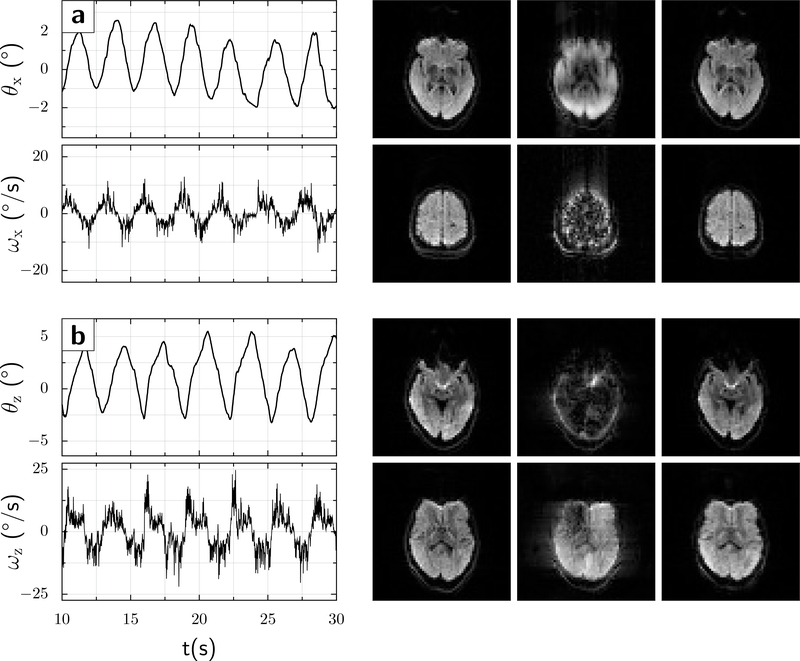
Diffusion-weighted imaging (DWI) is sensitive to head movements, which may cause signal losses because of motion-induced gradient imbalances. Prospective motion correction using fast optical tracking can attenuate these artifacts. Approaches include quasicontinuous updates of gradients and radiofrequency (RF) pulses or dynamically applying a rebalancing gradient to restore the gradient balance, but these prior methods used bipolar diffusion gradients. The goal of this project was to develop and evaluate a motion-insensitive implementation for the more common monopolar diffusion sequence.
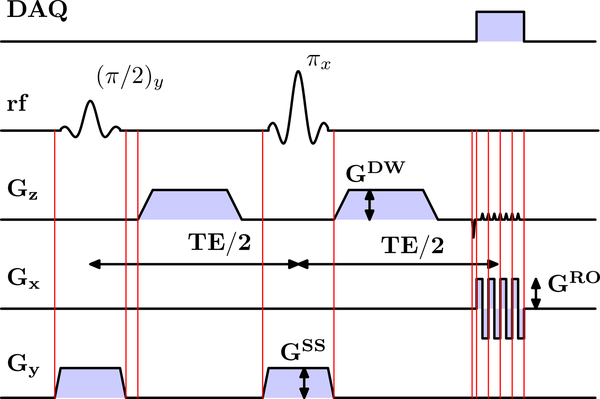
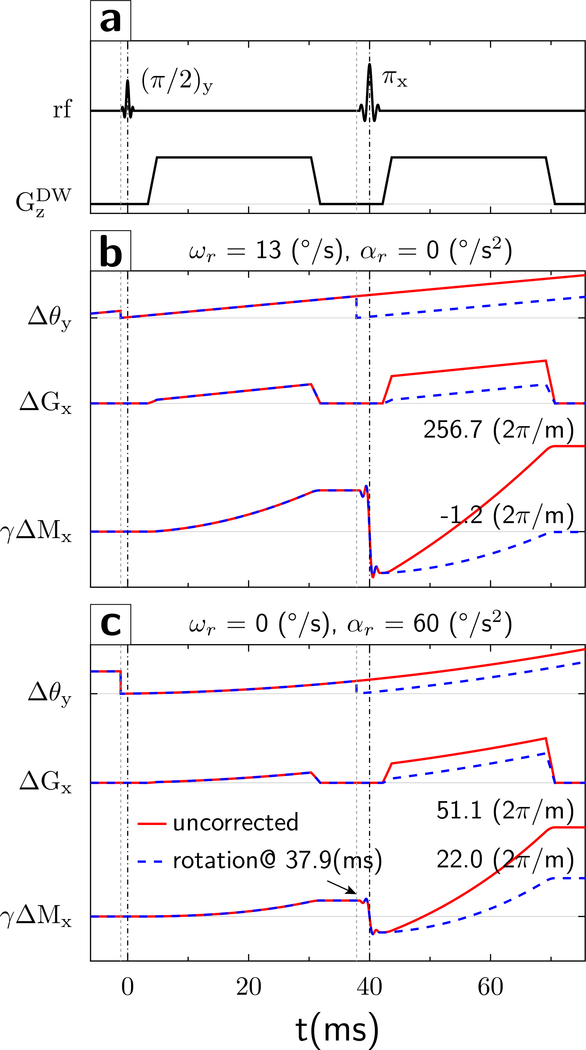
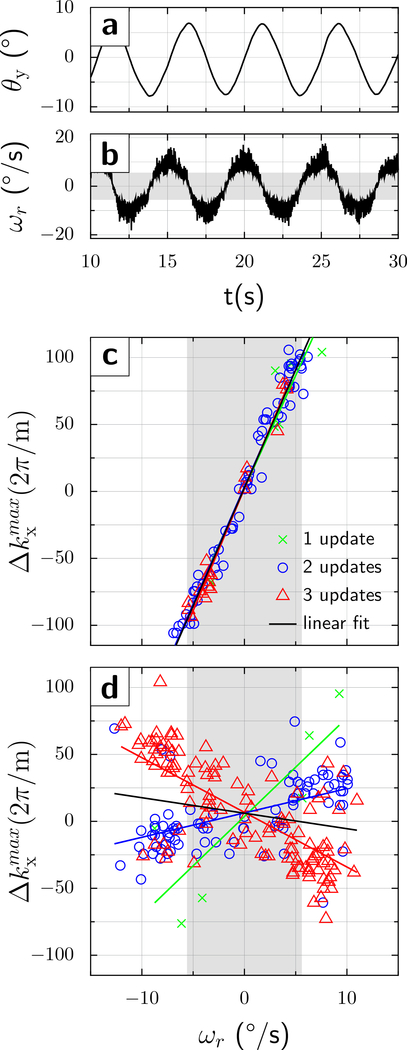
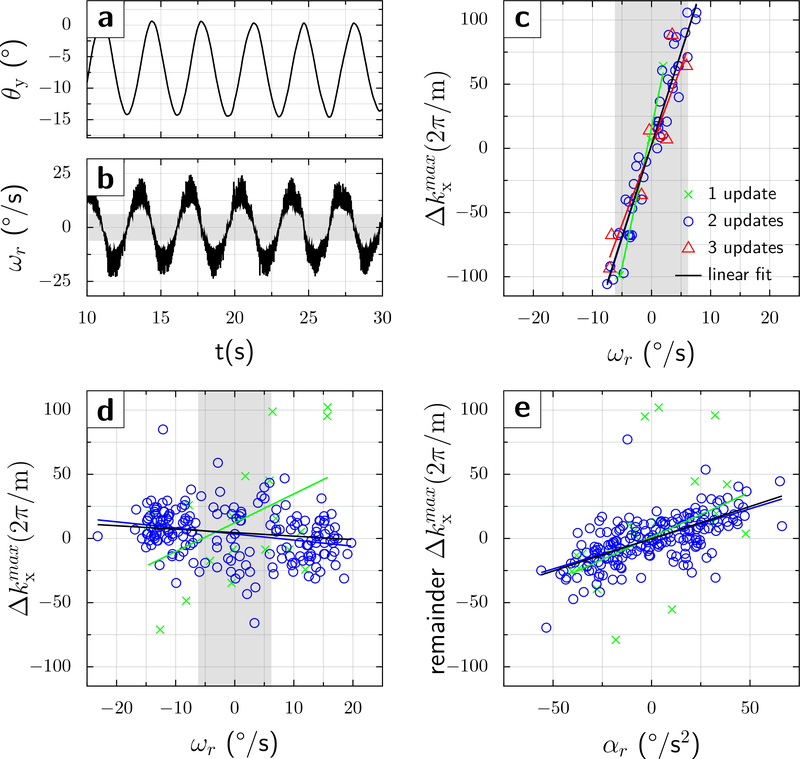
A monopolar diffusion sequence was developed with motion updates before each RF pulse and each diffusion-weighting gradient. The sequence was tested in a phantom and human brain at b = 1000 s/mm and rotational velocities up to 20°/s. Motion sensitivity, signal losses, and in vivo image profiles were compared between scans with and without intrasequence motion updates.
With typical motion parameters, intrasequence motion updates with optimal parameters reduced the motion sensitivity of DWI (motion-induced gradient moment imbalance) sevenfold. Optimal results were achieved by matching the echo time of the pulse sequence to an even multiple of the tracking system frame-to-frame period. Average signal losses and the frequency of signal dropouts in phantom and in vivo measurements were reduced when intrasequence updates were enabled, and quality measures of DTI analyses were improved.
A correction scheme for the monopolar DWI sequence can reduce the motion sensitivity of brain DWI up to sevenfold compared with an implementation without intrasequence updates.
扩散加权成像(DWI)对头部运动敏感,头部运动可能因运动引起的梯度失衡而导致信号丢失。使用快速光学跟踪进行前瞻性运动校正可减少这些伪影。方法包括对梯度和射频(RF)脉冲进行准连续更新,或动态应用重新平衡梯度以恢复梯度平衡,但这些先前的方法使用的是双极扩散梯度。本项目的目标是为更常见的单极扩散序列开发并评估一种对运动不敏感的实现方法。
开发了一种单极扩散序列,在每个RF脉冲和每个扩散加权梯度之前进行运动更新。该序列在体模和人脑内进行测试,b值为1000 s/mm²,旋转速度高达20°/s。比较了有无序列内运动更新的扫描之间的运动敏感性、信号丢失和体内图像特征。
在典型运动参数下,采用最佳参数的序列内运动更新将DWI的运动敏感性(运动引起的梯度矩失衡)降低了7倍。通过使脉冲序列的回波时间与跟踪系统帧间周期的偶数倍相匹配,可获得最佳结果。启用序列内更新后,体模和体内测量中的平均信号丢失和信号丢失频率降低,并且DTI分析的质量指标得到改善。
与无序列内更新的实现方法相比,单极DWI序列的校正方案可将脑DWI的运动敏感性降低多达7倍。