Center for Public Health Research, University of Milano-Bicocca, Via Cadore 48, 20900, Monza, Italy.
Value-Based Healthcare Unit, IRCCS MultiMedica, Sesto San Giovanni, Italy.
Clin Drug Investig. 2021 May;41(5):459-468. doi: 10.1007/s40261-021-01023-8. Epub 2021 Mar 16.
Rivaroxaban is a selective inhibitor of coagulation factor Xa and its combination with aspirin showed better outcomes in the prevention of recurrent cardiovascular disease than aspirin alone.
This analysis aimed to economically compare the cost effectiveness of rivaroxaban (2.5 mg twice daily) plus aspirin (100 mg once daily) with aspirin alone in patients with coronary artery disease (CAD) or peripheral artery disease (PAD) and related subgroups.
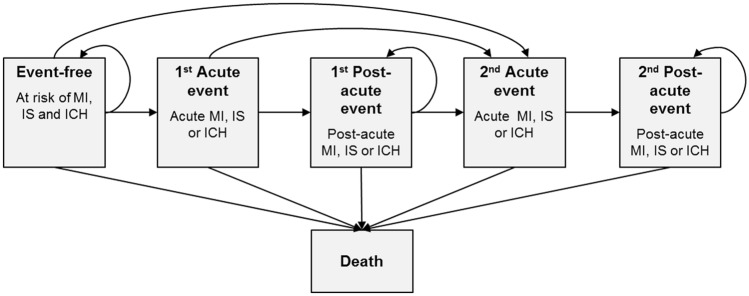
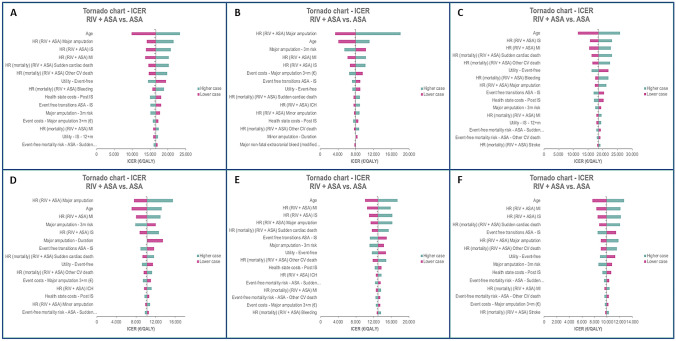
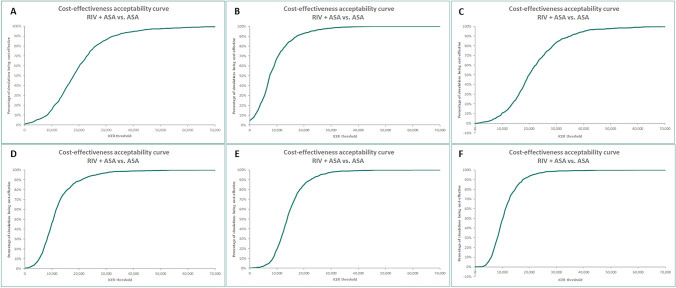
The analysis simulates the perspective of the Italian National Healthcare Service and used a state-transition decision Markov model. Clinical efficacy data and health events risks were gathered from the COMPASS trial. Health outcomes and costs (in Euros) were evaluated over a lifetime horizon and were discounted at 3.5% per annum. Direct healthcare costs entered the analysis. Results were expressed in terms of incremental cost-effectiveness ratio (ICER), defined as cost per quality-adjusted life-year (QALY) gained. One-way deterministic and probabilistic sensitivity analyses were performed.
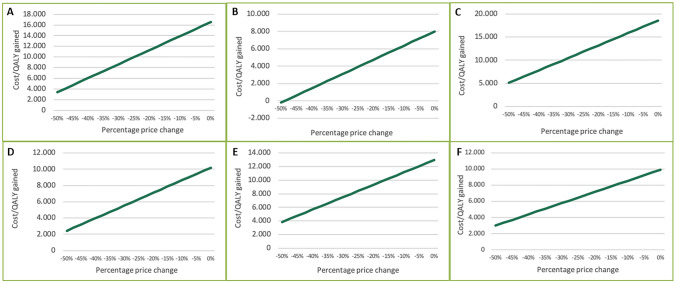
For the CAD or PAD population, rivaroxaban plus aspirin was more effective and costly compared with aspirin alone. Incremental costs and efficacy produced an ICER of €16,522 per QALY gained. Analyses found similar trends for the PAD and CAD groups, with respective ICERs of €8003 and €18,599, while ICERs for the other groups were lower than €13,000 per QALY. Sensitivity analyses confirmed these findings.
Compared with aspirin alone, rivaroxaban plus aspirin is cost effective in preventing recurrent cardiovascular events in all patients with CAD or PAD, from the Italian perspective. These results could help clinicians and decision makers to develop improved strategies for cardiovascular disease prevention.
利伐沙班是一种凝血因子 Xa 的选择性抑制剂,其与阿司匹林联合使用在预防复发性心血管疾病方面优于阿司匹林单药治疗。
本分析旨在从意大利国家医疗保健服务的角度,对利伐沙班(每日两次 2.5 毫克)联合阿司匹林(每日一次 100 毫克)与阿司匹林单药治疗在冠心病(CAD)或外周动脉疾病(PAD)患者及相关亚组中的成本效果进行经济比较。
该分析模拟了意大利国家医疗保健服务的视角,并使用状态转换决策马尔可夫模型。临床疗效数据和健康事件风险来自 COMPASS 试验。在终生时间范围内评估健康结果和成本(欧元),并按每年 3.5%贴现。直接医疗保健成本纳入分析。结果以增量成本效果比(ICER)表示,定义为每获得一个质量调整生命年(QALY)的成本。进行了单因素确定性和概率敏感性分析。
对于 CAD 或 PAD 人群,与阿司匹林单药治疗相比,利伐沙班联合阿司匹林更有效且成本更高。增量成本和疗效产生的 ICER 为每获得一个 QALY 增加 16522 欧元。分析发现 PAD 和 CAD 组也存在类似趋势,相应的 ICER 分别为 8003 欧元和 18599 欧元,而其他组的 ICER 低于每 QALY 13000 欧元。敏感性分析证实了这些发现。
从意大利的角度来看,与阿司匹林单药治疗相比,利伐沙班联合阿司匹林在预防所有 CAD 或 PAD 患者复发性心血管事件方面具有成本效果。这些结果可以帮助临床医生和决策者制定改善心血管疾病预防策略。