Department of Orthopaedic Surgery, Wakayama Medical University, 811-1 Kimiidera, Wakayama, Wakayama, Japan.
Department of Preventive Medicine for Locomotive Organ Disorders, 22nd Century Medical and Research Center, The University of Tokyo, Hongo, Bunkyo-ku, Tokyo, Japan.
Sci Rep. 2021 Mar 16;11(1):6025. doi: 10.1038/s41598-021-85521-x.
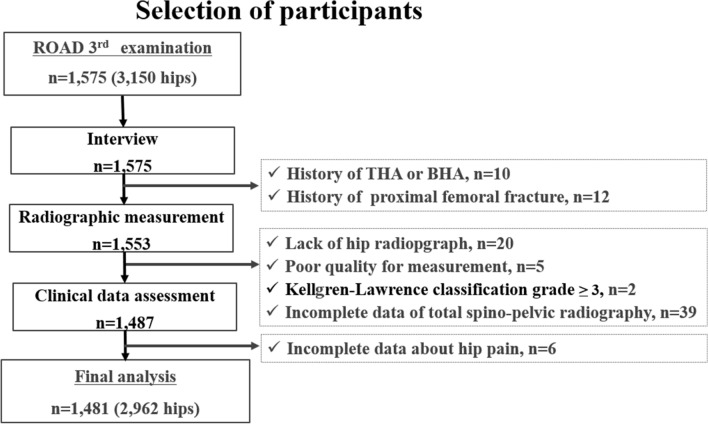
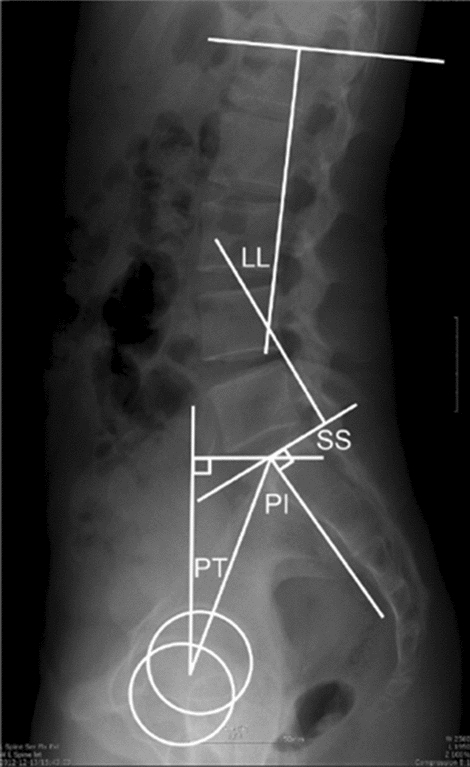
Pistol grip deformity (PGD) may be the main factor in femoroacetabular impingement development. This study aimed to clarify the epidemiological indices and factors related to PGD in Japanese people. This population-based cohort study included 1575 local Japanese residents. PGD, center edge angle, and joint space width were measured radiographically. We investigated the relationship between PGD and spino-pelvic parameters. Factors associated with PGD were examined using multiple logistic regression analysis, with the presence/absence of PGD as an objective variable, and sex, age, body mass index (BMI), and the presence/absence of hip pain or spino-pelvic parameters as explanatory variables. In the entire cohort, 4.9% (10.6% men, 2.1% women) had PGD on at least one side. A trend was observed between PGD and increasing age in both men and women (men: p < 0.0001, women: p = 0.0004). No relationship was observed between PGD and hip pain (risk ratio 1.0 [95% confidence interval 0.97-1.03]). Factors significantly associated with PGD were age, sex, and BMI in the multivariate model. Acquired factors may be related to PGD in Japanese people as the PGD prevalence increased with age and PGD was not significantly associated with hip pain. This study provides new insights into the etiology and clinical significance of PGD.
枪柄畸形(PGD)可能是髋关节撞击综合征发展的主要因素。本研究旨在阐明日本人中 PGD 的流行指标和相关因素。这项基于人群的队列研究纳入了 1575 名当地日本居民。通过影像学测量 PGD、中心边缘角和关节间隙宽度。我们研究了 PGD 与脊柱骨盆参数之间的关系。使用多因素逻辑回归分析检查与 PGD 相关的因素,以 PGD 的存在/不存在为因变量,性别、年龄、体重指数(BMI)和髋关节疼痛或脊柱骨盆参数的存在/不存在为解释变量。在整个队列中,有 4.9%(男性 10.6%,女性 2.1%)至少一侧存在 PGD。男性和女性的 PGD 与年龄呈正相关(男性:p<0.0001,女性:p=0.0004)。PGD 与髋关节疼痛之间无相关性(风险比 1.0[95%置信区间 0.97-1.03])。多变量模型中,与 PGD 显著相关的因素为年龄、性别和 BMI。获得性因素可能与日本人的 PGD 有关,因为 PGD 患病率随年龄增长而增加,且 PGD 与髋关节疼痛无显著相关性。本研究为 PGD 的病因学和临床意义提供了新的见解。