Immunology & Respiratory Diseases Research, Boehringer Ingelheim Pharma GmbH & Co. KG, Biberach, Germany.
Drug Des Devel Ther. 2021 Mar 8;15:997-1011. doi: 10.2147/DDDT.S288369. eCollection 2021.
T cells are important regulators of inflammation and, via release of mediators, can contribute to pulmonary fibrosis. Nintedanib is approved for the treatment of idiopathic pulmonary fibrosis, systemic sclerosis-associated interstitial lung disease (ILD) and chronic fibrosing ILDs with a progressive phenotype. However, how nintedanib targets T cells has not been elucidated.
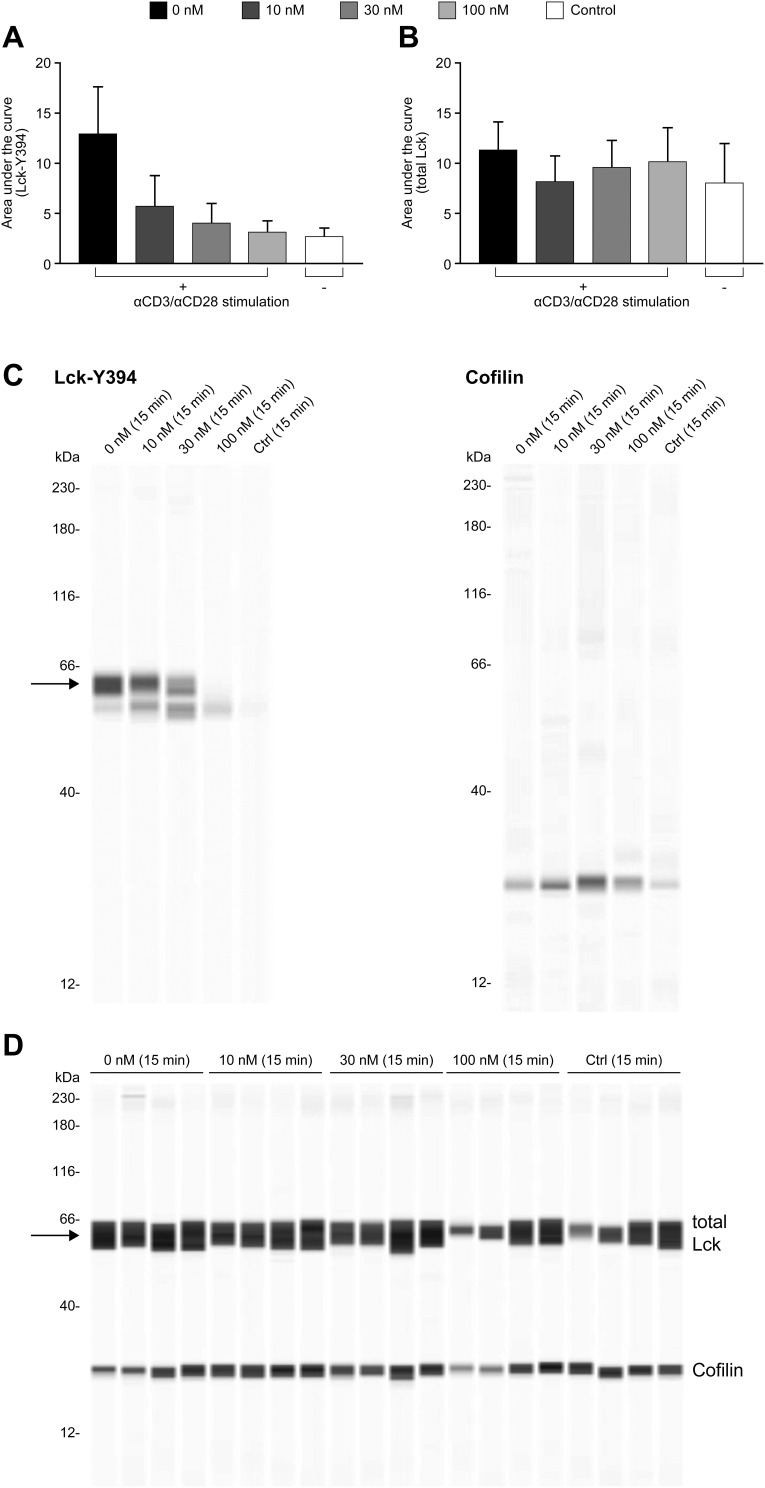
We investigated the immunomodulatory effects of nintedanib on T cells and peripheral blood mononuclear cells isolated from healthy donors. Cells were pre-incubated with different concentrations of nintedanib and then stimulated for 24 hours with anti-CD3 with or without anti-CD28 and with or without different cytokines. Levels of interferon gamma (IFN-γ), interleukin (IL)-2, IL-4, IL-5, IL-10, IL-12p70 and IL-13 were quantitated. Western blotting with primary antibodies against phospho-Lck-Y394, phospho-Lck-Y505, Lck-total and Cofilin examined the phosphorylation level of the Lck protein. In vitro T-cell proliferation, T-cell clustering and different T-cell populations were also assessed.
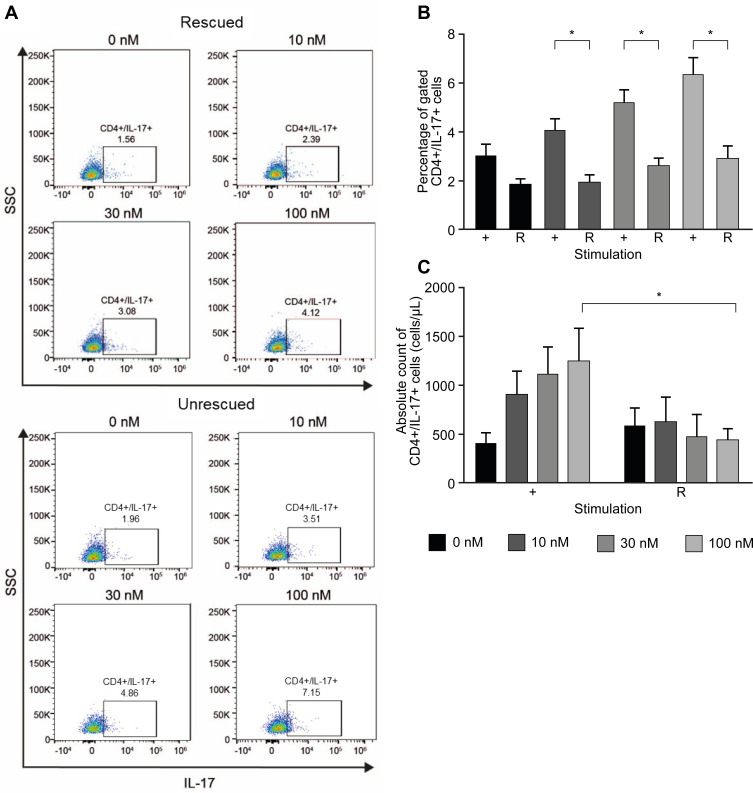
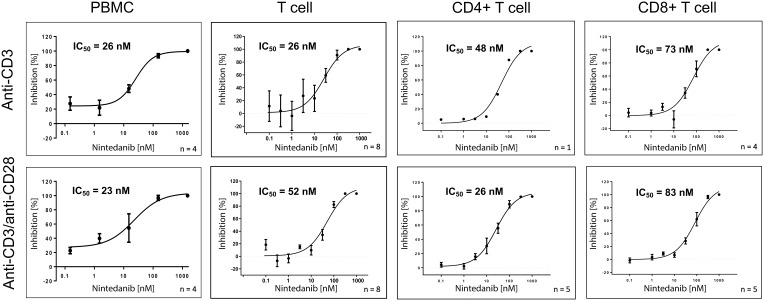
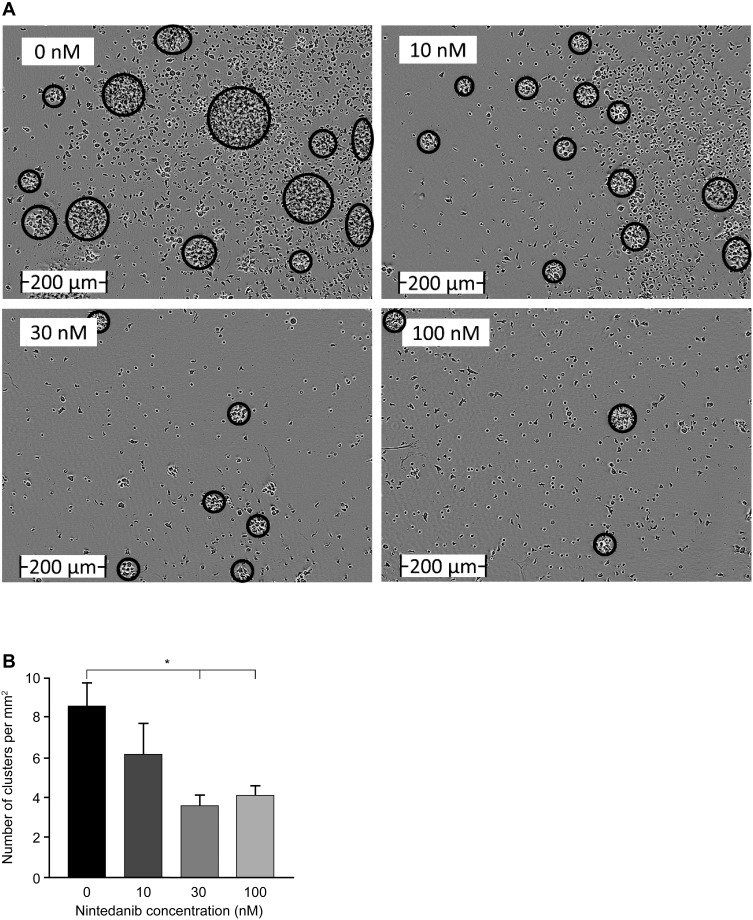
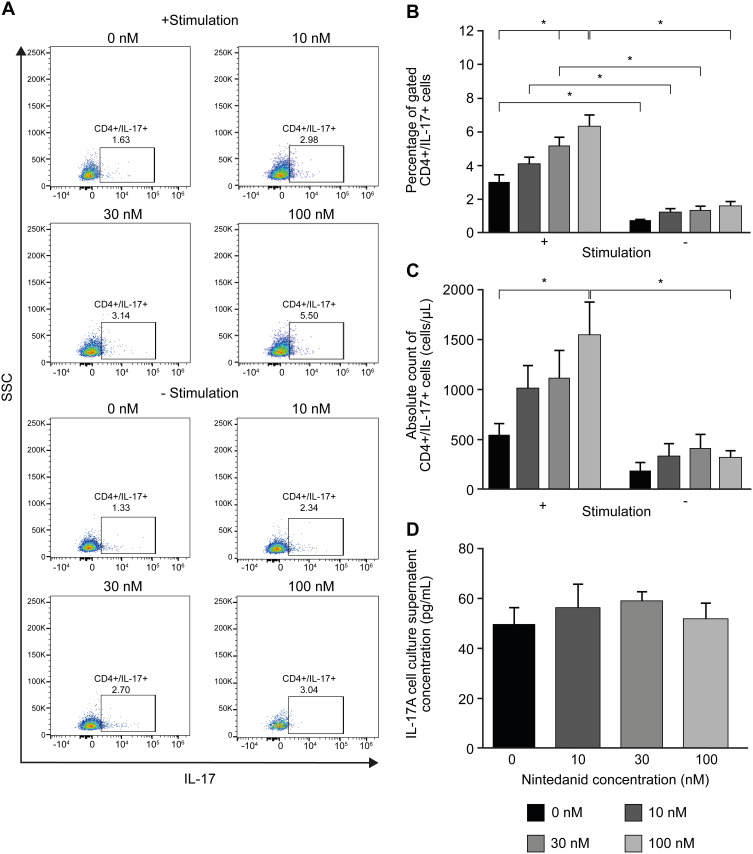
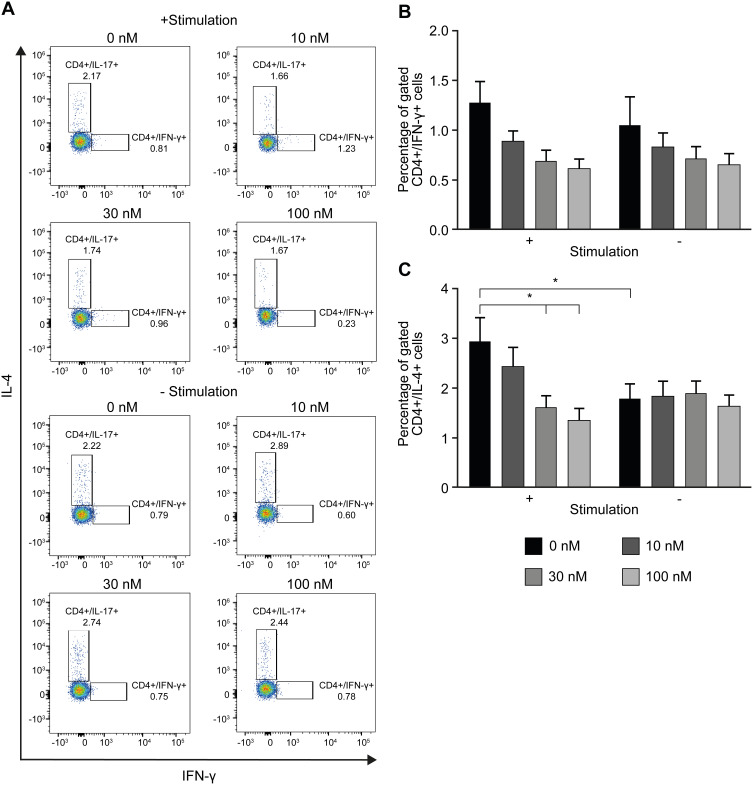
Nintedanib blocked T-cell activation through inhibiting Lck-Y394 phosphorylation. Pretreatment of T cells with nintedanib reduced cluster formation as a marker of activation and inhibited the release of IFN-γ, IL-2, IL-4, IL-5, IL-10, IL-12p70 and IL-13 at clinically relevant concentrations ranging from 5-77 nmol/L. Nintedanib did not alter T-cell proliferation or numbers of CD4+ and CD8+ T cells, but did increase stimulated Th17-like cells without increasing IL-17A levels.
These immunomodulatory effects may further explain how nintedanib slows the progression of pulmonary fibrosis in various ILDs.
T 细胞是炎症的重要调节者,通过释放介质,可导致肺纤维化。尼达尼布被批准用于特发性肺纤维化、系统性硬皮病相关间质性肺病(ILD)和具有进行性表型的慢性纤维性ILD 的治疗。然而,尼达尼布如何靶向 T 细胞尚未阐明。
我们研究了尼达尼布对 T 细胞和健康供者外周血单个核细胞的免疫调节作用。细胞用不同浓度的尼达尼布预孵育,然后用抗-CD3 刺激 24 小时,有或无抗-CD28,有或无不同的细胞因子。定量检测干扰素γ(IFN-γ)、白细胞介素(IL)-2、IL-4、IL-5、IL-10、IL-12p70 和 IL-13 的水平。用抗磷酸化 Lck-Y394、抗磷酸化 Lck-Y505、Lck 总蛋白和肌动蛋白丝蛋白检测 Lck 蛋白的磷酸化水平。还评估了体外 T 细胞增殖、T 细胞聚集和不同的 T 细胞群。
尼达尼布通过抑制 Lck-Y394 磷酸化阻断 T 细胞活化。用尼达尼布预处理 T 细胞可减少作为激活标志物的细胞簇形成,并在 5-77 nmol/L 的临床相关浓度下抑制 IFN-γ、IL-2、IL-4、IL-5、IL-10、IL-12p70 和 IL-13 的释放。尼达尼布不改变 T 细胞增殖或 CD4+和 CD8+T 细胞的数量,但会增加刺激的 Th17 样细胞,而不增加 IL-17A 水平。
这些免疫调节作用可能进一步解释尼达尼布如何减缓各种ILD 中肺纤维化的进展。