Skutschas Pavel P, Gvozdkova Vera A, Averianov Alexander O, Lopatin Alexey V, Martin Thomas, Schellhorn Rico, Kolosov Petr N, Markova Valentina D, Kolchanov Veniamin V, Grigoriev Dmitry V, Kuzmin Ivan T, Vitenko Dmitry D
Vertebrate Zoology Department, Saint Petersburg State University, Universitetskaya Emb. 7/9, St. Petersburg, Russia.
Zoological Institute of the Russian Academy of Sciences, Universitetskaya Emb. 1, St. Petersburg, Russia.
PLoS One. 2021 Mar 17;16(3):e0248163. doi: 10.1371/journal.pone.0248163. eCollection 2021.
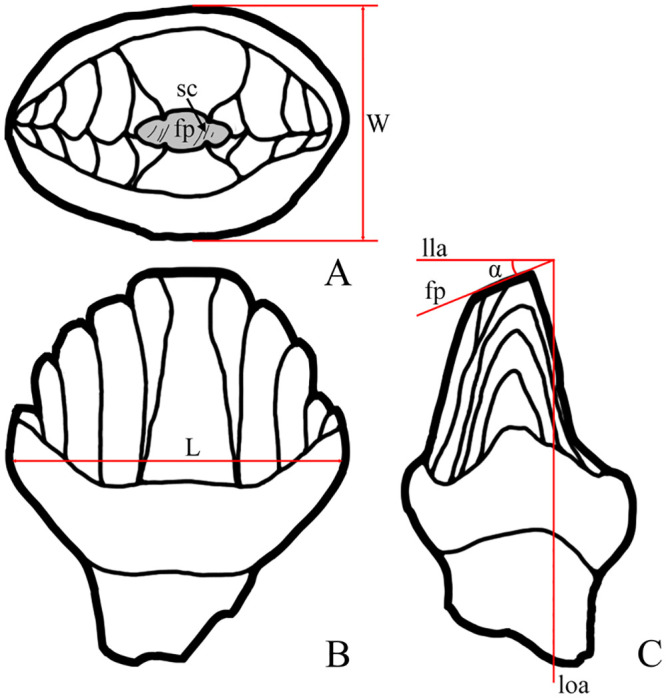
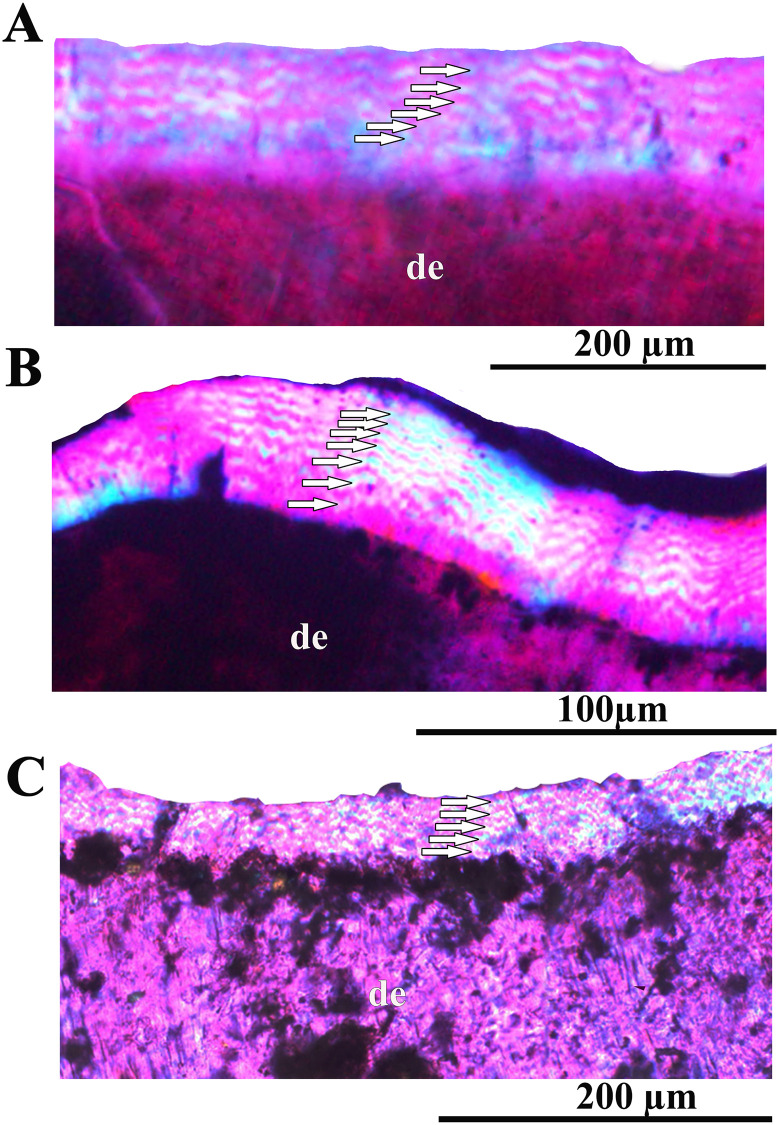
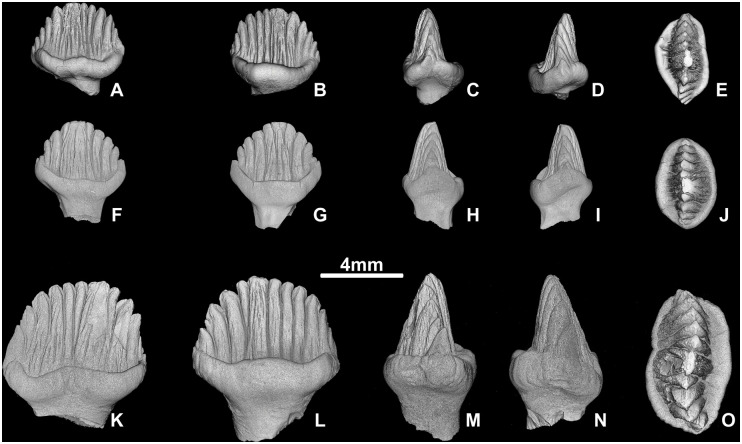
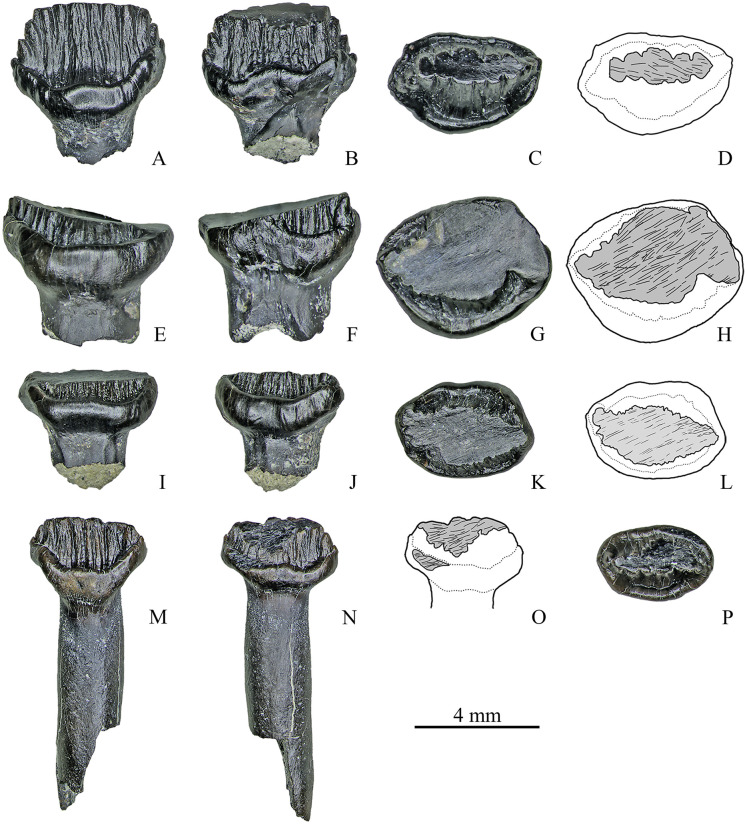
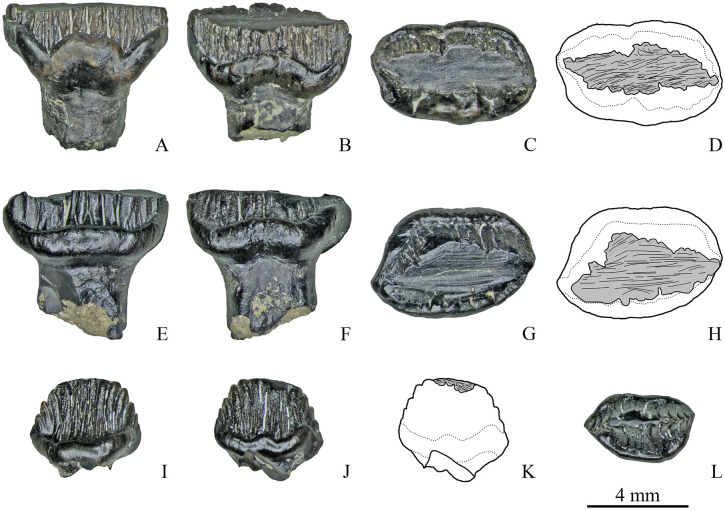
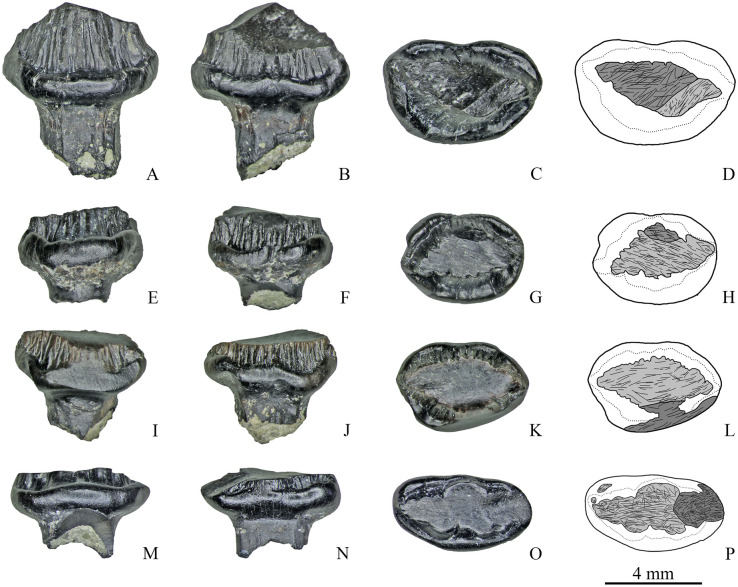
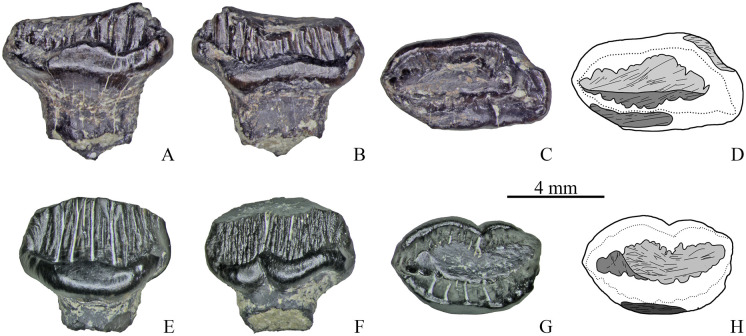
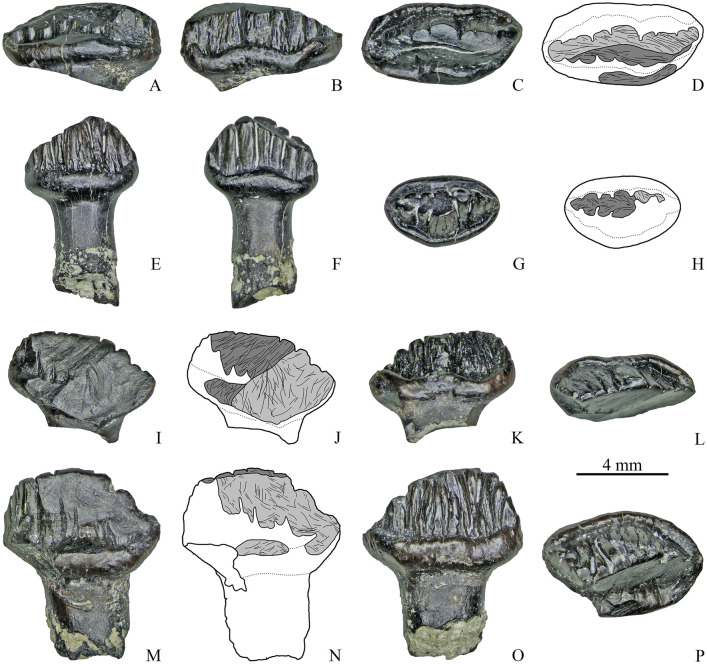
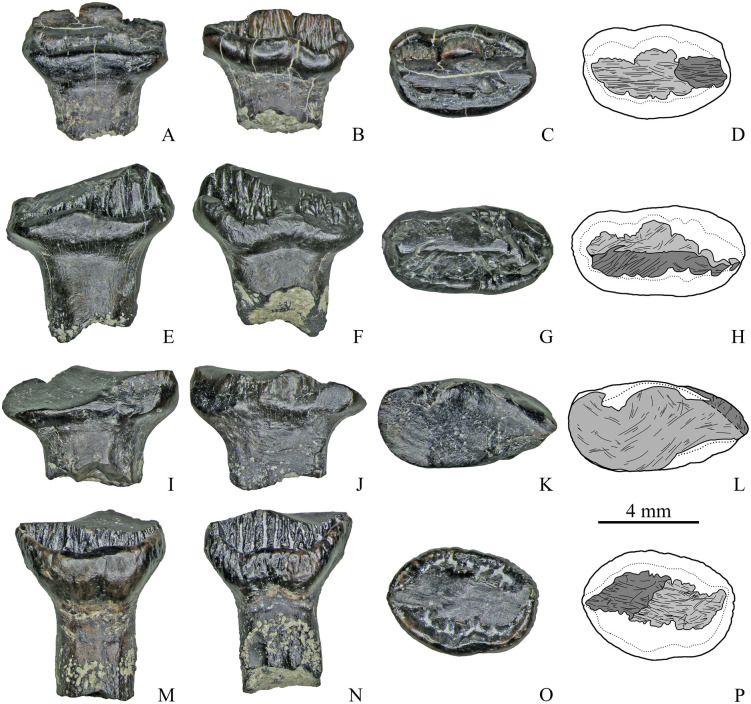
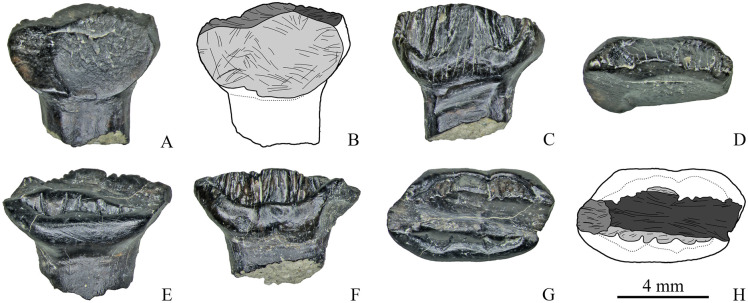
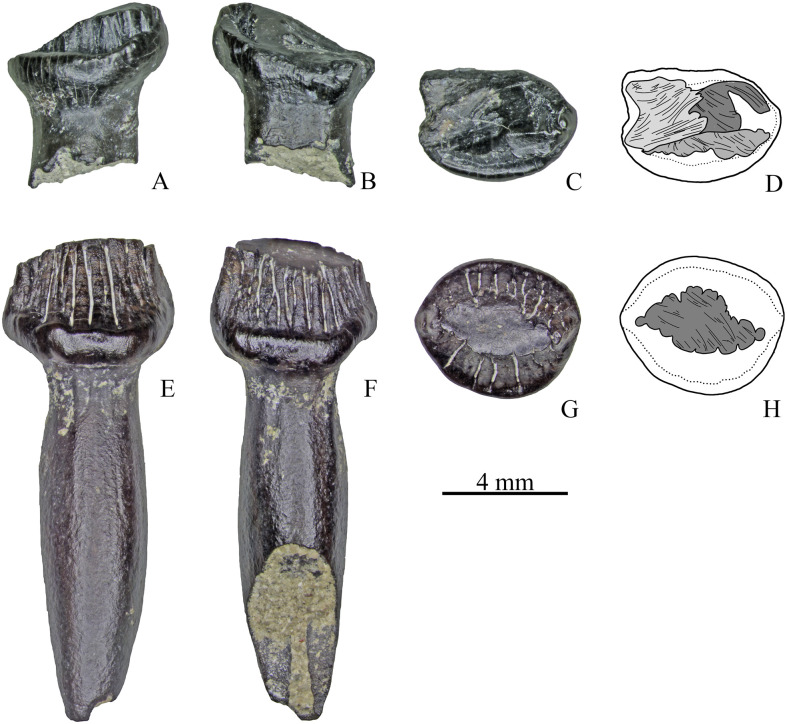
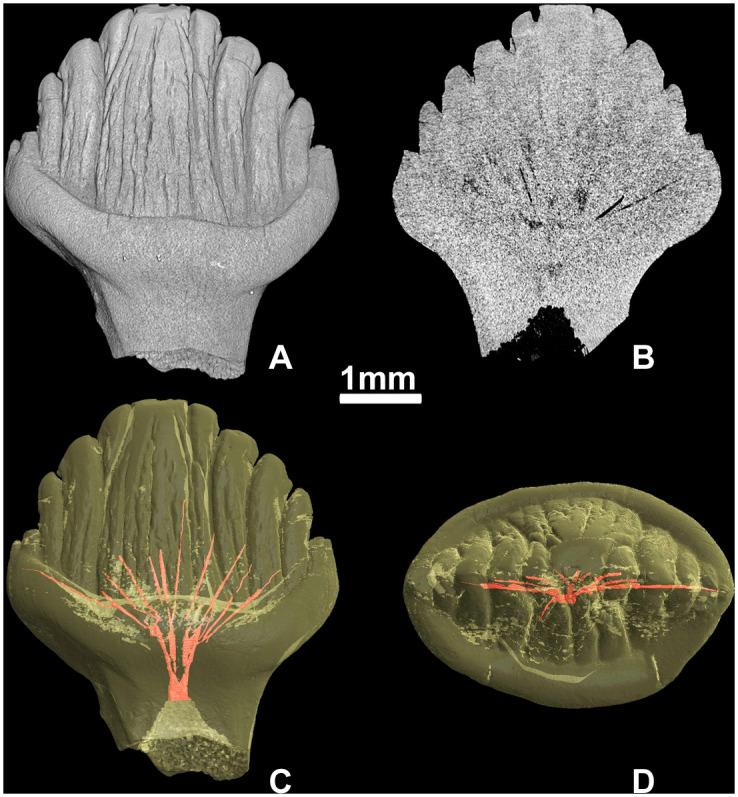
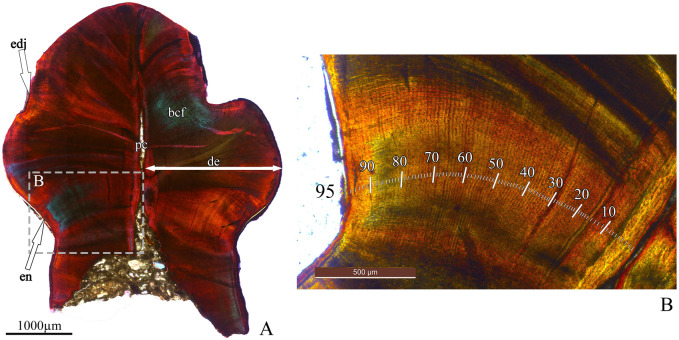
Isolated stegosaurian teeth from the Early Cretaceous high-latitude (palaeolatitude estimate of N 62°- 66.5°) Teete locality in Yakutia (Eastern Siberia, Russia) are characterized by a labiolingually compressed, slightly asymmetrical and mesiodistally denticulated (9-14 denticles) crown, a pronounced ring-like cingulum, as well as a "complex network of secondary ridges". The 63 teeth (found during on-site excavation in 2012, 2017-2019 and screen-washing in 2017-2019) most likely belong to one species of a derived (stegosaurine) stegosaur. Most of the teeth exhibit a high degree of wear and up to three wear facets has been observed on a single tooth. The prevalence of worn teeth with up to three wear facets and the presence of different types of facets (including steeply inclined and groove-like) indicate the tooth-tooth contact and precise dental occlusion in the Teete stegosaur. The microwear pattern (mesiodistally or slightly obliquely oriented scratches; differently oriented straight and curved scratches on some wear facets) suggest a complex jaw mechanism with palinal jaw motion. Histological analysis revealed that the Teete stegosaur is characterized by relatively short tooth formation time (95 days) and the presence of a "wavy enamel pattern". Discoveries of a "wavy enamel pattern" in the Teete stegosaur, in a Middle Jurassic stegosaur from Western Siberia, and in the basal ceratopsian Psittacosaurus, suggest that this histological feature is common for different ornithischian clades, including ornithopods, marginocephalians, and thyreophorans. A juvenile tooth in the Teete sample indicates that stegosaurs were year-round residents and reproduced in high latitudes. The combination of high degree of tooth wear with formation of multiple wear facets, complex jaw motions, relatively short tooth formation time and possibly high tooth replacement rates is interpreted as a special adaptation for a life in high-latitude conditions or, alternatively, as a common stegosaurian adaptation making stegosaurs a successful group of herbivorous dinosaurs in the Middle Jurassic-Early Cretaceous and enabeling them to live in both low- and high-latitude ecosystems.
来自俄罗斯东西伯利亚雅库特地区早白垩世高纬度(古纬度估计为北纬62° - 66.5°)特特地点的孤立剑龙牙齿,其特征为唇舌向压缩、略不对称且近远中具细齿(9 - 14个细齿)的齿冠、明显的环状齿带以及“复杂的次生脊网络”。这63颗牙齿(于2012年、2017 - 2019年现场挖掘以及2017 - 2019年筛洗过程中发现)很可能属于一种衍生(剑龙亚科)剑龙的单一物种。大多数牙齿呈现出高度磨损,在单颗牙齿上观察到多达三个磨损面。具有多达三个磨损面的磨损牙齿的普遍存在以及不同类型磨损面(包括陡倾和沟状)的存在,表明特特剑龙存在牙齿与牙齿的接触以及精确的牙齿咬合。微磨损模式(近远中或略倾斜方向的划痕;一些磨损面上不同方向的直线和曲线划痕)表明其具有复杂的颌骨机制以及往复式颌骨运动。组织学分析显示,特特剑龙的特征是牙齿形成时间相对较短(95天)且存在“波浪状釉质模式”。在特特剑龙、西西伯利亚的中侏罗世剑龙以及基础角龙类鹦鹉嘴龙中发现的“波浪状釉质模式”,表明这种组织学特征在不同的鸟臀目类群中很常见,包括鸟脚亚目、头饰龙类和甲龙类。特特样本中的一颗幼年牙齿表明剑龙是全年栖息于此并在高纬度地区繁殖。高度的牙齿磨损与多个磨损面的形成、复杂的颌骨运动、相对较短的牙齿形成时间以及可能较高的牙齿替换率相结合,被解释为对高纬度环境生活的一种特殊适应,或者,也可解释为剑龙类的一种普遍适应,使得剑龙在中侏罗世 - 早白垩世成为成功的草食性恐龙群体,并使它们能够生活在低纬度和高纬度生态系统中。