Hebbani Ananda Vardhan, Vaddi Damodara Reddy, Dd Padma Priya, NCh Varadacharyulu
Department of Biotechnology, New Horizon College of Engineering, Bengaluru, 560 103, India.
Department of Biochemistry, REVA University, Bengaluru, 560064, India.
J Ayurveda Integr Med. 2021 Apr-Jun;12(2):330-339. doi: 10.1016/j.jaim.2021.02.001. Epub 2021 Mar 14.
Alcohol is a widely abused drug with many health implications, mainly caused by the oxidative and nitrosative stress on different body parts. Ayurvedic herbalism authenticates the multiple therapeutic applications of Terminalia arjuna bark due to its rich phytochemical repertoire.
To observe the extent of oxidative damage caused to erythrocytes by alcohol and assess the protective ability of T. arjuna bark powder aqueous extract (AETA) against the damage.
Wister albino rats were categorized into four groups of eight rats per group; first group (control) was fed with glucose, second group was given alcohol at a dose of 20% v/v; 5g alcohol/kg b. wt/day, third group was co-administered with AETA (0.5 g/kg b. wt/day) and alcohol and the fourth group was kept on bark extract alone. Blood samples were collected and evaluated for different biochemical parameters after the completion of the treatment period.
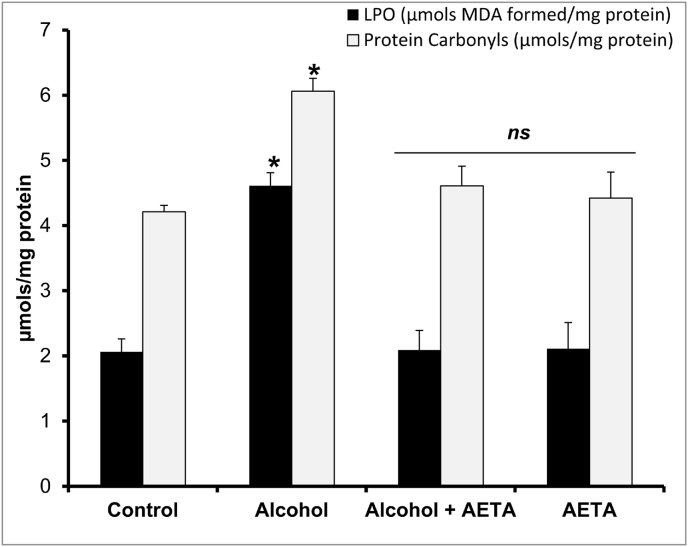
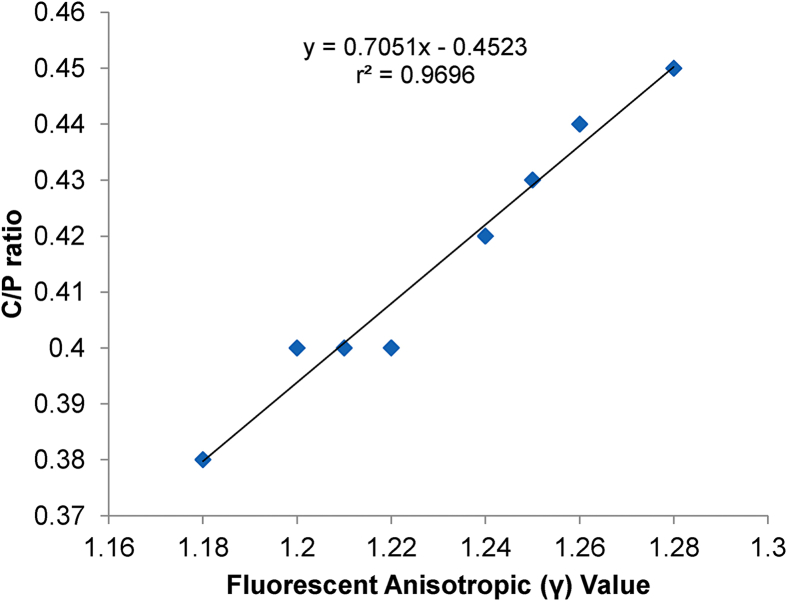
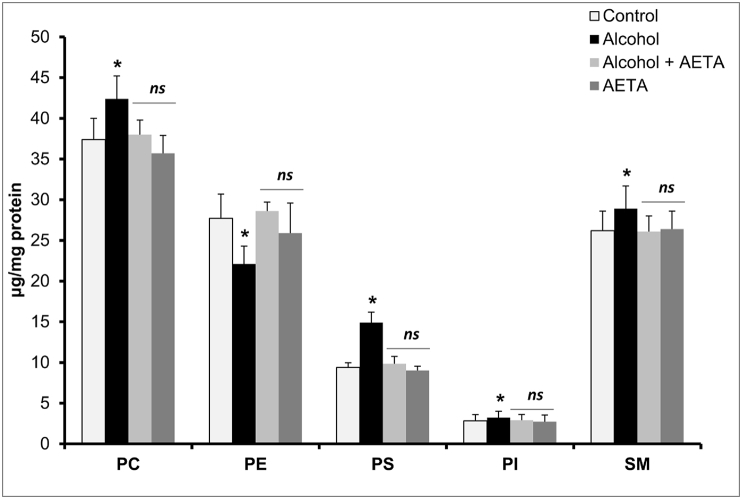
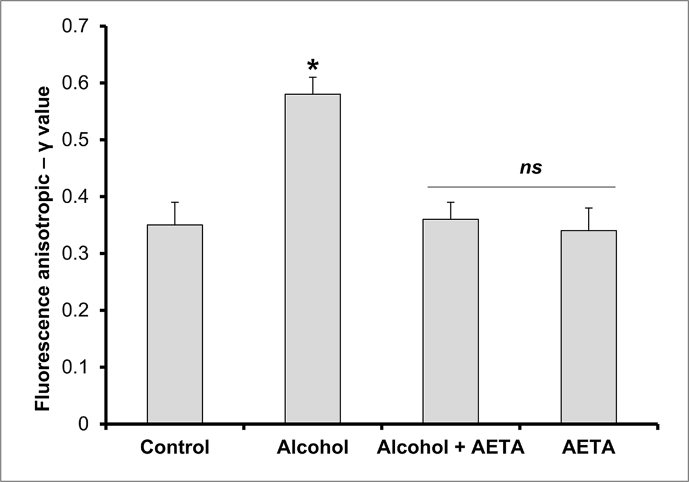
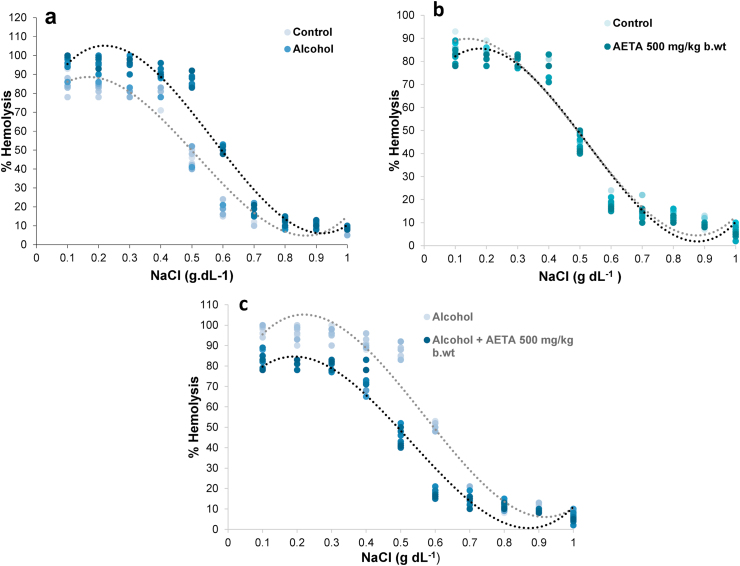
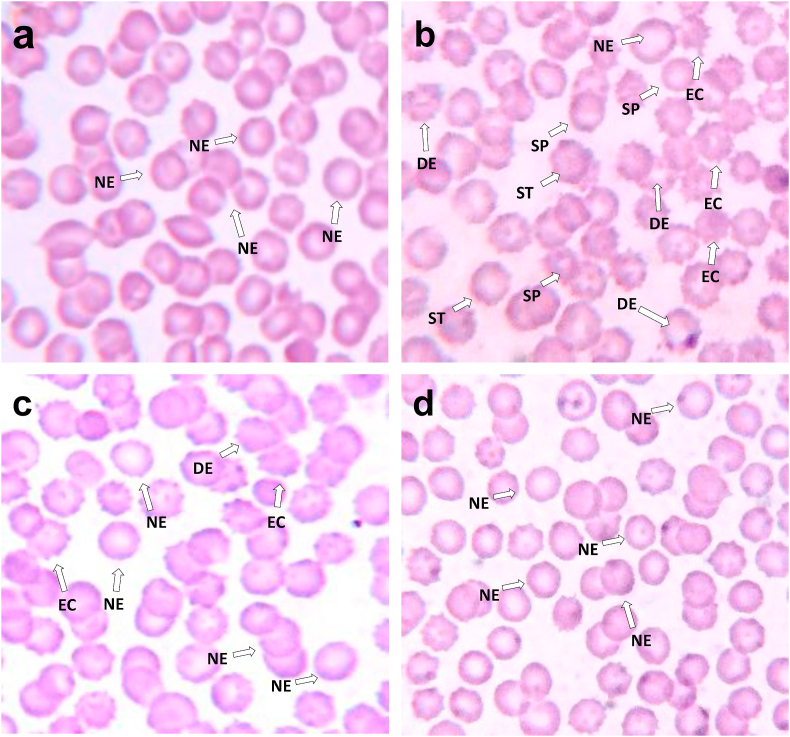
Alcohol significantly increased the erythrocyte membrane protein carbonyl and malondialdehyde (MDA) contents, along with a concomitant decrease in the membrane antioxidant status, when compared to the control group. Chromatographic analysis of the alcohol-treated rat erythrocyte membranes revealed altered membrane individual phospholipid contents and fluidity properties. Alcohol-induced morphological changes in the erythrocytes and its effect on decreasing the resistance of hypotonic shock induced by NaCl are evident from the hemolysis curves. However, AETA administration to alcoholic rats beneficially modulated the membrane properties anvd protected erythrocytes from damage.
Results suggest that AETA protects erythrocytes from alcohol-induced oxidative stress, biophysical, and biochemical changes very effectively.
酒精是一种广泛滥用的药物,对健康有诸多影响,主要是由其对身体不同部位产生的氧化应激和亚硝化应激所致。阿育吠陀草药学证实了诃子树皮因其丰富的植物化学成分而具有多种治疗用途。
观察酒精对红细胞造成的氧化损伤程度,并评估诃子树皮粉末水提取物(AETA)对这种损伤的保护能力。
将Wistar白化大鼠分为四组,每组八只;第一组(对照组)喂食葡萄糖,第二组给予20% v/v剂量的酒精;5克酒精/千克体重/天,第三组同时给予AETA(0.5克/千克体重/天)和酒精,第四组仅给予树皮提取物。治疗期结束后采集血样并评估不同的生化参数。
与对照组相比,酒精显著增加了红细胞膜蛋白羰基和丙二醛(MDA)含量,同时膜抗氧化状态随之降低。对酒精处理的大鼠红细胞膜进行色谱分析发现,膜中各磷脂含量和流动性特性发生了改变。溶血曲线表明,酒精诱导了红细胞形态变化及其对降低NaCl诱导的低渗性休克抵抗力的影响。然而,给酒精处理的大鼠施用AETA可有益地调节膜特性,并保护红细胞免受损伤。
结果表明,AETA能非常有效地保护红细胞免受酒精诱导的氧化应激、生物物理和生化变化的影响。