Collins Helen M, Betts Natalie S, Dockter Christoph, Berkowitz Oliver, Braumann Ilka, Cuesta-Seijo Jose A, Skadhauge Birgitte, Whelan James, Bulone Vincent, Fincher Geoffrey B
Australian Research Council Centre of Excellence in Plant Cell Walls, School of Agriculture, Food and Wine, University of Adelaide, Glen Osmond, SA, Australia.
Carlsberg Research Laboratory, Copenhagen, Denmark.
Front Plant Sci. 2021 Mar 1;12:641325. doi: 10.3389/fpls.2021.641325. eCollection 2021.
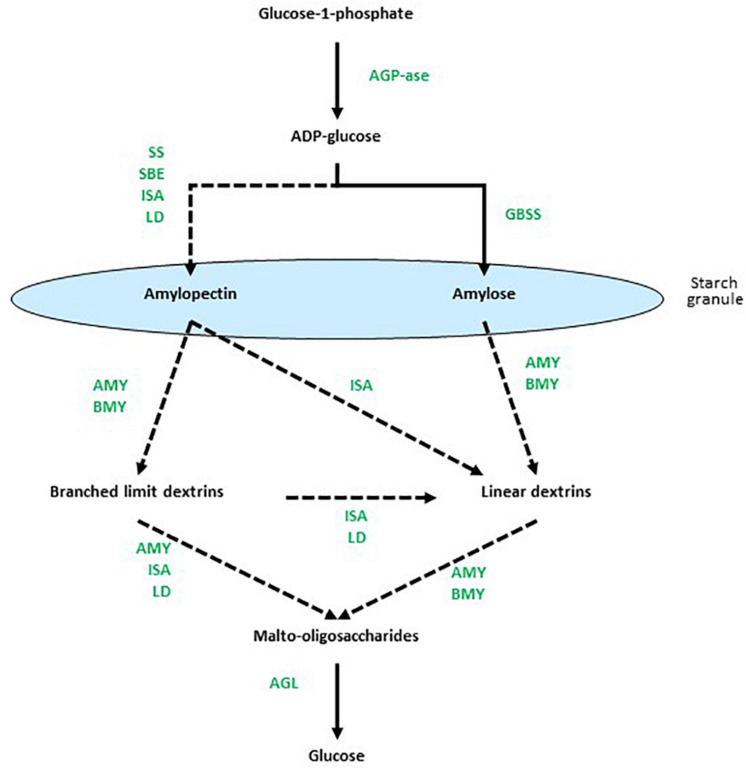
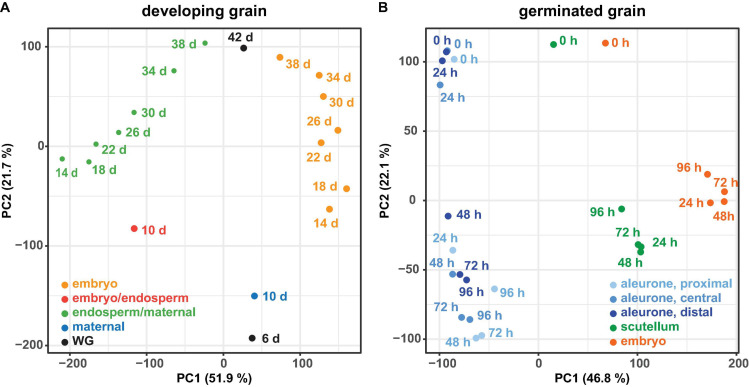
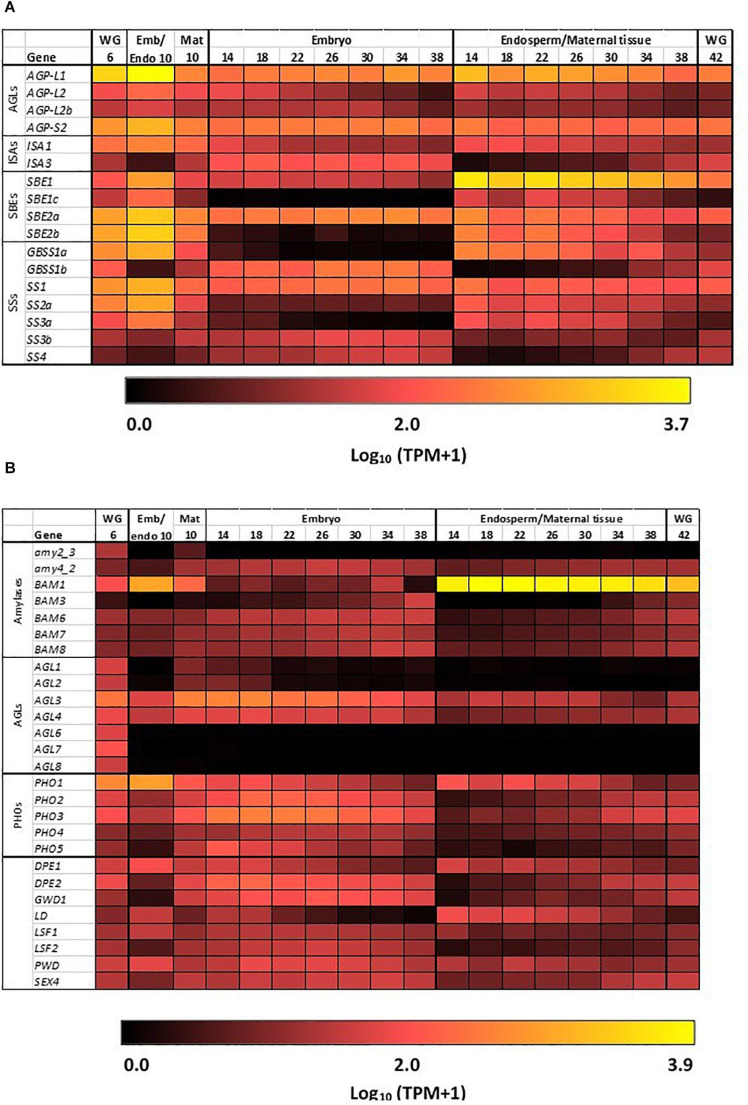
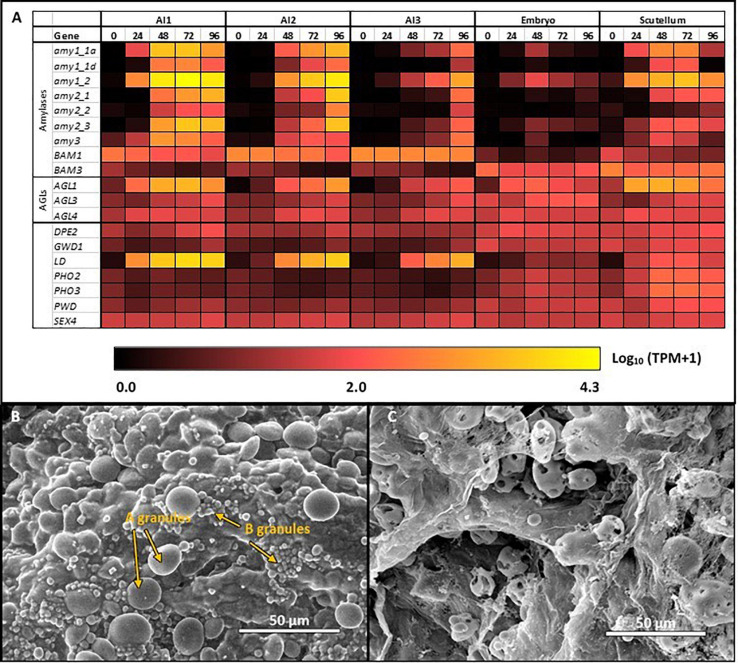
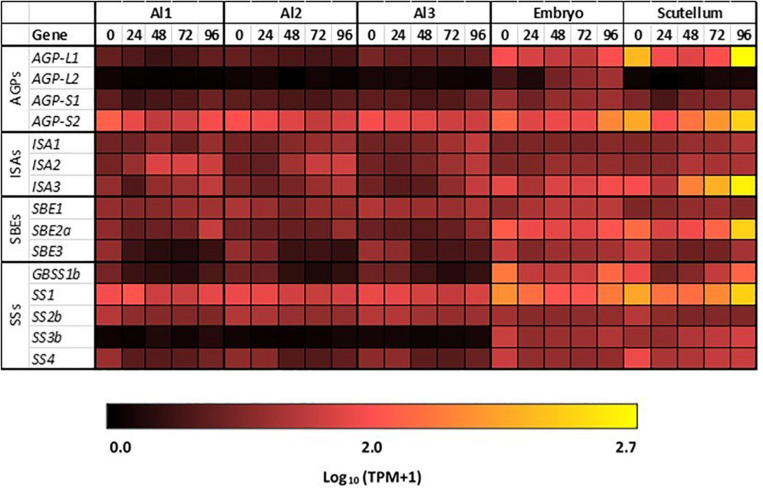
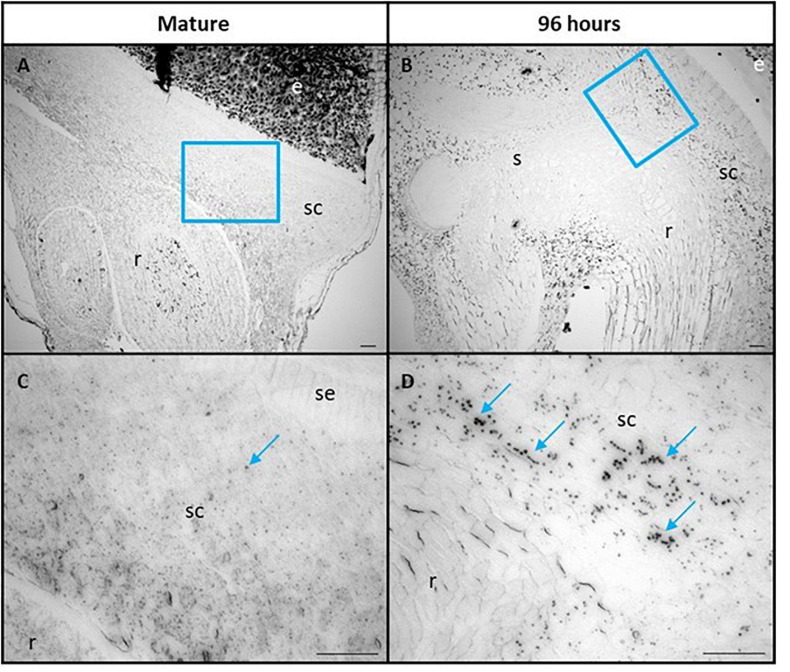
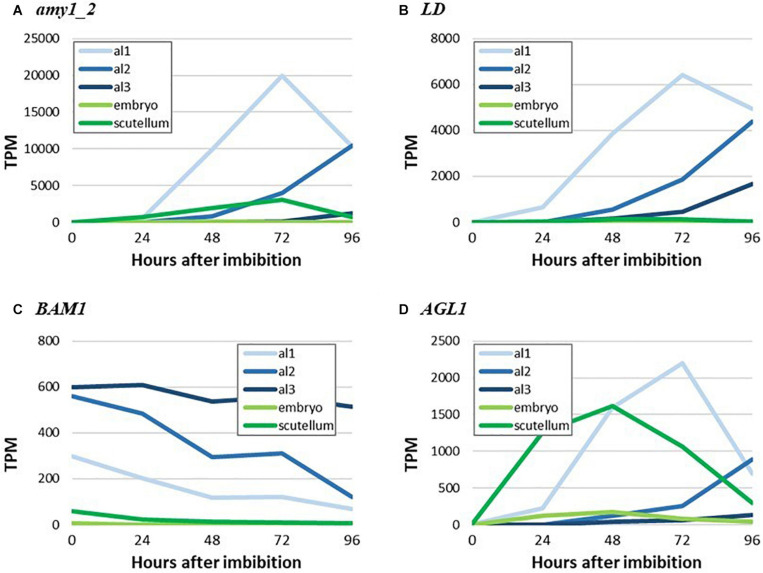
Starch is synthesized in the endosperm of developing barley grain, where it functions as the primary source of stored carbohydrate. In germinated grain these starch reserves are hydrolyzed to small oligosaccharides and glucose, which are transported to the embryo to support the growth of the developing seedling. Some of the mobilized glucose is transiently stored as starch in the scutellum of germinated grain. These processes are crucial for early seedling vigor, which is a key determinant of crop productivity and global food security. Several starch synthases (SS), starch-branching enzymes (SBEs), and starch debranching enzymes (isoamylases, ISA), together with a limit dextrinase (LD), have been implicated in starch synthesis from nucleotide-sugar precursors. Starch synthesis occurs both in the developing endosperm and in the scutellum of germinated grain. For the complete depolymerization of starch to glucose, α-amylase (Amy), β-amylase (Bmy), isoamylase (ISA), limit dextrinase (LD), and α-glucosidase (AGL) are required. Most of these enzymes are encoded by gene families of up to 10 or more members. Here RNA-seq transcription data from isolated tissues of intact developing and germinated barley grain have allowed us to identify the most important, specific gene family members for each of these processes and, at the same time, we have defined in detail the spatio-temporal coordination of gene expression in different tissues of the grain. A transcript dataset for 81,280 genes is publicly available as a resource for investigations into other cellular and biochemical processes that occur in the developing grain from 6 days after pollination.
淀粉在发育中的大麦籽粒胚乳中合成,在那里它作为储存碳水化合物的主要来源发挥作用。在发芽的籽粒中,这些淀粉储备被水解为小寡糖和葡萄糖,它们被运输到胚中以支持发育中的幼苗生长。一些动员的葡萄糖暂时以淀粉的形式储存在发芽籽粒的盾片中。这些过程对早期幼苗活力至关重要,而早期幼苗活力是作物生产力和全球粮食安全的关键决定因素。几种淀粉合酶(SS)、淀粉分支酶(SBE)和淀粉去分支酶(异淀粉酶,ISA),以及一种极限糊精酶(LD),参与了由核苷酸糖前体合成淀粉的过程。淀粉合成发生在发育中的胚乳和发芽籽粒的盾片中。为了将淀粉完全解聚为葡萄糖,需要α-淀粉酶(Amy)、β-淀粉酶(Bmy)、异淀粉酶(ISA)、极限糊精酶(LD)和α-葡萄糖苷酶(AGL)。这些酶大多由多达10个或更多成员的基因家族编码。在这里,来自完整发育和发芽大麦籽粒分离组织的RNA-seq转录数据使我们能够识别这些过程中每个过程最重要的特定基因家族成员,同时,我们详细定义了籽粒不同组织中基因表达的时空协调。一个包含81280个基因的转录数据集作为一种资源公开可用,用于研究授粉后6天发育中的籽粒中发生的其他细胞和生化过程。