Department of Pathology, Jeju National University Hospital, 15 Aran 13-gil, Jeju-si, 63241, Jeju-do, South Korea.
Department of Pathology and Molecular Diagnostic Laboratory, Asan Medical Center, University of Ulsan College of Medicine, Seoul, South Korea.
Sci Rep. 2021 Mar 18;11(1):6203. doi: 10.1038/s41598-021-85593-9.
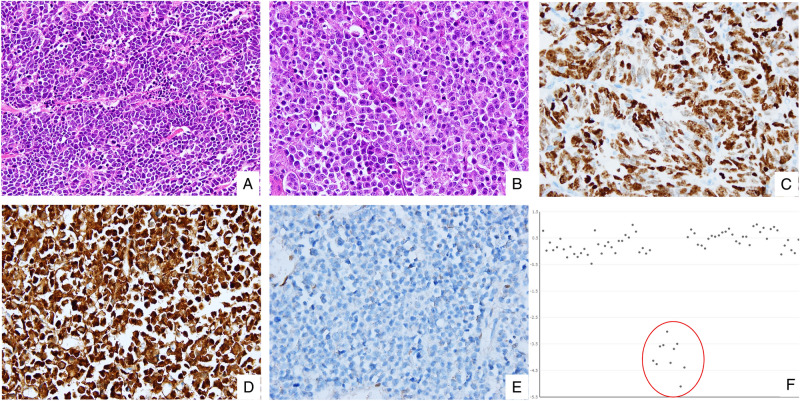
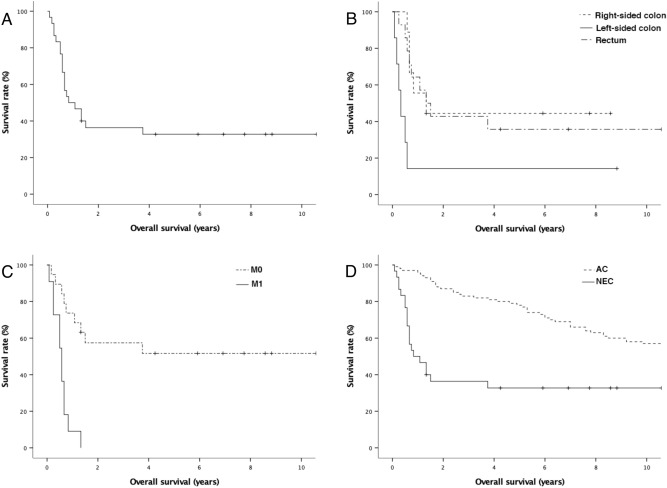
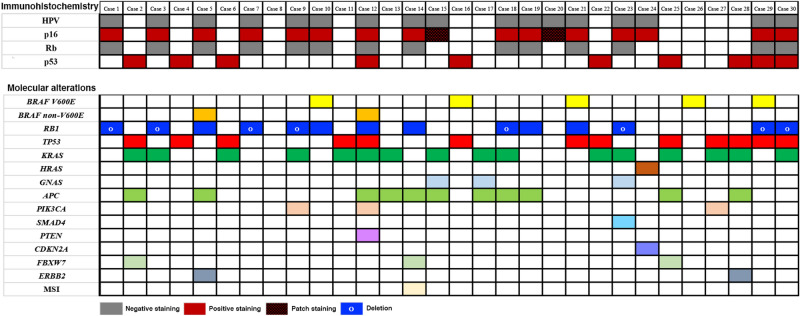
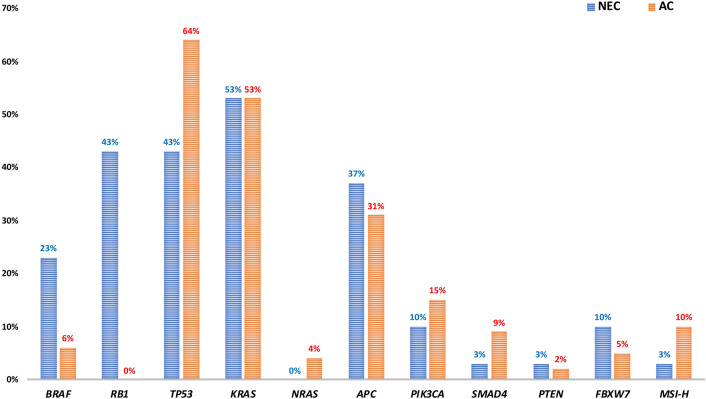
Poorly differentiated neuroendocrine carcinoma (NEC) is a rare subtype of colorectal cancer (CRC). This study aimed to investigate clinicopathologic characteristics of colorectal NECs and elucidate genomic differences and similarities between colorectal NECs and colorectal adenocarcinomas (ACs). A total of 30 colorectal NECs were screened for frequently identified CRC oncogenic driver genes by targeted next-generation sequencing of 382 genes. The median age of the patients was 67 years (range, 44 to 88 years). NECs occurred predominantly in the rectum (47%) and exhibited multiple adverse prognostic pathologic factors, including frequent lymphatic and vascular invasions, high rates of lymph node metastasis and distant metastasis and advanced TNM stage. The 1-, 3-, and 5-year overall survival rates of NEC patients were 46.7%, 36.4%, and 32.7%, respectively, with a median overall survival period of 11.5 months. In a molecular analysis, NECs showed high rates of BRAF mutation (23%), predominantly p.V600E (71%), and alterations in RB1 (47%), particularly deletion (57%). The frequencies and distributions of other genes, such as KRAS, APC, SMAD4, and PIK3CA, and microsatellite instability status were similar to those of ACs. These findings provide beneficial information for selecting therapeutic options, including targeted therapy, and a better understanding of the histogenesis of this tumour.
低分化神经内分泌癌(NEC)是一种罕见的结直肠癌(CRC)亚型。本研究旨在探讨结直肠 NEC 的临床病理特征,并阐明结直肠 NEC 与结直肠腺癌(AC)之间的基因组差异和相似性。通过对 382 个基因的靶向下一代测序,对 30 例结直肠 NEC 进行了常见的 CRC 致癌驱动基因的筛选。患者的中位年龄为 67 岁(范围,44 至 88 岁)。NEC 主要发生在直肠(47%),并表现出多个不良预后的病理因素,包括频繁的淋巴和血管侵犯、高淋巴结转移和远处转移率以及较晚的 TNM 分期。NEC 患者的 1、3 和 5 年总生存率分别为 46.7%、36.4%和 32.7%,中位总生存期为 11.5 个月。在分子分析中,NEC 显示出较高的 BRAF 突变率(23%),主要为 p.V600E(71%),以及 RB1 改变(47%),特别是缺失(57%)。其他基因(如 KRAS、APC、SMAD4 和 PIK3CA)的频率和分布以及微卫星不稳定性状态与 AC 相似。这些发现为选择治疗方案(包括靶向治疗)提供了有益的信息,并更好地理解了这种肿瘤的组织发生。