Lin Huapeng, Zeng Lingfeng, Yang Jing, Hu Wei, Zhu Ying
Department of Intensive Care Unit, Affiliated Hangzhou First People's Hospital, Zhejiang University School of Medicine, Hangzhou, China.
Department of Hepatobiliary Surgery, The Second Affiliated Hospital of Chongqing Medical University, Chongqing, China.
Front Oncol. 2021 Mar 2;11:608260. doi: 10.3389/fonc.2021.608260. eCollection 2021.
We sought to develop and validate a novel prognostic model for predicting survival of patients with Barcelona Clinic Liver Cancer Stages (BCLC) stage B hepatocellular carcinoma (HCC) using a machine learning approach based on random survival forests (RSF).
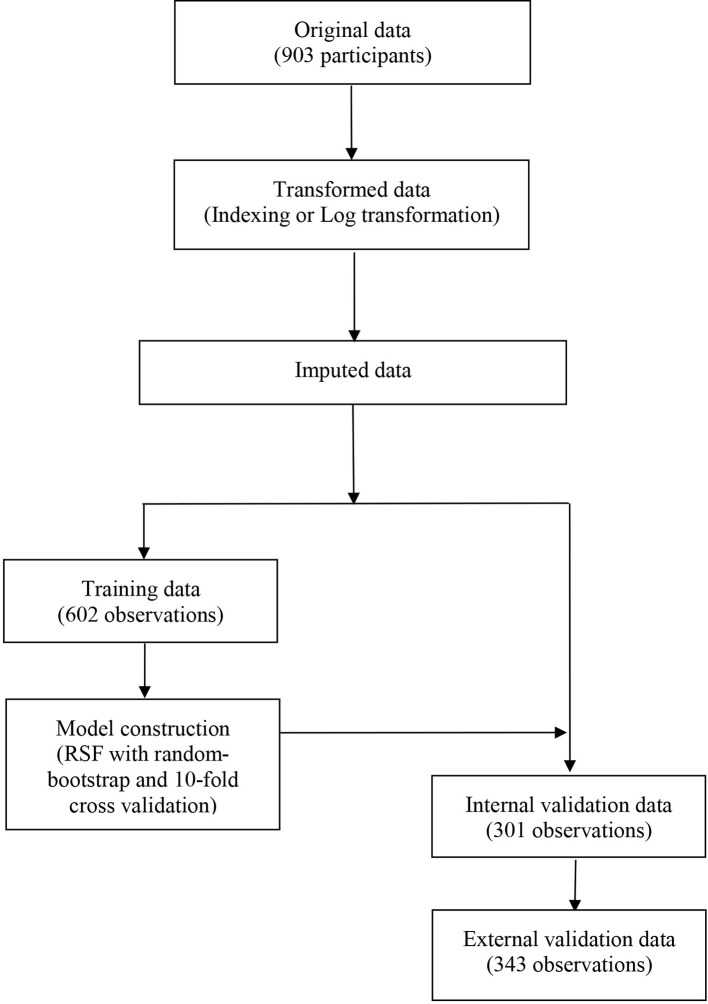
We retrospectively analyzed overall survival rates of patients with BCLC stage B HCC using a training (n = 602), internal validation (n = 301), and external validation (n = 343) groups. We extracted twenty-one clinical and biochemical parameters with established strategies for preprocessing, then adopted the RSF classifier for variable selection and model development. We evaluated model performance using the concordance index (c-index) and area under the receiver operator characteristic curves (AUROC).
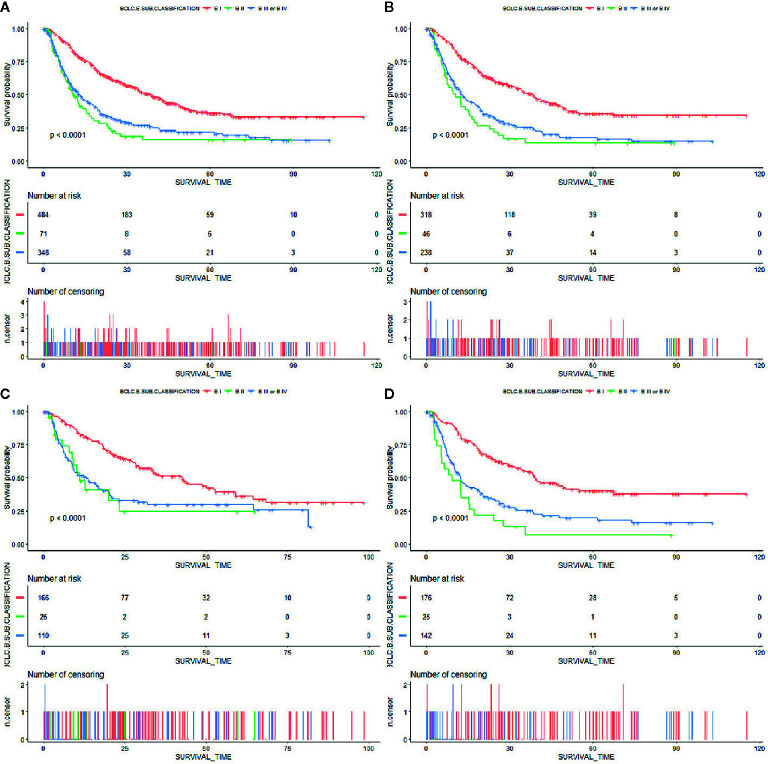
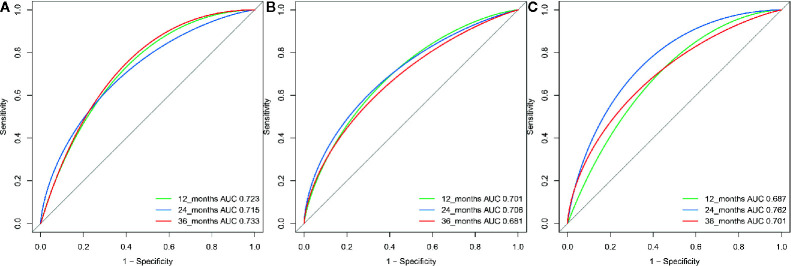
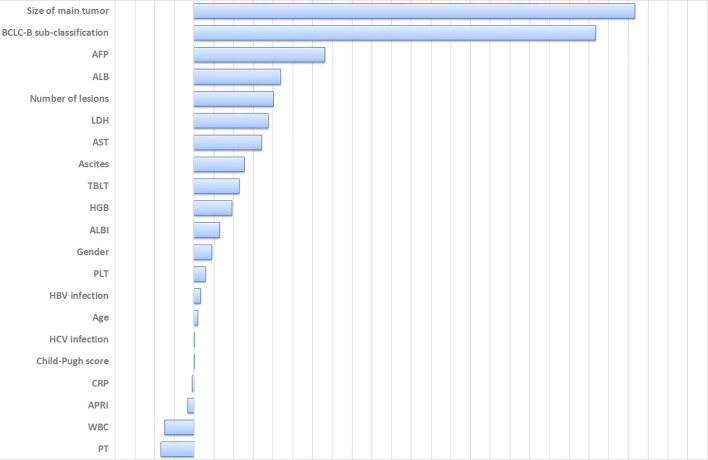
RSF revealed that five parameters, namely size of the tumor, BCLC-B sub-classification, AFP level, ALB level, and number of lesions, were strong predictors of survival. These were thereafter used for model development. The established model had a c-index of 0.69, whereas AUROC for predicting survival outcomes of the first three years reached 0.72, 0.71, and 0.73, respectively. Additionally, the model had better performance relative to other eight Cox proportional-hazards models, and excellent performance in the subgroup of BCLC-B sub-classification B I and B II stages.
The RSF-based model, established herein, can effectively predict survival of patients with BCLC stage B HCC, with better performance than previous Cox proportional hazards models.
我们试图开发并验证一种新型预后模型,该模型基于随机生存森林(RSF)机器学习方法来预测巴塞罗那临床肝癌分期(BCLC)B期肝细胞癌(HCC)患者的生存率。
我们回顾性分析了BCLC B期HCC患者的总生存率,分为训练组(n = 602)、内部验证组(n = 301)和外部验证组(n = 343)。我们采用既定的预处理策略提取了21个临床和生化参数,然后采用RSF分类器进行变量选择和模型开发。我们使用一致性指数(c指数)和受试者工作特征曲线下面积(AUROC)评估模型性能。
RSF显示,肿瘤大小、BCLC - B亚分类、甲胎蛋白(AFP)水平、白蛋白(ALB)水平和病灶数量这五个参数是生存率的强预测指标。此后将这些参数用于模型开发。所建立的模型c指数为0.69,而预测前三年生存结局的AUROC分别达到0.72、0.71和0.73。此外,该模型相对于其他八个Cox比例风险模型表现更好,在BCLC - B亚分类B I和B II期亚组中表现优异。
本文建立的基于RSF的模型能够有效预测BCLC B期HCC患者的生存率,其性能优于以往的Cox比例风险模型。