Nagy Ferenc, Krizsan Aron K, Kukuts Kornél, Szolikova Melinda, Hascsi Zsolt, Barna Sandor, Acs Antonietta, Szabo Peter, Tron Lajos, Balkay Laszlo, Dahlbom Magnus, Zentai Mihaly, Forgacs Attila, Garai Ildiko
ScanoMed Nuclear Medicine Centers, Nagyerdei krt. 98, Debrecen, H-4032, Hungary.
Mediso Ltd., Budapest, Hungary.
EJNMMI Phys. 2021 Mar 18;8(1):28. doi: 10.1186/s40658-021-00371-w.
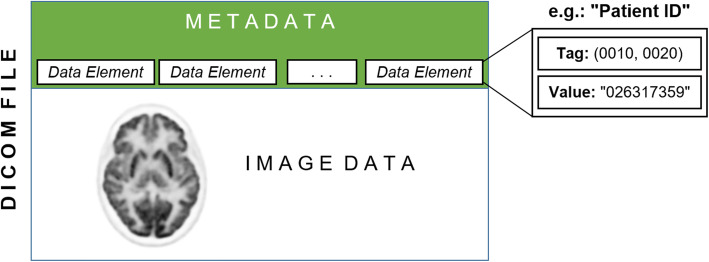
Regular and precise inspection of the realization of the local nuclear medicine standard operation procedures (SOPs) is very complex and time-consuming, especially when large amount of patient data is obtained from a wide scale of different scan procedures on a daily basis. DICOM metadata comprise a complete set of data related to the patient and the imaging procedure, and consequently all information necessary to evaluate the compliance with the actual SOP.
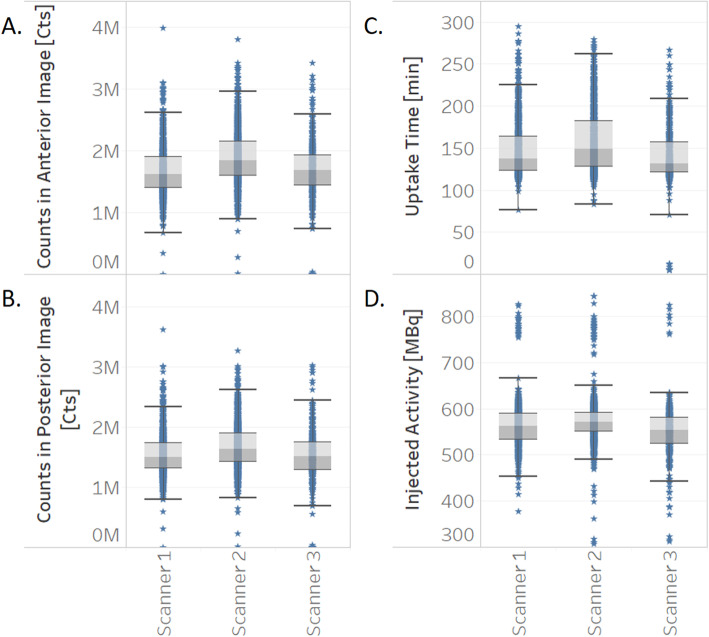
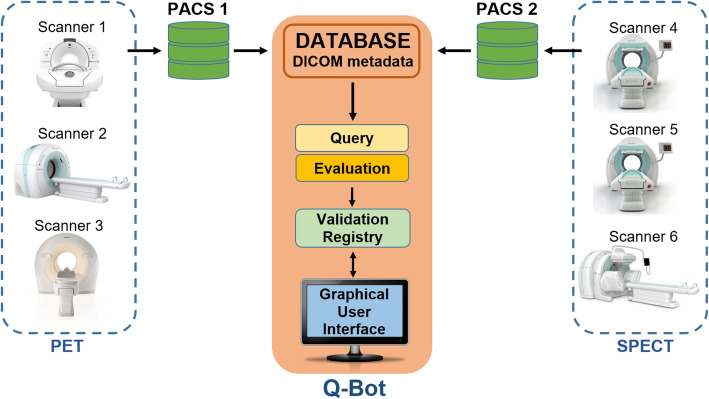
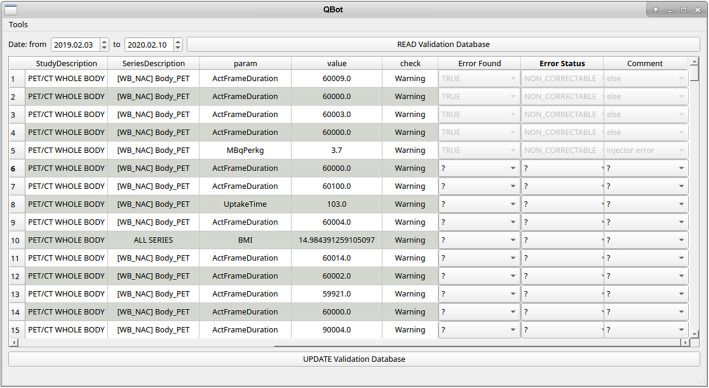
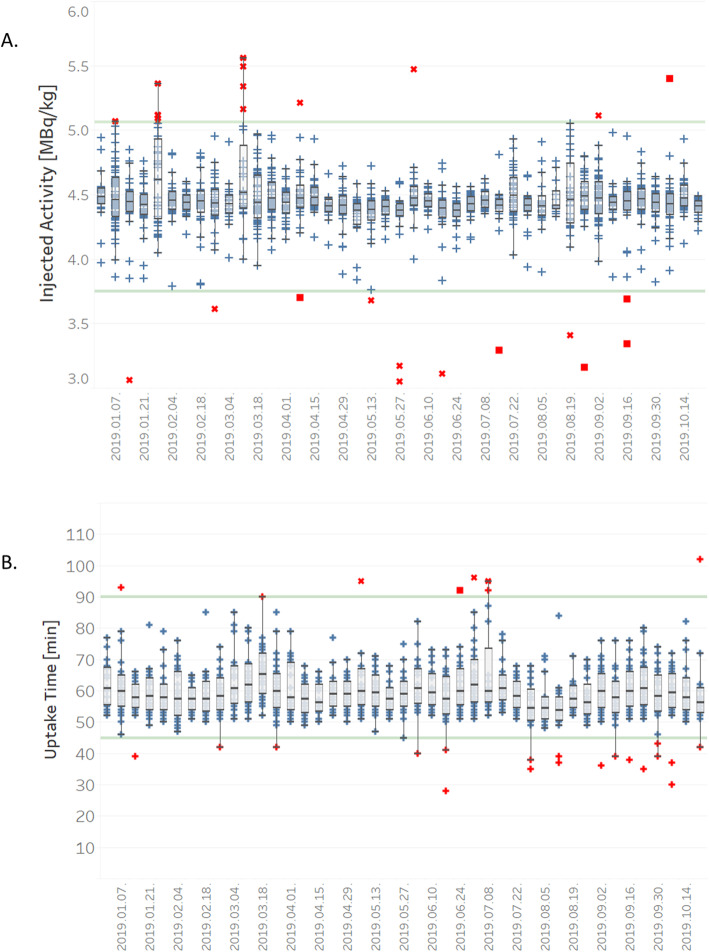
Q-Bot, an automatic DICOM metadata monitoring tool which is capable to verify SOP conformities, was tested for 11 months at two nuclear medicine departments. Relevant parameters, such as patient ID, patient mass and height, injected activity, and uptake time, were investigated in the case of adult F-FDG whole-body PET/CT and Tc-MDP gamma camera bone scans on a daily basis. Q-Bot automatically inspected the actual SOP compliance of these relevant DICOM parameters. Q-Bot graphical user interface (GUI) provided a summary of the outliers in a table format to be investigated by a dedicated technologist. In addition, information related to the error handling was also collected for retrospective analysis of long-term tendencies.
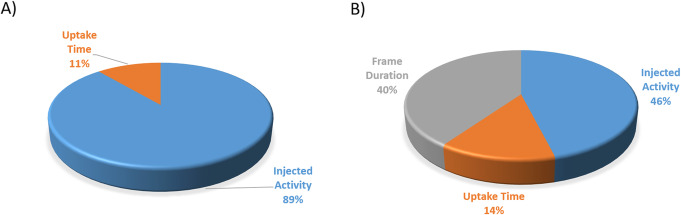
In total, 6702 PET/CT and 2502 gamma camera scans were inspected, from which 8581 were confirmed as valid patient study without errors. Discrepancies related to the lack of a parameter, not appropriate format, or improper scan procedures were found in 623 cases, and 156 out of these were corrected before the medical reading and reporting. SOP non-conformities explored with Q-Bot were found to be non-correctable in 467 cases. Systematic errors to our practice turned out to be the manual radiopharmaceutical injection, the allowance to use both SI and non-SI units, and the clear definition of decimal point symbol to use.
The daily evaluation of Q-Bot results provided early detection of errors and consequently ensured the minimization of error propagation. Integration of a QM software that inspects protocol compliance at a nuclear medicine department provides significant support to detect non-conformities for technologists, and much higher confidence in image quality for physicians.
定期且精确地检查当地核医学标准操作程序(SOP)的执行情况非常复杂且耗时,尤其是当每天从广泛的不同扫描程序中获取大量患者数据时。DICOM元数据包含与患者和成像程序相关的一整套数据,因此包含评估实际SOP合规性所需的所有信息。
Q-Bot是一种能够验证SOP合规性的自动DICOM元数据监测工具,在两个核医学科室进行了11个月的测试。在成人F-FDG全身PET/CT和Tc-MDPγ相机骨扫描的情况下,每天对患者ID、患者体重和身高、注射活度以及摄取时间等相关参数进行调查。Q-Bot自动检查这些相关DICOM参数的实际SOP合规性。Q-Bot图形用户界面(GUI)以表格形式提供异常值摘要,供专门的技术人员进行调查。此外,还收集了与错误处理相关的信息,用于对长期趋势进行回顾性分析。
总共检查了6702例PET/CT和2502例γ相机扫描,其中8581例被确认为有效的患者研究且无错误。在623例中发现了与参数缺失、格式不当或扫描程序不正确相关的差异,其中156例在医学解读和报告之前得到了纠正。用Q-Bot发现的SOP不符合项在467例中被发现无法纠正。我们实践中的系统错误原来是手动放射性药物注射、允许使用国际单位制(SI)和非国际单位制单位以及使用小数点符号的明确定义。
对Q-Bot结果的每日评估能够早期发现错误,从而确保错误传播最小化。在核医学科室集成一个检查协议合规性的质量管理软件,为技术人员检测不符合项提供了重要支持,并为医生提供了更高的图像质量信心。