Department of Urology, Guangdong Provincial People's Hospital, Guangdong Academy of Medical Sciences, Guangzhou, China.
Shantou University Medical College, Shantou, China.
Front Immunol. 2021 Mar 4;12:653358. doi: 10.3389/fimmu.2021.653358. eCollection 2021.
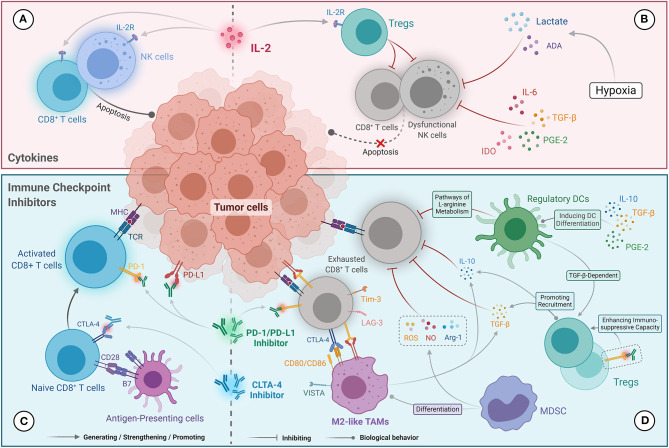
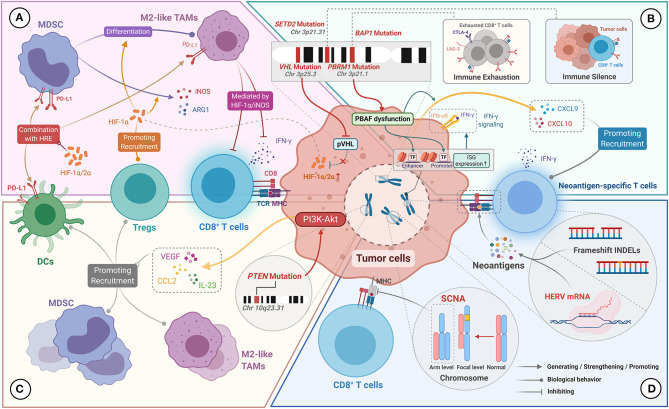
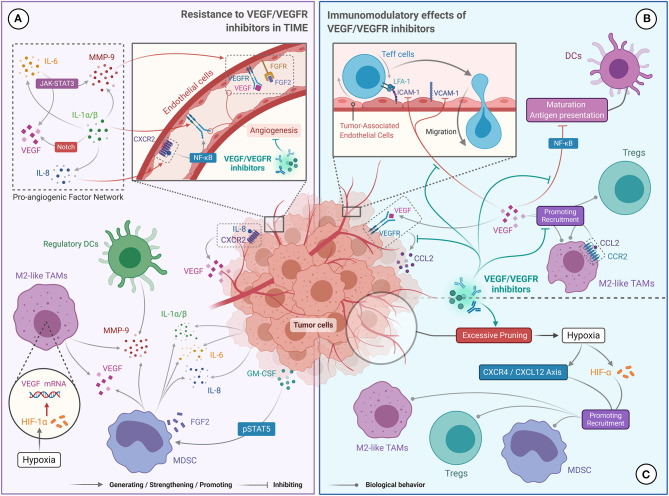
Immune checkpoint inhibitors (ICIs) are currently a first-line treatment option for clear cell renal cell carcinoma (ccRCC). However, recent clinical studies have shown that a large number of patients do not respond to ICIs. Moreover, only a few patients achieve a stable and durable response even with combination therapy based on ICIs. Available studies have concluded that the response to immunotherapy and targeted therapy in patients with ccRCC is affected by the tumor immune microenvironment (TIME), which can be manipulated by targeted therapy and tumor genomic characteristics. Therefore, an in-depth understanding of the dynamic nature of the TIME is important for improving the efficacy of immunotherapy or combination therapy in patients with advanced ccRCC. Here, we explore the possible mechanisms by which the TIME affects the efficacy of immunotherapy and targeted therapy, as well as the factors that drive dynamic changes in the TIME in ccRCC, including the immunomodulatory effect of targeted therapy and genomic changes. We also describe the progress on novel therapeutic modalities for advanced ccRCC based on the TIME. Overall, this review provides valuable information on the optimization of combination therapy and development of individualized therapy for advanced ccRCC.
免疫检查点抑制剂(ICIs)目前是透明细胞肾细胞癌(ccRCC)的一线治疗选择。然而,最近的临床研究表明,大量患者对 ICI 没有反应。此外,即使基于 ICI 的联合治疗,也只有少数患者能够获得稳定和持久的反应。现有研究得出结论,ccRCC 患者对免疫治疗和靶向治疗的反应受肿瘤免疫微环境(TIME)的影响,TIME 可通过靶向治疗和肿瘤基因组特征进行操纵。因此,深入了解 TIME 的动态特性对于提高晚期 ccRCC 患者免疫治疗或联合治疗的疗效非常重要。在这里,我们探讨了 TIME 影响免疫治疗和靶向治疗疗效的可能机制,以及导致 ccRCC 中 TIME 动态变化的因素,包括靶向治疗的免疫调节作用和基因组变化。我们还描述了基于 TIME 的晚期 ccRCC 新型治疗方式的进展。总的来说,本综述为优化晚期 ccRCC 的联合治疗和开发个体化治疗提供了有价值的信息。