Qian Yucheng, Wei Jingsun, Lu Wei, Sun Fangfang, Hwang Maxwell, Jiang Kai, Fu Dongliang, Zhou Xinyi, Kong Xiangxing, Zhu Yingshuang, Xiao Qian, Hu Yeting, Ding Kefeng
Department of Colorectal Surgery and Oncology, Key Laboratory of Cancer Prevention and Intervention, Ministry of Education, The Second Affiliated Hospital, Zhejiang University School of Medicine, Hangzhou, China.
Zhejiang University Cancer Center, Zhejiang University, Hangzhou, China.
Front Genet. 2021 Mar 4;12:619611. doi: 10.3389/fgene.2021.619611. eCollection 2021.
We focused on immune-related genes (IRGs) derived from transcriptomic studies, which had the potential to stratify patients' prognosis and to establish a risk assessment model in colorectal cancer.
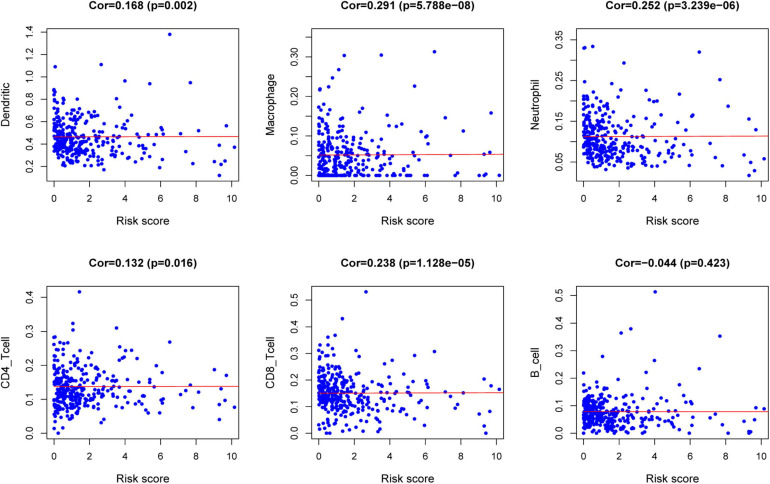
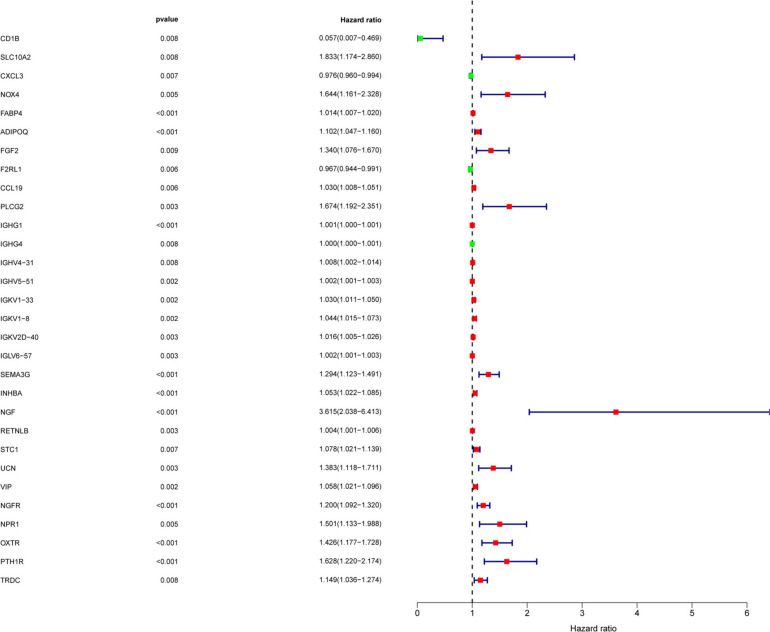
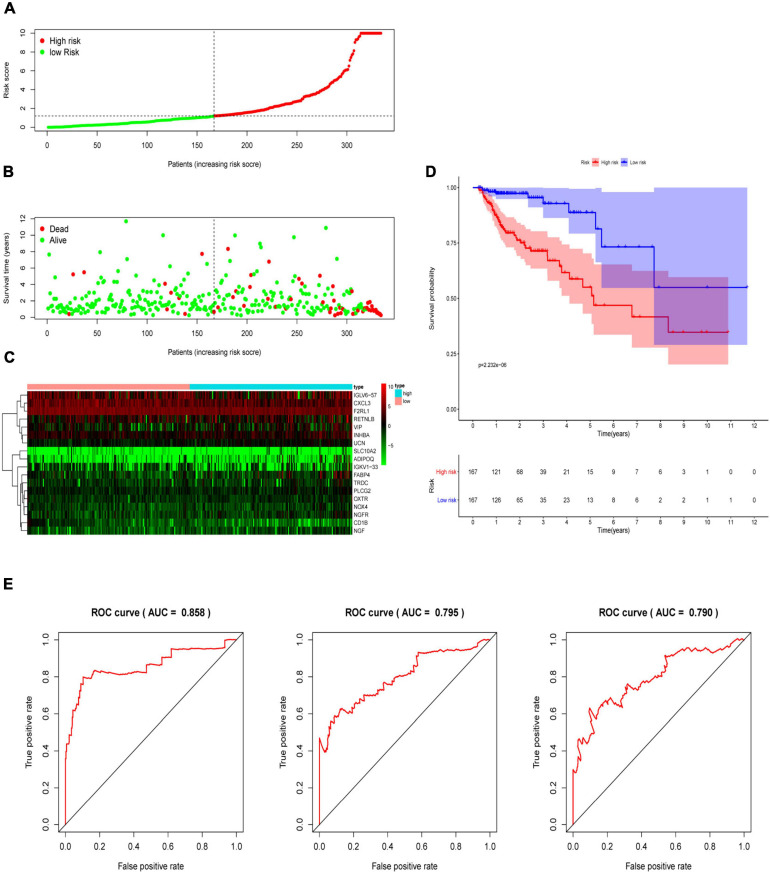
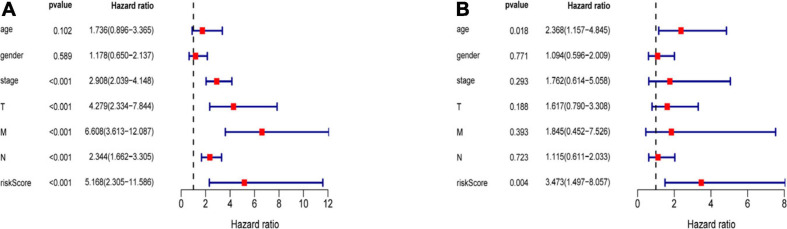
This article examined our understanding of the molecular pathways associated with intratumoral immune response, which represented a critical step for the implementation of stratification strategies toward the development of personalized immunotherapy of colorectal cancer. More and more evidence shows that IRGs play an important role in tumors. We have used data analysis to screen and identify immune-related molecular biomarkers of colon cancer. We selected 18 immune-related prognostic genes and established models to assess prognostic risks of patients, which can provide recommendations for clinical treatment and follow-up. Colorectal cancer (CRC) is a leading cause of cancer-related death in human. Several studies have investigated whether IRGs and tumor immune microenvironment (TIME) could be indicators of CRC prognoses. This study aimed to develop an improved prognostic signature for CRC based on IRGs to predict overall survival (OS) and provide new therapeutic targets for CRC treatment. Based on the screened IRGs, the Cox regression model was used to build a prediction model based on 18-IRG signature. Cox regression analysis revealed that the 18-IRG signature was an independent prognostic factor for OS in CRC patients. Then, we used the TIMER online database to explore the relationship between the risk scoring model and the infiltration of immune cells, and the results showed that the risk model can reflect the state of TIME to a certain extent. In short, an 18-IRG prognostic signature for predicting CRC patients' survival was firmly established.
我们聚焦于转录组学研究中衍生出的免疫相关基因(IRGs),这些基因有潜力对患者预后进行分层,并在结直肠癌中建立风险评估模型。
本文审视了我们对与肿瘤内免疫反应相关分子途径的理解,这是实施针对结直肠癌个性化免疫治疗分层策略的关键一步。越来越多的证据表明IRGs在肿瘤中发挥重要作用。我们利用数据分析筛选并鉴定了结肠癌的免疫相关分子生物标志物。我们选择了18个免疫相关的预后基因并建立模型来评估患者的预后风险,可为临床治疗和随访提供建议。结直肠癌(CRC)是人类癌症相关死亡的主要原因。多项研究探讨了IRGs和肿瘤免疫微环境(TIME)是否可作为CRC预后的指标。本研究旨在基于IRGs开发一种改进的CRC预后特征,以预测总生存期(OS)并为CRC治疗提供新的治疗靶点。基于筛选出的IRGs,使用Cox回归模型构建基于18-IRG特征的预测模型。Cox回归分析显示,18-IRG特征是CRC患者OS的独立预后因素。然后,我们使用TIMER在线数据库探索风险评分模型与免疫细胞浸润之间的关系,结果表明该风险模型在一定程度上可以反映TIME的状态。简而言之,一个用于预测CRC患者生存的18-IRG预后特征得以确立。