Loeb Alexander E, Farr Jack, Parikh Shital N, Cosgarea Andrew J
Department of Orthopaedic Surgery, The Johns Hopkins University School of Medicine, Baltimore, Maryland, USA.
Department of Orthopaedic Surgery, Indiana University School of Medicine, Indianapolis, Indiana, USA.
Orthop J Sports Med. 2021 Feb 26;9(2):2325967120985530. doi: 10.1177/2325967120985530. eCollection 2021 Feb.
Most patellar dislocations occur in a lateral direction because of a summed lateral force vector and predisposing anatomic risk factors. Medial patellar instability is rare and is a well-recognized iatrogenic complication of an overly aggressive lateral retinacular release. Noniatrogenic medial patellar dislocations are rare. The management of these injuries is not well described.
To describe the experience of the International Patellofemoral Study Group with patients with noniatrogenic medial patellar dislocation.
Case series; Level of evidence, 4.
Members of the International Patellofemoral Study Group (N = 64) were surveyed between October 2018 and April 2019. This group was chosen because of its wide referral base and interest in patellar instability. Specialists who had encountered a patient with medial patellar instability were sent a questionnaire inquiring about details of the case, including patient demographics, medical history, level of athletic competition, injury characteristics, and treatment. Cases were confirmed by physical examination records and, in some cases, with findings on advanced radiographic imaging.
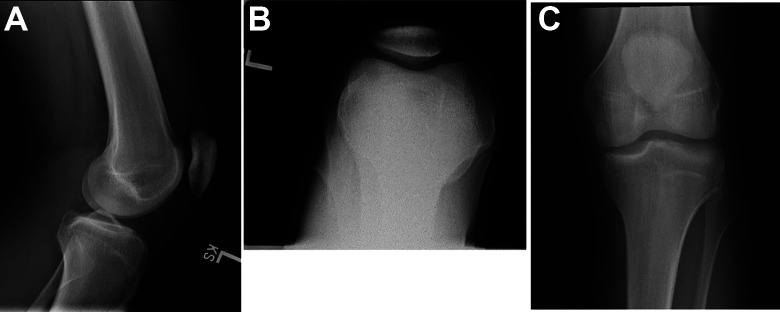
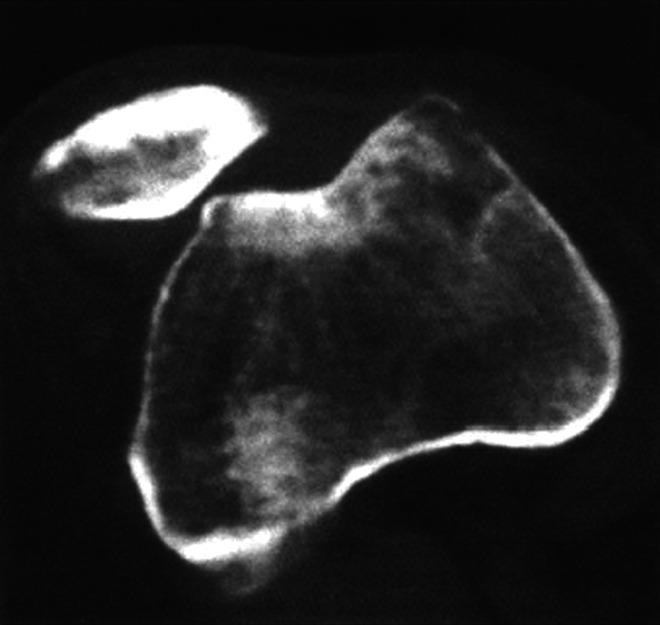
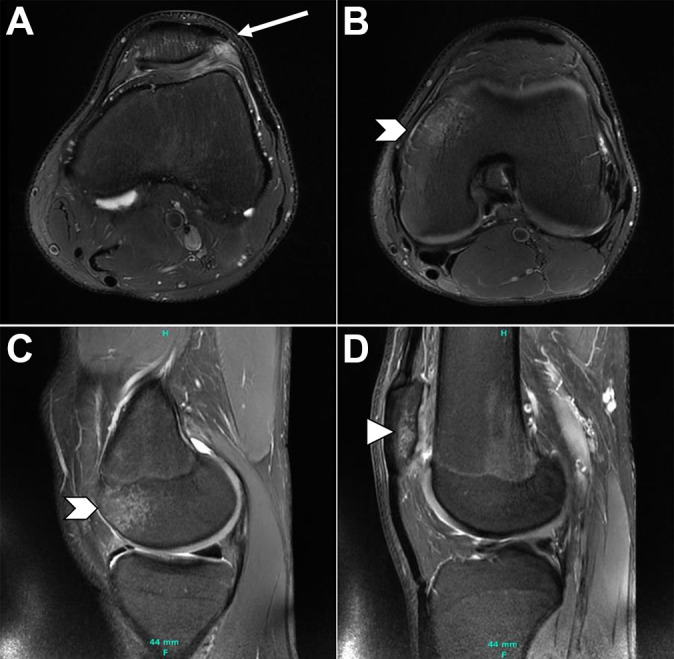
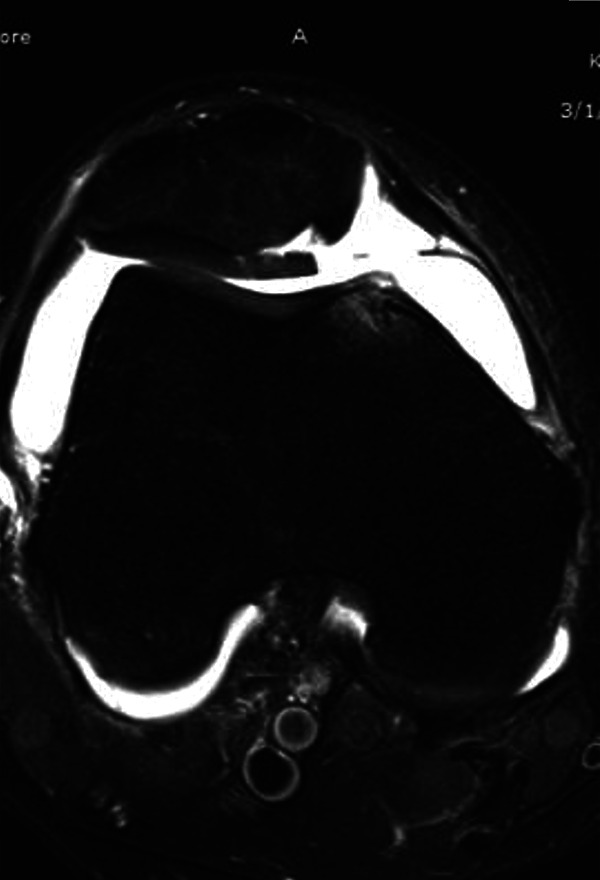
The survey response rate was 73% (47/64). Three of the 47 specialists (6.4%) reported they had seen a case of noniatrogenic medial patellar dislocation, for a total of 6 cases. Four cases were described as recurrent medial dislocations in the setting of hypermobile Ehlers-Danlos syndrome; 2 were treated nonoperatively, 1 underwent lateral patellofemoral ligament reconstruction, and 1 underwent derotational osteotomies. Two medial-sided patellar dislocations in collegiate athletes were sports-related injuries that required surgical debridement but no ligamentous reconstruction. None of the patients had persistent or recurrent instability at the time of their most recent follow-up.
Noniatrogenic medial patellar dislocations are extremely rare. This case review suggests that the treatment of first-time medial patellar instability in patients without known risk factors should follow the same principles as the treatment of lateral instability with no known risk factors, which is nonoperative management. For patients with documented risk factors and recurrence, surgery to address the risk factors may be appropriate.
由于合力外侧力向量和解剖学易感危险因素,大多数髌骨脱位发生在外侧方向。内侧髌骨不稳定很少见,是外侧支持带过度松解公认的医源性并发症。非医源性内侧髌骨脱位罕见。这些损伤的治疗方法描述不多。
描述国际髌股研究小组对非医源性内侧髌骨脱位患者的治疗经验。
病例系列;证据等级,4级。
在2018年10月至2019年4月期间对国际髌股研究小组的成员(N = 64)进行了调查。选择该组是因为其广泛的转诊基础和对髌骨不稳定的兴趣。遇到内侧髌骨不稳定患者的专家收到一份问卷,询问病例细节,包括患者人口统计学、病史、运动竞赛水平、损伤特征和治疗情况。病例通过体格检查记录确诊,在某些情况下,还通过高级影像学检查结果确诊。
调查回复率为73%(47/64)。47位专家中有3位(6.4%)报告他们见过非医源性内侧髌骨脱位病例,共6例。4例被描述为在活动度过高的埃勒斯-当洛综合征背景下的复发性内侧脱位;2例接受非手术治疗,1例接受外侧髌股韧带重建,1例接受旋转截骨术。2例大学运动员的内侧髌骨脱位是与运动相关的损伤,需要手术清创但无需韧带重建。在最近一次随访时,所有患者均无持续性或复发性不稳定。
非医源性内侧髌骨脱位极为罕见。本病例回顾表明,对于无已知危险因素的首次内侧髌骨不稳定患者的治疗,应遵循与无已知危险因素的外侧不稳定治疗相同的原则,即非手术治疗。对于有记录的危险因素和复发的患者,手术解决危险因素可能是合适的。