Shulman David S, Kiwinda Lulla V, Edwards Stacey, Clinton Catherine M, Hunt Sarah, Greenspan Lianne, Lawler Kristen D, Reaman Gregory, Al-Sayegh Hasan, Bona Kira, O'Neill Allison F, Shusterman Suzanne, Janeway Katherine A, Place Andrew E, Chi Susan N, Ma Clement, DuBois Steven G
Dana-Farber/Boston Children's Cancer and Blood Disorders Center, Harvard Medical School, Boston, MA, USA.
Boston Children's Hospital, Boston, MA, USA.
Cancer Med. 2021 Apr;10(7):2310-2318. doi: 10.1002/cam4.3791. Epub 2021 Mar 9.
Single patient Investigational New Drug (IND) applications are one mechanism through which experimental therapies are accessed for children with cancer. The landscape of use, outcomes, and toxicity from single patient INDs remains unknown in pediatric oncology.
We performed a retrospective analysis of all single patient INDs requested and prescribed at a single institution between 1/1/2007 and 5/1/2019. We report aggregate data from the US Food and Drug Administration (FDA) on single patient IND applications over the final two years of the study (2017-2019). We report an overview of all IND applications, as well as clinical descriptions of patients, treatments, outcomes, and toxicity.
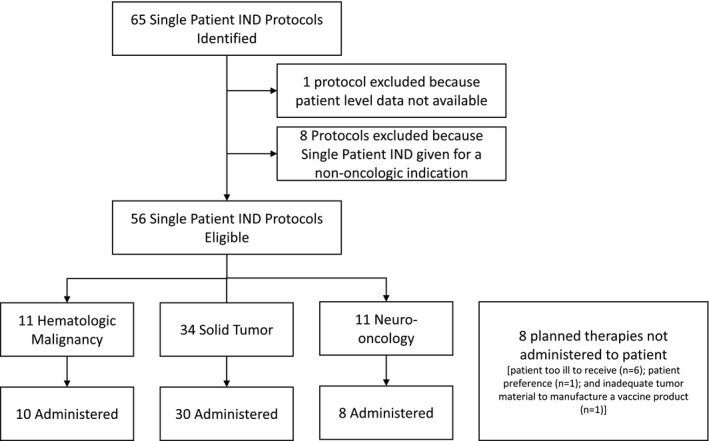
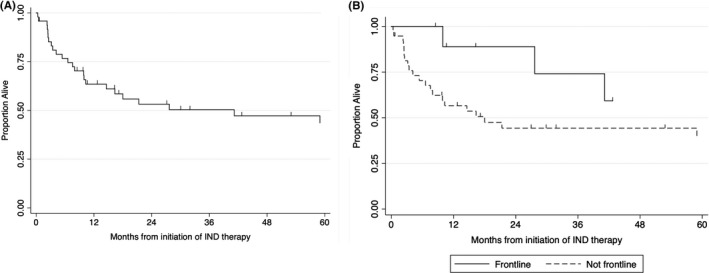
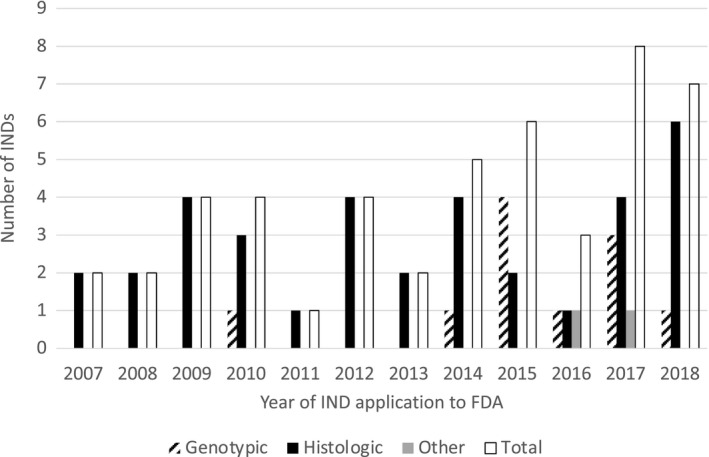
Over the 2-year period, the FDA approved all 171 submitted single patient IND requests for pediatric oncology. We identified 56 requests from our center during the 12-year study period, and all were approved (median time from FDA submission to approval: 1 day (range 0-12)). 71% of requests were based on disease histology. Lack of pediatric clinical trial (65%) was the most common reason for use. 48 approved requests were ultimately administered. The median duration of treatment was 84 days (range: 4-1590), with 3 patients remaining on treatment at time of analysis. Only 7% discontinued treatment due to toxicity. Three-year overall survival was 50% (95% CI, 35-64).
Single patient INDs in pediatric oncology were universally approved in our national and single-center analysis. In our cohort, single patient INDs were primarily utilized based on disease histology, rather than genomics, for agents that lacked a clinical trial.
单患者研究性新药(IND)申请是为癌症儿童获取实验性疗法的一种机制。儿科肿瘤学中,单患者IND的使用情况、疗效及毒性尚不清楚。
我们对2007年1月1日至2019年5月1日期间在单一机构申请并开具的所有单患者IND进行了回顾性分析。我们报告了美国食品药品监督管理局(FDA)在研究的最后两年(2017 - 2019年)关于单患者IND申请的汇总数据。我们报告了所有IND申请的概述,以及患者、治疗、疗效和毒性的临床描述。
在这两年期间,FDA批准了所有171份提交的儿科肿瘤学单患者IND申请。在12年的研究期间,我们中心确定了56份申请,且全部获得批准(从向FDA提交申请到批准的中位时间:1天(范围0 - 12天))。71%的申请基于疾病组织学。缺乏儿科临床试验(65%)是最常见的使用原因。最终有48份获批申请得到了应用。治疗的中位持续时间为84天(范围:4 - 1590天),分析时仍有3名患者在接受治疗。仅7%的患者因毒性而停止治疗。三年总生存率为50%(95%置信区间,35 - 64)。
在我们的全国性和单中心分析中,儿科肿瘤学中的单患者IND均获批准。在我们的队列中,单患者IND主要基于疾病组织学而不是基因组学,用于缺乏临床试验的药物。