Department of Pediatrics and Child Health (Wicklow, Dart), University of Manitoba; Children's Hospital Research Institute of Manitoba (Wicklow, Dart), Winnipeg, Man.; Waywayseecappo First Nation (McKee), Waywayseecappo, Man.; Brandon University (Griffiths), Brandon, Man.; Department of Clinical Health Psychology (Malik), University of Manitoba, Winnipeg, Man.; Wabaseemoong First Nation (Quoquat), Whitedog, Ont.; Department of Community Health Sciences (Bruce), University of Manitoba, Winnipeg, Man.
CMAJ. 2021 Mar 22;193(12):E403-E409. doi: 10.1503/cmaj.201685.
Despite prevention efforts, type 2 diabetes mellitus continues to increase in incidence among First Nations children and is associated with early and aggressive complications. We aimed to determine the experiences of adolescents living with type 2 diabetes and the barriers to living well with type 2 diabetes that adolescents perceived.
We recruited adolescents with type 2 diabetes mellitus from the pediatric diabetes clinic in Winnipeg, Manitoba, to participate in a day-long facilitated focus group discussion. Group discussions were recorded and transcribed verbatim. We used interpretive description methodology to inform the thematic analysis of the transcripts.
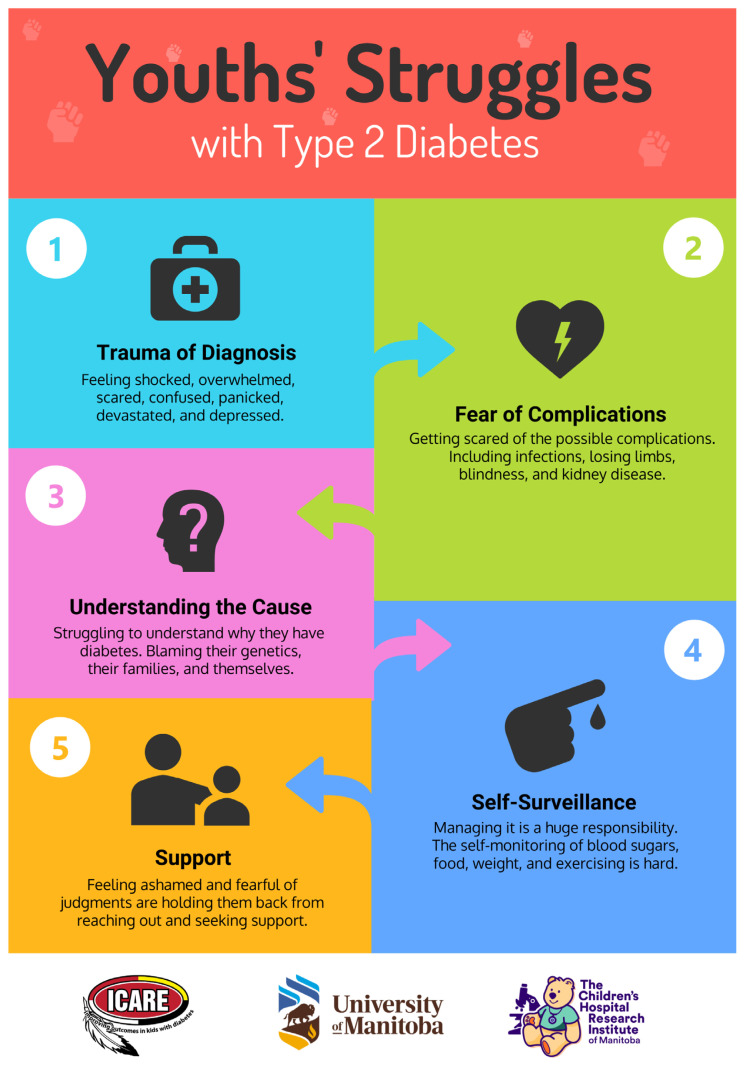
Eight adolescents with a mean age of 15 years participated. Five adolescents identified as female; most were Indigenous (7/8). The mean duration since diagnosis of diabetes was 2.5 years. Adolescents reported struggling with acceptance of their diagnosis, with the stigma and shame associated with the diagnosis and with daily self-management tasks. Three themes were developed from the focus group discussions: bearing witness, the "weight" of diabetes and support (lack of support).
Adolescents with diagnoses of type 2 diabetes experience associated stigma and shame, which are substantial barriers to self-care. A broader understanding of their lived experience, including the socioecological and emotional context, could help to improve health care provision and intervention strategies for this population.
尽管采取了预防措施,但 2 型糖尿病在原住民儿童中的发病率仍在持续上升,并且与早期和严重的并发症有关。我们旨在确定患有 2 型糖尿病的青少年的经历,以及他们认为患有 2 型糖尿病的生活障碍。
我们从马尼托巴省温尼伯的儿科糖尿病诊所招募了患有 2 型糖尿病的青少年,让他们参加了为期一天的小组讨论。小组讨论被记录并逐字转录。我们使用解释性描述方法对转录本进行主题分析。
共有 8 名平均年龄为 15 岁的青少年参加。有 5 名青少年被确定为女性;大多数是原住民(7/8)。诊断出糖尿病的平均时间为 2.5 年。青少年报告难以接受他们的诊断,以及与诊断相关的耻辱感和羞耻感,以及日常的自我管理任务。从小组讨论中得出了三个主题:见证、糖尿病的“重担”和支持(缺乏支持)。
患有 2 型糖尿病的青少年经历了与疾病相关的耻辱和羞耻,这是自我护理的重大障碍。更全面地了解他们的生活经历,包括社会生态和情感背景,可以帮助改善该人群的医疗服务提供和干预策略。