
CT纹理特征在预测胰腺癌肝转移患者预后中的作用。
Role of CT texture features for predicting outcome of pancreatic cancer patients with liver metastases.
作者信息
Hang Junjie, Xu Kequn, Yin Ruohan, Shao Yueting, Liu Muhan, Shi Haifeng, Wang Xiaoyong, Wu Lixia
机构信息
Department of Oncology, Changzhou No.2 People's Hospital, Nanjing Medical University, Xinglong Road 19, Changzhou 213000, China.
Department of Medical Imaging, Changzhou No.2 People's Hospital, Nanjing Medical University, Xinglong Road 19, Changzhou 213000, China.
出版信息
J Cancer. 2021 Feb 22;12(8):2351-2358. doi: 10.7150/jca.49569. eCollection 2021.
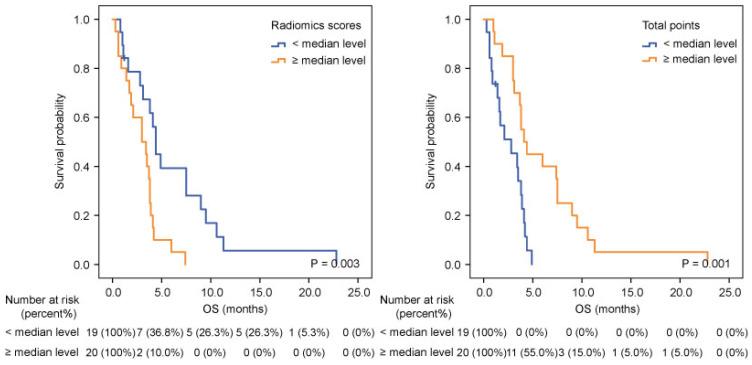
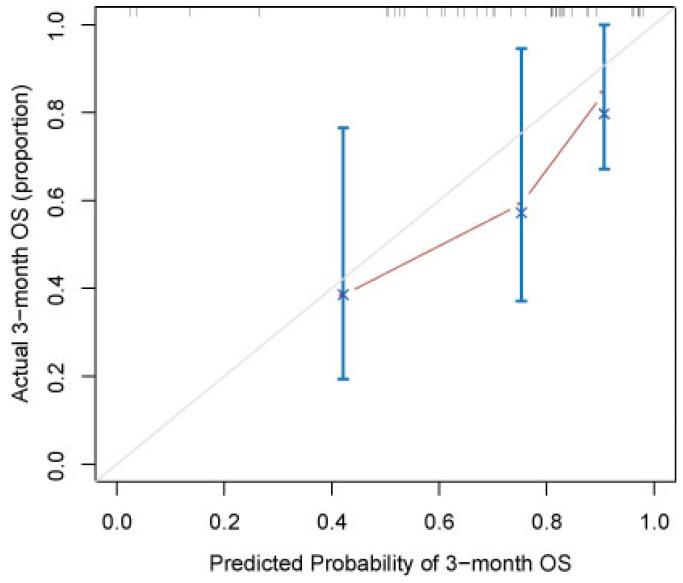
The purpose of this study was to evaluate the prognostic value of computed tomography (CT) texture features of pancreatic cancer with liver metastases. We included 39 patients with metastatic pancreatic cancer (MPC) with liver metastases and performed texture analysis on primary tumors and metastases. The correlations between texture parameters were assessed using Pearson's correlation. Univariate Cox proportional hazards model was used to assess the correlations between clinicopathological characteristics, texture features and overall survival (OS). The univariate Cox regression model revealed four texture features potentially correlated with OS (P<0.1). A radiomics score (RS) was determined using a sequential combination of four texture features with potential prognostic value that were weighted according to their β-coefficients. Furthermore, all variables with P<0.1 were included in the multivariate analysis. A nomogram,which was developed to predict OS according to independent prognostic factors, was internally validated using the C-index and calibration plots. Kaplan-Meier analysis and the log-rank test were performed to stratify OS according to the RS and nomogram total points (NTP). Few significant correlations were found between texture features of primary tumors and those of liver metastases. However, texture features within primary tumors or liver metastases were significantly associated. Multivariate analysis showed that Eastern Cooperative Oncology Group performance status (ECOG PS), chemotherapy, Carbohydrate antigen 19-9 (CA19-9), and the RS were independent prognostic factors (P<0.05). The nomogram incorporating these factors showed good discriminative ability (C-index = 0.754). RS and NTP stratified patients into two potential risk groups (P<0.01). The RS derived from significant texture features of primary tumors and metastases shows promise as a prognostic biomarker of OS of patients with MPC. A nomogram based on the RS and other independent prognostic clinicopathological factors accurately predicts OS.
本研究旨在评估胰腺癌肝转移的计算机断层扫描(CT)纹理特征的预后价值。我们纳入了39例伴有肝转移的转移性胰腺癌(MPC)患者,并对原发肿瘤和转移灶进行了纹理分析。使用Pearson相关性评估纹理参数之间的相关性。单因素Cox比例风险模型用于评估临床病理特征、纹理特征与总生存期(OS)之间的相关性。单因素Cox回归模型显示有四个纹理特征可能与OS相关(P<0.1)。使用四个具有潜在预后价值的纹理特征的序贯组合确定了一个影像组学评分(RS),并根据其β系数进行加权。此外,将所有P<0.1的变量纳入多因素分析。根据独立预后因素开发了一个预测OS的列线图,并使用C指数和校准图进行内部验证。采用Kaplan-Meier分析和对数秩检验,根据RS和列线图总分(NTP)对OS进行分层。在原发肿瘤和肝转移灶的纹理特征之间未发现显著相关性。然而,原发肿瘤或肝转移灶内的纹理特征显著相关。多因素分析显示,东部肿瘤协作组体能状态(ECOG PS)、化疗、糖类抗原19-9(CA19-9)和RS是独立的预后因素(P<0.05)。纳入这些因素的列线图显示出良好的鉴别能力(C指数=0.754)。RS和NTP将患者分为两个潜在风险组(P<0.01)。源自原发肿瘤和转移灶显著纹理特征的RS有望作为MPC患者OS的预后生物标志物。基于RS和其他独立预后临床病理因素的列线图可准确预测OS。


 Zotero 插件