College of Pharmacy, Zhejiang Chinese Medical University, Hangzhou, Zhejiang 310053, P.R. China.
Key Laboratory of Cancer Prevention and Therapy Combining Traditional Chinese and Western Medicine, Tongde Hospital of Zhejiang Province, Hangzhou, Zhejiang 310012, P.R. China.
Mol Med Rep. 2021 May;23(5). doi: 10.3892/mmr.2021.11969. Epub 2021 Mar 24.
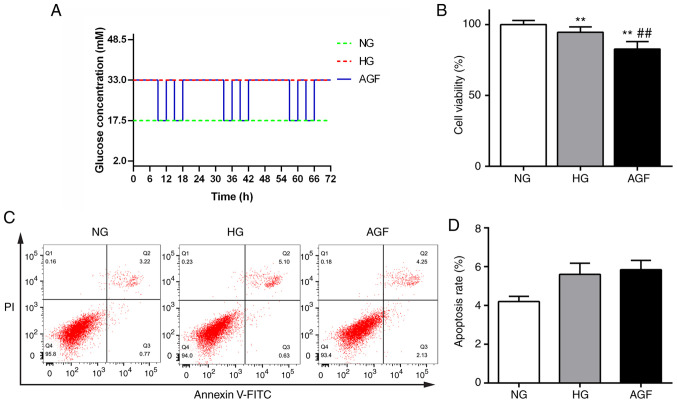
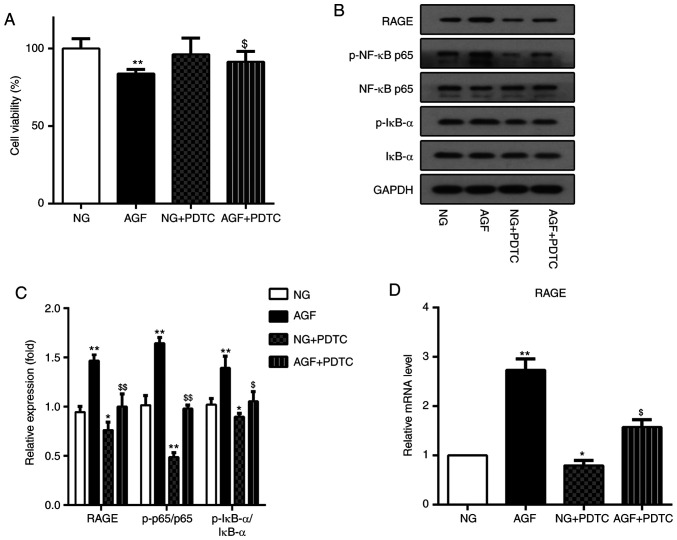
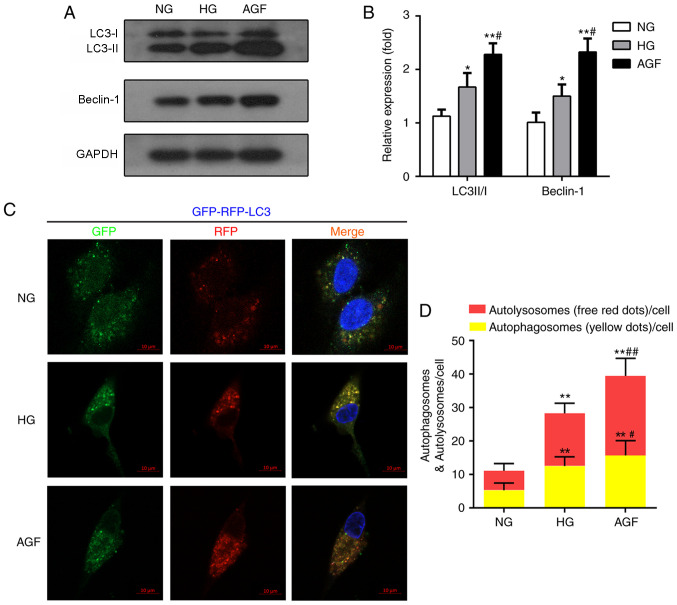
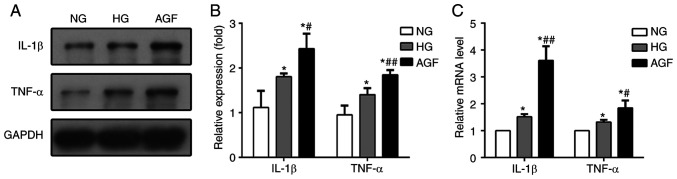
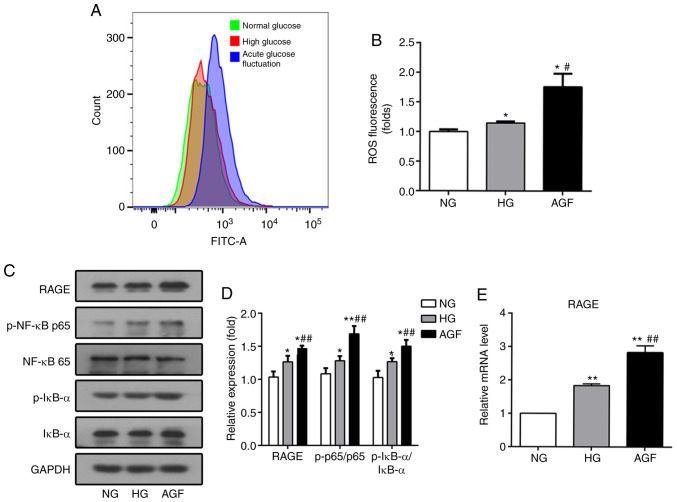
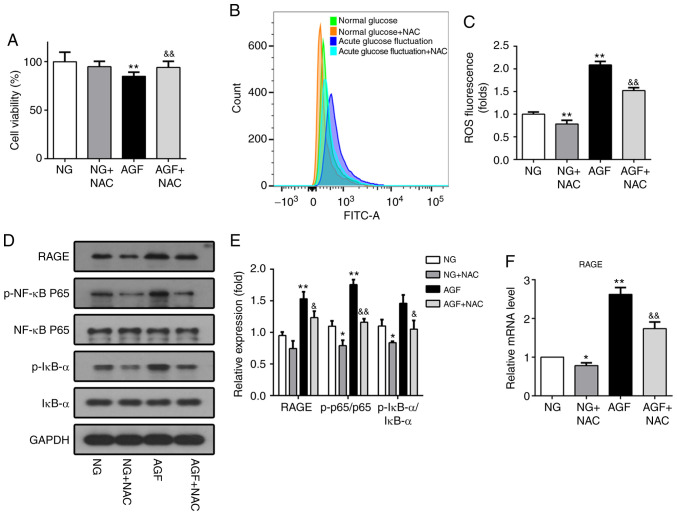
Diabetic nephropathy (DN) is a common chronic complication of diabetes, for which acute glucose fluctuation (AGF) is a potential risk factor. Fluctuating hyperglycemia has been confirmed to induce more serious kidney damage than hyperglycemia in diabetic rats; however, the mechanism remains unknown. The purpose of this study was to explore the potential role of AGF in the progression of DN. Viability of rat podocytes following 72‑h AGF treatment was detected using Cell Counting‑Kit‑8. The rates of apoptosis and the level of reactive oxygen species (ROS) in rat podocytes were assessed by flow cytometry. Western blotting and reverse transcription‑quantitative PCR were performed to measure relative protein and mRNA expression levels, respectively. Transfection with an mRFP‑GFP‑LC3 adenoviral vector was used to track autophagic flux under confocal microscopy. The results indicated that AGF could inhibit cell proliferation, promote TNF‑α, interleukin‑1β (IL‑1β), and reactive oxygen species (ROS) generation, and increase autophagy in rat podocytes. Moreover, AGF upregulated receptor for advanced glycation end products (RAGE) expression via activation of NF‑κB/p65 and IκBα. Pretreatment with 5 mM N‑Acetyl‑L‑cysteine or 10 M pyrrolidine dithiocarbamate effectively reduced cellular damage and inhibited activation of the NF‑κB/RAGE signaling pathway. Thus, AGF induces rat podocyte injury by aggravating oxidative stress, promoting the inflammatory response, and regulating ROS‑mediated NF‑κB/RAGE activation.
糖尿病肾病(DN)是糖尿病常见的慢性并发症,急性血糖波动(AGF)是其潜在的危险因素。波动的高血糖已被证实会比糖尿病大鼠中的高血糖诱导更严重的肾脏损伤;然而,其机制尚不清楚。本研究旨在探讨 AGF 在 DN 进展中的潜在作用。使用 Cell Counting-Kit-8 检测大鼠足细胞在 72 h AGF 处理后的活力。通过流式细胞术评估大鼠足细胞的凋亡率和活性氧(ROS)水平。通过 Western blot 和逆转录-定量 PCR 分别检测相对蛋白和 mRNA 表达水平。使用 mRFP-GFP-LC3 腺病毒载体转染在共聚焦显微镜下跟踪自噬流。结果表明,AGF 可抑制细胞增殖,促进 TNF-α、白细胞介素-1β(IL-1β)和活性氧(ROS)的产生,并增加大鼠足细胞的自噬。此外,AGF 通过激活 NF-κB/p65 和 IκBα 上调晚期糖基化终产物受体(RAGE)的表达。用 5 mM N-乙酰-L-半胱氨酸或 10 μM 吡咯烷二硫代氨基甲酸盐预处理可有效减轻细胞损伤并抑制 NF-κB/RAGE 信号通路的激活。因此,AGF 通过加重氧化应激、促进炎症反应以及调节 ROS 介导的 NF-κB/RAGE 激活来诱导大鼠足细胞损伤。