Instituto Gulbenkian de Ciência, Oeiras, Portugal.
National Centre for Biological Sciences, Bangalore, India.
J Cell Biol. 2021 May 3;220(5). doi: 10.1083/jcb.202008090.
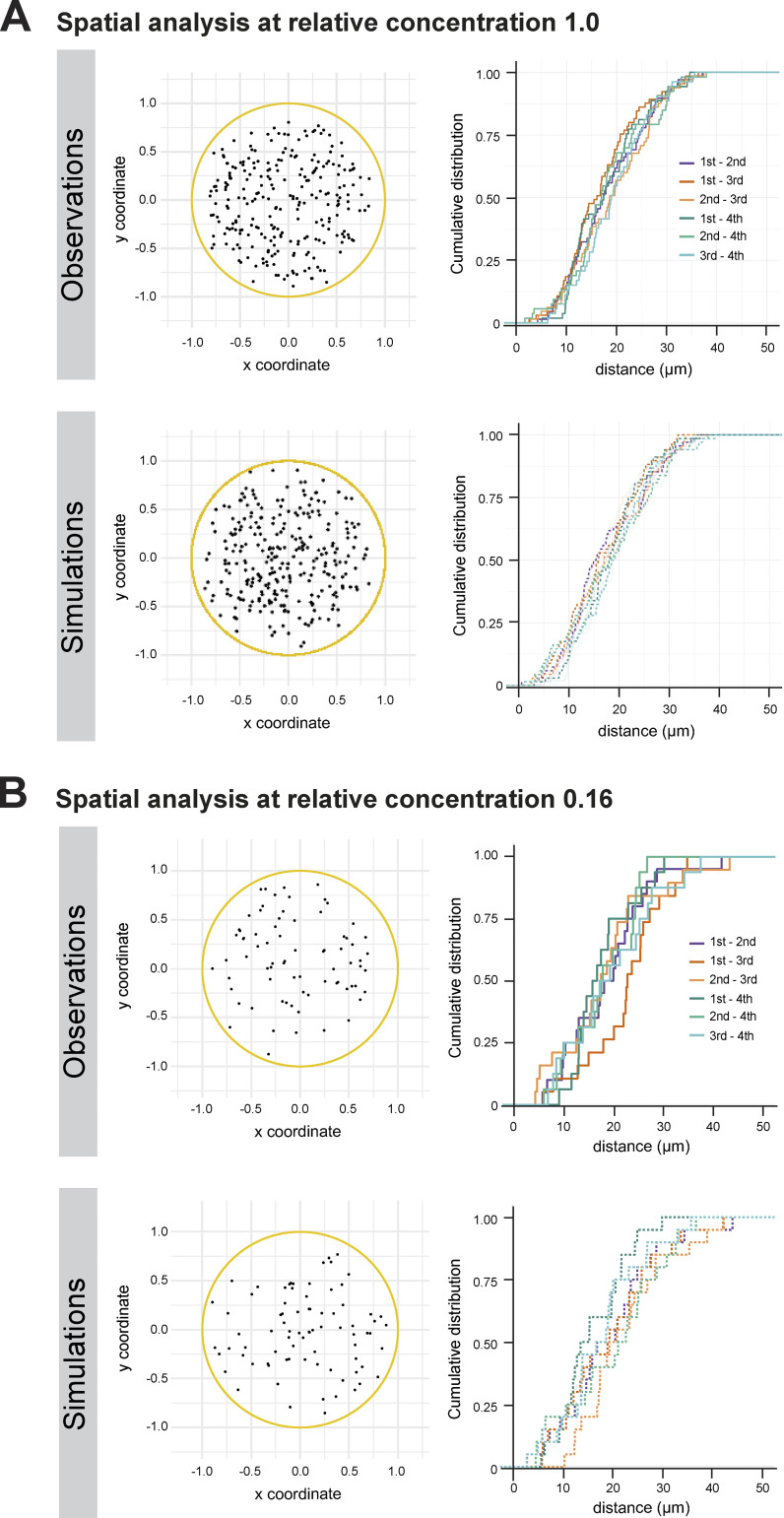
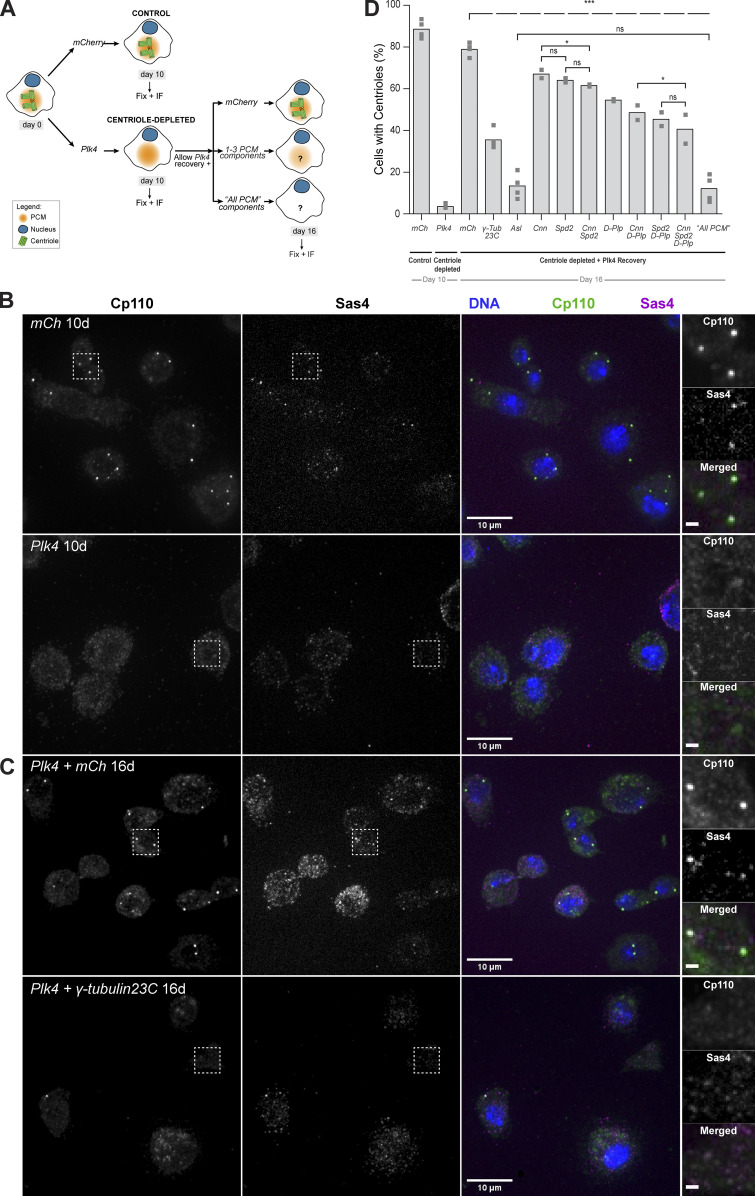
Centrioles form centrosomes and cilia. In most proliferating cells, centrioles assemble through canonical duplication, which is spatially, temporally, and numerically regulated by the cell cycle and the presence of mature centrioles. However, in certain cell types, centrioles assemble de novo, yet by poorly understood mechanisms. Herein, we established a controlled system to investigate de novo centriole biogenesis, using Drosophila melanogaster egg explants overexpressing Polo-like kinase 4 (Plk4), a trigger for centriole biogenesis. We show that at a high Plk4 concentration, centrioles form de novo, mature, and duplicate, independently of cell cycle progression and of the presence of other centrioles. Plk4 concentration determines the temporal onset of centriole assembly. Moreover, our results suggest that distinct biochemical kinetics regulate de novo and canonical biogenesis. Finally, we investigated which other factors modulate de novo centriole assembly and found that proteins of the pericentriolar material (PCM), and in particular γ-tubulin, promote biogenesis, likely by locally concentrating critical components.
中心体形成中心粒和纤毛。在大多数增殖细胞中,中心体通过经典复制组装,这种复制受细胞周期和成熟中心体的时空和数量调控。然而,在某些细胞类型中,中心体通过尚未完全了解的机制从头组装。在此,我们建立了一个控制体系,利用果蝇胚胎外植体过表达 Polo 样激酶 4(Plk4)来研究从头发生的中心粒生物发生,Plk4 是中心粒生物发生的触发因素。我们表明,在高 Plk4 浓度下,中心粒可以独立于细胞周期进程和其他中心粒的存在而从头组装、成熟和复制。Plk4 浓度决定了中心粒组装的时间起点。此外,我们的结果表明,不同的生化动力学调节从头发生和经典生物发生。最后,我们研究了哪些其他因素调节从头发生的中心粒组装,发现中心粒周围物质(PCM)的蛋白质,特别是 γ-微管蛋白,促进了生物发生,可能通过局部浓缩关键成分。