Sun Fengjun, Chen Zhuo, Yao Pu, Weng Bangbi, Liu Zhirui, Cheng Lin
Department of Pharmacy, The First Affiliated Hospital of Third Military Medical University (Army Medical University), Chongqing, China.
Department of Pharmacy, Chongqing Emergency Medical Center, Chongqing, China.
Front Pharmacol. 2021 Mar 8;12:641075. doi: 10.3389/fphar.2021.641075. eCollection 2021.
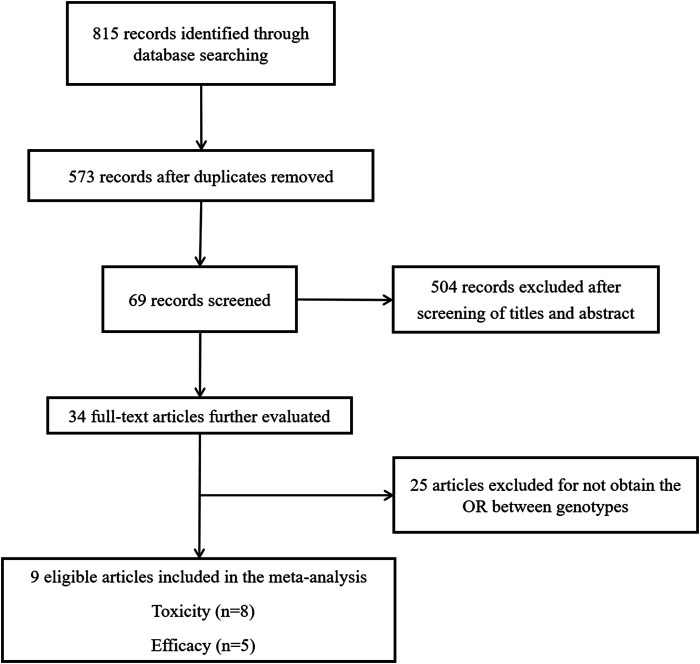
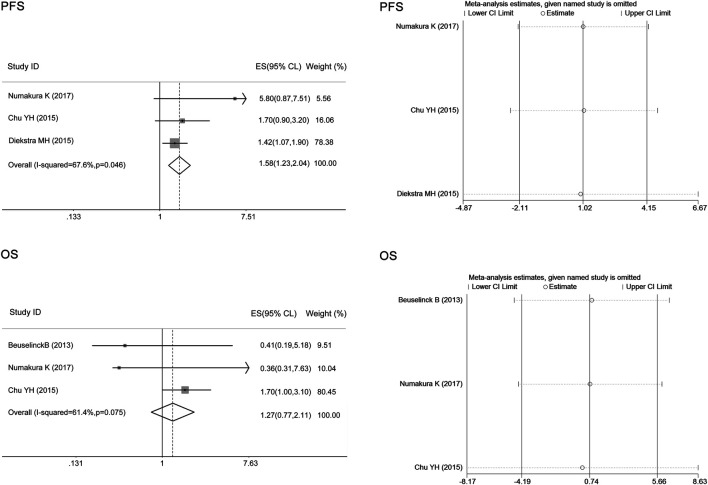
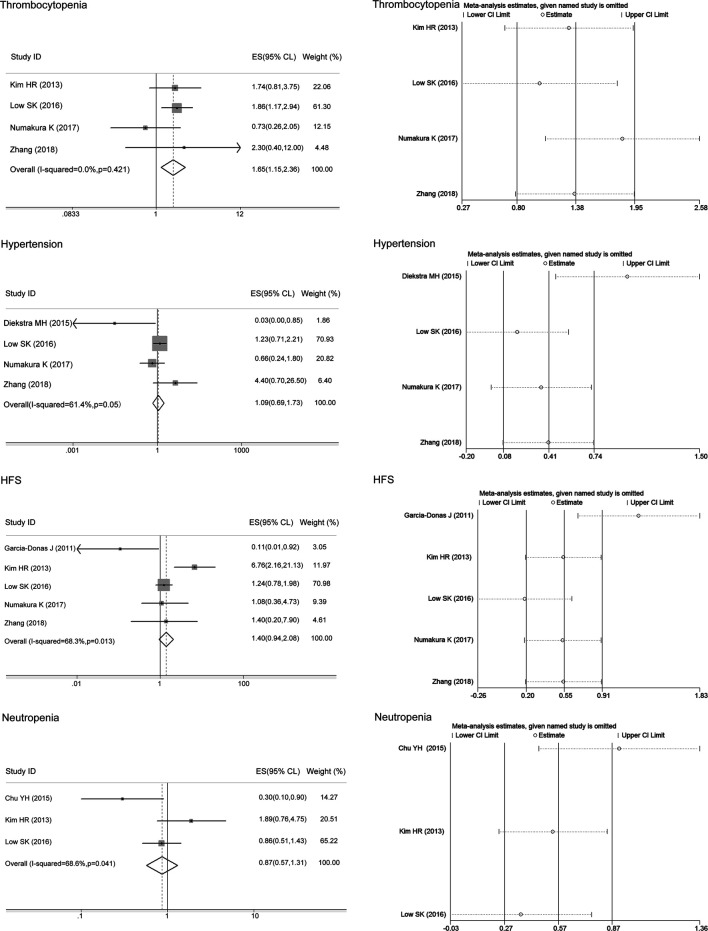
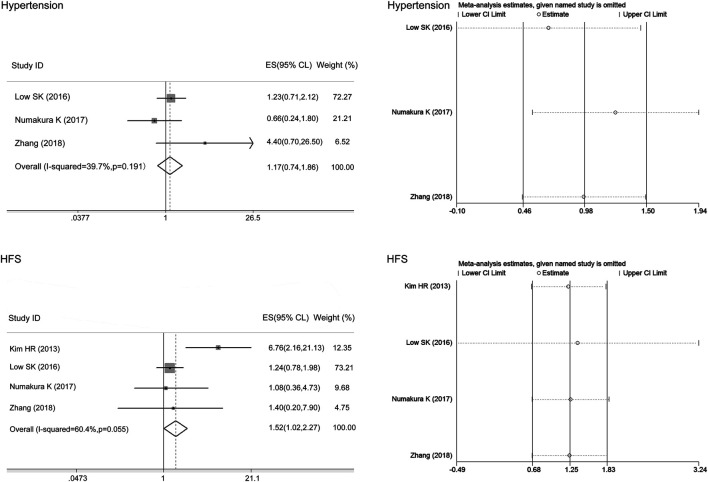
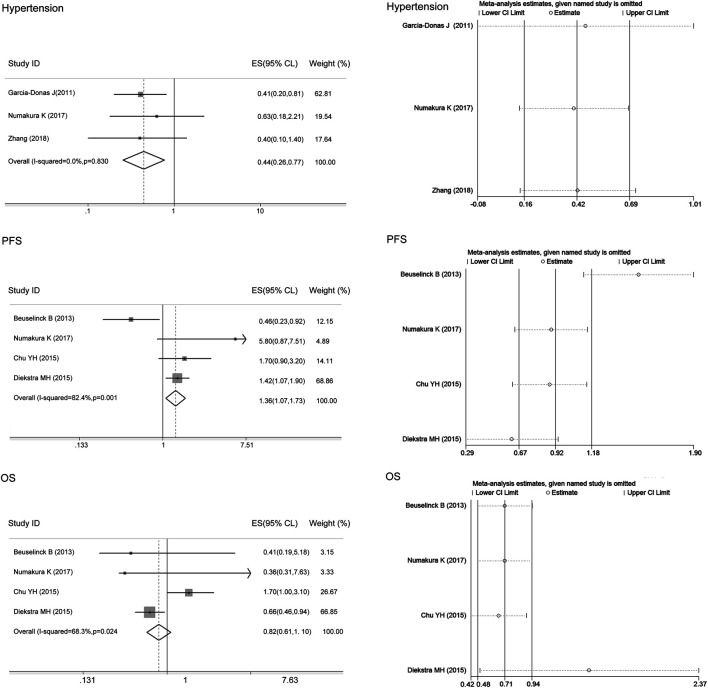
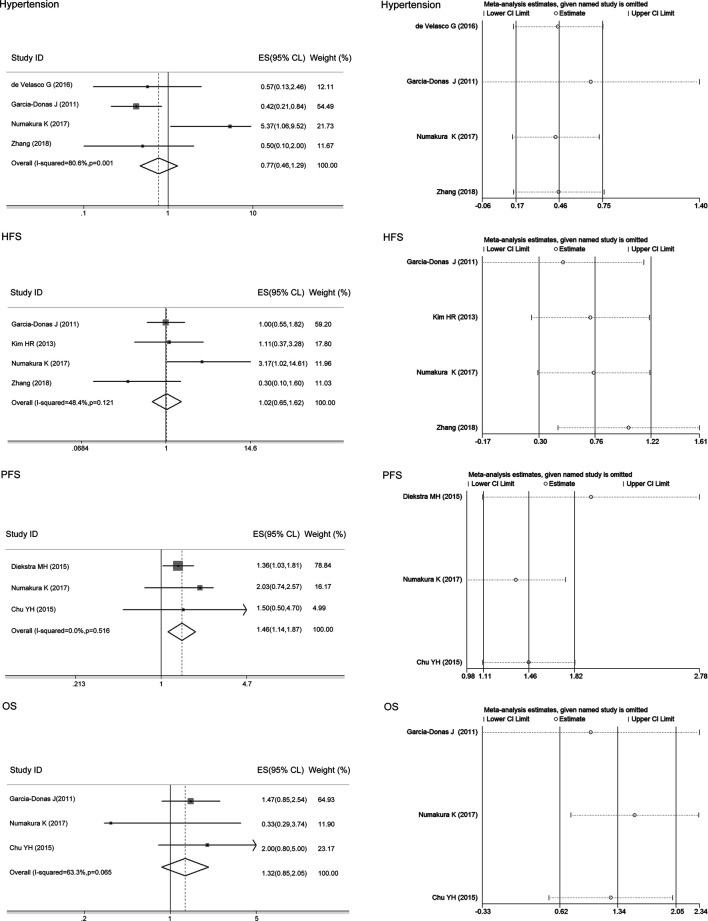
ABCG2 and ABCB1 are genes related to the pharmacokinetics of sunitinib and have been associated with its toxicity and efficacy. However, the results have been controversial. This study aimed to evaluate the associations of ABCG2 and ABCB1 polymorphisms with sunitinib-induced toxicity and efficacy in renal cell carcinoma (RCC) by meta-analysis. , and e were systematically searched for studies investigating the associations of the ABCG2 rs2231142 polymorphism with sunitinib-induced toxicity and the associations of the ABCB1 rs1128503 and ABCB1 rs2032582 polymorphisms with sunitinib-induced toxicity and clinical outcomes. The associations were evaluated by effect size (ES) with 95% confidence intervals (CIs). Eight and five studies were included in the toxicity and efficacy analysis, respectively, including a total of 1081 RCC patients. The ABCG2 rs2231142 A allele was associated with an increased risk of sunitinib-induced thrombocytopenia and hand-foot syndrome (HFS) in Asians (ES = 1.65, 95% CI = 1.15-2.36, = 0.006; ES = 1.52, 95% CI = 1.02-2.27, = 0.041). However, the ABCG2 rs2231142 polymorphism was not associated with sunitinib-induced hypertension or neutropenia (ES = 1.09, 95% CI = 0.69-1.73, = 0.701; ES = 0.87, 95% CI = 0.57-1.31, = 0.501). Compared with the C allele, the ABCB1 rs1128503 T allele was associated with a decreased risk of sunitinib-induced hypertension but worse progression-free survival (PFS) (ES = 0.44, 95% CI = 0.26-0.77, = 0.004; ES = 1.36, 95% CI = 1.07-1.73, = 0.011). There was no significant association between the T allele or C allele of ABCB1 rs1128503 and overall survival (OS) (ES = 0.82, 95% CI = 0.61-1.10, = 0.184). The ABCB1 rs2032582 T allele was associated with worse PFS than the other alleles (ES = 1.46, 95% CI = 1.14-1.87, = 0.003), while there was no significant association between the T allele or other alleles and sunitinib-induced hypertension, HFS, or OS (ES = 0.77, 95% CI = 0.46-1.29, = 0.326; ES = 1.02, 95% CI = 0.65-1.62, = 0.919; ES = 1.32, 95% CI = 0.85-2.05, = 0.215). The results indicate that the ABCG2 rs2231142 polymorphism may serve as a predictor of sunitinib-induced thrombocytopenia and HFS in Asians, while the ABCB1 rs1128503 polymorphism may serve as a predictor of sunitinib-induced hypertension, and both the ABCB1 rs1128503 and rs2032582 polymorphisms may serve as predictors of PFS in RCC. These results suggest a possible application of individualized use of sunitinib according to the genetic background of patients.
ABCG2和ABCB1是与舒尼替尼药代动力学相关的基因,且与舒尼替尼的毒性和疗效有关。然而,结果一直存在争议。本研究旨在通过荟萃分析评估ABCG2和ABCB1基因多态性与舒尼替尼诱导的毒性及疗效在肾细胞癌(RCC)中的相关性。系统检索了关于ABCG2 rs2231142多态性与舒尼替尼诱导毒性的相关性以及ABCB1 rs1128503和ABCB1 rs2032582多态性与舒尼替尼诱导毒性和临床结局的相关性的研究。通过效应大小(ES)及95%置信区间(CI)评估相关性。毒性和疗效分析分别纳入了8项和5项研究,共1081例RCC患者。ABCG2 rs2231142 A等位基因与亚洲人舒尼替尼诱导的血小板减少症和手足综合征(HFS)风险增加相关(ES = 1.65,95% CI = 1.15 - 2.36,P = 0.006;ES = 1.52,95% CI = 1.02 - 2.27,P = 0.041)。然而,ABCG2 rs2231142多态性与舒尼替尼诱导的高血压或中性粒细胞减少症无关(ES = 1.09,95% CI = 0.69 - 1.73,P = 0.701;ES = 0.87,95% CI = 0.57 - 1.31,P = 0.501)。与C等位基因相比,ABCB1 rs1128503 T等位基因与舒尼替尼诱导的高血压风险降低相关,但无进展生存期(PFS)较差(ES = 0.44,95% CI = 0.26 - 0.77,P = 0.004;ES = 1.36,95% CI = 1.07 - 1.73,P = 0.011)。ABCB1 rs1128503的T等位基因或C等位基因与总生存期(OS)之间无显著相关性(ES = 0.82,95% CI = 0.61 - 1.10,P = 0.184)。ABCB1 rs2032582 T等位基因与其他等位基因相比,PFS较差(ES = 1.46,95% CI = 1.14 - 1.87,P = 0.003),而T等位基因或其他等位基因与舒尼替尼诱导的高血压以及HFS或OS之间无显著相关性(ES = 0.77,95% CI = 0.46 - 1.29,P = 0.326;ES = 1.02,95% CI = 0.65 - 1.62,P = 0.919;ES = 1.32,95% CI = 0.85 - 2.05,P = 0.215)。结果表明,ABCG2 rs2231142多态性可能是亚洲人舒尼替尼诱导的血小板减少症和HFS 的预测指标,而ABCB1 rs1128503多态性可能是舒尼替尼诱导的高血压的预测指标,且ABCB1 rs1128503和rs2032582多态性均可能是RCC中PFS的预测指标。这些结果提示根据患者的基因背景个体化使用舒尼替尼具有可能的应用价值。