Department of Neurology, Neurological Institute, Taipei Veterans General Hospital, Taipei, Taiwan.
School of Medicine, National Yang Ming Chiao Tung University, Taipei, Taiwan.
J Headache Pain. 2021 Mar 25;22(1):14. doi: 10.1186/s10194-021-01223-9.
Chronic headache may persist after the remission of reversible cerebral vasoconstriction syndrome (RCVS) in some patients. We aimed to investigate the prevalence, characteristics, risk factors, and the impact of post-RCVS headache.
We prospectively recruited patients with RCVS and collected their baseline demographics, including psychological distress measured by Hospital Anxiety and Depression scale. We evaluated whether the patients developed post-RCVS headache 3 months after RCVS onset. The manifestations of post-RCVS headache and headache-related disability measured by Migraine Disability Assessment (MIDAS) scores were recorded.
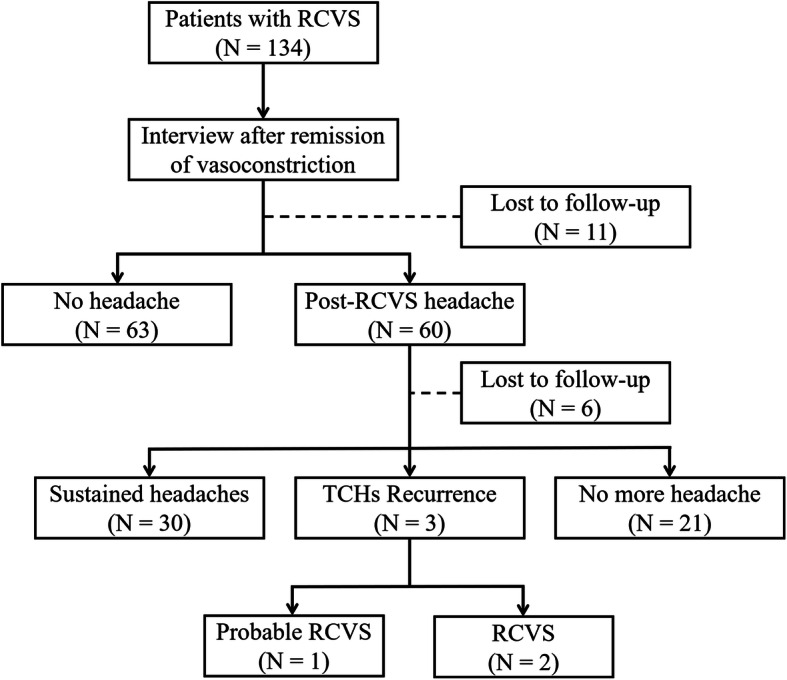
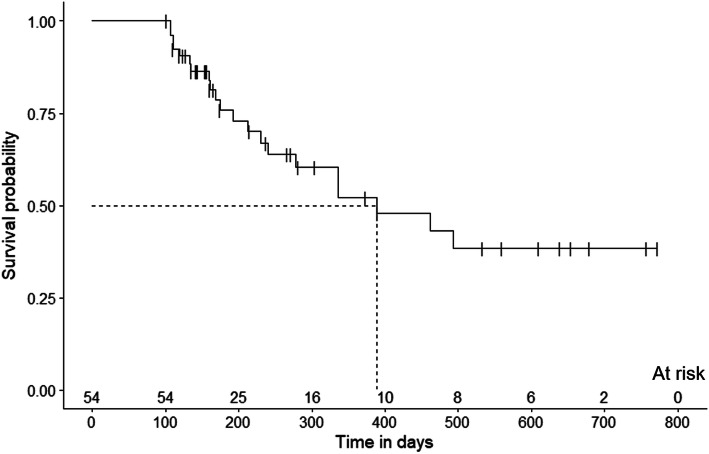
From 2017 to 2019, 134 patients with RCVS were recruited, of whom, 123 finished follow-up interviews (response rate 91.8%). Sixty (48.8%) patients had post-RCVS headache. Migrainous features were common in post-RCVS headache. Post-RCVS headache caused moderate-to-severe headache-related disability (MIDAS score > 10) in seven (11.7%) patients. Higher anxiety level (odds ratio 1.21, p = 0.009) and a history of migraine (odds ratio 2.59, p = 0.049) are associated with post-RCVS headache. Survival analysis estimated that 50% post-RCVS headache would recover in 389 days (95% confidence interval: 198.5-579) after disease onset.
Post-RCVS headache is common, affecting half of patients and being disabling in one-tenth. Higher anxiety level and migraine history are risk factors. Half of the patients with post-RCVS headache would recover in about a year.
在一些患者中,可逆性脑血管收缩综合征(RCVS)缓解后仍可能持续慢性头痛。我们旨在研究 RCVS 后头痛的患病率、特征、危险因素及对头痛的影响。
我们前瞻性招募 RCVS 患者,并收集其基线人口统计学资料,包括使用医院焦虑和抑郁量表(HADS)测量的心理困扰。我们评估 RCVS 发病后 3 个月患者是否发生 RCVS 后头痛。记录 RCVS 后头痛的表现以及偏头痛残疾评估量表(MIDAS)评分所测头痛相关残疾。
2017 年至 2019 年,共招募了 134 例 RCVS 患者,其中 123 例完成了随访访谈(应答率 91.8%)。60 例(48.8%)患者发生 RCVS 后头痛。RCVS 后头痛以偏头痛样特征为主。7 例(11.7%)患者的 RCVS 后头痛导致中重度头痛相关残疾(MIDAS 评分>10)。较高的焦虑水平(优势比 1.21,p=0.009)和偏头痛史(优势比 2.59,p=0.049)与 RCVS 后头痛相关。生存分析估计,RCVS 发病后 389 天(95%置信区间:198.5-579)内,50%的 RCVS 后头痛会缓解。
RCVS 后头痛很常见,影响半数患者,十分之一的患者致残。较高的焦虑水平和偏头痛史是危险因素。大约一半的 RCVS 后头痛患者将在约一年后缓解。