Department of Plastic and Reconstructive Surgery, Kyoto University Graduate School of Medicine, 54 Kawahara-cho, Shogoin, Sakyo-ku, Kyoto, 606-8507, Japan.
Congenital Anomaly Research Center, Kyoto University Graduate School of Medicine, Yoshida-Konoe-cho, Sakyo-ku, Kyoto, 606-8501, Japan.
Sci Rep. 2021 Mar 25;11(1):6867. doi: 10.1038/s41598-021-85543-5.
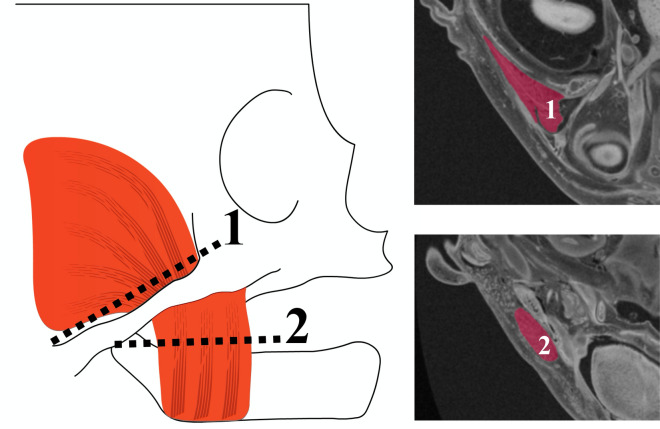
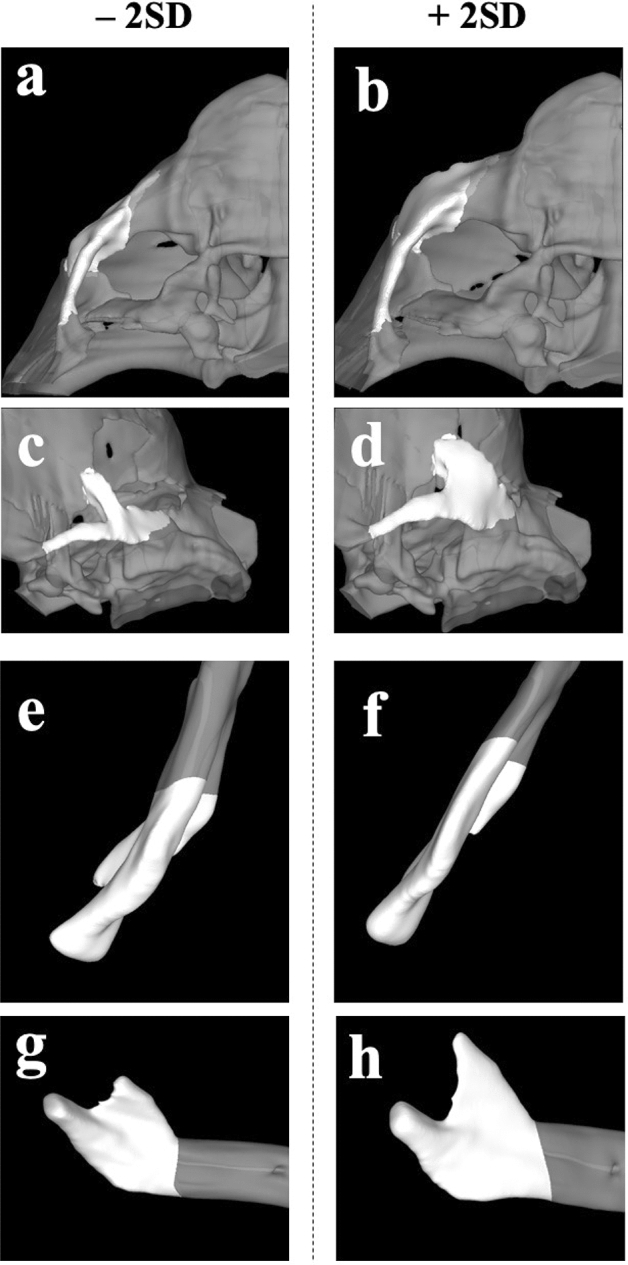
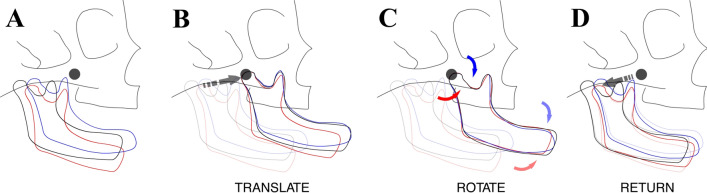
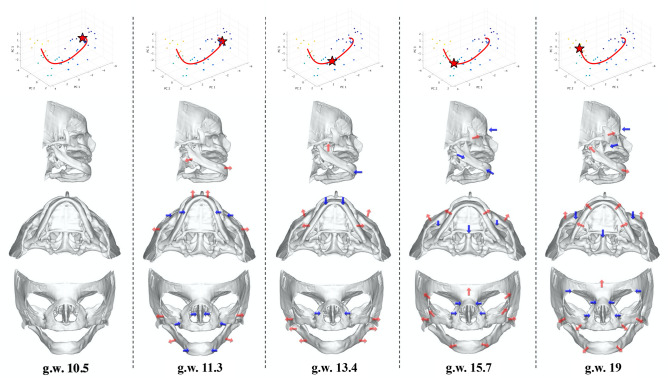
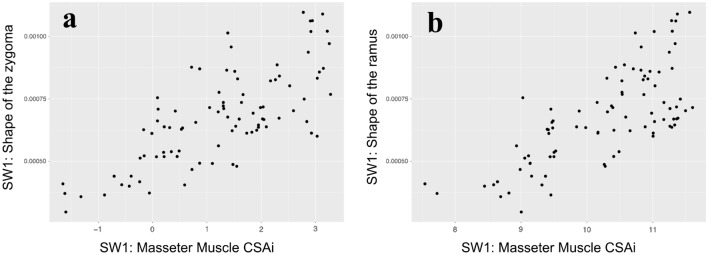
Significant shape changes in the human facial skeleton occur in the early prenatal period, and understanding this process is critical for studying a myriad of congenital facial anomalies. However, quantifying and visualizing human fetal facial growth has been challenging. Here, we applied quantitative geometric morphometrics (GM) to high-resolution magnetic resonance images of human embryo and fetuses, to comprehensively analyze facial growth. We utilized non-linear growth estimation and GM methods to assess integrated epigenetic growth between masticatory muscles and associated bones. Our results show that the growth trajectory of the human face in the early prenatal period follows a curved line with three flexion points. Significant antero-posterior development occurs early, resulting in a shift from a mandibular prognathic to relatively orthognathic appearance, followed by expansion in the lateral direction. Furthermore, during this time, the development of the zygoma and the mandibular ramus is closely integrated with the masseter muscle.
人类面部骨骼在胚胎早期发生显著的形态变化,理解这个过程对于研究无数先天性面部异常至关重要。然而,量化和可视化人类胎儿面部生长一直具有挑战性。在这里,我们应用定量几何形态测量学(GM)对人类胚胎和胎儿的高分辨率磁共振图像进行分析,全面研究面部生长。我们利用非线性生长估计和 GM 方法来评估咀嚼肌和相关骨骼之间的综合表观遗传生长。我们的结果表明,人类面部在胚胎早期的生长轨迹遵循一条带有三个弯曲点的曲线。早期发生显著的前后向发育,导致下颌前突向相对正常的外观转变,随后向外侧扩张。此外,在此期间,颧骨和下颌支的发育与咬肌紧密结合。