Wang Xiang-Peng, Xie Wen-Peng, Bi Yi-Fei, Wang Bao-An, Song Hong-Bo, Wang Shi-Lu, Bi Rong-Xiu
First Clinical Medical College, Shandong University of Traditional Chinese Medicine, Jinan, Shandong 250355, P.R. China.
Department of Orthopedics, Affiliated Hospital of Shandong University of Traditional Chinese Medicine, Jinan, Shandong 250014, P.R. China.
Exp Ther Med. 2021 May;21(5):468. doi: 10.3892/etm.2021.9899. Epub 2021 Mar 8.
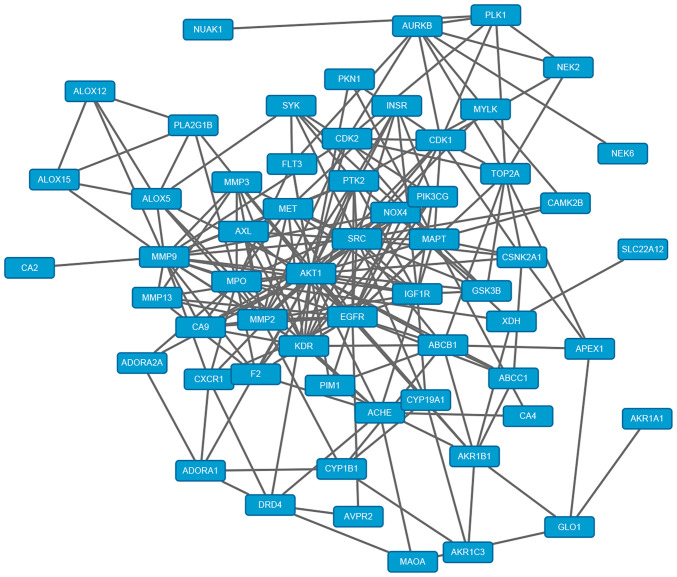
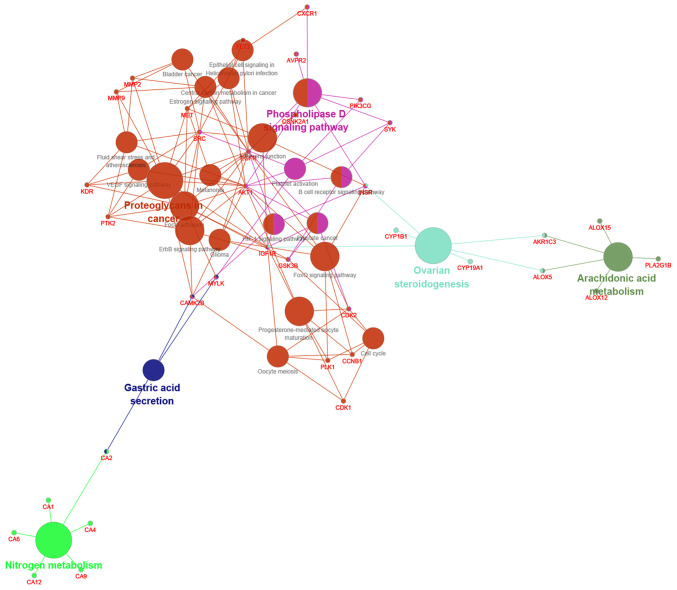
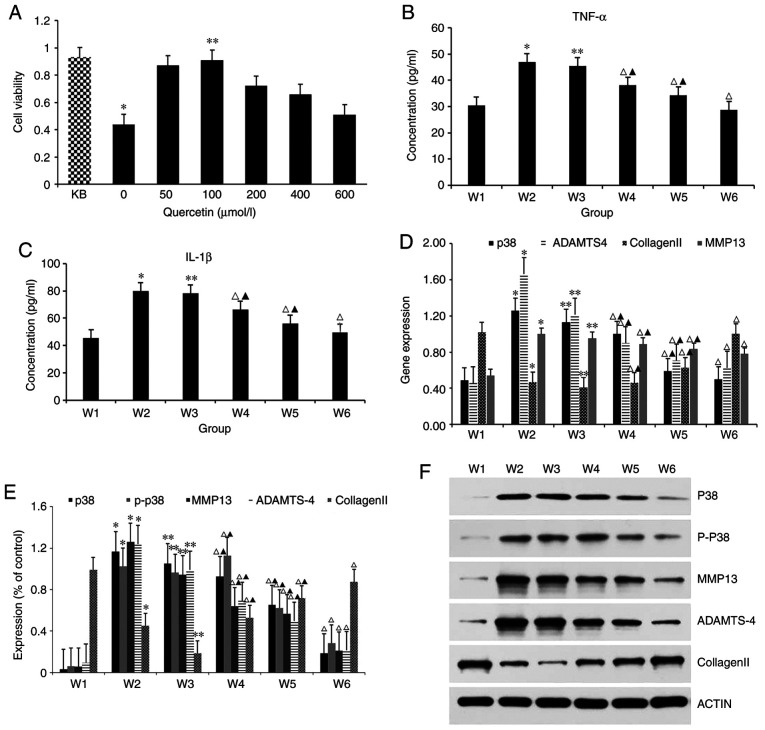
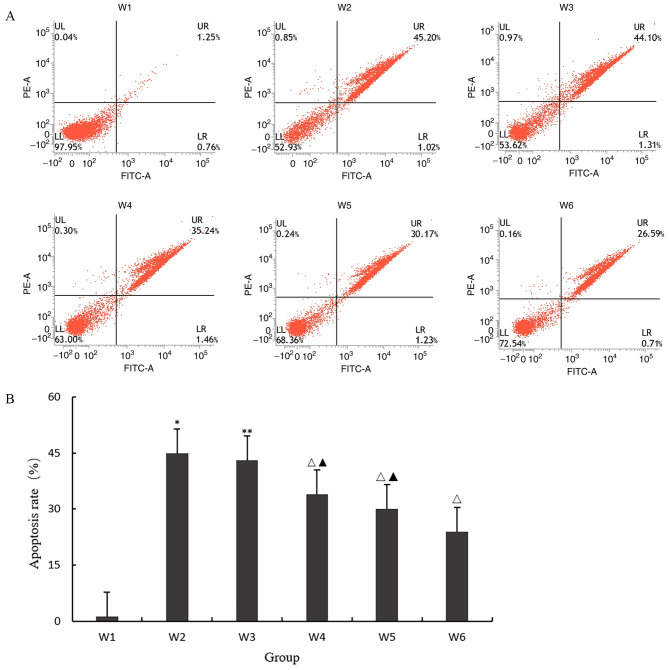
The objective of the present study was to investigate the effect of quercetin and evaluate its protective effect on articular cartilage in patients with osteoarthritis (OA), by intervening the p38 pathway. The target factors of quercetin protecting articular cartilage in patients with OA were predicted scientifically and analyzed to predict the possible pathways by using network pharmacology. A pathway predicted to be closely associated with osteoarthritis was chosen for experimental verification in cells. The optimal intervention drug concentrations were selected by the of Cell Cycle Kit-8 assay, osteoarthritis and inflammatory factors relevant to osteoarthritis, interleukin-1β and tumor necrosis factor-α, were tested by of enzyme-linked immunosorbent assay, and the expression of relevant proteins and mRNA of the p38 signaling pathway was tested by reverse transcription-quantitative PCR and western blotting, following quercetin intervention. It was found that quercetin, at the concentration of 100 umol/l, can decrease inflammatory factors relevant to OA, inhibit the expression of p38, matrix metalloprotease 13 and ADAMTS in the pathway, and promote the expression of collagen Ⅱ. Therefore, it is postulated that quercetin can lower the expression of inflammatory factors in cartilage for the prevention and treatment of OA, and the expression level of relevant factors can be changed positively by blocking the p38 MAPK signaling pathway. Thus, quercetin can promote the repair of degenerative chondrocytes and protect articular chondrocytes.
本研究的目的是通过干预p38信号通路,研究槲皮素的作用并评估其对骨关节炎(OA)患者关节软骨的保护作用。运用网络药理学科学预测并分析槲皮素保护OA患者关节软骨的靶标因子,以预测可能的信号通路。选择一条预测与骨关节炎密切相关的信号通路在细胞中进行实验验证。通过Cell Cycle Kit-8法选择最佳干预药物浓度,采用酶联免疫吸附测定法检测与骨关节炎相关的骨关节炎和炎症因子、白细胞介素-1β和肿瘤坏死因子-α,在槲皮素干预后,通过逆转录定量PCR和蛋白质免疫印迹法检测p38信号通路相关蛋白和mRNA的表达。结果发现,浓度为100 μmol/l的槲皮素可降低与OA相关的炎症因子,抑制该信号通路中p38、基质金属蛋白酶13和含血小板反应蛋白基序的解聚蛋白样金属蛋白酶的表达,并促进Ⅱ型胶原蛋白的表达。因此,推测槲皮素可降低软骨中炎症因子的表达以预防和治疗OA,并且通过阻断p38丝裂原活化蛋白激酶信号通路可正向改变相关因子的表达水平。因此,槲皮素可促进退变软骨细胞的修复并保护关节软骨细胞。