Institute of Biology and Faculty of Engineering, State University of Rio de Janeiro, Rio de Janeiro, Brazil.
Faculty of Medical Sciences, State University of Rio de Janeiro, Rio de Janeiro, Brazil.
PLoS One. 2021 Mar 26;16(3):e0247635. doi: 10.1371/journal.pone.0247635. eCollection 2021.
COVID-19 is characterized by a rapid change in the patient's condition, with major changes occurring over a few days. We aimed to develop and evaluate an emergency system for monitoring patients with COVID-19, which may be useful in hospitals where more severe patients stay in their homes.
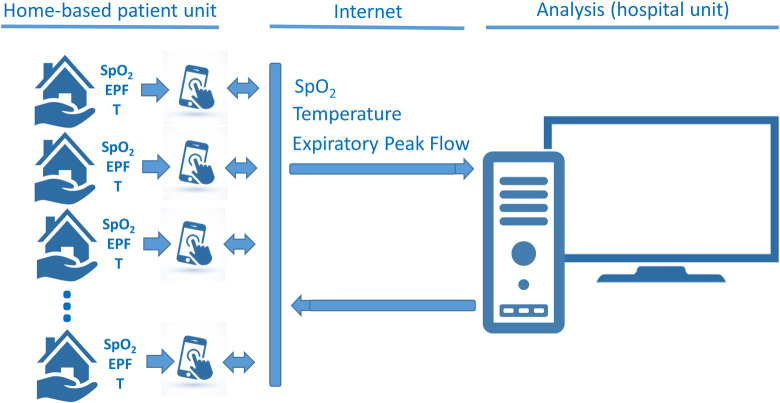
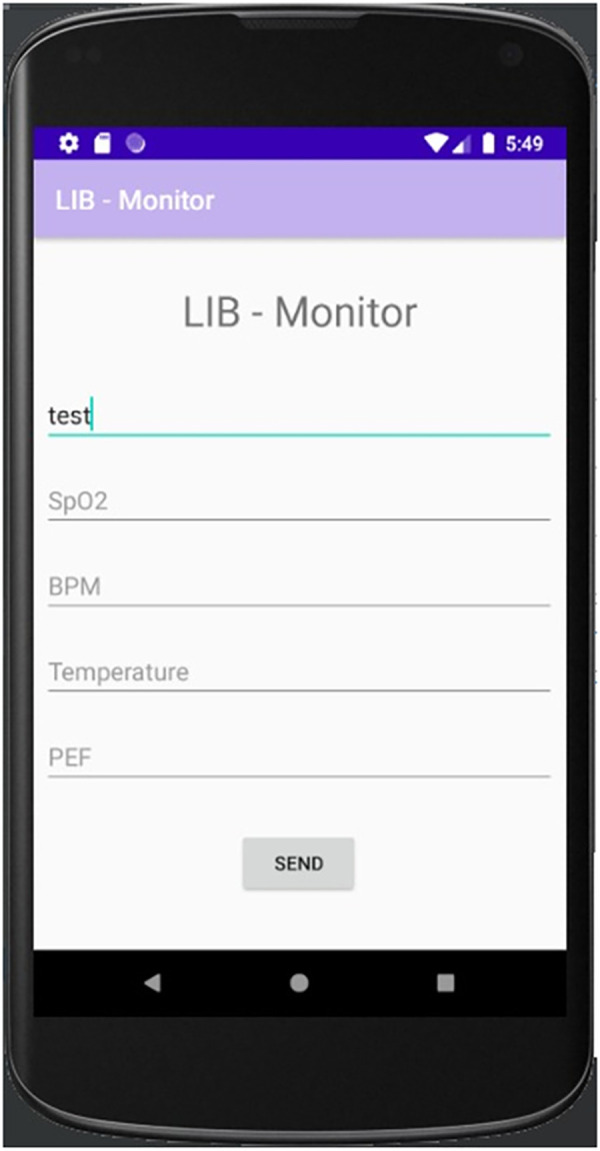
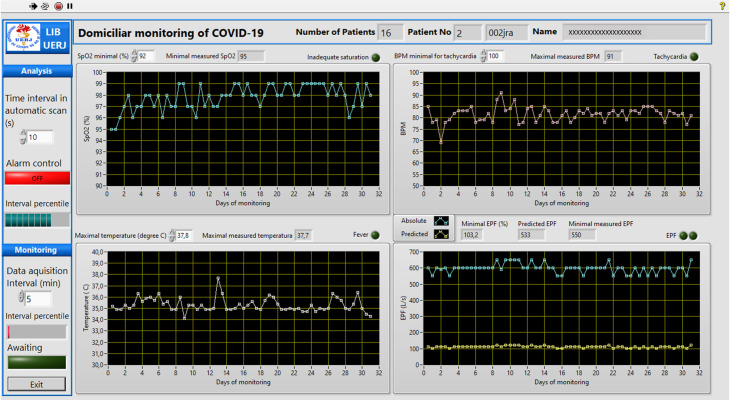
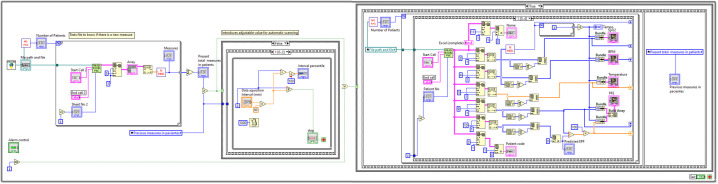
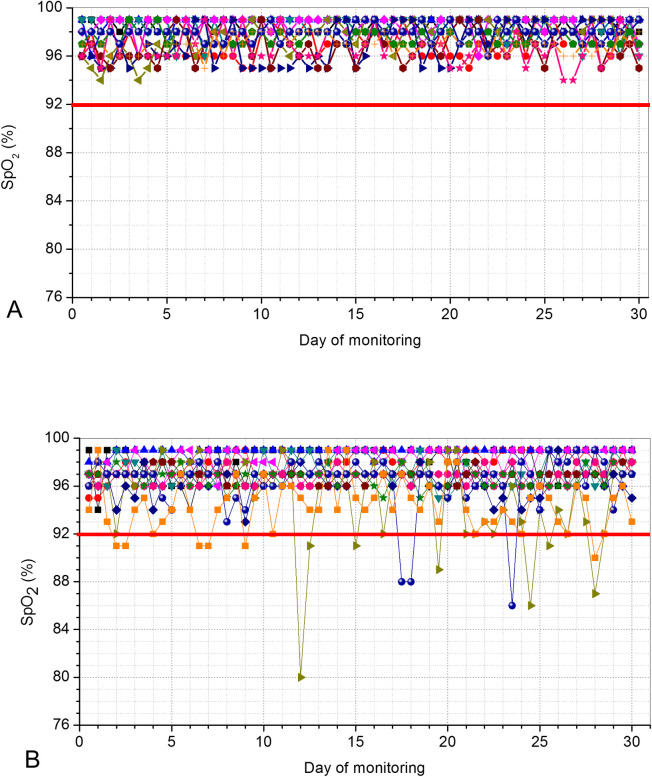
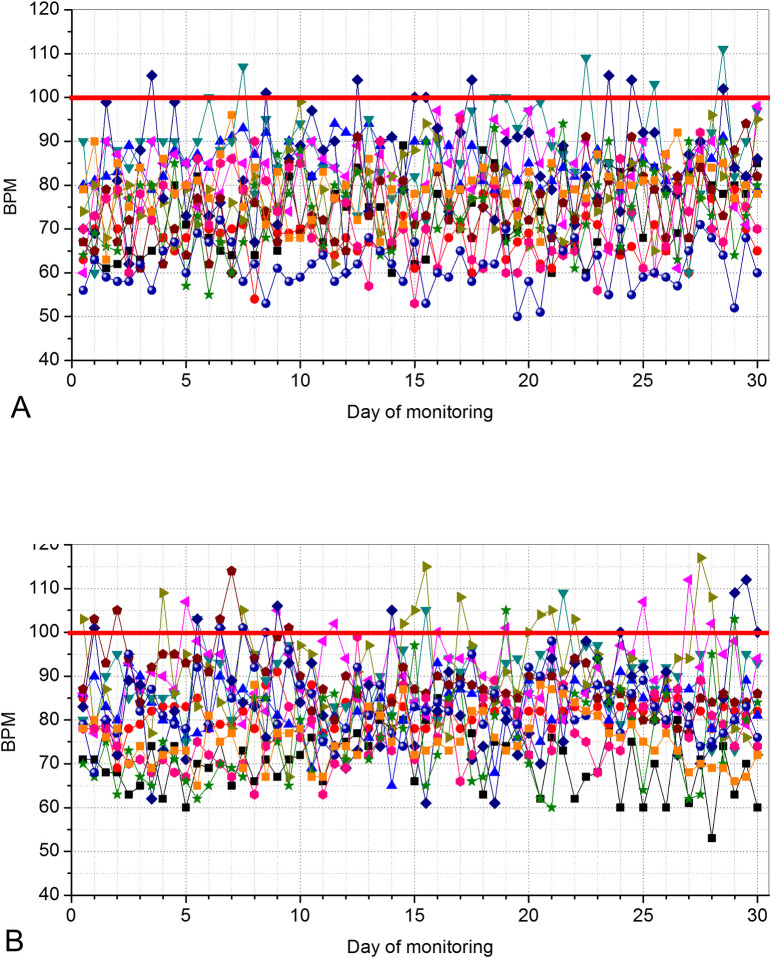
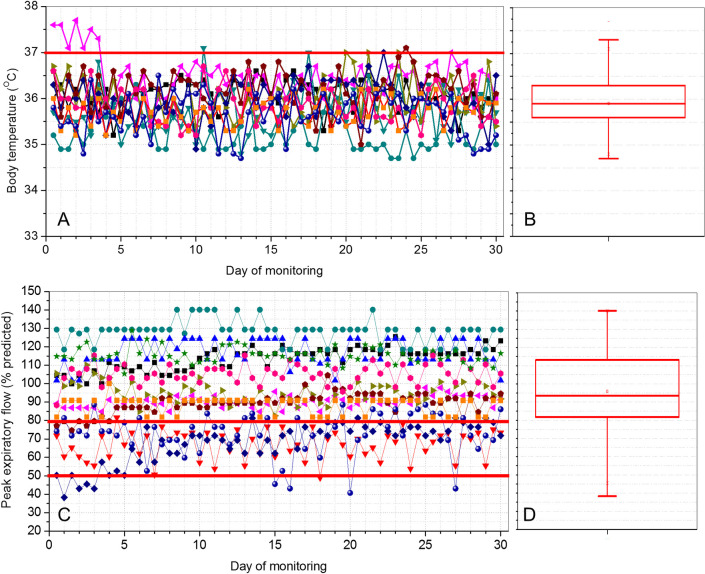
METHODOLOGY/PRINCIPAL FINDINGS: The system consists of the home-based patient unit, which is set up around the patient and the hospital unit, which enables the medical staff to telemonitor the patient's condition and help to send medical recommendations. The home unit allows the data transmission from the patient to the hospital, which is performed using a cell phone application. The hospital unit includes a virtual instrument developed in LabVIEW® environment that can provide a real-time monitoring of the oxygen saturation (SpO2), beats per minute (BPM), body temperature (BT), and peak expiratory flow (PEF). Abnormal events may be fast and automatically identified. After the design details are described, the system is validated by a 30-day home monitoring study in 12 controls and 12 patients with COVID-19 presenting asymptomatic to mild disease. Patients presented reduced SpO2 (p<0.0001) and increased BPM values (p<0.0001). Three patients (25%) presented PEF values between 50 and 80% of the predicted. Three of the 12 monitored patients presented events of desaturation (SpO2<92%). The experimental results were in close agreement with the involved pathophysiology, providing clear evidence that the proposed system can be a useful tool for the remote monitoring of patients with COVID-19.
An emergency system for home monitoring of patients with COVID-19 was developed in the current study. The proposed system allowed us to quickly respond to early abnormalities in these patients. This system may contribute to conserving hospital resources for those most in need while simultaneously enabling early recognition of patients under acute deterioration, requiring urgent assessment.
COVID-19 的特点是患者病情迅速变化,主要变化在几天内发生。我们旨在开发和评估一种 COVID-19 患者监测的紧急系统,该系统可能对那些有更多重症患者在家中治疗的医院有用。
方法/主要发现:该系统由居家患者单元组成,该单元围绕患者设置,医院单元则使医务人员能够远程监测患者的病情并帮助发送医疗建议。居家单元允许患者将数据传输到医院,这是通过手机应用程序完成的。医院单元包括在 LabVIEW®环境中开发的虚拟仪器,可实时监测血氧饱和度 (SpO2)、每分钟心跳 (BPM)、体温 (BT) 和呼气峰值流量 (PEF)。异常事件可能快速自动识别。在描述了设计细节之后,通过对 12 名无症状至轻症 COVID-19 患者和 12 名对照患者进行为期 30 天的居家监测研究对系统进行了验证。患者的 SpO2 值降低(p<0.0001),BPM 值增加(p<0.0001)。3 名患者(25%)的 PEF 值在预测值的 50%至 80%之间。12 名监测患者中有 3 名出现低氧血症(SpO2<92%)事件。实验结果与所涉及的病理生理学密切一致,清楚地表明所提出的系统可以成为 COVID-19 患者远程监测的有用工具。
本研究开发了一种 COVID-19 患者居家监测的紧急系统。所提出的系统使我们能够快速应对这些患者的早期异常。该系统有助于为最需要的患者保留医院资源,同时能够早期识别病情急剧恶化的患者,需要紧急评估。