Ogi Mizue, Campling Natasha, Birtwistle Jakki, Richardson Alison, Bennett Michael I, Santer Miriam, Latter Susan
School of Health Sciences, University of Southampton, Southampton, Hampshire, UK.
Leeds Institute of Health Sciences, University of Leeds, Leeds, UK.
BMJ Support Palliat Care. 2021 Mar 28;14(e2). doi: 10.1136/bmjspcare-2020-002761.
Providing palliative care patients living at home with timely access to medicines is critical to enable effective symptom management, minimise burden and reduce unplanned use of healthcare services. Little is known about how diverse community-based palliative care models influence medicine access.
To produce a critical overview of research on experiences and outcomes of medicine access in community-based palliative care models of service delivery through a systematic review and narrative synthesis.
MEDLINE, CINAHL, EMBASE, PsycINFO, Cochrane Library databases and grey literature were systematically searched for all types of studies. Study quality was assessed using the Mixed Methods Appraisal Tool; a narrative synthesis was used to integrate and summarise findings.
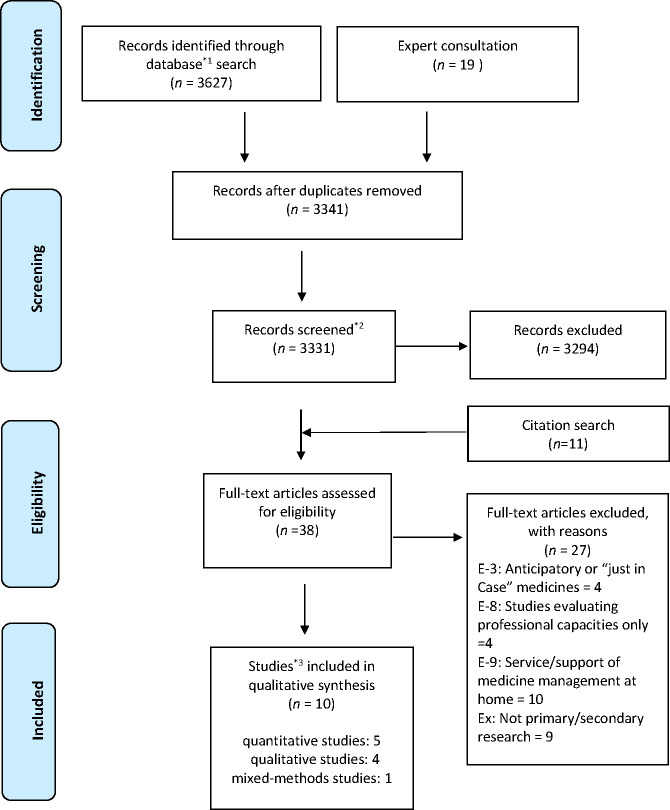
3331 articles were screened; 10 studies were included in the final sample. Studies included a focus on community pharmacy (n=4), hospice emergency medication kits (HEMKs) in the home (n=3), specialist community nurse prescribers (n=1), general practice (n=1) and one study included multiple service delivery components. Community pharmacy was characterised by access delays due to lack of availability of medicine stock and communication difficulties between the pharmacy and other healthcare professionals. HEMKs were perceived to reduce medicine access time out of hours and speed symptom control. However, the majority of studies comprised small, local samples, largely limited to self-reports of health professionals. There was a lack of data on outcomes, and no comparisons between service delivery models.
Further research is required to understand which models facilitate rapid and efficient access to medicines for community-based palliative care patients.
为居家的姑息治疗患者及时提供药物对于有效管理症状、减轻负担以及减少医疗服务的意外使用至关重要。关于多样化的社区姑息治疗模式如何影响药物获取情况,目前所知甚少。
通过系统评价和叙述性综合分析,对社区姑息治疗服务提供模式中药物获取的经验和结果的研究进行批判性综述。
系统检索MEDLINE、CINAHL、EMBASE、PsycINFO、Cochrane图书馆数据库和灰色文献,以查找所有类型的研究。使用混合方法评估工具评估研究质量;采用叙述性综合分析来整合和总结研究结果。
筛选了3331篇文章;最终样本纳入了10项研究。这些研究包括对社区药房的关注(n = 4)、家中的临终关怀急救药箱(HEMKs)(n = 3)、专科社区护士开方者(n = 1)、全科医疗(n = 1),还有一项研究包括多个服务提供组成部分。社区药房的特点是由于药品库存不足以及药房与其他医疗专业人员之间的沟通困难而导致获取延迟。HEMKs被认为可减少非工作时间的药物获取时间并加快症状控制。然而,大多数研究样本量小且局限于当地,主要限于卫生专业人员的自我报告。缺乏关于结果的数据,且未对服务提供模式进行比较。
需要进一步研究以了解哪些模式有助于社区姑息治疗患者快速有效地获取药物。