Sarkar Ashish, Kumar Vijay, Malhotra Rajesh, Pandit Hemant, Jones Elena, Ponchel Frederique, Biswas Sagarika
Department of Integrative and Functional Biology, CSIR-Institute of Genomics and Integrative Biology, New Delhi, 110007, India.
Academy of Scientific and Innovative Research (AcSIR), Ghaziabad, Uttar Pradesh, 201002, India.
J Inflamm Res. 2021 Mar 18;14:949-964. doi: 10.2147/JIR.S300801. eCollection 2021.
Circulating plasma proteins play an important role in various diseases, and analysis of the plasma proteome has led to the discovery of various disease biomarkers. Osteoarthritis (OA) is the most common chronic joint disease, mostly affecting people of older age. OA typically starts as a focal disease (in a single compartment, typically treated with unicompartmental knee replacement), and then progresses to the other compartments (if not treated in time, typically treated with total knee replacement). For this, identification of differential proteins was carried out in plasma samples of OA cases and compared with healthy controls. The aim of this study was to identify circulatory differentially expressed proteins (DEPs) in knee-OA patients undergoing total knee replacement or unicompartmental knee replacement compared to healthy controls and assess their role, in order to have better understanding of the etiology behind OA pathophysiology.
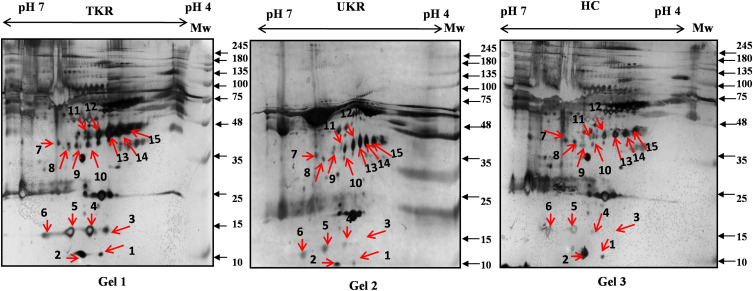
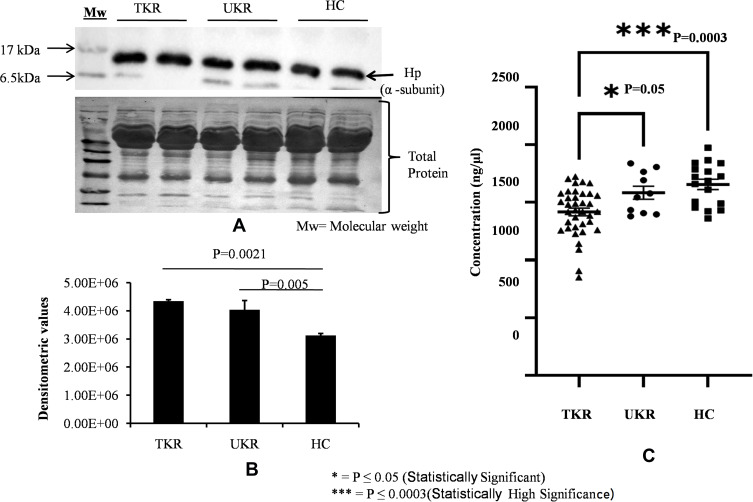
DEPs were identified with two-dimensional gel electrophoresis (2DE) and isobaric tags for relative and absolute quantification (iTRAQ), followed by liquid chromatography with tandem mass spectrometry. Validation of DEPs was carried out using Western blot and ELISA. Posttranslational modifications were checked after running native gel using purified protein from patients, followed by detection of autoantibodies.
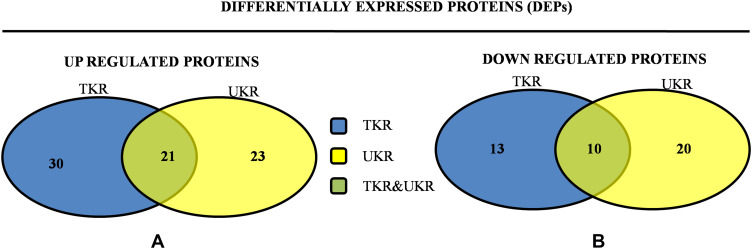
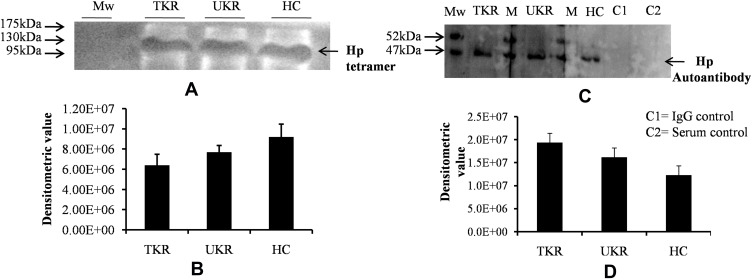
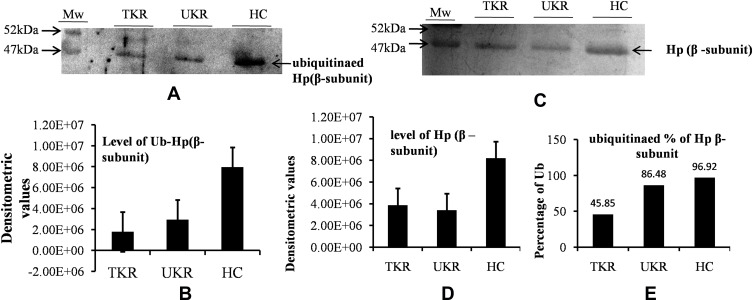
In total, 52 DEPs were identified, among which 45 were distinct DEPs. Haptoglobin (Hp) was identified as one of the most significantly upregulated proteins in OA (=0.005) identified by both 2DE and iTRAQ. Decreased levels of Hp tetramers and increased levels of autoantibodies against Hpβ were observed in OA plasma.
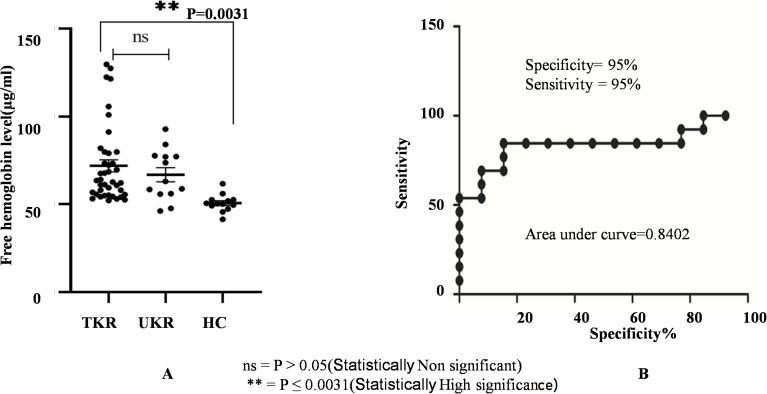
Our data suggest that poor clearance of free hemoglobin and low levels of Hp tetramers may be associated with OA pathogenesis and inflammation.
循环血浆蛋白在多种疾病中发挥着重要作用,对血浆蛋白质组的分析已促成多种疾病生物标志物的发现。骨关节炎(OA)是最常见的慢性关节疾病,主要影响老年人。OA通常起始于局灶性疾病(在单个关节腔,通常采用单髁膝关节置换术治疗),然后进展至其他关节腔(若未及时治疗,通常采用全膝关节置换术治疗)。为此,在OA病例的血浆样本中进行了差异蛋白鉴定,并与健康对照进行比较。本研究的目的是鉴定接受全膝关节置换术或单髁膝关节置换术的膝OA患者与健康对照相比的循环差异表达蛋白(DEP),并评估其作用,以便更好地理解OA病理生理学背后的病因。
采用二维凝胶电泳(2DE)和相对与绝对定量的等压标签(iTRAQ)鉴定DEP,随后进行液相色谱串联质谱分析。使用蛋白质印迹法和酶联免疫吸附测定法对DEP进行验证。使用来自患者的纯化蛋白在天然凝胶电泳后检查翻译后修饰,随后检测自身抗体。
共鉴定出52种DEP,其中45种为独特的DEP。触珠蛋白(Hp)被鉴定为通过2DE和iTRAQ鉴定出的OA中上调最显著的蛋白之一(P = 0.005)。在OA血浆中观察到Hp四聚体水平降低以及针对Hpβ的自身抗体水平升高。
我们的数据表明,游离血红蛋白清除不良和Hp四聚体水平低可能与OA发病机制和炎症相关。