Dorschel Kirsten B, Wanebo John E
Heidelberg University Medical School, Ruprecht-Karls-Universität Heidelberg, Heidelberg, Germany.
Department of Neurosurgery, Barrow Neurological Institute, Phoenix, Arizona, USA.
Appl Clin Genet. 2021 Mar 18;14:145-171. doi: 10.2147/TACG.S252736. eCollection 2021.
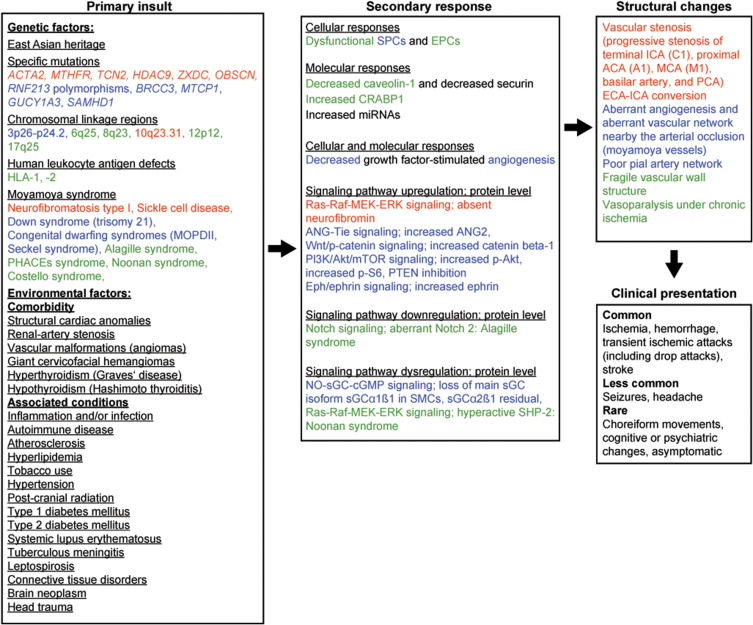
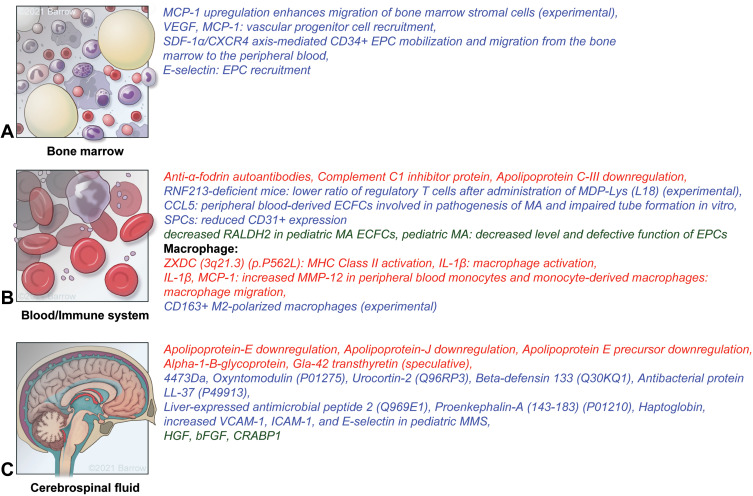
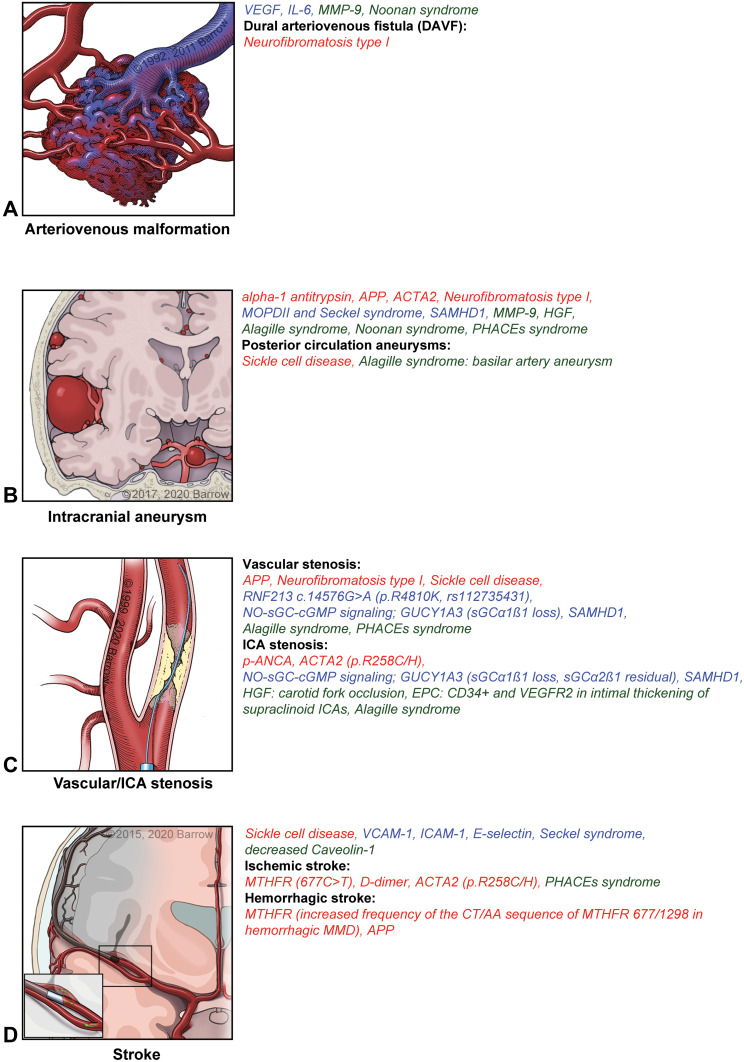
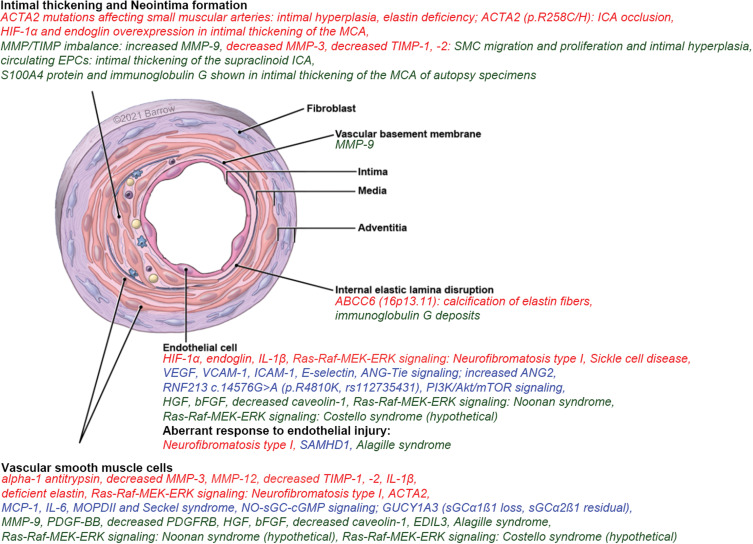
This literature review describes the pathophysiological mechanisms of the current classes of proteins, cells, genes, and signaling pathways relevant to moyamoya angiopathy (MA), along with future research directions and implementation of current knowledge in clinical practice.
This article is intended for physicians diagnosing, treating, and researching MA.
References were identified using a PubMed/Medline systematic computerized search of the medical literature from January 1, 1957, through August 4, 2020, conducted by the authors, using the key words and various combinations of the key words "moyamoya disease," "moyamoya syndrome," "biomarker," "proteome," "genetics," "stroke," "angiogenesis," "cerebral arteriopathy," "pathophysiology," and "etiology." Relevant articles and supplemental basic science articles published in English were included. Intimal hyperplasia, medial thinning, irregular elastic lamina, and creation of moyamoya vessels are the end pathologies of many distinct molecular and genetic processes. Currently, 8 primary classes of proteins are implicated in the pathophysiology of MA: gene-mutation products, enzymes, growth factors, transcription factors, adhesion molecules, inflammatory/coagulation peptides, immune-related factors, and novel biomarker candidate proteins. We anticipate that this article will need to be updated in 5 years.
It is increasingly apparent that MA encompasses a variety of distinct pathophysiologic conditions. Continued research into biomarkers, genetics, and signaling pathways associated with MA will improve and refine our understanding of moyamoya's complex pathophysiology. Future efforts will benefit from multicenter studies, family-based analyses, comparative trials, and close collaboration between the clinical setting and laboratory research.
本综述描述了与烟雾病(MA)相关的当前各类蛋白质、细胞、基因和信号通路的病理生理机制,以及未来的研究方向和当前知识在临床实践中的应用。
本文旨在为诊断、治疗和研究MA的医生提供参考。
作者通过对1957年1月1日至2020年8月4日的医学文献进行PubMed/Medline系统计算机检索,使用关键词“烟雾病”“烟雾综合征”“生物标志物”“蛋白质组”“遗传学”“中风”“血管生成”“脑动脉病”“病理生理学”和“病因学”及其各种组合来识别参考文献。纳入了以英文发表的相关文章和补充基础科学文章。内膜增生、中膜变薄、弹性膜不规则以及烟雾血管的形成是许多不同分子和遗传过程的最终病理表现。目前,有8类主要蛋白质与MA的病理生理学有关:基因突变产物、酶、生长因子、转录因子、黏附分子、炎症/凝血肽、免疫相关因子和新型生物标志物候选蛋白。我们预计本文需要在5年后更新。
越来越明显的是MA涵盖了多种不同的病理生理状况。对与MA相关的生物标志物、遗传学和信号通路的持续研究将改善和完善我们对烟雾病复杂病理生理学的理解。未来的工作将受益于多中心研究、基于家族的分析、比较试验以及临床环境与实验室研究之间的密切合作。